Biomass Monitor
Biomass Monitor
In the transition toward sustainable energy and circular economies, the role of a biomass monitor has become central to industrial efficiency. Biomass—ranging from wood pellets and agricultural residues to wastewater sludge and liquid biofuels—presents unique challenges for level and inventory measurement. Unlike standardized liquids, biomass materials are often non-homogeneous, dusty, prone to fermentation, or characterized by irregular surface profiles.
For process engineers and plant managers, selecting the correct biomass monitor is not merely about measuring a level; it is about ensuring the continuous feed of boilers, managing the health of anaerobic digesters, and optimizing supply chain logistics. This guide explores the engineering principles, selection criteria, and installation best practices for biomass monitoring technologies used in modern industrial automation.
Measurement Principles for Biomass Monitoring
To effectively monitor biomass, several physical principles are employed depending on whether the material is solid, liquid, or slurry-based. Understanding these principles is the first step in selecting a reliable instrument.
Radar Level Measurement (Non-Contact)
Radar level meters, particularly those operating at high frequencies (e.g., 80 GHz), are often the preferred choice for a biomass monitor in solid storage applications. These devices emit microwave pulses that reflect off the material surface. The time-of-flight between emission and reception determines the distance.
* Advantages: Radar is largely unaffected by dust, temperature fluctuations, or pressure. High-frequency radar has a narrow beam angle, which is critical for avoiding internal silo structures and measuring materials with a steep angle of repose.
* Limitations: Materials with extremely low dielectric constants (εr < 1.5), such as very dry wood shavings, may require specialized high-sensitivity radar units.
Ultrasonic Level Measurement
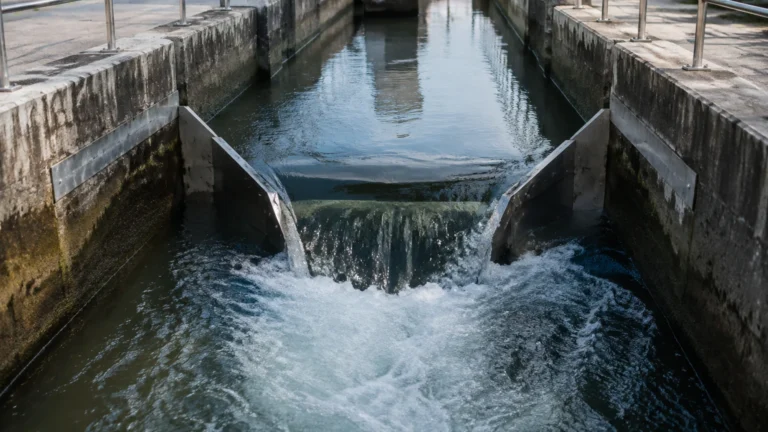
Ultrasonic sensors use sound waves to detect the surface of the biomass. This is a cost-effective solution frequently used for liquid biomass or open-channel flow in water treatment plants.
* Advantages: Non-contact and relatively simple to install. Ideal for aqueous biomass solutions and sludge tanks.
* Limitations: Ultrasonic waves are sensitive to air temperature gradients, heavy foam, and high dust concentrations, which can attenuate the signal. In enclosed silos containing wood pellets, the dust generated during filling often renders ultrasonic sensors unreliable.
Hydrostatic Pressure Measurement
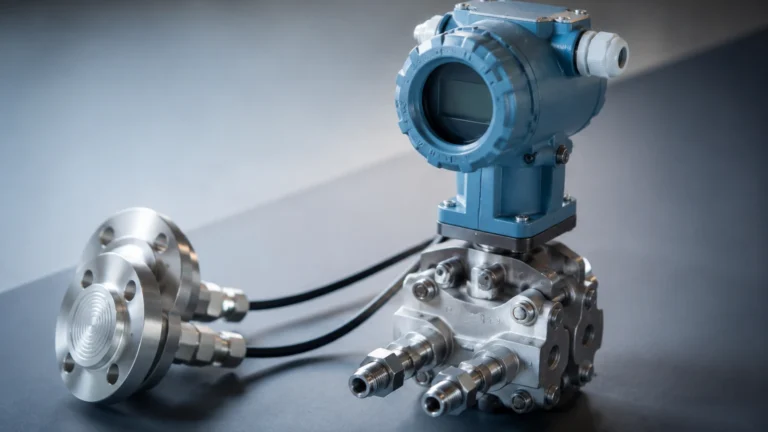
For liquid biomass stored in tanks, such as bio-oils or fermentation liquids, hydrostatic transmitters measure the pressure exerted by the liquid column.
* Advantages: Highly accurate for liquids with a consistent density.
* Limitations: If the density of the biomass changes (e.g., due to varying moisture content or fermentation gases), the level reading will drift unless compensated.
Point Level Switches
While continuous monitors provide a 0–100% reading, point level switches (such as tuning forks or rotary paddles) act as safety backups to prevent overfilling or dry-run conditions in biomass conveyors and hoppers.
Key Evaluation Criteria for Biomass Monitors
When evaluating a biomass monitor for a specific project, engineers must look beyond the basic data sheet. The following criteria are essential for long-term reliability:
Material Characteristics
Biomass is rarely uniform. Wood chips may have a moisture content ranging from 10% to 50%, significantly altering their dielectric properties and weight. In solid biomass silos, the "angle of repose" (the steepest angle at which the material remains stable) creates a non-level surface. A biomass monitor must be capable of processing these irregular reflections to provide an average volume estimate.
Environmental Conditions
* Dust and Vapor: Silos for grain or wood pellets are extremely dusty environments. The instrument must have an IP66/67 or higher rating and, in many cases, explosion-proof certification (ATEX/IECEx) due to the combustibility of organic dust.
* Temperature: Biomass fermentation in digesters can generate heat. The sensor must operate reliably at temperatures up to 80°C (176°F) or higher if steam cleaning is involved.
Accuracy vs. Repeatability
In B2B applications, repeatability is often more critical than absolute accuracy. For a boiler feed system, knowing that the fuel level has dropped by a specific percentage is vital for maintaining the combustion rate, even if the absolute volume calculation has a small margin of error due to material bridging.
For a comprehensive look at available sensor technologies and their specific industrial ratings, professionals can consult the Main Page of Welk's technical catalog to review product options and application support.
Practical Selection Table for Biomass Applications
| Biomass Type | Recommended Technology | Primary Reason | Alternative Option |
| :— | :— | :— | :— |
| Wood Pellets/Chips | 80 GHz Radar | Penetrates dust; narrow beam for tall silos. | Guided Wave Radar (GWR) |
| Agricultural Waste | Radar or Ultrasonic | Handles irregular surfaces and varying moisture. | Rotary Paddle (Point Level) |
| Wastewater Sludge | Hydrostatic or Ultrasonic | Reliable in high-moisture/viscous liquids. | Radar (if foam is present) |
| Bio-Ethanol/Oils | Radar or Hydrostatic | High accuracy for chemical processing. | Guided Wave Radar |
| Anaerobic Digesters | Radar (Non-contact) | Unaffected by methane gas and foam. | Ultrasonic (with foam compensation) |
Installation Considerations and Best Practices
Correct installation is the difference between a functional biomass monitor and a failing one. Because biomass often creates uneven surfaces, the following engineering guidelines should be followed:
1. Avoid the Fill Stream: Never install a sensor directly above the point where material enters the silo. The falling material will interfere with the signal and may damage the sensor head.
2. Nozzle Height and Diameter: For radar and ultrasonic sensors, the nozzle should be as short as possible. If a long nozzle is required, ensure the internal diameter is wide enough to prevent "ringing" or false echoes from the nozzle walls.
3. Positioning for Angle of Repose: In solid biomass silos, the sensor should ideally be placed at 1/3 of the radius from the outer wall. This position typically provides a measurement that represents the average volume of the conical pile.
4. Aiming Flanges: Use adjustable aiming flanges (swivel mounts) to point the sensor at the center of the material pile. This maximizes the return signal strength, especially for materials with poor reflective properties.
5. Purging Systems: In extremely dusty wood-processing applications, select a biomass monitor with an integrated air-purge connection. This allows a small amount of compressed air to keep the sensor face clean, preventing signal loss over time.
Common Risks and Limitations
Material Bridging and Rat-Holing
Biomass materials, particularly wet wood chips or fibrous agricultural waste, are prone to "bridging" (where material sticks to the walls, creating a hollow space underneath). A top-down biomass monitor will measure the top of the bridge, reporting a full silo even if the bottom is empty. In these cases, using multiple sensors or combining level measurement with load cells (weight-based) is recommended.
Foam in Liquid Biomass
In fermentation tanks or waste-to-energy plants, foam is a common byproduct. Ultrasonic sensors will often reflect off the top of the foam rather than the liquid, leading to false high readings. Non-contact radar is generally better at penetrating light foam, but heavy, dense foam may still require a guided wave radar (GWR) with a coaxial probe to ensure accuracy.
Signal Attenuation
Dry biomass has a low dielectric constant. If the material is also very porous (like loose husks), the radar signal may penetrate the material rather than reflecting off the surface. Selecting a sensor with high dynamic range and advanced signal processing algorithms is necessary to detect these weak returns.
Frequently Asked Questions (FAQ)
Q: Can a biomass monitor handle different types of wood waste in the same silo?
A: Yes, but the device may require recalibration if the dielectric constant or bulk density changes significantly. Radar sensors are generally the most robust against these changes as they measure the surface interface regardless of density, provided the dielectric constant remains above the minimum threshold.
Q: Is contact or non-contact measurement better for biomass?
A: Non-contact (Radar/Ultrasonic) is usually preferred to avoid mechanical wear and tear from abrasive biomass. However, Guided Wave Radar (contact) is excellent for small tanks or materials with very low reflectivity where a physical probe can guide the signal.
Q: How do I monitor biomass in a pressurized vessel?
A: For pressurized environments, such as those found in chemical pre-treatment of biomass, radar or hydrostatic sensors with appropriate pressure ratings (e.g., up to 40 bar / 580 psi) and process seals are required.
Q: What maintenance does a biomass monitor require?
A: If equipped with an air-purge system, maintenance is minimal. Without a purge system, the sensor face should be inspected periodically for dust buildup or resin accumulation, which can occur with certain types of pine or oily biomass.
Conclusion
Effective biomass monitoring is a cornerstone of modern bio-industrial operations. By understanding the physical properties of the material—whether it is the dust-heavy environment of a pellet silo or the foam-prone conditions of a digester—engineers can select a technology that balances cost with long-term reliability. For those seeking specific hardware solutions and technical documentation for industrial-grade sensors, visiting the Main Page provides access to a range of instruments designed to meet these rigorous application demands. Proper selection, combined with strategic installation, ensures that biomass remains a predictable and manageable resource in the global energy mix.