Blockages in Crushers
Blockages in Crushers
In industrial mineral processing, aggregate production, and recycling, the efficiency of the entire production line often hinges on the performance of the primary and secondary crushers. One of the most significant disruptors of this efficiency is the occurrence of blockages in crushers. When a crusher stalls or a feed chute becomes plugged, the resulting downtime leads to substantial financial losses, safety risks for maintenance personnel, and potential damage to expensive mechanical components.
Preventing these incidents requires a deep understanding of why they occur and how modern instrumentation can be used to monitor material flow. By integrating reliable level measurement and flow detection systems, operators can transition from reactive maintenance to proactive process control. This guide explores the technical causes of blockages, the physics behind measurement solutions, and practical engineering considerations for selecting the right instrumentation.
The Impact of Blockages on Industrial Crushing Operations
Blockages in crushers are rarely isolated events; they are typically the result of a mismatch between material characteristics and machine settings. Whether dealing with a jaw crusher, cone crusher, or gyratory crusher, a blockage usually manifests in one of two ways: a "bridging" event at the intake or a "plugged" condition in the discharge chute.
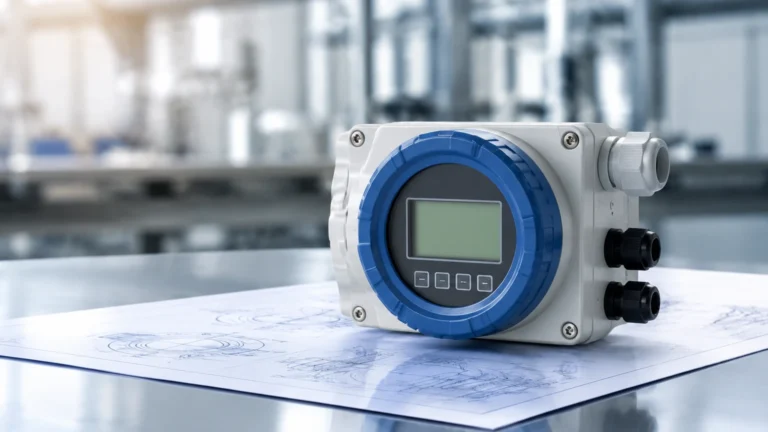
When a blockage occurs, the mechanical energy of the motor is often converted into heat or structural stress. In some cases, the crusher may experience a "tramp iron" event where non-crushable material enters the chamber, but more frequently, the issue is simply an overfill condition. Monitoring the level of the material in the feed hopper and the surge bin below the crusher is the primary method for preventing these overflows. Utilizing high-quality sensors from a professional manufacturer ensures that the control system receives accurate data even in the harshest environments. For detailed specifications on industrial-grade sensors, you may refer to the Main Page of Welk’s technical catalog.
Primary Causes of Blockages in Crushers
Understanding the root causes of material flow issues is essential for designing an effective monitoring system. Several factors contribute to the formation of blockages:
1. Oversize Feed Material: If the rocks or ore entering the crusher are larger than the physical opening (the "gape"), they can bridge across the opening, preventing any further material from entering.
2. Moisture and Fines Content: High moisture levels in the feed material can cause fine particles to stick together, forming a "cake" that clings to the walls of chutes and the crushing chamber. This is particularly common in clay-rich ores.
3. Choke Feeding Issues: While many crushers are designed for choke feeding (keeping the chamber full to maximize throughput), exceeding the maximum level can lead to a stall if the motor cannot handle the torque required to restart under load.
4. Downstream Bottlenecks: If a conveyor belt stops or a secondary screen becomes blinded, material can back up into the crusher discharge, leading to a rapid and catastrophic blockage of the crushing chamber itself.
Measurement Principles for Level Monitoring
To prevent blockages in crushers, engineers must monitor the level of material at various stages. Different technologies offer varying levels of success depending on the dust, vibration, and material properties involved.
Radar Level Measurement (FMCW)
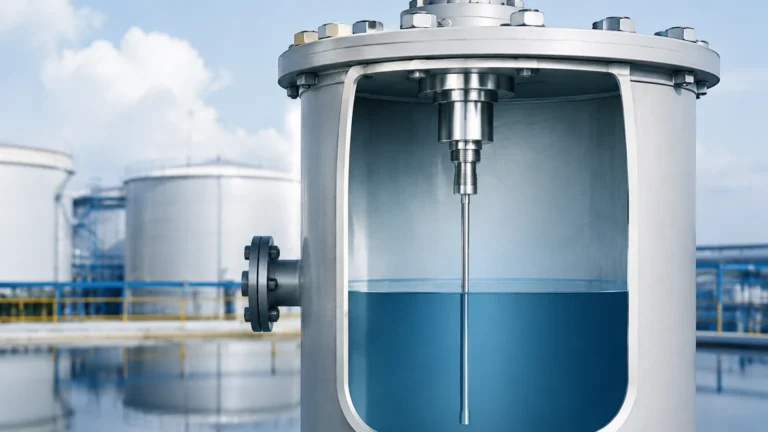
Frequency Modulated Continuous Wave (FMCW) radar is the gold standard for crusher applications. The sensor emits a continuous signal with a changing frequency. The reflection from the material surface is received, and the frequency difference between the emitted and received signal is proportional to the distance.
Radar is highly effective because electromagnetic waves at high frequencies (such as 80GHz) can penetrate thick dust and are unaffected by air temperature fluctuations or acoustic noise from the crushing process. This makes radar the preferred choice for monitoring the level inside a primary crusher’s feed pocket.
Ultrasonic Level Measurement
Ultrasonic sensors operate by emitting a high-frequency sound pulse and measuring the time it takes for the echo to return from the material surface. While cost-effective, ultrasonic sensors have limitations in crusher environments. The intense noise generated by the crushing action can interfere with the acoustic signal, and heavy dust can attenuate the sound waves. However, for secondary applications or discharge conveyors where dust is managed, ultrasonic sensors provide a reliable non-contact solution.
Point Level Detection (Switches)
In addition to continuous monitoring, point level switches act as a fail-safe. Technologies such as vibrating rod switches or RF admittance switches are installed at the "high-high" level mark. If the material reaches this point, the switch provides an immediate digital signal to the PLC to stop the upstream feeders, effectively preventing the crusher from being buried.
Technology Selection for Feed and Discharge Monitoring
Selecting the right instrument requires balancing performance requirements against environmental constraints. The following table provides a comparison of common technologies used to manage blockages in crushers.
| Technology | Typical Application | Dust Tolerance | Vibration Resistance | Recommended Use |
| :— | :— | :— | :— | :— |
| 80GHz Radar | Primary Feed Hopper | Excellent | High | Continuous monitoring in heavy dust. |
| Ultrasonic | Secondary Surge Bins | Moderate | Moderate | Cost-effective level tracking in lower noise. |
| RF Admittance | Discharge Chute | High | High | High-level alarm to prevent back-filling. |
| Vibrating Rod | Buffer Silos | Moderate | Moderate | Point level detection for dry aggregates. |
| Hydrostatic | Water Treatment/Slurry | N/A | High | Monitoring levels in wet-crushing sumps. |

Installation and Engineering Best Practices
Even the most advanced sensor will fail if it is not installed correctly. When mounting level meters to prevent blockages in crushers, consider the following engineering guidelines:
* Mounting Location: Sensors should be mounted away from the direct path of the falling feed material. Impact from a 500kg rock will destroy any instrument. Use a protective baffle or mount the sensor in a recessed area if necessary.
* Beam Angle: Radar sensors with narrow beam angles (e.g., 3° to 8°) are ideal for crushers. A narrow beam prevents false reflections from the walls of the hopper or the internal mechanical components of the crusher.
* Vibration Isolation: Crushers generate significant structural vibration. Instruments should be mounted on independent supports or equipped with heavy-duty vibration dampeners to prevent internal electronic failure.
* Aiming the Sensor: In many hoppers, the material forms a cone shape. The sensor should be aimed at the "effective" center of the material pile to ensure the reading reflects the actual volume and not a localized high or low spot.
Limitations and Mitigation Strategies
While level measurement is the most effective way to prevent blockages in crushers, there are physical limitations to consider.
Signal Attenuation: In extremely dusty environments, even radar can experience signal degradation. Selecting a sensor with a high dynamic range and utilizing specialized lens antennas can mitigate this.
Mechanical Wear: The abrasive nature of the material means that any contact-based sensor (like a tilt switch) will have a short lifespan. Non-contact methods like radar or ultrasonic are always preferred for primary crushing stages.
Material Build-up: On the face of an ultrasonic sensor, dust build-up can create a "dead zone" where the sensor can no longer see. Many modern sensors include self-cleaning faces or air-purge connections to blow away accumulated dust. For radar, a PTFE or PEEK flange cover can prevent material from sticking to the antenna.
Frequently Asked Questions (FAQ)
Q: How do I prevent the sensor from being damaged by falling rocks?
A: The sensor should be installed with a "look-down" angle that avoids the trajectory of the feed material. Additionally, heavy-duty mounting brackets and protective shrouds are recommended. Many operators use a stand-off pipe to keep the sensor away from the primary impact zone.
Q: Can I use a level sensor to detect if the crusher is actually crushing or just running empty?
A: Yes. By monitoring the level in the feed pocket, the control system can determine if the crusher is "choke fed." If the level drops while the motor is running, it indicates an empty run, allowing the system to throttle down or alert the operator.
Q: What is the maximum range for these sensors?
A: Modern radar level meters can measure distances up to 30 meters (approx. 100 feet) or more, which is more than sufficient for even the largest gyratory crusher installations. Ultrasonic sensors typically have a shorter effective range, often up to 15 meters (approx. 50 feet) in industrial settings.
Q: How does moisture affect the measurement?
A: For radar, moisture in the material actually improves the reflection (dielectric constant), making the signal stronger. However, moisture can cause material to stick to the sensor face. For ultrasonic sensors, high humidity can change the speed of sound slightly, but most sensors include temperature compensation to account for this.
Conclusion
Managing blockages in crushers is a fundamental requirement for any high-volume material processing facility. By understanding the measurement principles of radar and ultrasonic technologies, engineers can implement a robust monitoring strategy that protects equipment and optimizes throughput. Reliable data from the feed and discharge points allows for automated feed control, ensuring the crusher operates within its designed parameters. For more information on selecting the appropriate level measurement hardware for your specific application, visit the Main Page to explore the full range of industrial solutions provided by Welk.