Carbon Capture Services
Carbon Capture Services
In the current industrial landscape, carbon capture, utilization, and storage (CCUS) has transitioned from a niche environmental initiative to a core operational requirement for heavy industries. Carbon capture services encompass the engineering, deployment, and management of technologies designed to strip carbon dioxide (CO2) from industrial exhaust or directly from the atmosphere. For engineers and facility managers, the success of these services relies heavily on the precision of process control, where level measurement plays a critical role in managing solvents, separators, and storage vessels.
Effective carbon capture requires a sophisticated understanding of fluid dynamics and chemical interactions. Whether utilizing amine scrubbing, membrane separation, or cryogenic distillation, the ability to monitor liquid levels accurately ensures system safety, prevents solvent loss, and optimizes energy consumption. This guide explores the technical foundations of level measurement within the context of carbon capture services and provides a framework for selecting the appropriate instrumentation.
Measurement Principles in Carbon Capture Systems
Before selecting instrumentation for carbon capture applications, it is essential to understand the physical principles governing level detection. In these environments, fluids range from corrosive chemical solvents to high-pressure liquefied gases.
Radar Level Measurement (Time of Flight)
Radar level meters operate on the Time of Flight (ToF) principle. The device emits high-frequency electromagnetic pulses (typically in the GHz range) that travel at the speed of light. When these pulses hit the surface of the medium, they are reflected back to the sensor. The distance is calculated based on the interval between transmission and reception.
In carbon capture, non-contact radar is often preferred because it is unaffected by the density or pressure changes common in CO2 compression stages. However, the dielectric constant (εr) of the medium is a critical factor; liquid CO2 has a low dielectric constant, which requires high-sensitivity radar units to ensure a reliable return signal.
Ultrasonic Level Sensing
Ultrasonic sensors utilize sound waves rather than electromagnetic waves. The sensor emits an acoustic pulse that reflects off the liquid surface. While cost-effective for atmospheric tanks, ultrasonic measurement is sensitive to the composition of the gas space. In carbon capture services, where the vapor space may be saturated with CO2 or chemical vapors, the speed of sound can vary significantly, leading to measurement errors unless temperature and gas-composition compensation are applied.
Hydrostatic Pressure Measurement
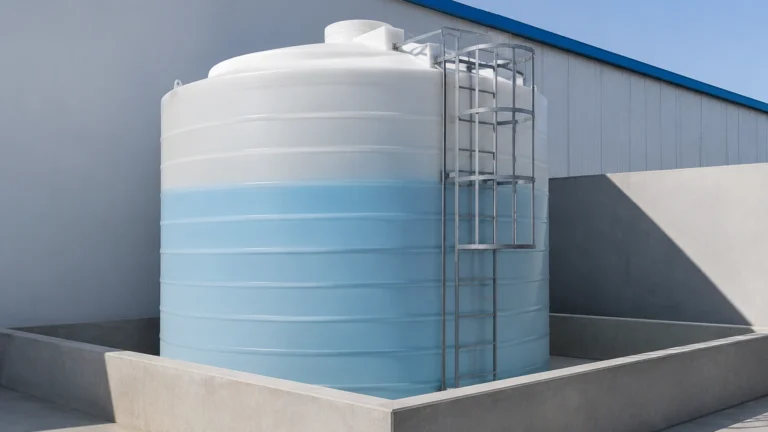
This principle relies on the relationship between the height of a liquid column and the pressure it exerts at the base of a vessel. By measuring the head pressure and accounting for the specific gravity of the fluid, the level can be inferred. This is a robust method for large storage tanks, though it requires consistent fluid density to maintain accuracy. In carbon capture, hydrostatic transmitters are frequently used in amine storage and water treatment stages.
Magnetic Level Gauges
Magnetic level gauges (MLGs) provide both a visual indication and a localized electronic signal. A float containing a magnet assembly moves with the liquid level inside a bypass chamber. This magnet actuates flags or a transmitter outside the chamber. MLGs are highly valued in high-pressure CO2 applications where a clear, mechanical backup to electronic sensors is required for safety protocols.
The Role of Level Instrumentation in Carbon Capture Services
Carbon capture services involve several distinct stages, each presenting unique challenges for level measurement. Understanding these stages allows for better integration of Welk instrumentation into the broader process flow.
1. Absorption and Stripping Columns
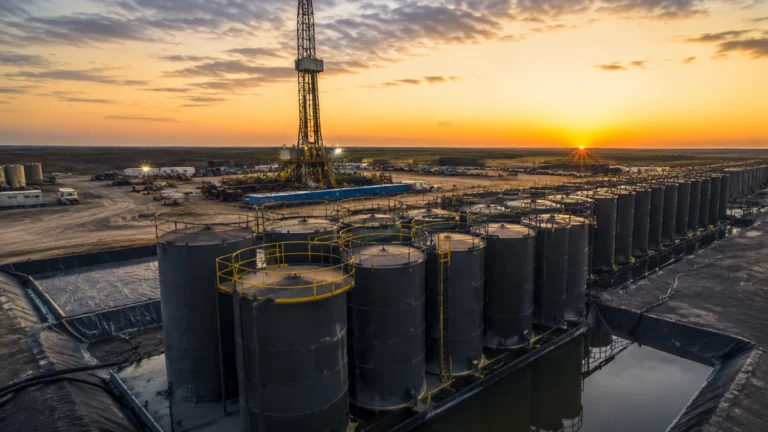
In post-combustion capture, flue gas passes through an absorber column where a solvent (typically an amine solution) reacts with CO2. The "rich" solvent is then sent to a stripper column to release the CO2. Level control in the bottom of these columns is vital to prevent "gas carry-under," which can damage pumps, or "liquid carry-over," which can contaminate downstream equipment. The presence of foam, a common issue in amine systems, necessitates the use of guided wave radar or specialized signal processing to distinguish between the foam layer and the true liquid level.
2. Phase Separation and Flash Tanks
As the CO2 is stripped and processed, it often undergoes phase changes. Flash tanks are used to reduce pressure and separate liquids from gases. These vessels operate under fluctuating pressures and temperatures. Accurate level monitoring ensures that the liquid phase is drained at the correct rate, maintaining the efficiency of the separation process.
3. CO2 Liquefaction and Compression
To transport CO2 efficiently, it must be compressed and often liquefied. This involves high-pressure vessels where the CO2 exists in a dense phase or supercritical state. Level measurement here is technically demanding due to the high pressures (often exceeding 70 bar) and the low temperatures required for liquefaction. For detailed technical specifications on sensors capable of handling these extremes, engineers should review the product options and application support on the Main Page.
Technical Selection Criteria for CCUS Applications
Selecting the right instrument requires a balance of performance, material compatibility, and cost. The following table provides a general comparison of technologies used in carbon capture services.
| Technology | Typical Accuracy | Max Pressure | Suitability for Foam | Material Compatibility |
| :— | :— | :— | :— | :— |
| Non-Contact Radar | ±2 mm | Up to 160 bar | Moderate (requires high frequency) | Excellent (PTFE/316SS) |
| Guided Wave Radar | ±3 mm | Up to 400 bar | Excellent | Good (Contacting probe) |
| Ultrasonic | ±0.25% of range | Atmospheric | Poor | Good (Plastic/PVDF) |
| Hydrostatic | ±0.1% of span | High (Process dependent) | Good | Excellent (Ceramic/SS) |
| Magnetic Gauge | ±5 mm | Up to 250 bar | Excellent | Excellent (Bypass design) |
Evaluation Factors
1. Dielectric Constant: Ensure the radar sensor can detect low-dielectric fluids like pure liquid CO2 (εr ≈ 1.6).
2. Corrosion Resistance: Amine solutions and carbonic acid (formed when CO2 mixes with water) are corrosive. Wetted parts must be made of 316L stainless steel, Hastelloy, or specialized plastics.
3. Hazardous Area Certification: Most carbon capture facilities are classified as hazardous zones (ATEX/IECEx), requiring intrinsically safe or explosion-proof instrumentation.
Installation Considerations and Best Practices
Proper installation is as critical as instrument selection. In the context of carbon capture services, several factors can interfere with measurement reliability.
* Nozzle Geometry: For radar and ultrasonic sensors, the height and diameter of the mounting nozzle can cause signal interference. Nozzles should be kept as short as possible, and the internal surface should be smooth to prevent false reflections.
* Stirrers and Internal Obstructions: Many tanks in CCUS processes contain heating coils or agitators. Guided wave radar (GWR) is often preferred in these scenarios because the signal is confined to the probe, ignoring internal tank structures.
* Stilling Wells: In high-turbulence environments, such as the bottom of an absorber column, installing the level sensor inside a stilling well or bypass chamber can stabilize the liquid surface and improve measurement accuracy.
* Environmental Sealing: CO2 is a small molecule that can permeate certain seal materials. For high-pressure CO2 service, dual-seal designs or glass-to-metal seals are recommended to prevent leaks into the electronic housing.
Limitations and Challenges in Carbon Capture Measurement
While modern instrumentation is highly capable, certain limitations must be acknowledged within carbon capture services:
1. Supercritical Fluids: Near the critical point of CO2 (31.1°C, 73.8 bar), the distinction between liquid and gas phases disappears. Traditional level measurement becomes impossible because there is no defined interface. Systems must be designed to operate safely away from these transition zones.
2. Amine Foaming: Chemical impurities or high gas velocities can cause significant foaming in absorbers. If the level meter cannot see through the foam, it may trigger false high-level alarms, leading to unnecessary process shutdowns.
3. Build-up and Scaling: In carbon capture systems involving mineral carbonation or water treatment, scaling on probes can occur. Non-contact radar is generally more resistant to these issues than contacting methods like GWR or floats.
Frequently Asked Questions (FAQs)
Q: Can ultrasonic sensors be used for liquid CO2 storage?
A: Generally, no. Liquid CO2 is stored under pressure, and the vapor space is filled with concentrated CO2 gas. The speed of sound in CO2 is different from air and changes with pressure, making ultrasonic measurement unreliable without complex compensation.
Q: What is the best way to measure level in an amine regenerator?
A: Guided wave radar is typically the best choice. It handles the high temperatures and potential foaming better than other technologies and provides a stable signal despite the boiling surface.
Q: How does temperature affect hydrostatic level transmitters in CCUS?
A: Temperature changes affect the density of the liquid. Since hydrostatic sensors measure weight (pressure), a decrease in density will result in a lower pressure reading even if the physical level remains the same. Integrated temperature compensation or using a differential pressure transmitter with remote seals can mitigate this.
Q: Are there specific maintenance requirements for level meters in carbon capture?
A: Regular calibration checks are recommended, especially for systems handling corrosive amines. For non-contact radar, checking the antenna for condensation or crystallization is a standard maintenance task.
Conclusion
As carbon capture services continue to scale globally, the demand for reliable, high-precision level measurement will only increase. By understanding the underlying physics of measurement and the specific rigors of the CCUS process, engineers can specify instrumentation that enhances both safety and efficiency. Whether managing the complexities of amine scrubbing or the high pressures of CO2 sequestration, selecting the right level meter is a fundamental step in the successful deployment of decarbonization technology. For professionals seeking robust measurement hardware tailored to these industrial demands, the solutions provided by Welk offer the accuracy and durability required for modern carbon management.