Caustic Soda Storage Tank
Caustic Soda Storage Tank
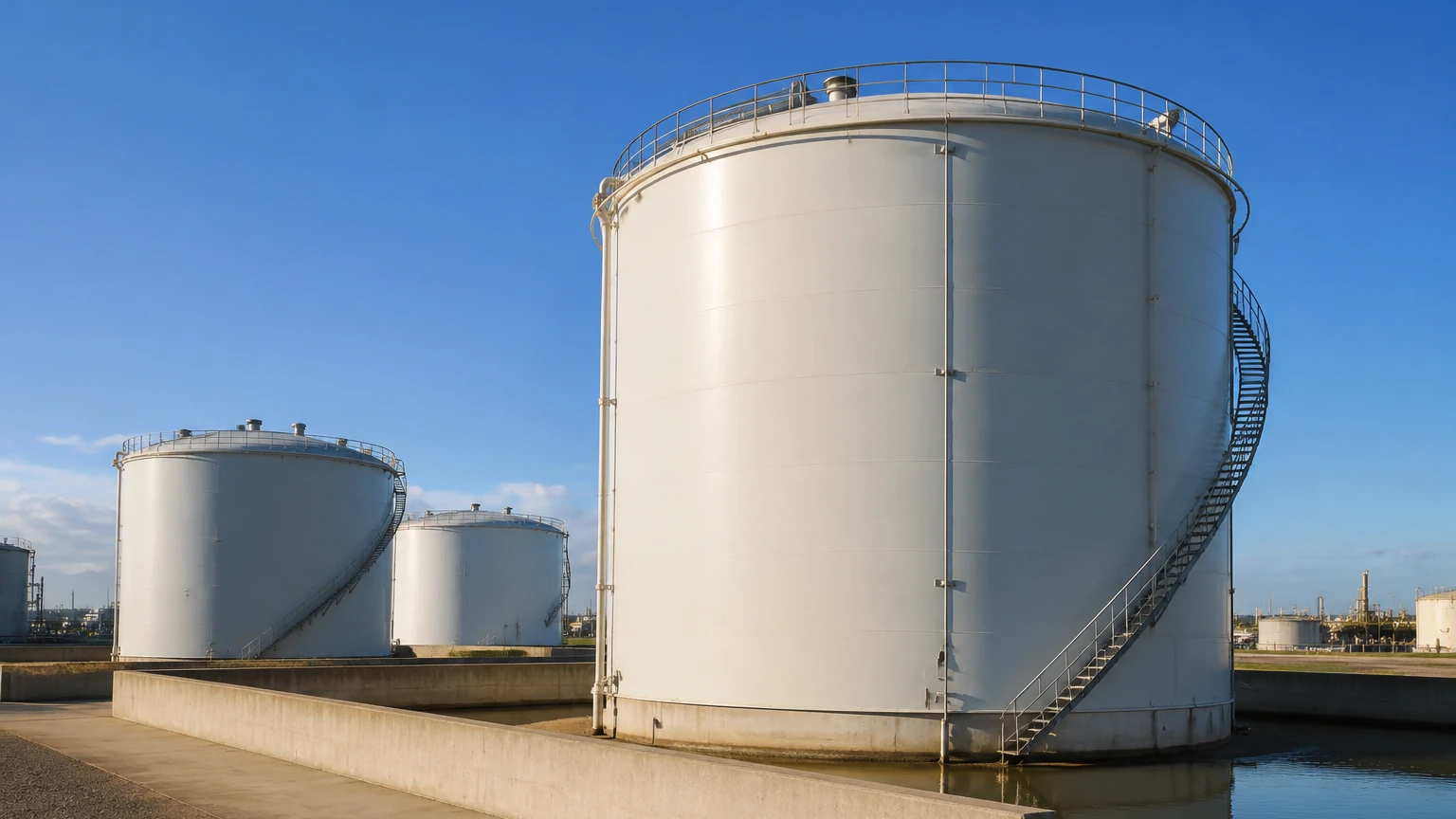
Caustic soda, or sodium hydroxide (NaOH), is one of the most widely used industrial chemicals, essential for processes ranging from pH adjustment in water treatment to chemical pulping and alumina production. However, managing a caustic soda storage tank presents significant engineering challenges due to the chemical's highly corrosive nature, its tendency to crystallize at ambient temperatures, and the potential for hazardous fumes.
Reliable level measurement is the cornerstone of safe and efficient caustic soda management. Accurate data prevents overfills that could lead to environmental disasters and ensures process continuity by preventing dry-run conditions in downstream pumps. This guide examines the technical requirements for instrumentation in caustic soda applications, comparing measurement principles and providing practical selection criteria for plant engineers.
Challenges in Caustic Soda Level Measurement
Before selecting a level instrument for a caustic soda storage tank, it is vital to understand the physical and chemical behaviors of the medium that can interfere with sensor performance.
1. Chemical Corrosivity
Caustic soda is highly alkaline. While it does not attack carbon steel at low temperatures and concentrations, it causes "caustic embrittlement" or stress corrosion cracking at higher temperatures. For instrumentation, wetted parts must be constructed from materials that can withstand high pH levels. Standard 316L stainless steel is often insufficient for long-term exposure to concentrated (50%) NaOH; instead, plastics like PTFE (Polytetrafluoroethylene), PVDF (Polyvinylidene fluoride), or high-nickel alloys are preferred.
2. Crystallization and Scaling
One of the most difficult properties of caustic soda is its freezing point. A 50% NaOH solution begins to crystallize at approximately 12°C to 15°C. In many climates, storage tanks must be heat-traced and insulated. For level sensors, this means that any moving parts or small orifices (such as those in traditional pressure taps) are prone to clogging. Scaling on the surface of probes or transducers can also attenuate signals or cause mechanical failure.
3. Vapor and Condensation
In heated tanks, caustic soda can generate vapors that condense on cooler surfaces, including the faces of level sensors. This condensation can create a "blind" spot for ultrasonic sensors or cause signal scattering for radar units if the antenna design does not facilitate liquid shedding.
Measurement Principles and Technology Options
Selecting the right technology requires a balance between accuracy, maintenance requirements, and total cost of ownership. Below are the primary measurement principles used in a caustic soda storage tank.
Radar Level Measurement (Non-Contact)
Non-contact radar level meters are widely considered the gold standard for caustic soda applications. These instruments emit high-frequency microwave pulses (typically in the 26GHz or 80GHz range) that reflect off the liquid surface. The time-of-flight is measured to determine the distance.
* Advantages: Since the sensor does not touch the liquid, corrosion is minimized. 80GHz radar units offer a narrow beam angle, which is ideal for avoiding internal tank structures like heating coils or agitators.
* Material Considerations: The antenna should be encapsulated in PTFE or a similar fluoropolymer to protect it from corrosive vapors.
Ultrasonic Level Measurement
Ultrasonic sensors function similarly to radar but use sound waves instead of microwaves. The sensor emits an ultrasonic pulse that bounces off the liquid surface and returns to the transducer.
* Advantages: Cost-effective for atmospheric tanks and relatively easy to install.
* Limitations: Ultrasonic performance is heavily affected by temperature gradients and heavy vapors. In a heated caustic soda storage tank, the speed of sound changes with air temperature, which can lead to inaccuracies unless the sensor has robust temperature compensation.
Hydrostatic Level Transmitters
This principle measures the pressure exerted by the liquid column at the bottom of the tank (P = ρgh, where P is pressure, ρ is density, g is gravity, and h is height).
* Implementation: For caustic soda, a "flush diaphragm" or a remote seal transmitter is necessary. This prevents the chemical from entering the sensor body. The diaphragm must be made of a compatible material like Tantalum, Ceramic, or Monel.
* Considerations: Accuracy depends on a constant liquid density. If the concentration of the caustic soda varies significantly, the level reading will drift.
Magnetic Level Gauges
Magnetic level gauges consist of a bypass chamber mounted to the side of the tank. A float containing a magnet moves with the liquid level, flipping magnetic flags on an external scale to provide a visual indication.
* Advantages: They provide a highly visible local display that does not require power. They can be equipped with reed switches or transmitters for remote monitoring.
* Maintenance: In caustic applications, the bypass chamber must be oversized to prevent the float from sticking due to crystallization.
Selection Criteria for Caustic Soda Storage
When evaluating instrumentation for a caustic soda storage tank, use the following table to compare the suitability of different technologies based on typical process conditions.
| Technology | Corrosive Resistance | Accuracy | Maintenance Need | Ideal Application |
| :— | :— | :— | :— | :— |
| 80GHz Radar | Excellent (PTFE Lens) | ±1 mm | Very Low | High-accuracy process tanks with internal obstructions. |
| Ultrasonic | Good (PVDF Body) | ±0.25% of range | Low | Simple atmospheric storage tanks at stable temperatures. |
| Hydrostatic | Moderate to High | ±0.1% to 0.5% | Moderate | Tanks where top-mounting is not possible; requires compatible seals. |
| Magnetic Gauge | High (Alloy/Plastic) | ±5 mm | Moderate | Visual backup and local level monitoring requirements. |
For more detailed technical specifications and to explore a full range of industrial measurement solutions, you may refer to the Main Page of our product catalog.
Installation and Engineering Best Practices
Proper installation is as critical as sensor selection. Even the most advanced radar meter will fail if installed incorrectly in a caustic soda environment.
1. Nozzle Positioning
For non-contact sensors (Radar and Ultrasonic), the nozzle should be located away from the tank wall to avoid signal interference. However, it must also be positioned away from the inlet pipe to prevent the "noise" of turbulent filling from affecting the reading. A distance of at least 200 mm from the tank wall is generally recommended for small tanks, while larger tanks require more clearance.
2. Handling Crystallization
If the caustic soda storage tank is heated, ensure the sensor nozzle is also insulated. A cold nozzle can become a site for caustic soda to crystallize, eventually blocking the sensor's "view." For hydrostatic sensors, installing a flushing port allows operators to clear the diaphragm area with water or steam without removing the instrument.
3. Material Compatibility (Wetted Parts)
* PTFE/PFA: Best for gaskets, o-rings, and sensor faces.
* EPDM: Often used for seals in caustic service, though compatibility should be verified against the specific concentration.
* Ceramic: Excellent for hydrostatic diaphragms as it resists both corrosion and mechanical abrasion.
4. Redundancy and Safety
In many industrial jurisdictions, a caustic soda storage tank requires a secondary high-level alarm that is independent of the primary level transmitter. This is often achieved using a tuning fork level switch or a float switch made of 316SS or plastic, depending on the temperature and concentration. These switches provide a "dry contact" to shut off feed pumps or close valves in an emergency.
Maintenance and Calibration
While modern electronic level meters are designed for long-term stability, the harsh environment of a caustic soda storage tank necessitates a routine maintenance schedule:
* Visual Inspection: Check for signs of caustic "creep" (white salt deposits) around flanges and electrical conduits. Caustic soda can wick through small gaps and damage wiring.
* Cleaning: Periodically check non-contact sensor faces for scaling. If scaling occurs, a PTFE-faced sensor can usually be wiped clean with a damp cloth.
* Zero-Point Verification: For hydrostatic transmitters, check the zero-point annually. Changes in the specific gravity of the caustic soda (due to concentration changes) may require a recalibration of the scaling in the control system (PLC/DCS).
Frequently Asked Questions (FAQs)
Q: Can I use a standard stainless steel pressure sensor for caustic soda?
A: It is not recommended for concentrated NaOH. While 316SS has some resistance, it is susceptible to pitting and stress corrosion at concentrations above 20% and temperatures above 50°C. A ceramic or tantalum diaphragm is a much safer choice.
Q: Why is my ultrasonic sensor giving erratic readings in the winter?
A: If the tank is heated, the temperature difference between the liquid and the air inside the tank creates a vapor mist and temperature gradients. These change the speed of sound and can scatter the ultrasonic signal. Switching to a radar-based system, which is unaffected by air temperature, usually resolves this.
Q: Is a stilling well necessary for radar in a caustic soda tank?
A: A stilling well is only necessary if there is extreme foam or if the tank has heavy internal agitation that creates a turbulent surface. In most static storage tanks, an 80GHz radar with a narrow beam can operate perfectly without a stilling well.
Conclusion
Managing a caustic soda storage tank requires a disciplined approach to material selection and instrumentation. By understanding the measurement principles of radar, ultrasonic, and hydrostatic technologies, engineers can select a solution that minimizes the risks of corrosion and crystallization. For those looking to implement these solutions, reviewing the technical options available on the Main Page is an excellent starting point for ensuring process safety and reliability. Always confirm the specific concentration and temperature of your NaOH solution with your instrument provider to ensure the longest possible service life for your equipment.