Temp Transducer
Temp Transducer
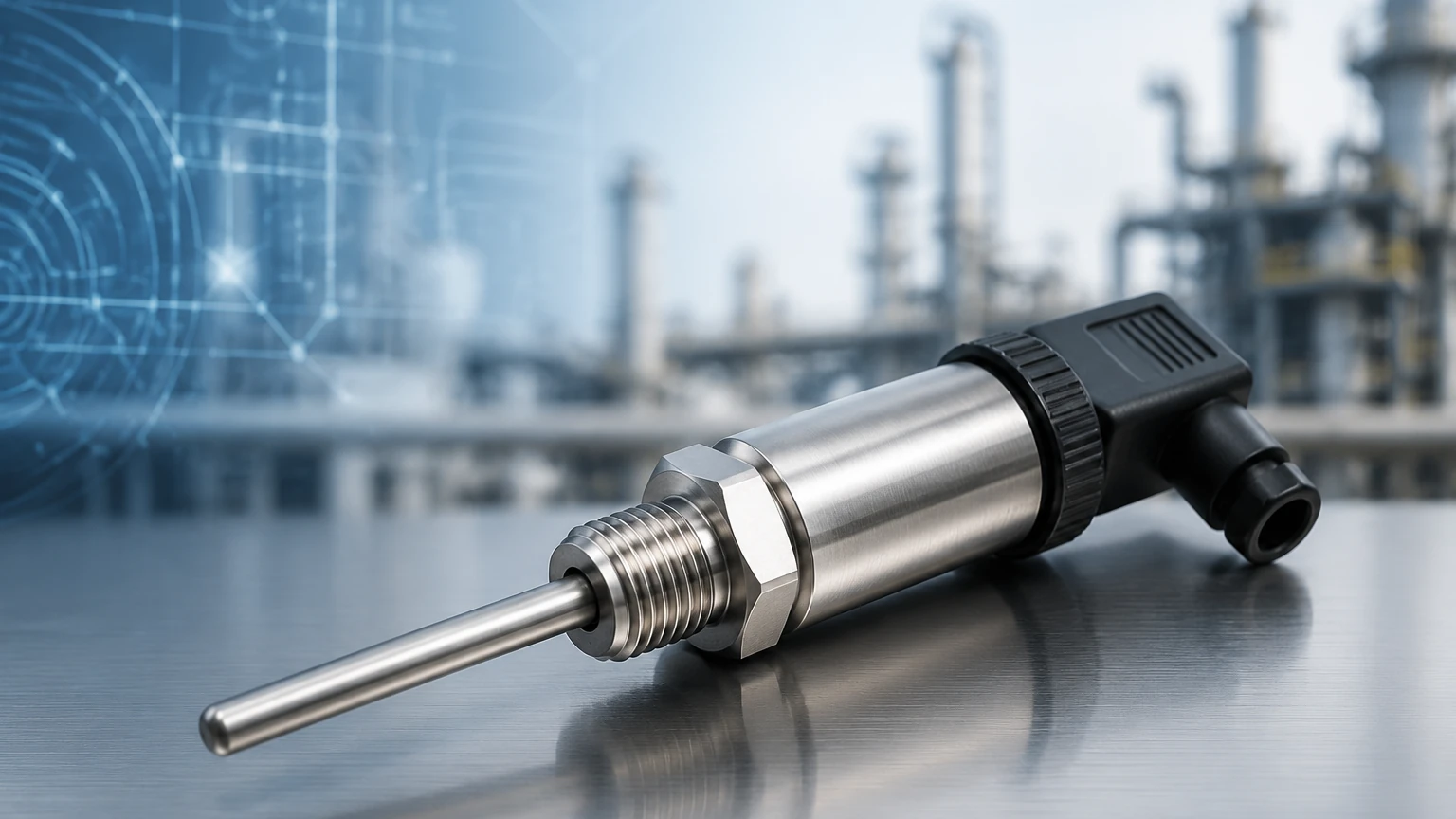
In the landscape of industrial automation and process control, the temp transducer (temperature transducer) serves as a foundational component for ensuring operational safety, product quality, and system efficiency. While the terms "sensor" and "transducer" are often used interchangeably in casual conversation, in a professional engineering context, a temp transducer specifically refers to a device that converts a thermal physical quantity into a standardized electrical signal, such as 4-20mA, 0-10V, or digital protocols like HART and Modbus.
For industries ranging from chemical processing to water treatment, accurate temperature data is not merely a standalone requirement; it is frequently a critical variable in the calculation of other process parameters, most notably level measurement. This article explores the technical principles, selection criteria, and practical applications of temperature transducers within industrial environments.
Understanding the Fundamentals of Temperature Transducers
A temp transducer consists of two primary elements: the sensing element that reacts to thermal changes and the transduction electronics that condition and convert that reaction into a usable output. The primary goal is to provide a linear and repeatable signal that a Programmable Logic Controller (PLC) or Distributed Control System (DCS) can interpret accurately over long distances.
Unlike simple sensors that might output a raw millivolt or ohmic change, a transducer is designed to overcome signal degradation. In large-scale industrial plants, the distance between the measurement point and the control room can be hundreds of meters. A raw signal would suffer from electromagnetic interference (EMI) and voltage drops. By utilizing a temp transducer, the signal is amplified and standardized, ensuring that the integrity of the data remains intact from the field to the interface.
Common Measurement Principles in Industrial Transducers
To select the correct temp transducer, one must understand the underlying physics of the sensing elements. The three most common technologies used in industrial B2B applications are RTDs, Thermocouples, and Thermistors.
Resistance Temperature Detectors (RTD)
RTDs operate on the principle that the electrical resistance of a metal increases as its temperature rises. The most common material used is platinum, specifically the Pt100 (100 ohms at 0°C) and Pt1000 (1000 ohms at 0°C) standards.
- Pros: High accuracy, excellent stability over time, and high linearity.
- Cons: Slower response time compared to thermocouples and higher initial cost.
Thermocouples
Thermocouples consist of two dissimilar metals joined at one end. When the junction experiences a temperature gradient, it produces a small voltage (the Seebeck effect). Different metal combinations create different "Types" (e.g., Type K, Type J, Type T).
- Pros: Extremely wide temperature range (up to 1700°C or more), rugged construction, and very fast response times.
- Cons: Lower accuracy than RTDs, prone to drift over time, and requires cold-junction compensation.
Thermistors
Thermistors are ceramic-like semiconductors that exhibit a large change in resistance for a small change in temperature. They are typically NTC (Negative Temperature Coefficient) or PTC (Positive Temperature Coefficient).
- Pros: Extremely high sensitivity and low cost.
- Cons: Highly non-linear, limited temperature range, and fragile compared to industrial RTDs.
The Critical Link Between Temperature and Level Measurement
In the context of industrial instrumentation, temperature measurement is rarely an isolated task. For a professional manufacturer like Welk, the temp transducer is an essential partner to level measurement technologies. Temperature fluctuations significantly impact the accuracy of various level sensors, making compensation a necessity.
Ultrasonic Level Meters
Ultrasonic sensors measure level by emitting sound waves and timing their return. However, the speed of sound in air is highly dependent on temperature. At 0°C, sound travels at approximately 331.5 m/s, whereas at 20°C, it travels at 343.4 m/s. Without an integrated or external temp transducer to provide real-time data for compensation, an ultrasonic level meter could produce errors of several percentage points for every few degrees of temperature change.
Hydrostatic Level Transmitters
Hydrostatic pressure measurement relies on the density of the liquid. Since the density of most liquids changes with temperature, a temp transducer is required to adjust the calculation of the liquid column height. This is particularly vital in fuel storage and chemical dosing where volume accuracy is tied to financial transactions.
Radar Level Meters
While radar waves (electromagnetic) are largely unaffected by air temperature, the electronics within the radar housing and the physical properties of the tank (thermal expansion) still require monitoring. In high-temperature reactors, a temp transducer ensures that the radar unit operates within its safe thermal limits.
To explore how these technologies integrate into a broader process control strategy, engineers should Review product options and application support to find the right balance of accuracy and durability.
Practical Selection Table for Temperature Transducers
Choosing the right technology requires balancing environmental constraints against performance requirements. The following table provides a general comparison for industrial selection.
| Feature | RTD (Pt100/Pt1000) | Thermocouple (Type K/J) | Thermistor (NTC) |
| :— | :— | :— | :— |
| Temperature Range | -200°C to +850°C | -200°C to +1700°C | -50°C to +150°C |
| Accuracy | High (±0.1°C to ±0.5°C) | Medium (±1.0°C to ±2.2°C) | Medium/High (at specific points) |
| Stability | Excellent (Long-term) | Low (Prone to drift) | Medium |
| Response Time | Slow (5 to 30 seconds) | Fast (0.1 to 5 seconds) | Medium (1 to 10 seconds) |
| Linearity | Excellent | Fair | Poor (Exponential) |
| Cost | Moderate | Low | Very Low |
Installation Considerations and Best Practices
The performance of a temp transducer is only as good as its installation. Even the most accurate Pt100 sensor will provide false data if it is not correctly coupled to the process.
1. Thermowell Usage: In pressurized or corrosive environments, the transducer probe should be housed in a thermowell. This allows for the removal and calibration of the instrument without breaking the process seal or draining the tank. However, engineers must account for the added thermal lag introduced by the thermowell wall.
2. Insertion Depth: To avoid conduction errors (where heat escapes through the sensor housing), the probe should be inserted into the process fluid at a depth equal to at least 10 times the diameter of the protection tube.
3. Wiring and Shielding: For RTDs, 3-wire or 4-wire configurations are preferred to compensate for lead-wire resistance. For all transducers, shielded twisted-pair cabling should be used to prevent EMI from heavy machinery or variable frequency drives (VFDs).
4. Placement in Tanks: When used alongside level meters, the temp transducer should be placed in a location that represents the average temperature of the bulk material, avoiding "dead zones" near tank walls or heat sources like steam coils unless those are the specific areas of interest.
Limitations and Common Risks
While modern temp transducers are highly reliable, they are not immune to failure. Engineers must be aware of the following risks:
- Calibration Drift: Over time, the physical properties of the sensing element can change due to thermal cycling or contamination. Regular calibration intervals are necessary to maintain B2B quality standards.
- Self-Heating: In RTDs and thermistors, the current used to measure resistance generates a small amount of heat. If the excitation current is too high, the transducer will report a temperature higher than the actual process temperature.
- Vibration Fatigue: In high-flow applications, constant vibration can lead to mechanical failure of the sensor wires or the protective sheath. In such cases, reinforced probes or vibration-dampened mounts are required.
- Chemical Incompatibility: The sheath material (typically 316 Stainless Steel or Hastelloy) must be compatible with the process media. Pitting or stress corrosion cracking can lead to probe failure and process contamination.
Frequently Asked Questions (FAQs)
Q: Can I use a temp transducer for both liquid and gas measurement?
A: Yes, but the design of the probe may differ. Gas measurements typically require a faster response time, often utilizing perforated tips or smaller diameter probes to increase the surface-area-to-mass ratio.
Q: What is the difference between a 2-wire and a 4-wire RTD transducer?
A: A 2-wire setup does not compensate for the resistance of the wires leading to the sensor, which can cause significant errors. A 4-wire setup completely cancels out lead-wire resistance, providing the highest possible accuracy.
Q: How often should a temp transducer be calibrated?
A: In most industrial settings, an annual calibration is standard. However, in critical pharmaceutical or food-grade applications, semi-annual or even quarterly verification may be required to meet regulatory compliance.
Q: Does a temp transducer require a power supply?
A: Yes. Most industrial transducers are "loop-powered," meaning they draw the small amount of power they need (usually under 4mA) from the same two wires used to transmit the 4-20mA signal.
Conclusion
The temp transducer remains a cornerstone of industrial process integrity. Whether it is providing the necessary compensation data for an ultrasonic level meter or monitoring the thermal profile of a chemical reactor, its role in converting raw physical data into actionable electronic signals cannot be overstated. By understanding the specific strengths of RTDs and thermocouples, and adhering to strict installation guidelines, process engineers can ensure long-term reliability and precision in their measurement systems. For those seeking to integrate these sensors into a comprehensive level and flow management system, consulting with a specialized manufacturer ensures that the hardware selected is fit for the rigors of the specific industrial environment.