Cm444
Cm444
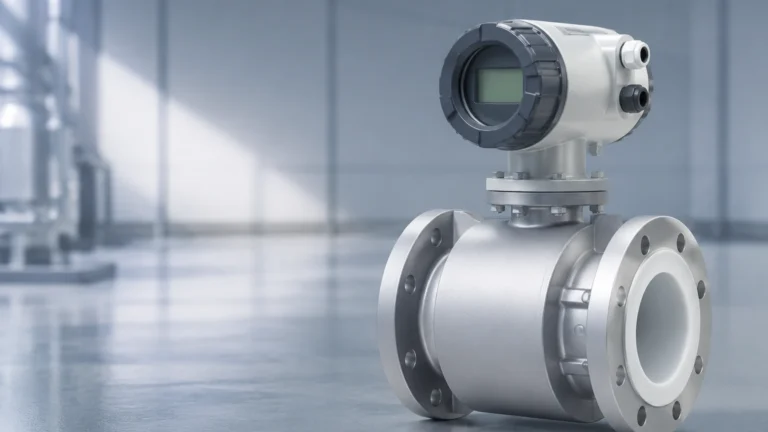
In the landscape of modern industrial automation, the ability to monitor multiple process parameters through a single, centralized interface is a critical requirement for operational efficiency. The CM444 represents a sophisticated multi-channel transmitter platform designed to aggregate data from various sensors, providing a unified point of control and communication. While often associated with liquid analysis, such as pH, conductivity, and dissolved oxygen, the CM444 platform functions as a cornerstone in complex process loops where level measurement—provided by specialized manufacturers like Welk—is equally vital.
This guide explores the technical architecture of multi-channel transmitters, their integration with level measurement technologies, and the practical considerations for engineers selecting these systems for water treatment, chemical processing, and industrial automation.
Understanding Multi-Channel Transmitters in Process Control
At its core, a multi-channel transmitter like the CM444 acts as the "brain" of a sensor network. Unlike traditional single-parameter transmitters that require individual power supplies and communication lines for every sensor, a multi-channel system consolidates these inputs.
The Principle of Digital Integration
Modern transmitters utilize digital communication protocols to interface with sensors. This shift from analog (4-20mA) to digital (such as Memosens or other proprietary bus systems) allows for several advantages:
1. Plug-and-Play Functionality: Sensors can be pre-calibrated in a laboratory environment and connected to the transmitter in the field without requiring re-calibration at the point of installation.
2. Enhanced Diagnostics: Digital sensors transmit not only the primary measurement value but also secondary data such as sensor health, operating hours, and extreme temperature exposures.
3. Signal Integrity: Digital signals are inherently more resistant to electromagnetic interference (EMI) compared to low-voltage analog signals, which is crucial in heavy industrial environments.
In a typical application, the CM444 might manage up to eight different sensor inputs. This modularity allows a facility to monitor a tank's chemical composition (pH/ORP) while simultaneously tracking its volume using a radar or ultrasonic level sensor.
Level Measurement Principles and Integration
To effectively use a multi-parameter controller, one must understand the measurement principles of the sensors it manages. Welk specializes in several level measurement technologies that are frequently integrated into these automated systems.
Radar Level Measurement
Radar level meters operate on the Time-of-Flight (ToF) principle. The sensor emits a high-frequency electromagnetic wave (typically in the 26 GHz or 80 GHz range) toward the material surface. The wave reflects off the surface and returns to the sensor. The distance ($D$) is calculated using the formula:
$$D = \frac{c \times t}{2}$$
Where $c$ is the speed of light and $t$ is the measured transit time. Radar is preferred for its non-contact nature and its ability to perform accurately regardless of pressure, vacuum, or temperature fluctuations. When integrated with a system like the CM444 via a 4-20mA HART or digital input, radar provides the primary volume data necessary for inventory management.
Ultrasonic Level Sensors
Similar to radar, ultrasonic sensors use ToF but rely on sound waves. These waves travel at the speed of sound, which is influenced by air temperature. Consequently, ultrasonic sensors must include integrated temperature compensation. They are highly cost-effective for water and wastewater applications but are limited in environments with heavy foam, dust, or high-pressure vapors that can attenuate or distort the sound wave.
Hydrostatic Level Transmitters
Hydrostatic measurement is a contact-based method that determines level by measuring the pressure exerted by a liquid column. The pressure ($P$) at the bottom of a tank is proportional to the height ($h$) of the liquid and its density ($\rho$):
$$P = \rho \times g \times h$$
Welk’s hydrostatic transmitters are often used in deep wells or vented tanks. These sensors provide a reliable 4-20mA signal that can be easily processed by a multi-channel controller to trigger alarms or control pumps.
Key Features and Capabilities of the CM444 Platform
The CM444 is distinguished by its modular hardware architecture. Users can expand the system by adding input/output modules as process requirements change.
* Multi-Parameter Support: The device can simultaneously process inputs for pH, ORP, conductivity, oxygen, turbidity, and level.
* Advanced Communication: Beyond local display, the transmitter supports integration into higher-level PLC or SCADA systems through PROFIBUS DP, PROFINET, Modbus TCP/IP, and EtherNet/IP.
* Data Logging: Integrated web servers and SD card slots allow for extensive data logging, which is essential for regulatory compliance in water treatment and food production.
* User Interface: A large, backlit graphic display provides clear visualization of all connected channels, including trend graphs and diagnostic alerts.
Selection Criteria for Multi-Channel Controllers
Choosing the right configuration for a multi-channel system requires an analysis of the specific process environment. The following table provides a selection framework for integrating level and analysis sensors.
| Application | Primary Level Technology | Analysis Parameters | Recommended Communication |
| :— | :— | :— | :— |
| Wastewater Treatment | Ultrasonic / Radar | pH, DO, Turbidity | Modbus TCP / EtherNet/IP |
| Chemical Storage | 80GHz Radar | pH, Conductivity | HART / PROFIBUS DP |
| Food & Beverage | Hydrostatic (Hygienic) | Conductivity, pH | PROFINET |
| Oil & Gas | Guided Wave Radar | Interface Level | HART / Modbus |
Evaluation Factors
1. Number of Channels: Determine the current number of sensors and allow for 20-30% future expansion.
2. Environmental Rating: Ensure the enclosure (typically IP66/IP67) matches the installation site’s exposure to moisture and corrosive cleaning agents.
3. Power Supply: Verify if the unit will be powered by 24V DC (common in cabinets) or 100-230V AC (common in field installations).

Installation and Commissioning Best Practices
Proper installation is paramount to ensuring the longevity and accuracy of the CM444 and its connected sensors.
Mounting Considerations
* Location: Install the transmitter at eye level in a location shielded from direct sunlight to prevent display degradation and excessive internal heat buildup. Use a weather protection cover if installed outdoors.
* Vibration: Avoid mounting the unit directly on pumps or high-vibration machinery, as this can fatigue internal electronic connections over time.
Wiring and Shielding
* Separation: Keep signal cables (sensors) separate from power cables to minimize noise.
* Grounding: Ensure the transmitter housing is properly grounded. For digital sensors, use shielded twisted-pair cables to maintain signal integrity over long distances (up to 100 meters for some digital protocols).
Level Sensor Placement
When installing Welk level sensors alongside analysis probes:
* Radar/Ultrasonic: Ensure there is a clear path to the liquid surface, away from filling streams or internal tank obstructions (like agitators or ladders).
* Hydrostatic: Ensure the diaphragm is not located in a "dead zone" where sediment can accumulate and foul the sensor.
Limitations and Operational Challenges
While highly versatile, multi-channel systems have limitations that engineers must account for:
1. Single Point of Failure: Because one transmitter manages multiple sensors, a power failure or processor fault in the CM444 will result in the loss of all data for that process loop. Redundant power supplies or distributed control strategies should be considered for critical applications.
2. Complexity: The menu-driven configuration of a multi-parameter device is more complex than a simple 4-20mA loop. Staff training is required to navigate the calibration and diagnostic menus effectively.
3. Cable Management: Managing up to eight sensor cables, plus power and communication lines, requires meticulous labeling and the use of appropriate cable glands to maintain the IP rating of the enclosure.
Frequently Asked Questions (FAQs)
Q: Can I mix different sensor brands with a CM444?
A: The CM444 is primarily designed for digital sensors using specific protocols (like Memosens). However, it can often accept standard 4-20mA analog inputs from other manufacturers, such as Welk level transmitters, via optional input modules.
Q: What is the maximum distance between the sensor and the transmitter?
A: For digital sensors, the distance can typically reach 100 meters (330 feet). For analog 4-20mA sensors, the distance can be significantly longer, depending on the loop power and wire gauge, though signal degradation becomes a factor over 500 meters.
Q: How often does the CM444 require maintenance?
A: The transmitter itself is virtually maintenance-free. However, the connected sensors (especially pH and dissolved oxygen) require regular cleaning and calibration. The CM444 helps by providing "Clean" and "Cal" timers to alert operators when service is due.
Q: Is the CM444 suitable for hazardous areas?
A: There are specific versions of multi-channel transmitters rated for ATEX/IECEx Zone 1 or Zone 2. Always verify the certification markings on the device nameplate before installing in a potentially explosive atmosphere.
Conclusion
The CM444 serves as a powerful tool for consolidating process data, offering the flexibility and diagnostic depth required by modern industrial facilities. By integrating reliable level measurement instruments from manufacturers like Welk with the multi-parameter capabilities of the CM444, engineers can achieve a holistic view of their process, leading to improved safety, reduced downtime, and optimized chemical usage.
When selecting a system, prioritize modularity and communication compatibility to ensure the installation remains viable as plant requirements evolve. For a comprehensive range of level measurement solutions compatible with advanced control systems, visit the Main Page.