Edge Devices
Edge Devices
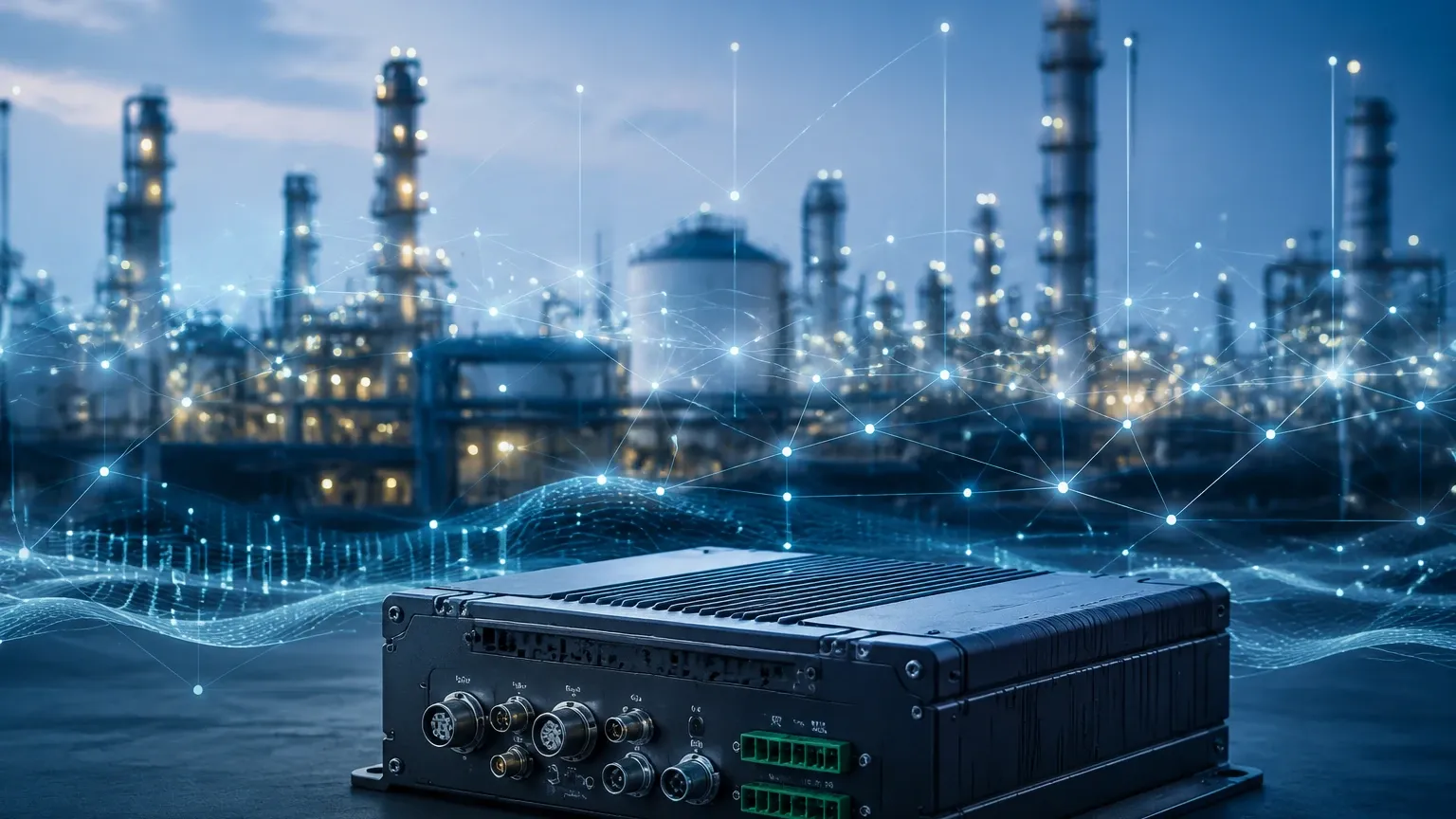
In the landscape of modern industrial automation, the integration of edge devices has transformed how process data is collected, analyzed, and utilized. For industries relying on precise level measurement—such as water treatment, chemical processing, and oil and gas—the transition from centralized data processing to decentralized edge computing represents a significant leap in operational efficiency. Edge devices serve as the critical bridge between field-level sensors and high-level management systems, providing the localized intelligence necessary for real-time decision-making.
Understanding Level Measurement Principles
Before selecting or implementing edge devices, it is essential to understand the measurement principles of the sensors they will support. Industrial level instruments generate the raw data that edge systems must interpret. The accuracy of the digital twin or the control logic at the edge depends entirely on the physics of the sensing technology.
Radar Level Measurement
Radar level meters typically utilize Frequency Modulated Continuous Wave (FMCW) technology. Operating often at 80 GHz, these sensors emit a continuous signal with a varying frequency. The reflection from the medium surface is received, and the frequency difference between the emitted and received signal is proportional to the distance. This "Time of Flight" (ToF) principle allows for non-contact measurement that is largely unaffected by temperature fluctuations, vacuum, or high pressure. When connected to edge devices, the complex echo curves generated by radar sensors can be processed locally to filter out false reflections from agitators or tank internal structures.
Ultrasonic Level Sensing
Ultrasonic sensors function by emitting high-frequency sound pulses. These pulses travel through the air, bounce off the liquid or solid surface, and return to the transducer. The device calculates the distance based on the speed of sound. Because the speed of sound is influenced by air temperature, these sensors usually include integrated temperature compensation. Edge devices are particularly useful here for performing advanced signal damping and volumetric calculations based on non-linear tank geometries.
Hydrostatic Level Transmission
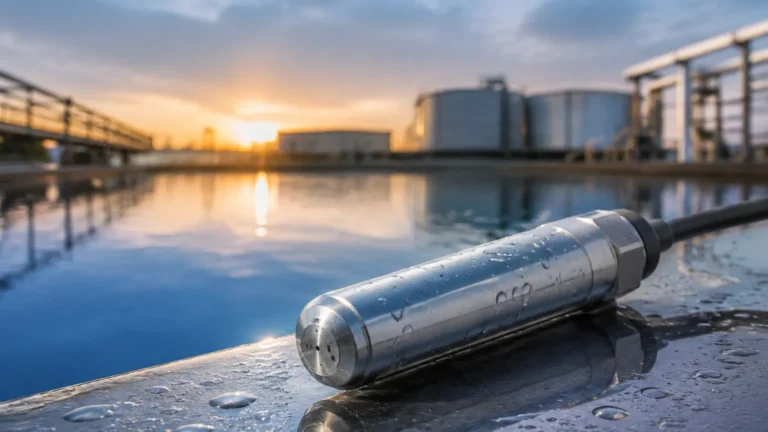
Hydrostatic sensors measure the pressure exerted by a liquid column at a specific point. Based on the principle that $P = \rho gh$ (where P is pressure, $\rho$ is density, g is gravity, and h is height), the sensor converts the weight of the liquid into a level reading. These are often submersible or flange-mounted. In applications where the density of the fluid changes due to temperature, an edge device can ingest data from both the pressure sensor and a separate temperature probe to provide a compensated, accurate level reading in real-time.
The Role of Edge Devices in Level Monitoring
Edge devices are hardware components positioned at the "edge" of the network, near the physical sensors and actuators. In a B2B industrial context, these devices range from simple IoT gateways to sophisticated edge controllers and industrial PCs (IPCs). Their primary function is to ingest data via industrial protocols (such as 4-20mA, HART, Modbus RTU, or IO-Link) and process that data locally before sending it to a centralized cloud or on-premise server.
By performing data deduplication, filtering, and local analytics, edge devices reduce the bandwidth requirements and latency associated with cloud computing. For a facility manager, this means that if a critical level threshold is reached in a chemical storage tank, the edge device can trigger an automated shut-off valve locally in milliseconds, independent of the facility's internet connectivity.
For engineers looking to integrate these technologies with high-quality sensing hardware, the Main Page offers a detailed overview of the instruments that form the foundation of an edge-enabled architecture.
Key Evaluation Criteria for Industrial Edge Devices
Selecting the right edge devices requires a balance between computational power, environmental resilience, and connectivity options. The following criteria are paramount for industrial applications:
1. Connectivity and Protocol Support: The device must support the specific output of your level meters. While 4-20mA is standard, many modern radar and ultrasonic sensors use HART or RS485 (Modbus). The edge device should act as a multi-protocol translator, potentially converting these to MQTT or OPC UA for upstream communication.
2. Environmental Rating: Since these devices are often installed near tanks or in outdoor pump stations, they require robust ingress protection. An IP67 or IP68 rating is often necessary to protect against dust and moisture.
3. Processing Capability: Determine if the device only needs to pass data (gateway) or if it needs to run complex algorithms, such as predictive maintenance models for pump health or inventory forecasting.
4. Security Features: As edge devices connect the field level to the internet, they must include hardware-based security, such as Trusted Platform Modules (TPM), encrypted communication, and robust firewall capabilities.
Practical Selection Table
The following table compares common types of edge devices used in level measurement applications:
| Feature | IoT Gateway | Edge Controller | Industrial PC (IPC) |
| :— | :— | :— | :— |
| Primary Function | Data routing & protocol conversion | Real-time control & logic | Heavy data processing & AI |
| I/O Density | Low (mostly digital/wireless) | High (Analog & Digital) | Modular / Expandable |
| Operating System | RTOS / Linux (Embedded) | Real-time Linux / Proprietary | Windows IoT / Linux |
| Typical Latency | 10ms – 100ms | < 1ms | 1ms – 10ms |
| Ideal Application | Remote wellhead monitoring | Chemical batch processing | Site-wide analytics hub |
| Power Consumption | Very Low (< 5W) | Moderate (10W – 30W) | High (30W – 100W+) |
Installation and Integration Considerations
Successful deployment of edge devices in a level measurement system involves more than just mounting hardware. Engineers must consider the physical and electrical environment to ensure long-term reliability.
* Signal Integrity: When connecting analog level transmitters (4-20mA) to an edge device, use shielded twisted-pair cabling to prevent electromagnetic interference (EMI). The edge device should be grounded according to the manufacturer’s specifications to avoid ground loops that can distort measurement signals.
* Distance Limitations: For RS485/Modbus communication between the sensor and the edge device, distances can reach up to 1,200 meters. However, for 4-20mA signals, voltage drop over long cable runs must be calculated to ensure the edge device's analog input receives a valid signal.
* Thermal Management: Industrial edge devices are often fanless to prevent dust ingress. Ensure adequate clearance around the heat sinks, especially if the device is mounted in a non-ventilated control cabinet in high-temperature environments (above 50°C).
* Power Redundancy: In critical applications, such as flood monitoring or hazardous chemical storage, edge devices should be powered by a 24V DC supply with battery backup or a Uninterruptible Power Supply (UPS) to maintain monitoring during power outages.
Limitations of Edge Computing
While edge devices offer numerous advantages, they are not a universal solution. One primary limitation is the management overhead. Deploying a hundred edge devices across a large facility requires a robust Device Management System (DMS) to handle firmware updates and security patches. Furthermore, while edge devices process data locally, they have limited storage capacity compared to cloud environments. Long-term historical data for trend analysis must still be offloaded to a central historian or cloud database.
Another consideration is the "edge-to-cloud" cost balance. High-performance industrial PCs used as edge devices are significantly more expensive than simple transmitters. The investment must be justified by the need for low latency or the high cost of bandwidth in remote locations.
Frequently Asked Questions (FAQs)
Q: Can I connect my existing analog level sensors to a modern edge device?
A: Yes. Most industrial edge devices and gateways feature analog-to-digital converters (ADCs) that accept 4-20mA or 0-10V signals. This allows you to modernize older facilities without replacing every sensor.
Q: What is the difference between an edge device and a standard PLC?
A: A Programmable Logic Controller (PLC) is designed primarily for deterministic real-time control (moving valves, starting motors). An edge device focuses on data processing, protocol translation, and connectivity to higher-level IT systems. Modern "Edge Controllers" often combine both functions into a single unit.
Q: Do edge devices require an internet connection to function?
A: No. One of the main benefits of edge devices is their ability to perform local logic and data logging without an active internet connection. They can buffer data and sync with the cloud once connectivity is restored.
Q: How do I secure edge devices from cyber threats?
A: Security should be multi-layered. Use devices with built-in encryption, disable unused physical ports (like USB), implement VLANs to isolate industrial traffic, and ensure all default passwords are changed immediately upon installation.
Conclusion
Edge devices are a fundamental component of the modern industrial internet of things (IIoT), providing the necessary intelligence to transform raw level data into actionable insights. By understanding the underlying measurement principles—whether radar, ultrasonic, or hydrostatic—and selecting the appropriate edge hardware based on connectivity, environment, and processing needs, organizations can significantly improve their process reliability. As the industry moves toward more autonomous operations, the role of the edge will only continue to grow, making informed selection and installation more critical than ever.