Decarbonization as a Service
Decarbonization as a Service
In the current industrial landscape, the transition toward carbon neutrality is no longer a peripheral corporate social responsibility goal; it is a core operational requirement. As regulatory frameworks like the Carbon Border Adjustment Mechanism (CBAM) and various national net-zero targets tighten, industrial facilities are seeking efficient ways to reduce their environmental footprint without compromising productivity. This has led to the emergence of Decarbonization as a Service (DaaS).
DaaS is a comprehensive business model where a service provider manages the strategy, implementation, and monitoring of carbon reduction initiatives for a client, often through an outcome-based or subscription-oriented financial structure. For many engineering and plant managers, the foundation of any successful DaaS initiative is accurate data. Without precise measurement of resources—such as water, fuel, chemicals, and waste—it is impossible to establish a baseline or verify carbon savings. This is where high-precision industrial level measurement instruments, such as those found on the Main Page of specialized manufacturers, become indispensable.
The Role of Measurement in Decarbonization
Decarbonization as a service relies heavily on the "Measure, Manage, Mitigate" framework. Before a facility can implement carbon-capture technologies or switch to hydrogen fuel, it must optimize existing processes. Optimization is fundamentally a measurement challenge. Accurate level monitoring allows for the reduction of waste, the optimization of chemical dosing in water treatment, and the efficient management of storage tanks to prevent leaks or overfills that lead to environmental hazards.
Measurement Principles and Technologies
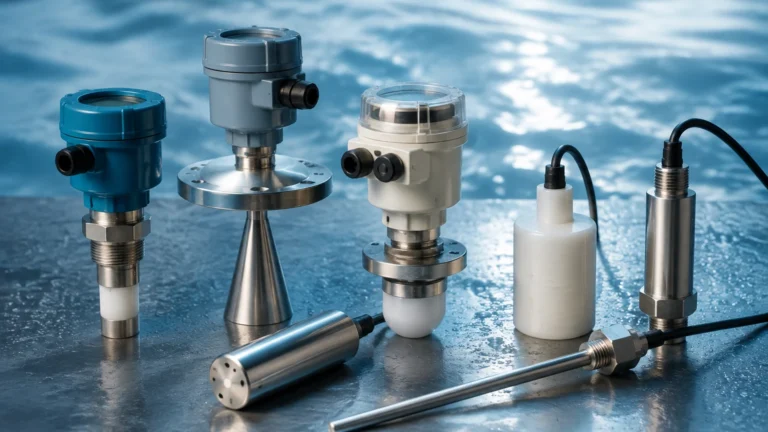
To understand how level measurement supports decarbonization, it is essential to review the primary technologies used in industrial environments. Each technology offers specific advantages depending on the medium and the environmental conditions.
1. Radar Level Measurement (Time-of-Flight)
Radar level meters operate on the Time-of-Flight (ToF) principle. The device emits a high-frequency microwave signal (often in the 26GHz or 80GHz range) toward the surface of the material. The signal reflects off the surface and returns to the sensor. By measuring the time it takes for the pulse to travel to the surface and back, the instrument calculates the distance.
In the context of decarbonization, radar is preferred for its high accuracy (up to ±1mm) and its non-contact nature. It is unaffected by temperature fluctuations, pressure changes, or the presence of dust and steam, making it ideal for monitoring volatile organic compounds (VOCs) or fuel stocks where precise inventory management is required to prevent evaporative losses.
2. Ultrasonic Level Sensors
Ultrasonic sensors also use the ToF principle but utilize sound waves instead of electromagnetic waves. A transducer emits an ultrasonic pulse that bounces off the liquid or solid surface. While cost-effective, ultrasonic sensors are sensitive to the medium's temperature (which affects the speed of sound) and the presence of foam or heavy vapors.
These sensors are widely used in water and wastewater treatment—a critical sector for decarbonization. By accurately monitoring tank levels in water recycling loops, facilities can reduce the energy-intensive process of pumping fresh water, thereby lowering their Scope 2 emissions.
3. Hydrostatic Level Transmitters
Hydrostatic measurement is based on the principle that the pressure at the bottom of a liquid column is directly proportional to the height of the liquid and its density. The formula used is $P = \rho \cdot g \cdot h$, where $P$ is pressure, $\rho$ is density, $g$ is gravity, and $h$ is the height of the liquid.
This method is highly reliable for deep wells and large storage tanks. In DaaS projects involving carbon sequestration or underground storage, hydrostatic transmitters provide a robust solution for continuous monitoring in challenging environments.
Practical Selection for Decarbonization Projects
When evaluating hardware for a decarbonization as a service framework, engineers must match the technology to the specific application. The following table provides a selection guide based on common industrial decarbonization use cases.
| Application | Recommended Technology | Key Benefit for Decarbonization | Accuracy |
| :— | :— | :— | :— |
| Chemical Dosing | Ultrasonic / Radar | Prevents chemical waste and optimizes treatment energy. | High |
| Fuel Storage | 80GHz Radar | Reduces inventory loss and monitors consumption rates. | Ultra-High |
| Water Recycling | Ultrasonic | Enables closed-loop water systems, reducing pump energy. | Moderate |
| Biogas Production | Guided Wave Radar | Monitors digester levels to maximize methane capture. | High |
| Effluent Monitoring | Hydrostatic | Ensures compliance and prevents environmental discharge. | High |
Implementation and Installation Considerations
Successful integration of level measurement into a DaaS model requires careful installation. Even the most advanced radar meter will fail to provide actionable data if installed incorrectly.
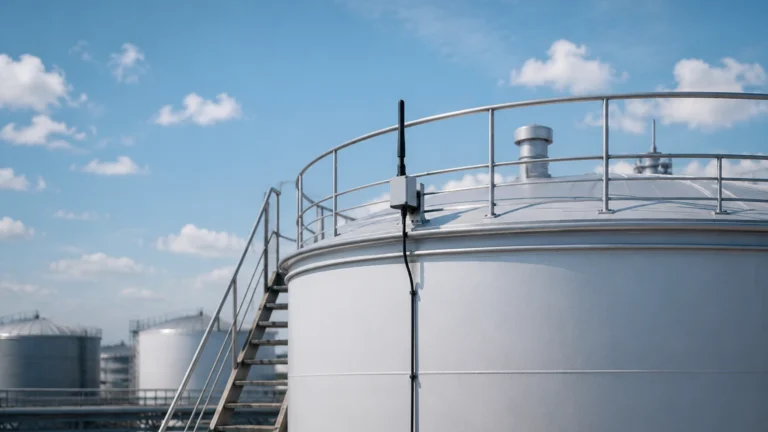
1. Nozzle and Obstruction Management: For radar and ultrasonic sensors, the "beam angle" is critical. The sensor must be installed away from tank walls and internal obstructions like agitators or ladders. Obstructions can cause false echoes, leading to inaccurate readings that skew carbon reporting data.
2. Mounting Orientation: Sensors should generally be mounted perpendicular to the liquid surface. For solid materials, which may form a cone shape, adjustable flanges are often required to aim the signal at the most representative point of the material surface.
3. Environmental Shielding: While industrial-grade instruments are robust, extreme heat or direct sunlight can affect the electronics' lifespan. Using sunshades or remote-mounted displays can improve reliability in outdoor installations, such as those found in solar-thermal or large-scale water treatment plants.
4. Integration with IoT and EMS: In a DaaS model, data must flow from the sensor to an Energy Management System (EMS) or a cloud-based platform. Utilizing protocols like HART, Modbus, or 4-20mA outputs ensures that the measurement data is accessible for real-time carbon tracking and reporting.
Limitations and Risks
While decarbonization as a service offers a pathway to net-zero, there are technical and operational risks involved in the measurement phase:
* Media Dynamics: Rapidly changing liquid densities can affect hydrostatic measurements. If a DaaS provider is monitoring a tank where different liquids are mixed, the pressure-to-level calculation may become inaccurate unless compensated for by secondary sensors.
* Signal Interference: In high-pressure chemical reactors, the dielectric constant of the vapor space can change, affecting the speed of radar signals. Selecting the correct frequency (e.g., 80GHz for better focus) is essential to mitigate this risk.
* Data Silos: If the level measurement hardware is not properly integrated with the DaaS provider's software, the resulting "data silos" prevent the realization of energy savings. Continuous communication between the plant engineering team and the service provider is necessary.
Frequently Asked Questions (FAQ)
Q: How does level measurement directly impact a company's carbon footprint?
A: Level measurement impacts the carbon footprint by enabling process efficiency. For example, by precisely controlling the level in a boiler feed tank, a plant can optimize heat recovery and reduce fuel consumption. Furthermore, accurate inventory management prevents over-ordering and the associated transport emissions of raw materials.
Q: Can existing tanks be retrofitted for DaaS monitoring?
A: Yes. Most modern level meters, including radar and ultrasonic types, are designed for retrofitting. Non-contact sensors are particularly easy to install on existing tank nozzles without requiring a process shutdown, making them ideal for facilities transitioning to a decarbonization as a service model.
Q: What is the maintenance requirement for these instruments?
A: Non-contact radar and ultrasonic sensors have no moving parts and require minimal maintenance. Periodic calibration checks are recommended to ensure the data remains within the required accuracy for carbon reporting and regulatory compliance.
Q: Is radar always better than ultrasonic for carbon-tracking applications?
A: Not necessarily. While radar is more accurate in volatile or high-pressure environments, ultrasonic sensors are often more cost-effective for simple water tank monitoring. The choice depends on the specific medium and the precision required by the DaaS contract.
Conclusion
Decarbonization as a service represents a shift toward more accountable and data-driven industrial operations. By leveraging advanced level measurement technologies—ranging from high-frequency radar to robust hydrostatic transmitters—companies can gain the visibility needed to eliminate waste and optimize energy use. As the industry moves toward a low-carbon future, the accuracy of the instruments found on the Main Page of professional manufacturers will continue to serve as the bedrock of sustainable engineering practices. Successful decarbonization is not just about adopting new energy sources; it is about the precise and intelligent management of every liter and kilogram of material within the industrial cycle.