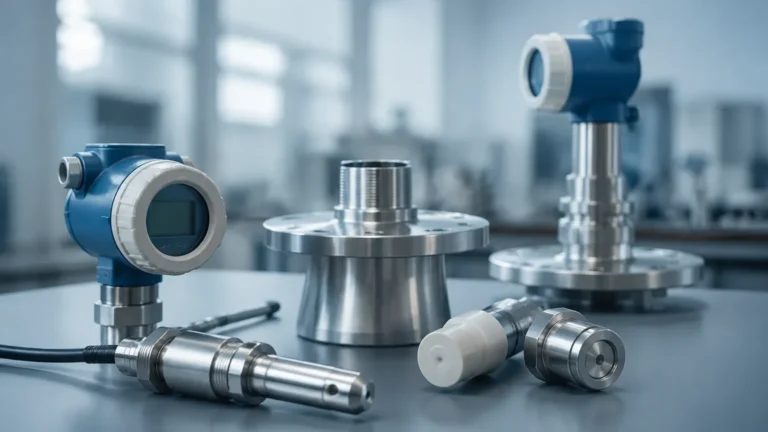
Wireless Tank Monitor
Wireless Tank Monitor
In the modern industrial landscape, the transition from manual level checking to automated, remote sensing has become a prerequisite for operational efficiency. A wireless tank monitor is an integrated system designed to measure the volume or level of liquids and solids in storage vessels and transmit that data to a central management platform without the need for physical signal wiring. These systems are particularly critical in large-scale tank farms, remote water treatment facilities, and chemical processing plants where the cost of cabling often exceeds the cost of the instrumentation itself.
Implementing a wireless tank monitor system requires a deep understanding of both the physical measurement principles and the telecommunication protocols used to bridge the gap between the field and the control room. This guide explores the technical foundations, selection criteria, and practical deployment strategies for industrial wireless level monitoring.
Measurement Principles in Wireless Level Systems
Before selecting a wireless transmission protocol, engineers must first determine the most appropriate sensing technology for the medium being measured. In a wireless configuration, the sensor is typically integrated with a battery-powered radio module. The three most common technologies utilized in these systems are radar, ultrasonic, and hydrostatic pressure.
Radar Level Measurement (Non-Contact)
Radar level monitors utilize high-frequency electromagnetic waves, typically in the 26 GHz or 80 GHz range. These waves are emitted from the sensor antenna, reflect off the surface of the medium, and return to the receiver. The system measures the Time of Flight (ToF) to calculate the distance.
In wireless applications, 80 GHz radar is often preferred due to its narrow beam angle (often as low as 3 degrees), which allows for installation in narrow tanks or vessels with internal obstructions like agitators or heating coils. Because radar is an electromagnetic wave, it is unaffected by vacuum, pressure, or air temperature fluctuations, making it the most robust choice for volatile chemicals or high-pressure storage.
Ultrasonic Level Measurement (Non-Contact)
Ultrasonic sensors emit high-frequency sound pulses (usually between 40 kHz and 200 kHz). Like radar, they measure the time it takes for the echo to return from the liquid surface. However, since sound requires a medium to travel through, the speed of the pulse is influenced by air temperature and vapor composition.
Wireless ultrasonic tank monitors are highly effective for water, wastewater, and non-volatile oils. They are generally more cost-effective than radar but are limited in environments with heavy foam, steam, or significant dust, which can attenuate the sound signal.
Hydrostatic Level Measurement (Contact)
Hydrostatic transmitters measure the pressure exerted by the liquid column above the sensor. The principle is based on the formula: $P = \rho \cdot g \cdot h$, where $P$ is pressure, $\rho$ is the density of the liquid, $g$ is gravity, and $h$ is the height of the liquid.
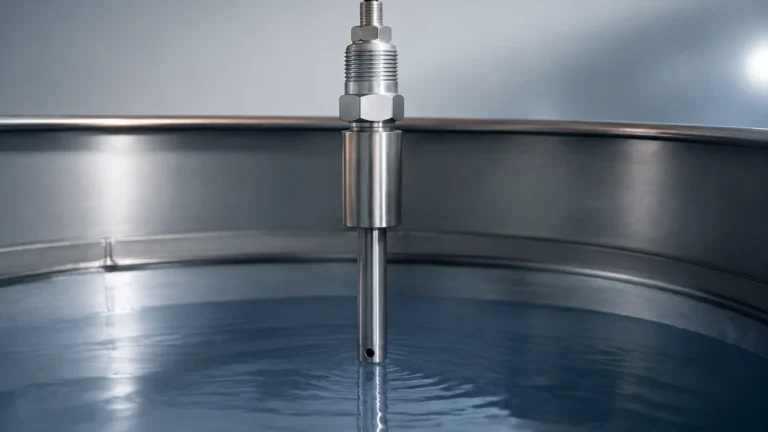
In a wireless setup, a submersible pressure transducer is placed at the bottom of the tank and connected to a wireless node at the top. This method is ideal for deep wells or tanks where surface foam or internal structures make non-contact measurement difficult. However, it requires the liquid density to remain relatively constant for accurate readings.
Wireless Communication Protocols and Connectivity
The "wireless" component of a wireless tank monitor refers to the method of data transmission. The choice of protocol affects the device's battery life, range, and data update frequency.
1. LoRaWAN (Long Range Wide Area Network): This is one of the most popular protocols for industrial monitoring. It offers a range of up to 15 kilometers (9 miles) in open areas and has extremely low power consumption. It is ideal for periodic level updates (e.g., every 15 to 60 minutes) and can operate for several years on a single battery.
2. NB-IoT (Narrowband Internet of Things): This is a cellular-based protocol that utilizes existing mobile networks. It provides excellent penetration through concrete and metal, making it suitable for tanks located in basements or dense industrial environments. It requires a SIM card and a subscription but eliminates the need for a local gateway.
3. Satellite Connectivity: For extremely remote locations, such as oil tanks in the middle of a desert or remote mining sites, satellite-based wireless monitors transmit data directly to orbital constellations. While hardware and data costs are higher, it is the only viable solution where cellular or LoRaWAN coverage is non-existent.
4. Wi-Fi and Bluetooth: Generally reserved for short-range applications or local commissioning. Wi-Fi is rarely used for battery-powered industrial monitors due to its high power consumption, but it may be used if the monitor is mains-powered.
For a detailed comparison of hardware compatible with these protocols, engineers can consult the Main Page of the manufacturer’s technical catalog.
Technical Selection Criteria for Industrial Applications
Selecting the right wireless tank monitor involves balancing the physical properties of the stored material with the environmental constraints of the site. Engineers should evaluate the following factors:
Chemical Compatibility
For contact-based sensors like hydrostatic transmitters, the wetted materials (e.g., 316L stainless steel, Hastelloy, or PTFE) must be compatible with the fluid. For non-contact sensors, the housing material must withstand any corrosive vapors present in the tank headspace.
Dielectric Constant (Dk)
In radar measurement, the dielectric constant of the liquid determines the strength of the reflected signal. Liquids with a low Dk (like hydrocarbons or liquid gases) reflect less energy than water-based liquids. Modern radar monitors can handle Dk values as low as 1.4, but this must be confirmed during the selection phase.
Hazardous Area Certifications
Many tanks store flammable liquids (e.g., fuel, ethanol, or crude oil). In these environments, the wireless tank monitor must be certified as Intrinsically Safe (IS) under ATEX, IECEx, or UL standards. This ensures the device cannot release enough electrical or thermal energy to ignite the explosive atmosphere.
Battery Life vs. Reporting Interval
Wireless monitors are energy-constrained. A system that reports every minute will deplete its battery much faster than one that reports once a day. Most industrial applications find a balance with reporting intervals of 15 to 30 minutes, which typically yields a battery life of 3 to 5 years.
Installation and Deployment Guidelines
Correct installation is paramount to ensuring signal integrity and measurement accuracy. Below are the primary considerations for deploying wireless tank monitors.
Sensor Positioning
The sensor should be mounted away from the tank wall to avoid false reflections (interference). For ultrasonic and radar sensors, a minimum distance of 200 mm to 500 mm from the wall is usually recommended. The sensor must also be mounted perfectly perpendicular to the liquid surface to ensure the return signal is captured by the receiver.
Wireless Signal Path (Fresnel Zone)
Wireless signals do not travel in a perfectly straight line; they require an elliptical space known as the Fresnel Zone. Obstructions like large metal buildings or dense foliage within this zone can cause signal degradation. To maximize range, the gateway or antenna should be mounted as high as possible.
Tank Material Interference
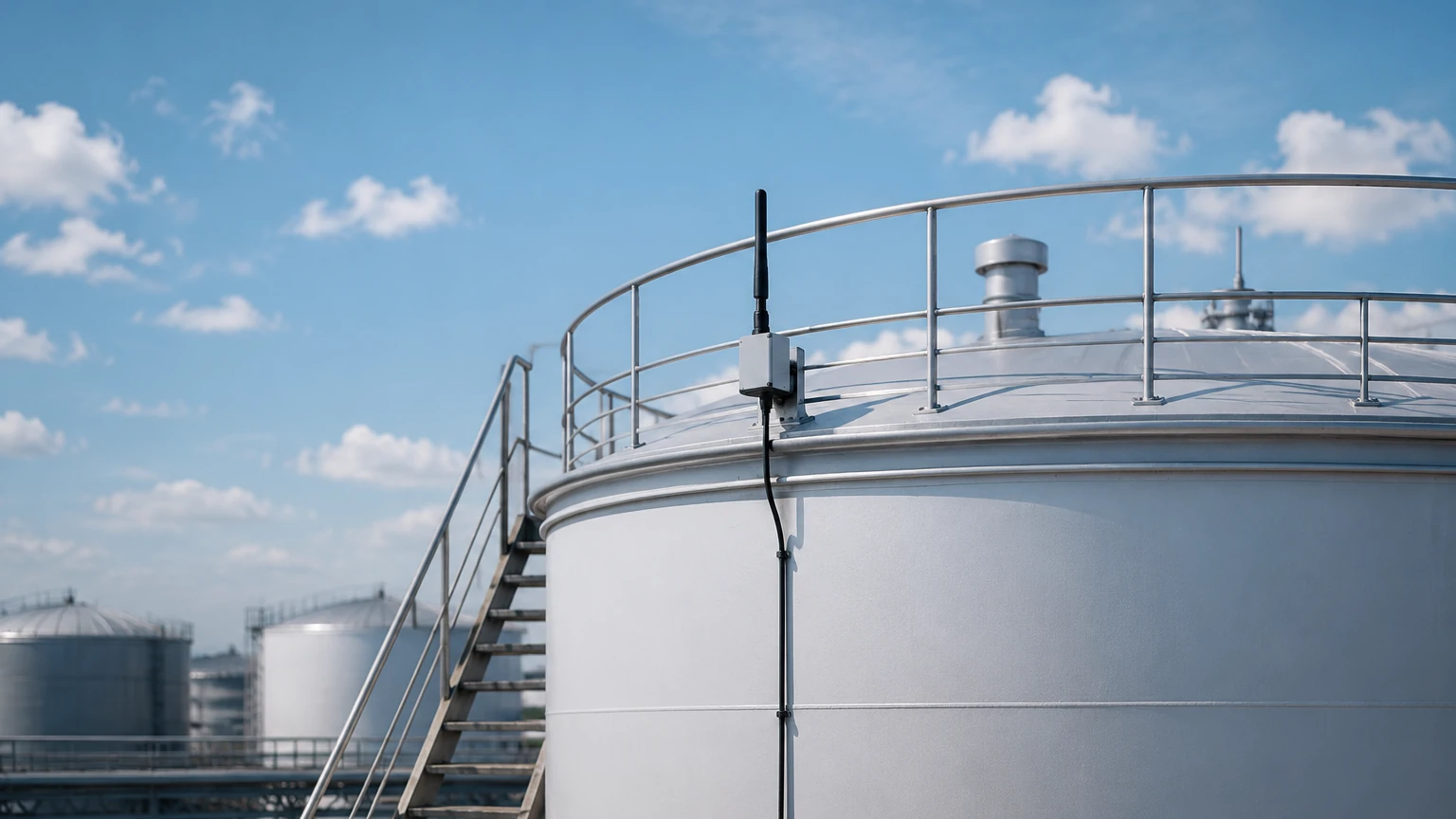
Metal tanks act as Faraday cages, which can block wireless signals. If the transmitter is located inside a metal tank, an external antenna must be mounted on the tank's exterior and connected via a coaxial cable to the internal sensor node. Plastic or fiberglass (FRP) tanks generally allow signals to pass through, often permitting the transmitter to be housed entirely within the tank dome.
Dead Zones (Blocking Distance)
Every non-contact sensor has a "dead zone" or "blocking distance" directly beneath the sensor face (typically 50 mm to 300 mm depending on the technology). If the liquid level enters this zone, the sensor will provide an inaccurate reading or an error code. Mounting the sensor on a nozzle or standpipe can help move the dead zone above the maximum fill level.
Comparison of Wireless Tank Monitoring Technologies
| Feature | Radar (80 GHz) | Ultrasonic | Hydrostatic |
| :— | :— | :— | :— |
| Measurement Type | Non-contact | Non-contact | Contact (Pressure) |
| Accuracy | ±1 mm to ±5 mm | ±0.25% of range | ±0.1% to ±0.5% of span |
| Best For | Chemicals, Hydrocarbons | Water, Wastewater | Deep Wells, Fuel Tanks |
| Affected by Foam? | Minimal | Significant | No |
| Affected by Vapor? | No | Yes | No |
| Power Consumption | Moderate | Low | Low |
Operational Limitations and Risk Mitigation
While wireless tank monitors offer significant advantages, they are not without limitations. Understanding these risks is essential for maintaining system reliability.
* Latency: Because wireless monitors often sleep between readings to save power, they are not suitable for high-speed process control (e.g., controlling a high-flow pump in real-time). They are best suited for inventory management and trend monitoring.
* Signal Interference: In heavy industrial environments, electromagnetic interference (EMI) from large motors or variable frequency drives (VFDs) can occasionally disrupt wireless transmissions. Using frequency-hopping spread spectrum (FHSS) protocols can mitigate this risk.
* Environmental Temperature: Extreme cold can significantly reduce battery capacity. In regions where temperatures drop below -30°C, specialized lithium-thionyl chloride (Li-SOCl2) batteries or external power sources may be required.
* Cybersecurity: Any wireless transmission is a potential vector for cyber-attacks. Industrial-grade wireless monitors should employ end-to-end encryption (AES-128 is standard for LoRaWAN) to ensure data integrity.
Frequently Asked Questions (FAQ)
Q: How far can a wireless tank monitor transmit data?
A: This depends on the protocol. LoRaWAN can reach up to 15 km with line-of-sight, while NB-IoT depends on the proximity of the nearest cellular tower. Wi-Fi is typically limited to 50-100 meters.
Q: Can these monitors be used for solids like grain or sand?
A: Yes, but radar is generally required. Solids do not have a flat surface, and their angle of repose can scatter ultrasonic signals. 80 GHz radar is effective at penetrating dust and reflecting off uneven solid surfaces.
Q: How do I know when the battery is about to die?
A: Most industrial wireless nodes transmit a "battery voltage" heartbeat signal along with the level data. The management software can be configured to send an alert when the voltage drops below a certain threshold (e.g., 10% remaining).
Q: Is it possible to integrate wireless data into an existing SCADA system?
A: Yes. Most wireless gateways support industrial protocols like Modbus TCP, MQTT, or OPC UA, allowing the data to be mapped directly into a SCADA or ERP system.
Conclusion
A wireless tank monitor is a powerful tool for modernizing inventory management and improving safety in industrial environments. By eliminating the need for extensive wiring, these systems allow for rapid deployment and scalability across diverse sites. However, the success of a wireless monitoring project depends on the correct matching of sensor technology to the medium and the selection of a communication protocol that fits the site's geography and power constraints. For further technical guidance and to review specific product options, engineers are encouraged to visit the Main Page for comprehensive application support.