Heavy Industry Weigh Belt
Heavy Industry Weigh Belt
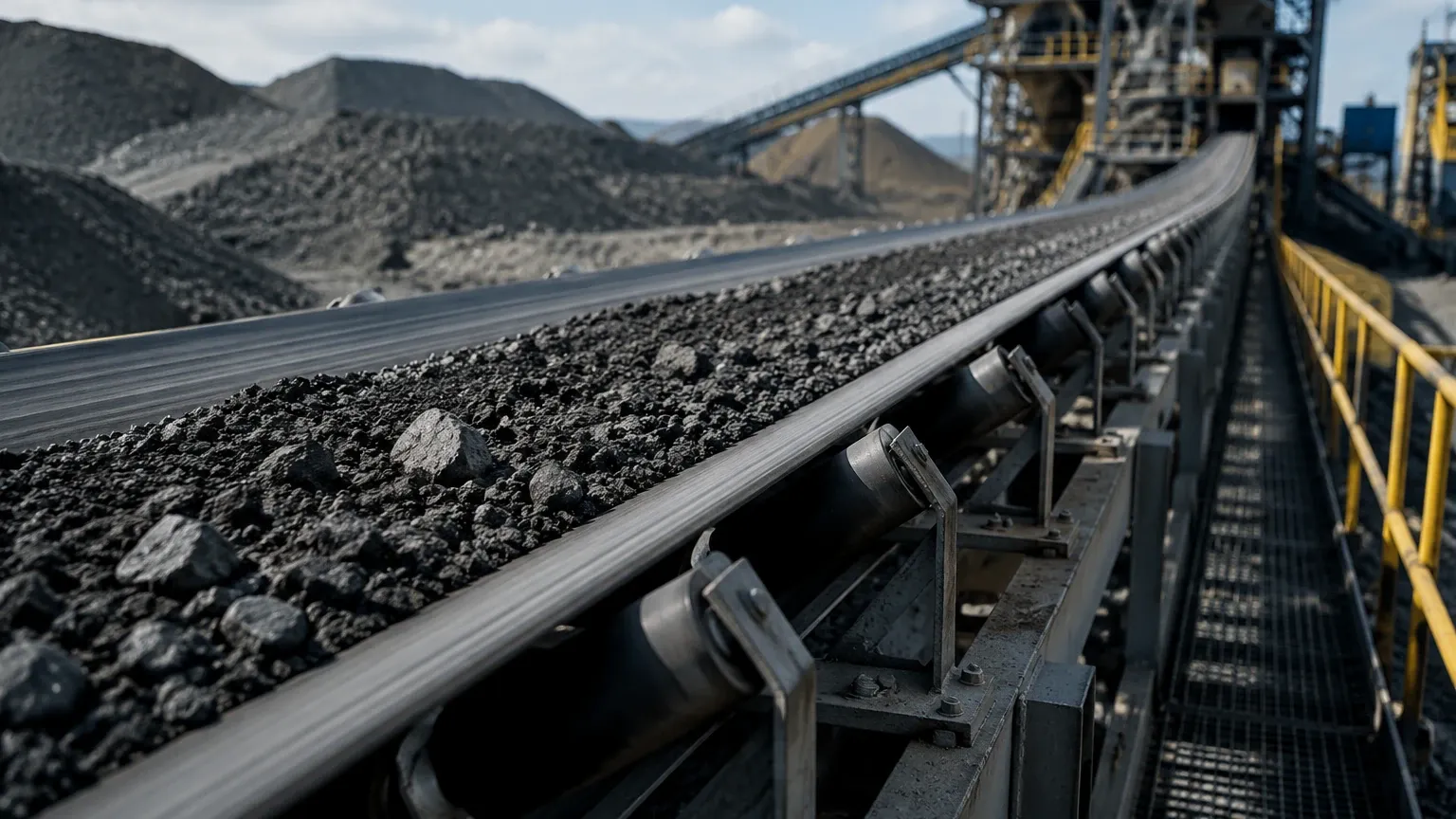
In the landscape of bulk material handling, the heavy industry weigh belt serves as a critical component for the continuous measurement and control of material flow. Unlike batch weighing systems that require halting the process, weigh belts—often referred to as belt scales or weighfeeders—provide real-time data on the mass of material moving across a conveyor. This capability is essential in sectors such as mining, cement production, power generation, and chemical processing, where precise throughput data directly impacts operational efficiency and inventory management.
While the weigh belt measures the dynamic flow of solids, its performance is inextricably linked to the storage systems that feed it. For a comprehensive overview of the instrumentation required to monitor these storage vessels, engineers often refer to the Main Page of industrial measurement providers to ensure that level sensing and flow measurement are synchronized.
Measurement Principles of Weigh Belts
The fundamental principle of a heavy industry weigh belt is the integration of two primary variables: the weight of the material on a specific section of the belt and the speed at which the belt is moving. By combining these inputs, the system calculates the mass flow rate and totalized weight.
1. Load Sensing
The weigh bridge is the mechanical structure installed under the conveyor belt. It typically utilizes one or more high-precision load cells (strain gauge or LVDT types). As material passes over the weigh bridge, the load cells detect the force exerted by the material. In heavy industry, these load cells must be ruggedized to withstand high vibrations and potential overloads.
2. Speed Sensing
A speed sensor, usually a digital encoder or a tachometer, is mounted on the tail pulley or a dedicated return belt wheel. This sensor tracks the velocity of the belt in meters per second (m/s). Accurate speed sensing is vital because any belt slippage or variation in motor speed can lead to significant calculation errors if not accounted for.
3. The Integration Process
The electronic integrator (or transmitter) receives signals from both the load cells and the speed sensor. It performs the following calculation:
Flow Rate (Q) = Load (L) × Speed (S)
* Q = Mass flow rate (e.g., tonnes per hour, t/h)
* L = Weight of material per unit length of belt (e.g., kg/m)
* S = Belt speed (e.g., m/s)
The integrator then totalizes this rate over time to provide the total mass conveyed during a shift or a specific process cycle.
Integration with Level Measurement Systems
A heavy industry weigh belt does not operate in isolation. In a typical process loop, the weigh belt is fed by a silo, hopper, or bin. To maintain a consistent "head" of material and prevent the belt from running empty or being overtopped, industrial level meters are deployed.
For instance, radar level meters or ultrasonic sensors are installed at the top of the feed hopper. These sensors provide continuous feedback to the control system (PLC/DCS). If the level in the hopper drops below a certain threshold, the weigh belt's accuracy may fluctuate due to inconsistent material density or "slugging." Conversely, high-level alarms prevent the hopper from overfilling, which could stall the conveyor drive. Integrating high-accuracy level data with weigh belt throughput allows for a closed-loop system that optimizes the entire material handling chain.
Key Evaluation Criteria for Selection
Selecting a weigh belt for heavy industry requires an analysis of the material characteristics and the environmental conditions. Engineers must prioritize durability and long-term stability over initial cost.
Material Characteristics
* Bulk Density: Materials with high bulk density (e.g., iron ore) require more robust load cells compared to lighter materials like wood chips.
* Moisture Content: High moisture can cause material to stick to the belt, leading to "carryback" that affects zero-calibration.
* Granularity: Large, abrasive rocks require impact-resistant idlers and heavy-duty belt materials.
Environmental Factors
* Dust and Ingress: In cement or mining applications, the system must have an IP66 or IP67 rating to prevent fine particles from fouling the load cells.
* Temperature: Extreme ambient temperatures can cause belt expansion or contraction, necessitating automatic tensioning systems to maintain accuracy.
Technical Selection Table
The following table provides a general guideline for selecting weigh belt specifications based on common heavy industry requirements.
| Feature | Standard Duty | Heavy Duty | Extra Heavy Duty |
| :— | :— | :— | :— |
| Typical Materials | Sand, Grain, Fertilizers | Coal, Limestone, Aggregates | Iron Ore, Copper Concentrate, Sinter |
| Belt Width (mm) | 400 – 800 mm | 800 – 1400 mm | 1400 – 2400+ mm |
| Flow Rate (t/h) | Up to 500 t/h | 500 – 2,500 t/h | 2,500 – 10,000+ t/h |
| Accuracy Class | ±0.5% to ±1.0% | ±0.25% to ±0.5% | ±0.125% to ±0.25% |
| Load Cell Type | Single point / S-Type | Dual Shear Beam | Multi-cell Platform |
| Frame Construction | Powder-coated Steel | Galvanized / Heavy Channel | Stainless Steel / Reinforced Beam |
Installation Considerations for Maximum Accuracy
The accuracy of a heavy industry weigh belt is often more dependent on the installation environment than the instrument itself. Even the most expensive load cell will fail to provide accurate data if the conveyor geometry is poor.
1. Conveyor Tension and Tracking
The belt must be properly tracked and tensioned. A gravity take-up (GTU) is preferred over a screw take-up because it maintains constant belt tension regardless of temperature changes or belt stretch. Variations in tension can change the "bridge effect," where the belt itself supports some of the material weight, bypassing the load cells.
2. Idler Alignment
The weigh idlers and at least two idlers before and after the weigh bridge (the "scale area") must be perfectly aligned. They should be shimmed to within 0.5 mm of each other to ensure a flat plane. Misaligned idlers introduce parasitic forces that the load cells interpret as weight.
3. Wind and Vibration Protection
In outdoor installations, wind can exert significant downward or upward force on the conveyor belt. Wind guards or enclosures are mandatory for high-precision applications. Similarly, the weigh bridge should be isolated from structural vibrations caused by nearby crushers or large motors.
4. Feed Point Distance
The weigh bridge should be located far enough from the feed point (loading chute) to allow the material to settle and reach the same speed as the belt. Typically, a distance equivalent to 2 to 5 idler spaces is recommended.
Limitations and Maintenance Requirements
While robust, heavy industry weigh belts have inherent limitations that must be managed through regular maintenance.
* Zero Drift: Dust accumulation on the weigh bridge or material sticking to the belt can cause the "zero" point to shift. Automated zero-tracking software in the integrator can mitigate this, but physical cleaning is still required.
* Calibration Frequency: In heavy industry, calibration should be checked monthly. Common methods include using certified test weights, calibration chains (which simulate a moving load), or material tests (weighing a sample on a static scale).
* Belt Wear: As the belt thins over years of use, its weight per meter changes. This requires a periodic re-zeroing of the system.
Frequently Asked Questions (FAQ)
Q: How does a weigh belt differ from a belt scale?
A: A belt scale is a weighing component installed onto an existing conveyor. A weigh belt (or weighfeeder) is a complete, self-contained conveyor system designed specifically for weighing, often including its own motor, belt, and framework to ensure optimal weighing conditions.
Q: Can weigh belts be used for legal-for-trade applications?
A: Yes, provided they meet specific local regulatory standards (such as OIML R50 or NIST Handbook 44) and undergo rigorous certification and sealing by weights and measures authorities.
Q: What is the impact of conveyor incline on weighing?
A: Weigh belts can operate on inclines, typically up to 18 degrees depending on the material's angle of repose. However, the integrator must be programmed with the exact angle of the conveyor to calculate the cosine component of the weight force, as load cells only measure the force perpendicular to the scale frame.
Q: How do I choose between a weigh belt and a loss-in-weight feeder?
A: Weigh belts are generally preferred for high-capacity, continuous flow (tonnes per hour). Loss-in-weight feeders are typically used for lower-capacity, high-precision applications (kg per hour) or where the material is extremely dusty or hazardous and needs to be completely enclosed.
Conclusion
The heavy industry weigh belt remains an indispensable tool for bulk solids management. By understanding the mechanical principles of load and speed integration, and by ensuring rigorous installation standards, operators can achieve the high levels of accuracy required for modern industrial processes. For the best results, these systems should be paired with reliable level measurement instrumentation to ensure a consistent and controlled supply of material, creating a holistic approach to process automation. For further technical specifications on the sensors that support these systems, visiting the Main Page of specialized instrument manufacturers is a recommended next step for engineering teams.