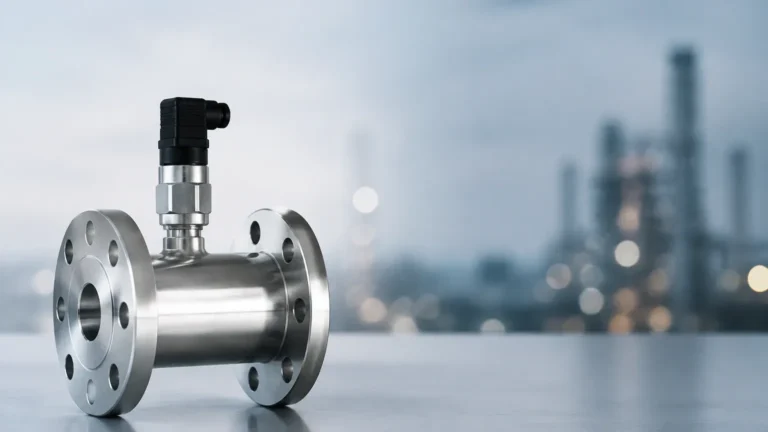
Def Tank Level Sensor
Def Tank Level Sensor
Diesel Exhaust Fluid (DEF), a solution of 32.5% high-purity urea and 67.5% deionized water, is a critical component in modern Selective Catalytic Reduction (SCR) systems. For both heavy-duty vehicles and industrial stationary engines, maintaining the correct level of DEF is not merely a maintenance task but a regulatory requirement. A failure to accurately monitor DEF levels can lead to engine derating, increased emissions, and potential hardware damage. Selecting the appropriate def tank level sensor requires a deep understanding of the fluid's chemical properties, environmental sensitivities, and the physical principles of level measurement.
In industrial and automotive applications, DEF level sensing is complicated by the fluid's tendency to crystallize, its corrosive nature toward certain metals, and its freezing point of -11°C (12°F). This guide explores the primary measurement technologies used to monitor DEF, selection criteria for various tank geometries, and best practices for long-term reliability.
Principles of DEF Level Measurement
To select the right instrument, engineers must first understand the physics behind common measurement methods. Each technology interacts differently with the urea solution and the surrounding environment.
Ultrasonic Level Sensing
Ultrasonic sensors are among the most common choices for DEF tanks. These devices emit high-frequency sound waves that travel through the air gap, reflect off the fluid surface, and return to the transducer. The sensor calculates the distance based on the time-of-flight.
Because the sensor does not come into contact with the DEF, it is protected from the corrosive nature of the urea. However, ultrasonic waves are sensitive to air temperature and vapor concentration. Since the speed of sound in air is approximately 343 m/s at 20°C but changes with temperature, high-quality ultrasonic sensors often include integrated temperature compensation to maintain accuracy.
Hydrostatic Pressure Measurement
Hydrostatic sensors measure the pressure exerted by the liquid column at the bottom of the tank. The principle is defined by the equation: *P = ρgh*, where *P* is pressure, *ρ* (rho) is the density of the DEF (approximately 1,090 kg/m³), *g* is gravity, and *h* is the height of the liquid.
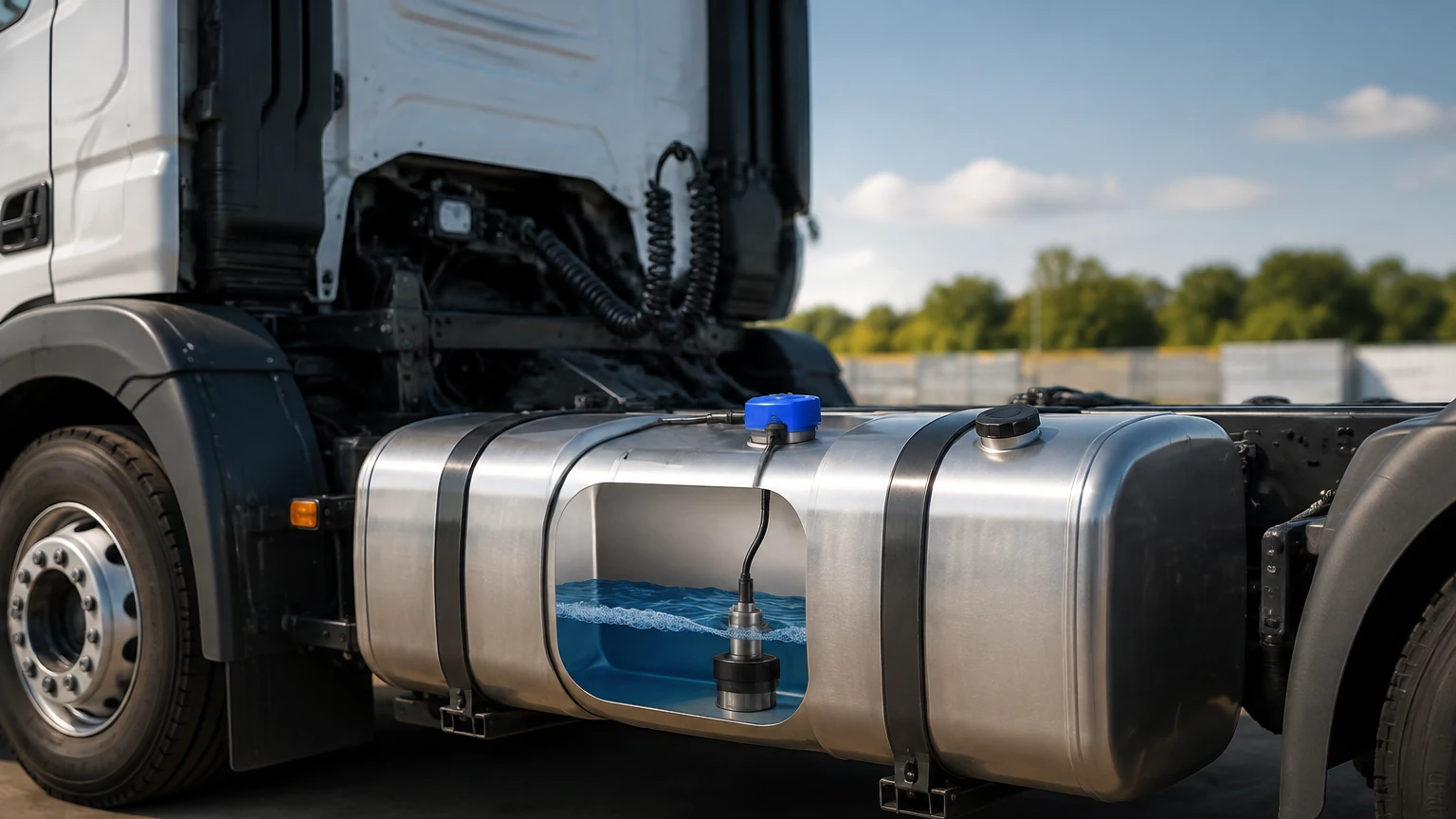
In industrial bulk storage, submersible pressure transmitters or externally mounted threaded sensors are frequently used. These sensors must be constructed from DEF-compatible materials like 316L stainless steel or specialized plastics. A significant advantage of hydrostatic measurement is its ability to provide continuous level data regardless of surface foam or turbulence.
Radar Level Measurement (FMCW and Pulse)
Radar sensors, particularly those operating at high frequencies like 80 GHz, offer the highest precision. Like ultrasonic sensors, they are non-contact. However, radar uses electromagnetic waves instead of sound. These waves are unaffected by temperature fluctuations, vapors, or vacuum conditions inside the tank. For large-scale DEF blending or storage facilities, radar is often the preferred technology due to its sub-millimeter accuracy and ability to ignore internal tank obstructions.
Magnetic Float and Reed Switch Technology
For smaller, mobile tanks, magnetic float sensors are common. A float containing a magnet moves up and down a stem as the fluid level changes, triggering reed switches at specific intervals or providing a continuous resistive output. While robust and cost-effective, these are contact-based sensors and are susceptible to "sticking" if urea crystallization occurs on the guide stem.
Technical Selection Criteria for DEF Applications
When evaluating a def tank level sensor, several technical parameters must be balanced against the specific requirements of the installation. For comprehensive comparisons of different sensor types and their industrial applications, engineers can Review product options and application support to ensure the chosen hardware meets site-specific standards.
Material Compatibility
DEF is highly corrosive to copper, brass, zinc, and carbon steel. Contact-based sensors must use materials that will not degrade or contaminate the fluid. Recommended materials include:
* Metals: 316L Stainless Steel.
* Plastics: Polyethylene (HDPE), Polypropylene (PP), or PTFE (Teflon).
* Seals: Viton or EPDM.
Output Signals and Integration
In automotive and heavy machinery, the sensor must typically communicate via the J1939 CAN bus protocol. In industrial automation, standard 4-20 mA analog loops or digital protocols like Modbus RTU are more common. The choice of output determines how easily the sensor integrates into existing PLC (Programmable Logic Controller) or telematics systems.
Accuracy and Resolution
For small tanks (e.g., 20 to 100 liters), high resolution is necessary to provide the operator with meaningful data. For large bulk tanks (e.g., 5,000 to 20,000 liters), a 1% or 0.5% accuracy rating is usually sufficient for inventory management.
Comparative Selection Table
| Technology | Accuracy | Contact Type | Ideal Application | Limitations |
| :— | :— | :— | :— | :— |
| Ultrasonic | ±0.25% to 1% | Non-contact | Standard industrial tanks | Affected by heavy foam/vapor |
| Hydrostatic | ±0.1% to 0.5% | Contact | Deep bulk storage tanks | Requires density compensation |
| Radar | ±1 mm to 3 mm | Non-contact | High-precision/Vapor-heavy | Higher initial cost |
| Magnetic Float | ±5 mm to 10 mm | Contact | Mobile/Small equipment | Moving parts can stick |
Installation and Engineering Considerations
Proper installation is as critical as the sensor technology itself. Failure to account for tank geometry or environmental factors can lead to erratic readings.
1. Dead Zones (Blocking Distance): Ultrasonic and radar sensors have a "dead zone" directly beneath the transducer where measurement is impossible. For a typical ultrasonic sensor, this might be 100 mm to 200 mm (approx. 4 to 8 inches). The sensor must be mounted high enough that the tank never overfills into this zone.
2. Tank Geometry and Obstructions: Internal baffles, heating coils, or ladders can reflect signals and cause false "full" readings. Radar sensors with narrow beam angles (e.g., 3° to 6°) are better at avoiding these obstructions than ultrasonic sensors with wider beam patterns.
3. Thermal Management: Since DEF freezes at -11°C, many tanks include heating elements. Sensors must be rated for the operating temperatures of these heaters and should be positioned away from direct heat sources to prevent localized boiling or rapid crystallization on the sensor face.
4. Venting: DEF tanks must be properly vented to prevent vacuum or pressure buildup, which can affect hydrostatic sensors and cause physical deformation of plastic tanks.
Limitations and Operational Challenges
Urea Crystallization
When DEF evaporates, it leaves behind white urea crystals. If these crystals form on the face of an ultrasonic transducer, they can scatter the sound waves, leading to a "loss of echo" error. In hydrostatic systems, crystals can plug the small sensing diaphragm or capillary tube. Regular inspection and, in some cases, the use of specialized coatings or protective boots are necessary.
Foaming
During high-speed filling, DEF can foam significantly. Ultrasonic and radar waves may be absorbed or scattered by this foam, resulting in temporary signal loss. Selecting a sensor with advanced signal processing algorithms can help filter out foam-related noise.
Concentration Monitoring
While level is the primary metric, many modern DEF sensors also incorporate concentration sensing using ultrasonic velocity or optical refractive index. This ensures that the fluid in the tank is actually DEF and not water or another contaminant, which is vital for SCR system health.
Frequently Asked Questions (FAQs)
Q: How often should a DEF level sensor be calibrated?
A: Most digital sensors (Radar/Ultrasonic) are factory-calibrated and do not require routine field calibration. However, hydrostatic sensors should be checked annually to account for any drift in the pressure diaphragm or changes in fluid density.
Q: Can I use a standard water level sensor for DEF?
A: Only if the materials are compatible. Standard water sensors often use brass or low-grade stainless steel components that will corrode quickly in urea. Always verify that the wetted parts are 316L SS or compatible plastics.
Q: What happens to the sensor if the DEF freezes?
A: DEF expands by approximately 7% when it freezes. Submersible hydrostatic sensors can be crushed by this expansion if they are not designed with a ruggedized housing. Non-contact sensors are generally safer in freezing conditions, provided the tank itself is designed to handle the expansion.
Q: Is a stilling well necessary for DEF level sensing?
A: In tanks with high agitation or surface turbulence, a stilling well (a vertical pipe surrounding the sensor) can help stabilize the fluid surface for ultrasonic or float-based sensors. However, it can also become a site for urea crystallization if not properly vented.
Conclusion for Engineering Teams
Selecting a def tank level sensor is a balance between environmental resilience and measurement precision. For mobile equipment, integrated units that combine level, temperature, and quality sensing are the industry standard. For industrial bulk storage, non-contact radar or robust hydrostatic transmitters offer the best longevity and ease of maintenance. By adhering to material compatibility standards and accounting for the unique physical properties of urea, facilities can ensure continuous compliance with emissions standards and reliable engine performance. For technical specifications and hardware selection, engineering teams should consult the Main Page of reputable manufacturers to match sensor capabilities with their specific process requirements.