Digital Water Flow Meter with Telemetry System
Digital Water Flow Meter with Telemetry System
In modern industrial and municipal water management, the transition from manual meter reading to automated, real-time data acquisition is a critical step toward operational efficiency. A digital water flow meter with telemetry system represents the integration of high-precision flow sensing technology with wireless communication modules. This combination allows engineers and facility managers to monitor water usage, detect leaks, and manage distribution networks from remote locations without the need for on-site inspections.
For industries ranging from chemical processing to large-scale water treatment, understanding the underlying measurement principles and the architecture of telemetry is essential for selecting the right equipment. This guide explores the technical foundations, selection criteria, and practical implementation of these systems.
Measurement Principles of Digital Flow Meters
Before evaluating telemetry options, it is necessary to understand how the digital flow meter captures data. The choice of measurement technology depends heavily on the fluid characteristics, pipe size, and required accuracy.
Electromagnetic Flow Measurement
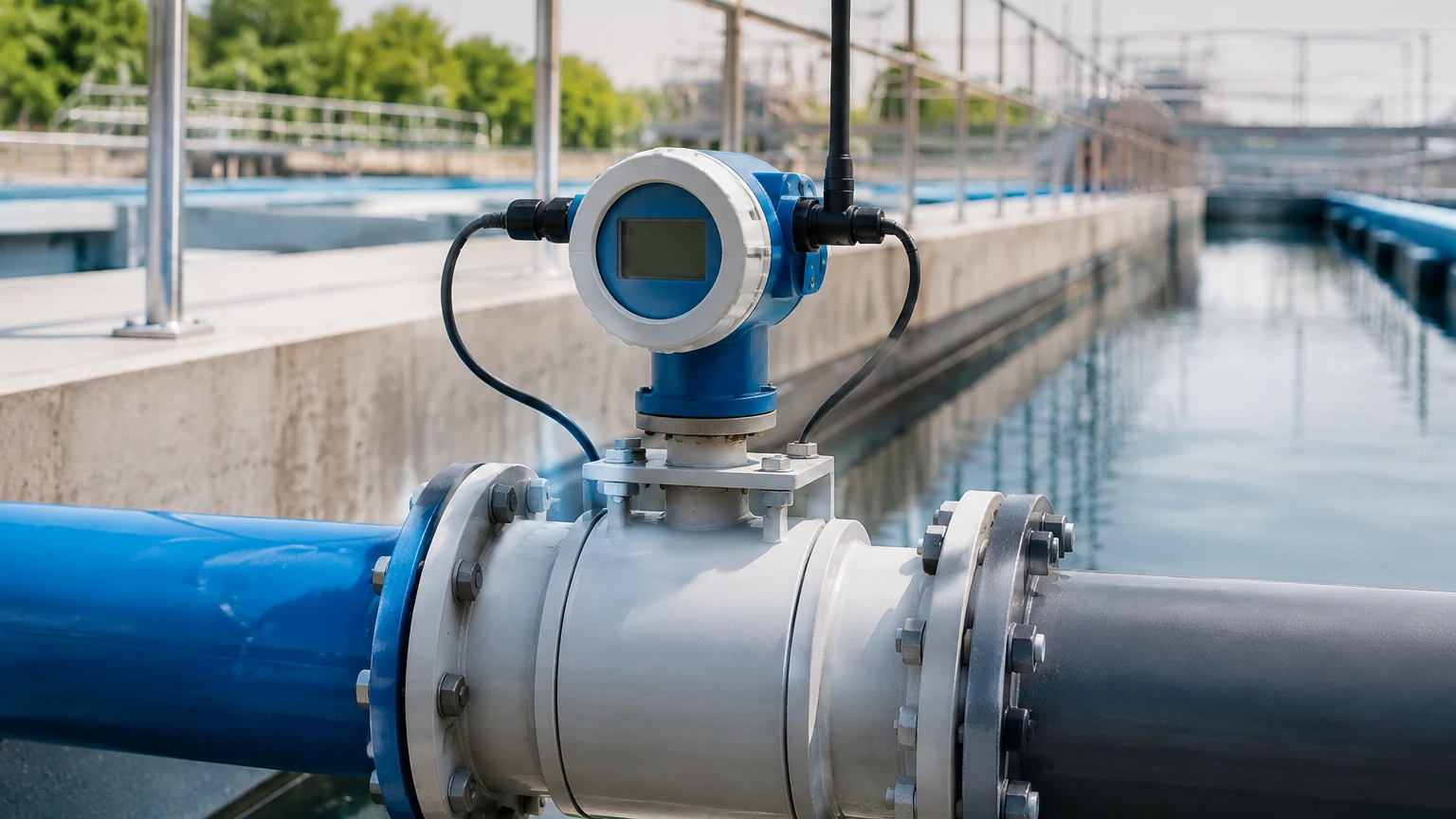
Electromagnetic flow meters, often called magmeters, operate on Faraday’s Law of Electromagnetic Induction. When a conductive liquid (such as water) flows through a magnetic field generated by the meter, it produces a voltage proportional to the velocity of the liquid.
* Advantages: No moving parts, negligible pressure drop, and high accuracy (typically ±0.5%).
* Requirement: The liquid must have a minimum conductivity, usually >5 μS/cm.
Ultrasonic Flow Measurement
Ultrasonic meters use sound waves to determine flow velocity. There are two primary types: transit-time and Doppler. Transit-time meters measure the time difference between signals sent upstream and downstream. This technology is ideal for clean water applications.
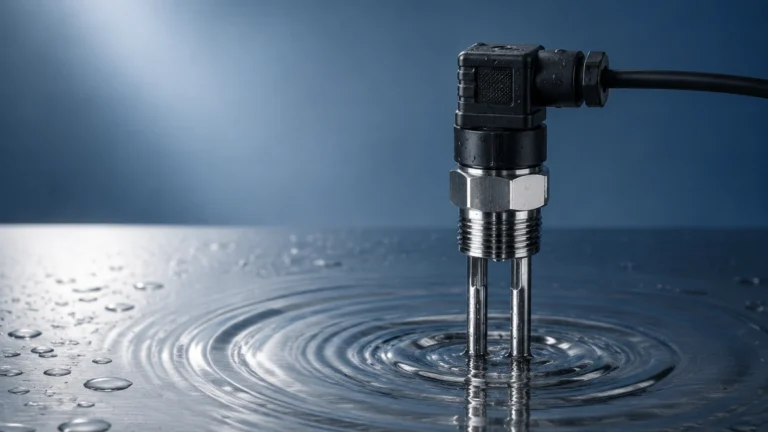
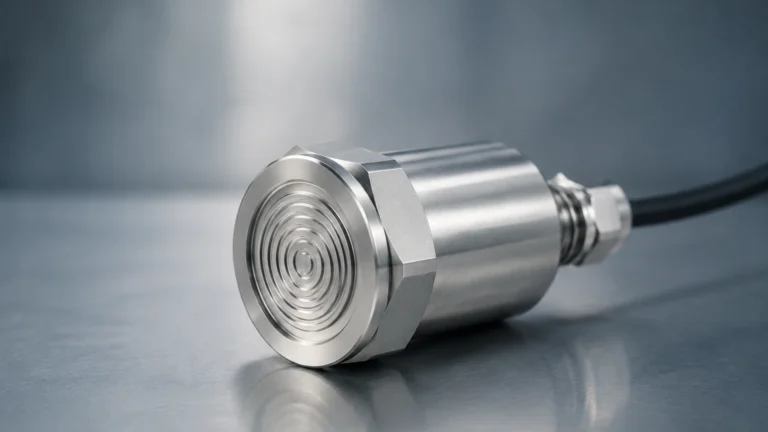
In many industrial setups, ultrasonic technology is also applied to open-channel flow. By using an ultrasonic level sensor to measure the head height over a weir or flume, the system calculates flow based on established hydraulic formulas. For comprehensive fluid monitoring, users often refer to the Main Page of specialized instrument providers to find level sensors that complement their flow measurement strategy.
Turbine and Vortex Flow Measurement
Turbine meters use a mechanical rotor that spins at a speed proportional to the flow rate. While highly accurate for clean water, they have moving parts that can wear over time. Vortex meters, conversely, measure the frequency of vortices shed by a "bluff body" placed in the flow stream. These are robust and suitable for high-velocity applications.
The Telemetry System Architecture
A digital water flow meter with telemetry system consists of three primary layers: the sensing layer, the transmission layer, and the data management layer.
1. Sensing Layer: The flow meter (electromagnetic, ultrasonic, etc.) captures the raw flow data and converts it into a digital signal (e.g., Modbus RTU, Pulse, or 4-20mA).
2. Transmission Layer: This is the core of the telemetry system. A wireless module (RTU or Gateway) collects data from the meter and transmits it via cellular networks (NB-IoT, 4G/5G), radio frequencies (LoRaWAN), or satellite links.
3. Data Management Layer: The transmitted data is received by a central server or cloud platform. Here, the data is processed, stored, and displayed via a dashboard for end-users to analyze.
Key Selection Criteria for Industrial Applications
Selecting the appropriate system requires balancing technical requirements with environmental constraints. The following table provides a comparison of common digital flow meter technologies used in telemetry-enabled systems.
Technology Comparison Table
| Feature | Electromagnetic | Ultrasonic (Transit-time) | Turbine | Open Channel (Ultrasonic Level) |
| :— | :— | :— | :— | :— |
| Best Fluid Type | Conductive liquids/Slurries | Clean water/Chemicals | Clean, low-viscosity liquids | Raw water/Wastewater |
| Accuracy | ±0.5% of rate | ±1.0% to ±2.0% | ±0.25% to ±0.5% | ±2.0% to ±5.0% |
| Pipe Sizes | 10 mm to 3000 mm | 15 mm to 6000 mm | 5 mm to 300 mm | N/A (Channels/Flumes) |
| Maintenance | Very Low | Low | Moderate (Moving parts) | Low |
| Pressure Drop | None | None | Significant | None |
Communication Protocol Selection
When choosing the telemetry component, consider the following protocols:
* NB-IoT (Narrowband IoT): Excellent for deep indoor penetration and long battery life; ideal for meters in pits or basements.
* LoRaWAN: Best for private networks across large industrial sites where cellular coverage is poor.
* 4G/LTE: Suitable for high-frequency data transmission where power is readily available.
Installation and Engineering Considerations
The reliability of a digital water flow meter with telemetry system is highly dependent on proper installation. Even the most advanced telemetry cannot compensate for poor sensor placement.
Straight Pipe Requirements
Most flow meters require a specific length of straight pipe upstream and downstream to ensure a stable, non-turbulent flow profile. A common rule of thumb is "10D Upstream and 5D Downstream," meaning the straight run should be 10 times the pipe diameter before the meter and 5 times the diameter after it.
Grounding and Interference
For electromagnetic meters, proper grounding is critical to prevent electrical noise from interfering with the small voltage signals generated by the flow. In telemetry systems, ensure that the wireless antenna is not shielded by metal enclosures or buried too deep underground, which could attenuate the signal.
Power Supply Management
Remote telemetry units often operate in locations without mains power. In these cases, battery-powered or solar-powered systems are required. Engineers must calculate the "reporting interval" (e.g., sending data once per hour vs. once per minute) to balance data granularity with battery longevity. Lithium-thionyl chloride (Li-SOCl2) batteries are frequently used for their high energy density and wide temperature range.
Limitations and Common Risks
While telemetry offers significant advantages, there are inherent limitations that must be managed:
* Signal Dead Zones: In remote mountainous areas or deep underground vaults, cellular signals may be non-existent. In such cases, external high-gain antennas or satellite telemetry may be the only viable options.
* Data Security: Transmitting industrial data over public networks introduces cybersecurity risks. Systems should utilize end-to-end encryption (AES-128 or higher) and secure VPN tunnels.
* Environmental Extremes: Sensors and transmitters must be rated for their environment. For outdoor installations, an IP68 rating is recommended to protect against submersion and dust ingress.
* Calibration Drift: Over time, sensors may drift. Digital systems should support remote diagnostics, allowing technicians to check the health of the meter without traveling to the site.
Frequently Asked Questions (FAQs)
Q: Can I retro-fit telemetry to an existing mechanical water meter?
A: Yes, if the mechanical meter has a pulse output or a communication port (like M-Bus), a telemetry gateway can be added to digitize and transmit the data. However, for high-accuracy industrial applications, a dedicated digital meter is preferred.
Q: How often should the telemetry system transmit data?
A: This depends on the application. For billing and general monitoring, once or twice a day is sufficient. For leak detection or process control, data may need to be transmitted every 5 to 15 minutes.
Q: What happens to the data if the wireless network goes down?
A: High-quality digital flow meters with telemetry systems include internal data logging. They store the data locally with timestamps and "backfill" the central database once the connection is restored.
Q: Are these systems compatible with SCADA?
A: Most modern telemetry gateways support standard protocols such as MQTT or OPC UA, making them easily integratable into existing SCADA or Building Management Systems (BMS).
Conclusion
Implementing a digital water flow meter with telemetry system is a strategic investment for any water-intensive industry. By selecting the correct measurement principle—whether electromagnetic for slurries or ultrasonic for clean water—and pairing it with a robust wireless protocol like NB-IoT or LoRaWAN, organizations can achieve unprecedented visibility into their water infrastructure.
When designing these systems, it is vital to consult with manufacturers who offer a broad range of instrumentation. While flow is a primary metric, integrating it with level measurement solutions, such as those found on the Main Page, ensures a holistic approach to industrial fluid management. Proper attention to installation geometry, power management, and signal integrity will ensure the system provides accurate, actionable data for years to come.
Download Digital Water Flow Meter with Telemetry System as a PDF