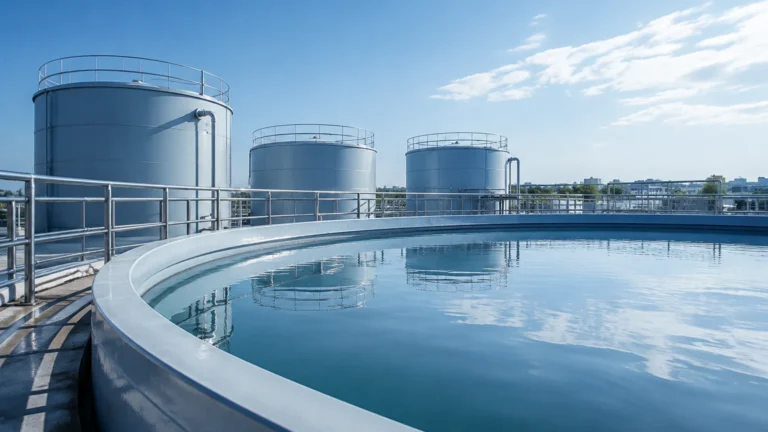
Digitalization in Hazardous Areas
Digitalization in Hazardous Areas
The integration of digital technologies into industrial environments—often referred to as Industry 4.0—has revolutionized how process data is collected, analyzed, and utilized. However, implementing digitalization in hazardous areas presents unique engineering challenges. In sectors such as oil and gas, chemical processing, and wastewater treatment, the presence of flammable gases, vapors, or combustible dusts requires instrumentation that balances high-speed data transmission with stringent explosion protection standards.
Modern level measurement solutions are at the forefront of this digital transformation. By transitioning from traditional analog signals to smart, networked sensors, operators can achieve higher accuracy, predictive maintenance capabilities, and enhanced safety. This guide explores the principles of digital level measurement, the selection of appropriate technologies, and the critical considerations for deploying these systems within hazardous zones.
Understanding Level Measurement Principles in Digital Systems
Before implementing digitalization in hazardous areas, it is essential to understand the underlying measurement principles of the instruments being networked. Digitalization does not change the physics of measurement, but it significantly changes how that measurement data is processed and communicated.
Radar Level Measurement
Radar level meters, including both non-contact and guided wave varieties, operate on the Time-of-Flight (ToF) principle. The sensor emits high-frequency electromagnetic pulses (typically in the GHz range) that travel to the product surface and reflect back to the receiver.
In a digitalized framework, advanced Frequency Modulated Continuous Wave (FMCW) radar sensors do more than just measure distance. They process complex echo curves to filter out interference from agitators or internal tank structures. Digital radar meters provide high resolution (often within ±2 mm) and can transmit diagnostic data regarding signal strength and foam detection via digital protocols to a central Main Page for real-time monitoring.
Ultrasonic Level Sensors
Ultrasonic sensors use sound waves (typically 20 kHz to 200 kHz) to determine the distance to a liquid or solid surface. The time taken for the pulse to return is proportional to the distance. While cost-effective, ultrasonic measurement is sensitive to temperature fluctuations and heavy vapor. Digital ultrasonic transmitters compensate for these variables using integrated temperature sensors and digital algorithms, ensuring that the data fed into the plant’s digital network remains accurate despite changing atmospheric conditions.
Hydrostatic Level Transmitters
Hydrostatic measurement relies on the principle that the pressure at a specific depth in a liquid is proportional to the height of the liquid column above it. Digital hydrostatic transmitters use high-precision piezoresistive or ceramic pressure cells. The digitalization of these sensors allows for remote zero-point adjustment and density compensation, which is critical when the stored media changes temperature or composition.
Magnetic Level Gauges and Switches
Magnetic level gauges provide a visual indication through a float-and-flap system. To integrate these into a digitalized hazardous area, they are equipped with reed-chain transmitters or magnetostrictive sensors. These components convert the mechanical position of the float into a digital signal, allowing the visual gauge to serve as a primary local indicator while providing continuous data to the control system.
The Role of Digitalization in Hazardous Areas
Digitalization in hazardous areas involves more than just replacing an analog gauge with a digital display. It refers to the end-to-end connectivity of field devices located in explosive atmospheres (Ex-zones) with higher-level plant management systems.
From 4-20mA to Smart Data
Traditionally, level instruments used a 4-20mA analog loop to transmit a single process variable (the level). Digitalization introduces protocols that allow for multi-variable transmission. A single smart radar meter can now transmit the level, the volume, the internal temperature of the electronics, and signal quality diagnostics simultaneously. This "rich data" is the foundation of predictive maintenance, allowing technicians to identify a fouling sensor before it fails.
IIoT and Edge Computing
The Industrial Internet of Things (IIoT) enables sensors in hazardous areas to communicate directly with cloud-based platforms or edge gateways. In a digitalized refinery, for instance, level data from hundreds of tanks can be aggregated to optimize supply chain logistics. The challenge lies in ensuring that the gateways and wireless nodes used to transmit this data comply with ATEX or IECEx certifications for Zone 0, 1, or 2.
Communication Protocols for Hazardous Zone Instruments
Selecting the right communication protocol is a cornerstone of digitalization. In hazardous areas, the protocol must be compatible with the safety barriers and galvanic isolators required for intrinsic safety.
1. HART (Highway Addressable Remote Transducer): The most common transitional protocol. It superimposes a digital signal on top of the standard 4-20mA analog loop. It is widely supported by hazardous area barriers.
2. Modbus RTU / RS485: Often used for multi-drop configurations where multiple sensors are connected to a single bus. In hazardous areas, this requires specific flameproof (Ex d) enclosures or intrinsically safe (Ex i) isolated repeaters.
3. PROFIBUS PA and FOUNDATION Fieldbus: These are fully digital protocols designed specifically for process automation. They provide high-speed data and power over the same pair of wires, following the FISCO (Fieldbus Intrinsically Safe Concept) to simplify loop calculations in explosive zones.
4. WirelessHART and ISA100.11a: These wireless protocols eliminate the need for expensive cabling in hazardous areas, which can significantly reduce installation costs in large tank farms.
Selection Criteria for Digital Level Meters
When choosing equipment for a digitalized project in a hazardous environment, engineers must evaluate both the measurement technology and the digital compatibility.
Practical Selection Table
| Technology | Typical Accuracy | Digital Protocols | Best Suited For | Hazardous Area Suitability |
| :— | :— | :— | :— | :— |
| Radar (FMCW) | ±2 mm | HART, Modbus, Profibus | Volatile chemicals, tall silos | Zone 0, 1, 2 (Ex ia/d) |
| Ultrasonic | ±0.25% of range | HART, Modbus | Water treatment, open channels | Zone 1, 2 (Ex m/ia) |
| Hydrostatic | ±0.1% of span | HART, 4-20mA | Deep wells, vented tanks | Zone 0, 1, 2 (Ex ia) |
| Magnetic Gauge | ±5 mm to 10 mm | HART, Reed Switch | High pressure, toxic media | Zone 0, 1, 2 (Ex d/ia) |
| Level Switch | ±1 mm (Repeatability) | Relay, Transistor, IO-Link | Overfill protection | Zone 0, 1, 2 (Ex ia/d) |

Installation and Safety Considerations
Digitalization in hazardous areas requires strict adherence to wiring and enclosure standards. Even the most advanced digital sensor is a liability if not installed correctly.
Protection Methods
* Intrinsic Safety (Ex i): This method limits the electrical and thermal energy available in the circuit to a level below what is required to ignite a specific hazardous atmospheric mixture. This is the preferred method for digital sensors as it allows for live maintenance.
* Flameproof/Explosion-Proof (Ex d): The equipment is housed in an enclosure that can withstand an internal explosion and prevent the flame from reaching the external atmosphere. This is often used for high-power digital devices like heavy-duty radar transmitters.
Wiring and Signal Integrity
Digital signals are more susceptible to electromagnetic interference (EMI) than high-current analog signals. In hazardous areas, shielded twisted-pair cabling is essential. Furthermore, the use of Ethernet-APL (Advanced Physical Layer) is emerging as a standard for bringing high-speed Ethernet (10 Mbit/s) directly into Zone 0, providing both power and data over long distances (up to 1,000 m or 3,280 ft).
Grounding and Bonding
Proper grounding is critical to prevent static build-up and to ensure the effectiveness of surge protection. In digital systems, improper grounding can create ground loops that corrupt digital data packets, leading to communication errors in the control system.
Limitations and Operational Risks
While digitalization offers numerous benefits, it is not without limitations, especially in extreme industrial environments.
* Power Constraints: Intrinsically safe circuits have strict power limits. High-performance digital processors and wireless transmitters may require more power than an Ex i barrier can provide, necessitating the use of Ex d enclosures or specialized power management.
* Cybersecurity: As soon as level meters are connected to a digital network, they become potential entry points for cyber threats. Instruments must be integrated into a secure network architecture with robust firewalls and restricted access protocols.
* Complexity of Configuration: Digital instruments often require specialized software or handheld communicators for setup. In hazardous areas, these tools must also be rated for the environment, or the work must be performed under a hot-work permit.
Frequently Asked Questions (FAQs)
Q: Can I use a standard Wi-Fi router to digitalize my hazardous area tank farm?
A: No. Standard Wi-Fi equipment is not rated for explosive atmospheres. You must use specialized wireless gateways and access points that are ATEX/IECEx certified. Furthermore, industrial protocols like WirelessHART are more reliable for process data than standard Wi-Fi.
Q: Is digital radar better than ultrasonic for hazardous chemical tanks?
A: Generally, yes. Radar is unaffected by the vapors, pressure, and temperature changes common in chemical storage. Digital radar also provides better signal processing to ignore internal tank obstructions.
Q: How does digitalization affect the SIL (Safety Integrity Level) rating?
A: Digitalization can improve a system's SIL rating by providing better diagnostics. A "smart" sensor can detect internal failures and report them immediately, reducing the Probability of Failure on Demand (PFD).
Conclusion
Digitalization in hazardous areas is a critical step for modern industrial facilities seeking to improve efficiency and safety. By selecting the right measurement principles—whether radar, ultrasonic, or hydrostatic—and pairing them with robust digital protocols, operators can gain unprecedented insights into their processes. When planning a digital upgrade, it is vital to confirm the specific Ex-zone requirements, the compatibility of digital protocols with existing safety barriers, and the long-term maintenance strategy for the networked instruments. For those evaluating hardware options, reviewing the latest specifications on a professional Main Page is the recommended first step in ensuring a compliant and effective installation.