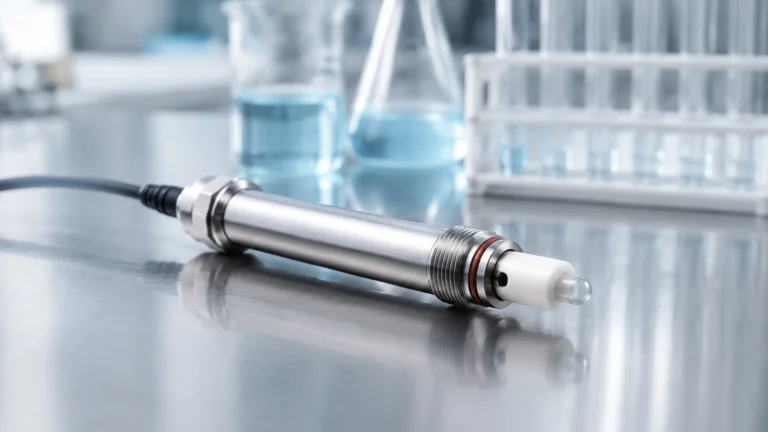
Electrochemical Oxygen Sensor
Electrochemical Oxygen Sensor
In industrial process control and safety monitoring, the measurement of oxygen concentration is a fundamental requirement. Whether ensuring the safety of personnel in confined spaces or maintaining the precise atmosphere for chemical reactions, the electrochemical oxygen sensor remains one of the most widely utilized technologies. This article provides a technical overview of electrochemical oxygen sensing, its operational principles, selection criteria, and its role alongside other process instrumentation such as level measurement systems.
Understanding the Measurement Principles
An electrochemical oxygen sensor operates essentially as a specialized fuel cell. It converts the chemical energy of a gas oxidation or reduction reaction directly into electrical energy. The magnitude of the resulting electrical current is directly proportional to the partial pressure of oxygen in the sampled environment.
The Redox Reaction
The sensor typically consists of a sensing electrode (cathode), a counter electrode (anode), and an electrolyte solution, all housed within a plastic or metal enclosure. A thin, gas-permeable membrane (usually made of PTFE or similar fluoropolymers) seals the sensor, allowing gas molecules to diffuse into the electrolyte while preventing liquid leakage.
When oxygen molecules diffuse through the membrane, they reach the cathode, where a reduction reaction occurs:
O₂ + 2H₂O + 4e⁻ → 4OH⁻
Simultaneously, at the anode, an oxidation reaction takes place. In many common galvanic sensors, a lead (Pb) anode is used:
2Pb + 4OH⁻ → 2PbO + 2H₂O + 4e⁻
The overall reaction consumes the anode material over time, which is why these sensors have a finite lifespan. The movement of electrons from the anode to the cathode through an external circuit creates a measurable current. Because the rate of oxygen diffusion is limited by the membrane and proportional to the oxygen concentration, the current produced reflects the oxygen level accurately.
Types of Electrochemical Oxygen Sensors
There are two primary configurations used in industrial instrumentation: Galvanic and Polarographic.
1. Galvanic Sensors
Galvanic sensors are self-powered. The difference in electrochemical potential between the cathode (often gold or platinum) and the anode (lead) is sufficient to drive the reaction spontaneously. These sensors are favored for portable gas detectors and remote monitoring because they require no external bias voltage and provide an "instant-on" capability.
2. Polarographic (Clark) Sensors
Polarographic sensors require an external bias voltage (typically between 0.6V and 0.9V) applied between the electrodes to initiate the reduction of oxygen. While more complex in terms of circuitry, polarographic sensors often offer better stability and a longer shelf life because the electrodes are not consumed in the same manner as a galvanic lead anode. They are frequently used in laboratory settings and high-end continuous emissions monitoring systems (CEMS).
Technical Selection Criteria for Industrial Applications
Selecting the correct electrochemical oxygen sensor requires an analysis of the specific process environment. Engineers must look beyond simple concentration ranges to ensure long-term reliability.
Measurement Range and Resolution
Most industrial applications require monitoring in the 0–25% volume range (for ambient air safety) or 0–100% (for oxygen enrichment processes). However, for specialized applications like boiler feedwater monitoring or semiconductor manufacturing, trace oxygen sensors capable of measuring in the parts-per-billion (ppb) or parts-per-million (ppm) range are necessary. For broader process oversight, including liquid storage and vessel monitoring, consulting the Main Page of specialized instrumentation suppliers can help integrate these sensors with level and pressure data.
Temperature and Pressure Sensitivity
Electrochemical reactions are temperature-dependent. As temperature increases, the diffusion rate through the membrane increases, which can lead to false high readings. Quality sensors include internal thermistors to provide automatic temperature compensation (ATC). Similarly, since these sensors measure partial pressure, changes in atmospheric or process pressure will affect the output. In pressurized vessels, sensors must be pressure-compensated or installed in a bypass line at atmospheric pressure.
Cross-Sensitivity and Contaminants
Electrochemical sensors can be affected by "interfering gases." For example, high concentrations of Carbon Dioxide (CO₂) can react with alkaline electrolytes to form carbonates, which eventually blocks the sensor. In environments with acidic gases (like SO₂ or NO₂), specialized "acid-stable" electrolytes must be specified.
Installation and Operational Best Practices
Proper installation is critical to extending the life of an electrochemical oxygen sensor and ensuring accurate data for process safety.
Orientation and Placement
Sensors should generally be installed with the sensing membrane facing downwards. This prevents condensed moisture or particulates from settling on the membrane, which would block gas diffusion and cause a sluggish or falling response. In tanks where liquid levels fluctuate, sensors should be placed well above the maximum fill level to avoid submersion. Integrating these sensors with reliable level measurement tools, such as those found on the Main Page, ensures that gas sensors are never compromised by rising fluids.
Flow Rate Considerations
In extractive sampling systems, the flow rate of the gas across the sensor membrane must be controlled. If the flow is too low, oxygen may be consumed by the sensor faster than it is replaced, leading to an artificially low reading. Conversely, extremely high flow rates can create pressure differentials across the membrane, leading to instability. A typical flow rate of 0.5 to 1.0 liters per minute (L/min) is standard for most industrial housings.

Comparison of Oxygen Sensing Technologies
The following table compares electrochemical sensors with other common industrial oxygen measurement technologies.
| Feature | Electrochemical | Paramagnetic | Zirconia (Zirconium Oxide) |
| :— | :— | :— | :— |
| Principle | Chemical Redox | Magnetic Susceptibility | Ion Conductivity (High Temp) |
| Cost | Low to Moderate | High | Moderate to High |
| Maintenance | High (Sensor replacement) | Low | Moderate (Heater element) |
| Lifespan | 1–3 years | 10+ years | 3–5 years |
| Response Time | <15 seconds (T90) | <5 seconds | <3 seconds |
| Best Use | Portables, Safety, Ambient | High Purity Gas, CEMS | Combustion Control, Flue Gas |
Limitations and Troubleshooting
Despite their versatility, electrochemical oxygen sensors have inherent limitations that maintenance teams must manage.
1. Finite Life: The anode is a consumable part. Even in storage, the sensor is slowly reacting with ambient oxygen. Most sensors have a lifespan of 12 to 24 months in air.
2. Electrolyte Depletion: In very dry environments, the aqueous electrolyte can dehydrate, causing the sensor to fail. In extremely humid environments, the electrolyte can absorb moisture (dilution), potentially leaking or changing the sensor's calibration.
3. Pressure Shocks: Sudden changes in pressure can physically deform the thin membrane, leading to permanent damage or a temporary "spike" in the signal.
Common Troubleshooting Steps
* Low Output: Check for membrane fouling (oil, dust, or moisture). If the sensor is past its expiration date, the anode is likely exhausted.
* Slow Response: This often indicates a partially blocked membrane or an aging sensor where the electrolyte has become sluggish.
* Noisy Signal: Usually caused by electromagnetic interference (EMI) or poor electrical connections at the sensor pins.
Frequently Asked Questions (FAQ)
Q: How often should an electrochemical oxygen sensor be calibrated?
A: For safety applications, a "bump test" is recommended before each use, with a full calibration every 3 to 6 months. In stable process environments, quarterly calibration is usually sufficient.
Q: Can these sensors measure oxygen in pure nitrogen?
A: Yes, they are ideal for measuring oxygen deficiency or "leak detection" in inerting applications. They will output a near-zero current in a 100% nitrogen environment.
Q: Does the sensor require oxygen to survive?
A: No. Unlike some metal oxide sensors, electrochemical sensors do not require a minimum oxygen level to function, making them excellent for monitoring anaerobic processes.
Q: Can I use an electrochemical oxygen sensor in a vacuum?
A: Generally, no. The pressure differential will likely rupture the membrane or cause the electrolyte to leak. Sensors must be used in a sample-conditioned line at near-atmospheric pressure.
Conclusion
The electrochemical oxygen sensor is a robust and cost-effective solution for a wide range of industrial monitoring tasks. By understanding the underlying chemical reactions and the environmental factors that influence sensor health, engineers can design safer and more efficient systems. When combined with advanced level measurement and process automation tools—available through the Main Page of professional instrumentation providers—these sensors contribute to a comprehensive strategy for plant safety and operational excellence. Regular maintenance and a clear understanding of the sensor's finite lifespan are the keys to avoiding unexpected downtime and ensuring accurate gas concentration data.