Fmr245
Fmr245
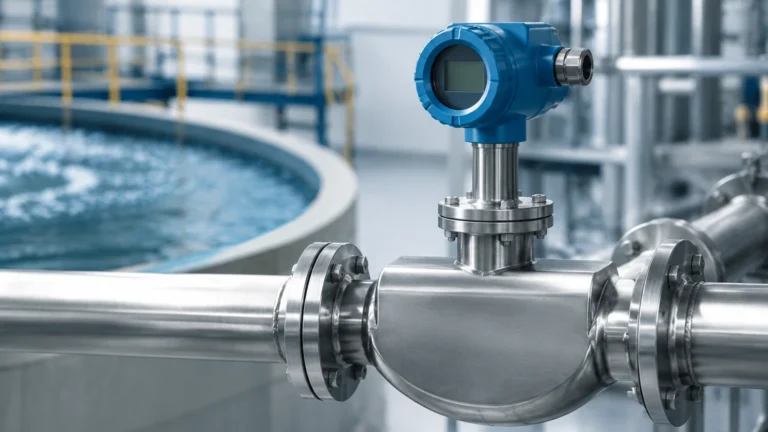
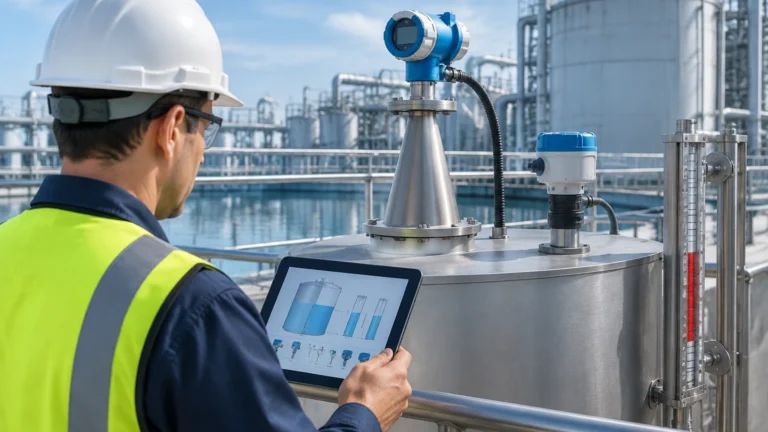
In the landscape of industrial process automation, precise level measurement is a cornerstone of operational efficiency, safety, and inventory management. Among the various technologies available, radar level measurement has emerged as a gold standard for challenging environments. The fmr245 represents a specific class of 26 GHz high-frequency pulse radar transmitters designed primarily for liquid level measurement. This article provides a comprehensive technical overview of the fmr245, its underlying measurement principles, selection criteria, and practical installation guidance for engineering professionals.
Measurement Principles of Radar Level Meters
To understand the capabilities of the fmr245, one must first grasp the physics of radar level detection. Radar instruments operate on the principle of "Time of Flight" (ToF). Unlike ultrasonic sensors that use sound waves, radar transmitters emit electromagnetic pulses that travel at the speed of light.
Pulse Radar Technology
In a pulse radar system like the fmr245, the sensor's antenna emits short microwave pulses toward the surface of the medium. These pulses are reflected by the product surface due to a change in the dielectric constant (relative permittivity) between the air/gas space and the stored material. The instrument measures the time interval between the emission of the pulse and its reception. Since the speed of light is constant, the distance ($D$) to the surface is calculated using the formula:
$D = (c \times t) / 2$
Where:
* $c$ is the speed of light.
* $t$ is the measured transit time.
Once the distance is known, the internal electronics subtract this value from the total tank height (calibration parameter) to determine the level of the liquid.
The Significance of 26 GHz Frequency
The fmr245 typically operates in the K-band (approximately 26 GHz). This higher frequency offers several advantages over older 6 GHz (C-band) radar units:
1. Narrower Beam Angle: Higher frequencies allow for a more focused signal beam for a given antenna size. This is critical in narrow tanks or vessels with internal obstructions like agitators or heating coils.
2. Smaller Antenna Sizes: High-frequency units can achieve high precision with smaller horn antennas, making them easier to install on existing small-diameter nozzles.
3. Better Reflection: Shorter wavelengths are more effectively reflected by the surface of many liquids, particularly those with lower dielectric constants.
Technical Specifications and Characteristics
The fmr245 is engineered for versatility across a wide range of process conditions. When evaluating this technology, engineers should consider the following typical performance envelopes:
* Measuring Range: Typically up to 20 meters (approx. 65 feet), with some variants extending to 40 meters depending on the dielectric properties of the medium.
* Accuracy: High-precision units offer an accuracy of ±2 mm (0.08 inches), ensuring tight control over inventory and process limits.
* Process Temperature: Standard models handle temperatures from -40°C to +150°C (-40°F to 302°F). High-temperature versions may extend this range further.
* Process Pressure: Capable of operating in environments ranging from vacuum to 40 bar (580 psi).
* Output Signals: Standard 4-20 mA with HART protocol is the norm, allowing for remote configuration and diagnostic monitoring via a PLC or SCADA system.
Selection Criteria for Level Measurement
Choosing the right instrument requires a comparison of the fmr245 against other common technologies. Welk provides a variety of solutions, and the following table assists in identifying the most appropriate technology for specific application needs.
Technology Comparison Table
| Feature | Radar (fmr245) | Ultrasonic | Hydrostatic | Magnetic Gauge |
| :— | :— | :— | :— | :— |
| Measurement Type | Non-contact | Non-contact | Contact (Pressure) | Contact (Float) |
| Medium | Liquids / Slurries | Liquids / Solids | Liquids | Liquids |
| Effect of Vacuum | None | Cannot operate | Minimal | None |
| Foam Sensitivity | Moderate | High | None | None |
| Max Temperature | +150°C to +250°C | +80°C | Dependent on seal | +400°C |
| Accuracy | ±2 mm | ±0.25% of range | ±0.1% to 0.5% | ±5 mm |
| Cost Profile | Mid to High | Low to Mid | Low | Mid |
When the application involves high temperatures, vacuum conditions, or vapors that would attenuate sound waves, the fmr245 radar transmitter is generally preferred over ultrasonic alternatives. For more detailed product comparisons and technical support, users should consult the Main Page of our industrial measurement catalog.
Application Engineering and Industry Use Cases
The fmr245 is a robust solution for several key industries where reliability is non-negotiable.
Chemical and Petrochemical
In chemical storage, tanks often contain volatile organic compounds (VOCs) or corrosive acids. The non-contact nature of the fmr245 prevents sensor degradation. Its ability to ignore heavy vapors and operate in pressurized vessels makes it ideal for solvents, alcohols, and hydrocarbons.
Water and Wastewater Treatment
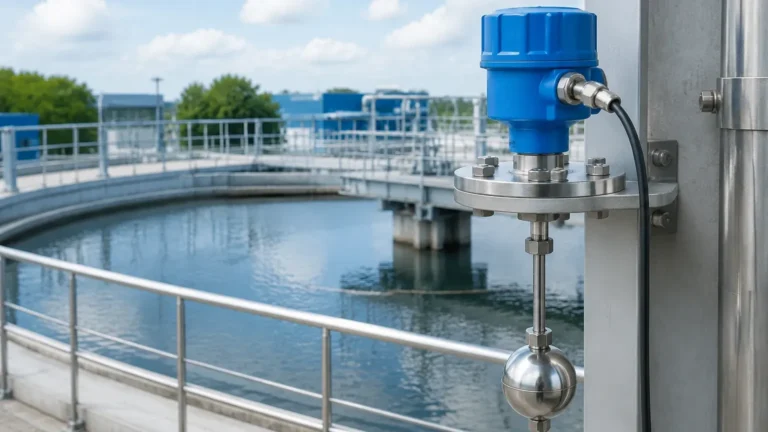
For large outdoor basins or chemical dosing tanks, radar is superior to ultrasonic sensors because it is unaffected by wind, ambient temperature fluctuations, or fog. The fmr245 provides stable readings even when the water surface is turbulent.
Food and Beverage
With hygienic antenna designs (such as PTFE-clad flush mounts), the fmr245 meets the stringent requirements for Clean-in-Place (CIP) and Sterilize-in-Place (SIP) processes. It is frequently used in milk storage, fruit juice processing, and brewing.
Installation Considerations and Best Practices
Proper installation is the most critical factor in ensuring the long-term accuracy of a radar level meter. Even the most advanced fmr245 unit will fail if the signal path is compromised.
1. Nozzle Geometry
The antenna should ideally extend below the bottom of the mounting nozzle. If the nozzle is significantly longer than the antenna horn, internal reflections (ringing) can create a "dead zone" at the top of the tank. A general rule of thumb is that the nozzle height ($L$) should not exceed three times the nozzle diameter ($D$).
2. Positioning and Beam Path
* Wall Distance: Do not mount the sensor too close to the tank wall. The beam spreads as it travels; if it hits the wall, it will cause false echoes. Maintain a distance of at least 1/6th of the tank diameter from the wall.
* Obstructions: Ensure the signal beam does not intersect with ladders, pipes, or agitator blades. If an obstruction is unavoidable, many modern transmitters allow for "False Echo Suppression," where the instrument learns the fixed reflections and ignores them.
* Inflow: Never mount the sensor directly above the tank's filling inlet. The falling liquid will interfere with the radar pulse.
3. Antenna Alignment
For liquid applications, the antenna must be mounted perpendicular to the liquid surface. A slight tilt can result in a significant loss of signal strength, as the radar pulse reflects away from the receiver rather than back toward it.

Limitations and Environmental Factors
While the fmr245 is highly versatile, it is not a "one-size-fits-all" solution. Engineers must be aware of specific limitations:
* Dielectric Constant (DK): The strength of the reflected signal is directly proportional to the DK of the medium. Materials with very low DK (like liquefied gases or pure oils) reflect very little energy. In these cases, a guided wave radar or a larger antenna horn may be required.
* Heavy Foam: Dense, thick foam can absorb radar signals, leading to a loss of echo. While the fmr245 can penetrate light foam, applications with consistent heavy foaming may require a different approach, such as a stilling well or hydrostatic pressure measurement.
* Condensation: While many antennas are designed to shed droplets, heavy condensation on the antenna face can attenuate the signal. Integrated air purging or PTFE covers can mitigate this issue.
Maintenance and Troubleshooting
Radar level meters are generally low-maintenance because they have no moving parts. However, periodic checks are recommended:
1. Antenna Cleaning: In applications with crystallizing or sticky media, buildup on the antenna can occur. If the signal strength (Amplitude) drops over time, the antenna should be inspected and cleaned.
2. Signal Quality Monitoring: Most fmr245 units provide a signal-to-noise ratio or echo quality metric. Monitoring this via HART can provide an early warning of potential failures before they result in a process shutdown.
3. Cable Integrity: Ensure that cable glands are tight and that there is no moisture ingress into the electronics housing, which is a common cause of intermittent signal loss.
Frequently Asked Questions (FAQs)
Q: Can the fmr245 measure solids?
A: While primarily designed for liquids, it can measure some fine-grained solids. However, for bulk solids with steep angles of repose, a dedicated solids radar with a higher power output or a specialized aiming flange is usually recommended.
Q: Does the fmr245 require recalibration if the liquid density changes?
A: No. Unlike hydrostatic pressure transmitters, radar measurement is based on the time of flight and is independent of the liquid's density or viscosity. It only depends on the dielectric constant.
Q: What is the minimum dielectric constant required for a reliable reading?
A: Generally, for a standard fmr245 with a horn antenna, a dielectric constant ($ε_r$) of 1.9 or higher is recommended for free-space measurement. For lower values, a stilling well can be used to concentrate the signal.
Q: How does the fmr245 handle agitation?
A: Agitation creates surface ripples that can scatter the signal. The fmr245 uses advanced software algorithms to average these fluctuations and provide a stable output. If the agitation is extreme, a stilling well is the best mechanical solution.
Conclusion
The fmr245 radar level transmitter is a sophisticated yet practical tool for modern industrial processes. By utilizing 26 GHz pulse technology, it provides high accuracy and a narrow beam profile suitable for complex vessel geometries. When selected and installed according to engineering best practices, it offers a maintenance-free solution that withstands the rigors of chemical, water treatment, and food processing environments. For those seeking to integrate these solutions into their facility, reviewing technical documentation and product options on our Main Page is the recommended next step for ensuring application success.