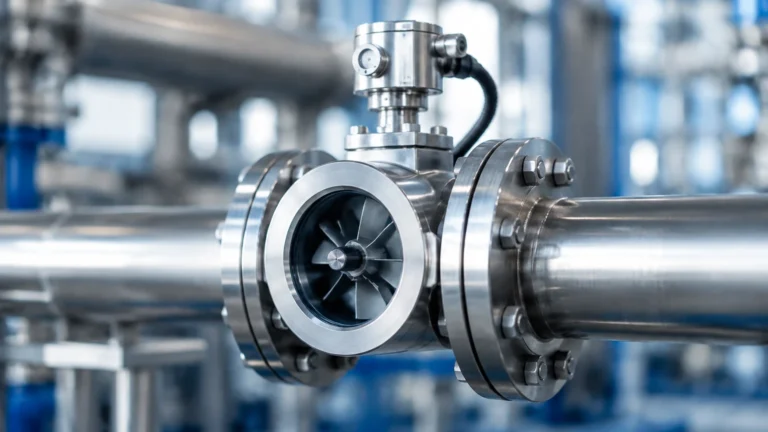
Cerabar Pmc21
Cerabar Pmc21
In the field of industrial automation and process control, pressure measurement is a fundamental parameter used not only to monitor system stress but also to determine the level of liquids in tanks and vessels. The Cerabar PMC21 represents a specific class of compact pressure transmitters designed for gauge and absolute pressure measurement. Utilizing a dry, capacitive ceramic sensor, this instrument is widely recognized for its robustness and stability in various industrial environments.
For engineers and plant managers, selecting the right pressure transmitter requires an understanding of the underlying sensor technology, the physical environment of the application, and the specific requirements of the process media. This guide provides a technical overview of the Cerabar PMC21, its measurement principles, and its practical application in industrial level and pressure monitoring.
Measurement Principles: Hydrostatic Level and Pressure
The Cerabar PMC21 operates primarily as a pressure transmitter, but in many B2B applications, it is utilized for hydrostatic level measurement. To select the correct instrument, it is essential to understand how these physical properties are translated into electronic signals.
Hydrostatic Level Measurement
Hydrostatic level measurement is based on the principle that the pressure at the bottom of a liquid column is directly proportional to the height of that liquid. The formula used is:
P = ρ × g × h
* P: Hydrostatic pressure
* ρ (rho): Density of the liquid
* g: Acceleration due to gravity (approx. 9.81 m/s²)
* h: Height of the liquid column
By measuring the pressure at a fixed point (usually the bottom of a tank), and knowing the density of the fluid, the transmitter can calculate the level. The Cerabar PMC21 is particularly suited for vented tanks where gauge pressure measurement is required to compensate for atmospheric pressure changes.
The Ceramic Capacitive Sensor
Unlike traditional transmitters that use a metallic diaphragm and an internal oil fill to transmit pressure to the sensing element, the Cerabar PMC21 features a "dry" ceramic sensor.
1. Structure: The sensor consists of a ceramic substrate and a ceramic diaphragm.
2. Function: As pressure is applied to the diaphragm, it deflects slightly, changing the capacitance between the diaphragm and the substrate.
3. Conversion: This change in capacitance is measured by the internal electronics and converted into a standardized 4-20mA or digital signal.
The absence of oil fill (oil-free) is a significant advantage in applications where contamination is a risk, such as in food processing or ultrapure water systems. Furthermore, ceramic (typically 99.9% Al₂O₃) is highly resistant to corrosion and mechanical abrasion.
Technical Specifications and Evaluation Criteria
When evaluating the Cerabar PMC21 for a project, several technical parameters must be confirmed to ensure compatibility with the process. For broader options in level sensing, including radar and ultrasonic technologies, engineers often consult the Main Page of specialized manufacturers to compare performance benchmarks.
Key Technical Data
* Pressure Ranges: Typically available from 100 mbar to 40 bar (1.5 psi to 600 psi).
* Accuracy: Standard accuracy is often around 0.5% of the span, with options for higher precision in specific configurations.
* Output Signal: 4 to 20 mA (analog) is the industry standard for integration into PLCs and DCS units.
* Process Temperature: Generally rated for -25°C to +100°C (-13°F to 212°F).
* Materials: The housing is typically 316L stainless steel, while the process diaphragm is high-purity ceramic.
Selection Table: Application Suitability
| Feature | Cerabar PMC21 Capability | Industrial Benefit |
| :— | :— | :— |
| Sensor Material | Ceraphire (99.9% Al2O3) | High vacuum and abrasion resistance. |
| Design | Compact / Threaded | Easy installation in tight spaces. |
| Protection Class | IP65 to IP68 | Suitable for wash-down or outdoor use. |
| Overload Capacity | Up to 40x nominal pressure | Protects against pressure surges/water hammer. |
Practical Selection and Engineering Considerations
Choosing a Cerabar PMC21 involves more than matching a pressure range. Engineers must consider the chemical compatibility of the seals and the physical constraints of the mounting point.
Material Compatibility
While the ceramic diaphragm is extremely inert, the O-rings (seals) used to secure the sensor must be compatible with the process fluid. Common materials include:
* FKM (Viton): Excellent for oils and many chemicals.
* EPDM: Preferred for water-based applications and some food-grade processes.
* FFKM: Used for highly aggressive chemical environments.
Vacuum Resistance
One of the standout features of the ceramic capacitive cell used in the PMC21 is its inherent resistance to vacuum. Metallic diaphragms can sometimes suffer from "oil outgassing" or permanent deformation under vacuum conditions. The dry ceramic cell remains stable, making it an ideal choice for processes that alternate between pressure and vacuum, such as CIP (Clean-In-Place) cycles.
Installation Guidelines
Correct installation is critical to ensure the longevity and accuracy of the pressure transmitter. Improper mounting can lead to signal drift or mechanical failure.
1. Mounting Position: The transmitter can be mounted in any orientation. However, for liquid level applications, it should be installed at the lowest point of the tank. If installed on a side wall, ensure the diaphragm is not prone to sediment buildup.
2. Pressure Compensation: For gauge pressure measurement, the transmitter requires a reference to atmospheric pressure. This is usually achieved through a vented cable or a venting element on the housing. Ensure this vent is not blocked or exposed to direct water spray.
3. Process Connections: Standard threads like G1/2" or 1/2" NPT are common. Use appropriate thread sealant or gaskets to prevent leaks, ensuring that the sealant does not obstruct the diaphragm.
4. Wiring: Use shielded cables to prevent electromagnetic interference (EMI) from affecting the 4-20mA signal, especially in environments with large motors or frequency drives.

Limitations and Risks
While the Cerabar PMC21 is a versatile tool, it is not a universal solution for every measurement challenge. Engineers should be aware of the following limitations:
* Temperature Extremes: With a standard limit of 100°C, it is not suitable for high-pressure steam or molten materials without specialized cooling siphons or remote seals.
* Clogging Media: In applications with high solids content or viscous sludges, the small process connection of a compact transmitter may clog. In these instances, a flush-mounted diaphragm or a larger magnetic level gauge might be more appropriate.
* Hydrogen Permeation: While ceramic is resistant to many things, certain specialized gas applications involving hydrogen can require specific metallic diaphragms with gold plating to prevent permeation, which ceramic cannot address in the same way.
Comparison: Ceramic vs. Metallic Diaphragms
| Criteria | Ceramic (PMC21 Style) | Metallic (PMP Style) |
| :— | :— | :— |
| Abrasion Resistance | Excellent | Moderate |
| Vacuum Stability | High | Variable |
| Risk of Contamination | Low (Oil-free) | Moderate (Oil-filled) |
| Response Time | Fast | Very Fast |
| High Temp Support | Limited | High (with capillaries) |
Frequently Asked Questions (FAQ)
Q1: Can the Cerabar PMC21 be used for steam applications?
A: Only if the temperature at the sensor diaphragm is kept within its rated limits (typically <100°C). This is usually achieved by using a pigtail siphon or water seal to dissipate heat before the steam reaches the transmitter.
Q2: What is the difference between gauge and absolute pressure in the PMC21?
A: Gauge pressure (standard) measures pressure relative to the local atmospheric pressure. Absolute pressure measures relative to a perfect vacuum. Level measurement in open tanks always requires gauge pressure.
Q3: How often does the unit require calibration?
A: While the ceramic sensor is known for long-term stability, most industrial quality systems recommend an annual calibration check to ensure the 4-20mA output remains within the specified accuracy tolerance.
Q4: Is the Cerabar PMC21 suitable for hygienic applications?
A: The PMC21 is often used in general industrial applications. For high-level hygienic requirements (3-A or EHEDG), specific versions with hygienic process connections and food-grade certificates are required.
Conclusion
The Cerabar PMC21 is a workhorse for B2B industrial pressure and level measurement, offering a balance of durability and cost-effectiveness. Its ceramic capacitive sensor provides a unique advantage in vacuum resistance and oil-free operation, making it a staple in water treatment, machine building, and general process industries. For projects requiring a broader scope of instrumentation—ranging from radar level meters to magnetic gauges—it is recommended to review the comprehensive technical resources available on the Main Page to ensure the selected technology aligns with the specific chemical and physical demands of the application.