Guage-towers
Guage-towers
In the complex landscape of industrial process control, achieving a stable and accurate level measurement is often hindered by the physical dynamics within a storage tank or process vessel. Turbulence, foam, internal obstructions, and high-velocity fluid entry can compromise the integrity of sensor signals. To mitigate these challenges, engineers frequently employ guage-towers—specialized vertical structures designed to isolate the measurement instrument from the broader vessel environment. Whether configured as internal stilling wells or external bypass chambers, these components serve as a protective conduit that ensures the reliability of level data across diverse applications, from chemical processing to water treatment.
Understanding the Role of Guage-towers in Industrial Level Measurement
A guage-tower is essentially a pipe or chamber that houses a level sensor, creating a calm surface for measurement. In many industrial tanks, agitators create significant surface ripples, or inflow pipes cause splashing. Without a guage-tower, a non-contact radar or ultrasonic sensor might receive scattered signals, leading to "noise" or false readings.
For contact-based technologies, such as magnetic level gauges or hydrostatic transmitters, guage-towers provide a dedicated space that prevents the instrument from being damaged by internal tank hardware or high-viscosity movements. By isolating a small column of liquid that is hydraulically connected to the main vessel, the tower ensures that the level inside the pipe is identical to the level in the tank, but without the chaotic surface conditions. This is particularly critical in the oil and gas sector, where liquid-liquid interfaces (such as oil and water) need precise monitoring despite the presence of emulsions or foam.
Measurement Principles and the Waveguide Effect
The integration of guage-towers significantly alters how different sensing technologies interact with the medium. Understanding these principles is essential before selecting a specific tower configuration.
Radar Level Measurement
In the context of radar technology, a guage-tower (specifically a stilling well) acts as a waveguide. When a radar pulse is transmitted into a metal pipe, the electromagnetic waves are contained within the walls, preventing signal divergence. This concentration of energy allows for a much stronger return echo, even from liquids with low dielectric constants. For non-contact radar, the pipe must be smooth and straight; any internal weld beads or misalignments can cause parasitic reflections. For guided wave radar (GWR), the tower provides a controlled environment that eliminates interference from tank walls or internal baffles.
Ultrasonic Level Measurement
Ultrasonic sensors rely on sound waves. In a large open tank, wind or vapor layers can deflect these waves. A guage-tower provides a confined path for the sound pulse to travel. However, engineers must ensure the tower diameter is sufficient to prevent the sound beam from hitting the pipe walls before reaching the liquid surface. Typically, a minimum diameter of 100 mm (approx. 4 inches) is recommended for ultrasonic applications to avoid signal attenuation.
Magnetic and Float-Based Systems
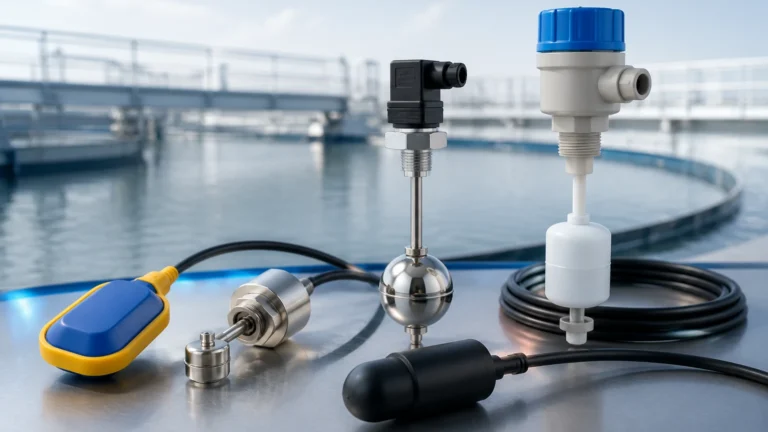
For magnetic level gauges, the guage-tower is usually an external bypass chamber. A float containing a permanent magnet moves up and down inside the tower. As the float moves, it toggles magnetic flaps or triggers a transmitter mounted on the outside of the tower. The principle here is purely mechanical and magnetic, relying on the buoyancy of the float within the isolated column of liquid.
Types of Guage-towers: Internal vs. External Configurations
Selecting the right architecture for guage-towers depends on the vessel design and the specific process requirements. The two primary configurations are internal stilling wells and external bypass chambers.
1. Internal Stilling Wells
These are pipes installed directly inside the tank, usually mounted to a top flange and extending to the bottom of the vessel.
* Advantages: They require no additional footprint outside the tank and are ideal for high-pressure vessels where adding external nozzles is difficult.
* Design Requirements: They must include vent holes at the top (above the maximum liquid level) to allow pressure equalization. Without these holes, the liquid level inside the pipe will not match the tank level due to trapped air or vacuum.
2. External Bypass Chambers
These are mounted to the side of the tank via two or more nozzles (process connections).
* Advantages: The primary benefit is maintainability. By installing isolation valves between the tank and the guage-tower, the instrument can be serviced, calibrated, or replaced without emptying the tank or breaking the process seal. This is a standard requirement in continuous-flow industries like refining.
* Design Requirements: These towers often require drain and vent valves to allow for safe commissioning and decommissioning.
Critical Selection Criteria for Engineering Specifications
When specifying guage-towers for a project, several technical factors must be evaluated to ensure compatibility with the Main Page of your instrumentation strategy.
| Feature | Specification Requirement | Engineering Note |
| :— | :— | :— |
| Material | 316L Stainless Steel, Hastelloy, PVC, or PTFE-lined | Must match the corrosive profile of the process media. |
| Diameter | 50 mm to 250 mm (2" to 10") | Radar typically requires 50-100 mm; Ultrasonic requires >100 mm. |
| Pressure Rating | ASME Class 150 to 2500 | Must exceed the maximum vessel design pressure. |
| Vent Holes | Minimum 3 mm to 6 mm diameter | Essential for pressure equalization in internal wells. |
| Finish | Ra < 0.8 µm (for sanitary) | Internal smoothness is critical for radar waveguide performance. |
Installation Best Practices for Long-Term Reliability
The performance of a level instrument is only as good as the installation of its guage-tower. Poorly installed towers are a leading cause of measurement drift and signal loss.
1. Verticality: Guage-towers must be installed perfectly vertical. A deviation of more than 0.5 to 1 degree can cause floats to stick in magnetic systems or cause radar signals to bounce off the pipe walls repeatedly, weakening the return echo.
2. Internal Smoothness: For stilling wells used with radar, the internal pipe joints must be precision-aligned. If the tower is composed of multiple sections, the use of centering sleeves or specialized welding jigs is necessary to prevent internal ridges.
3. Vent and Drain Positioning: In external bypass towers, the top process connection must be above the highest expected liquid level, and the bottom connection must be below the lowest level. If the liquid contains solids, the bottom connection should be inclined or equipped with a flush port.
4. Support Brackets: For long internal stilling wells (exceeding 3 meters or 10 feet), bottom or intermediate bracing is required to prevent the pipe from swaying due to agitator-induced currents, which could stress the flange connections.
Limitations and Operational Risks
While guage-towers solve many problems, they introduce specific risks that must be managed:
* Clogging and Buildup: In applications involving heavy crude oil, wastewater, or crystallizing chemicals, the narrow confines of a guage-tower can become clogged. If the liquid cannot flow freely into the tower, the measurement will "freeze" at the last known level.
* Coating: If the process media leaves a conductive film on the inside of the tower, it can interfere with radar signals. In such cases, a Guided Wave Radar (GWR) with a single-pole probe or a non-contact radar with a larger pipe diameter may be necessary.
* Density Variations: For float-based guage-towers, the measurement is dependent on liquid density. If the process temperature changes significantly, the density changes, and the float will sit at a different depth, introducing a measurement error. This is less of an issue for radar or ultrasonic technologies.
Frequently Asked Questions (FAQs)
Q: Can I use a plastic guage-tower for radar level measurement?
A: While possible, it is not recommended for high-accuracy applications. Metal pipes act as superior waveguides for radar. If a plastic pipe (like PVC) is used, the radar signal may pass through the pipe wall rather than being contained, leading to interference from objects outside the tower.
Q: How do I size the vent holes for an internal stilling well?
A: Vent holes should be large enough to allow air to escape as the liquid rises rapidly, but small enough to prevent significant turbulence from entering the pipe. Typically, two 6 mm (1/4 inch) holes placed 180 degrees apart near the top flange are sufficient.
Q: What is the maximum length for a guage-tower?
A: For external bypass chambers, lengths can reach 6 meters (20 feet) or more, though they often require intermediate support flanges. Internal stilling wells can be longer, but they must be structurally reinforced to withstand the hydraulic forces within the tank.
Q: Do guage-towers work with viscous liquids?
A: Yes, but with caution. Viscous liquids move slowly through the process connections of a bypass tower, leading to a time lag in measurement. Using larger diameter connections (e.g., 50 mm / 2" instead of 25 mm / 1") can help mitigate this.
Conclusion
Guage-towers are indispensable components in the industrial instrumentation toolkit. By providing a controlled, stable environment for sensors, they enable accurate level monitoring in conditions that would otherwise be impossible to manage. Whether you are dealing with the aggressive agitation of a chemical reactor or the foaming surfaces of a water treatment tank, the correct specification and installation of these towers ensure that your level measurement system remains a reliable asset for process safety and efficiency. For those seeking specific hardware solutions, reviewing the latest Main Page of technical offerings is the recommended next step for engineering teams.