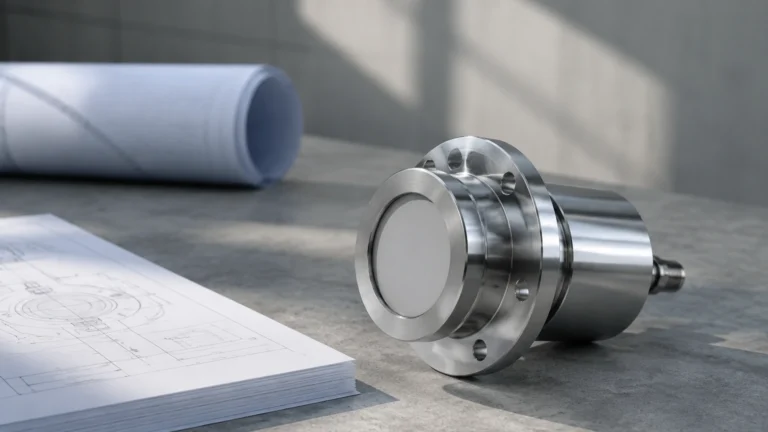
Hash Oil Extractor Machine
Hash Oil Extractor Machine
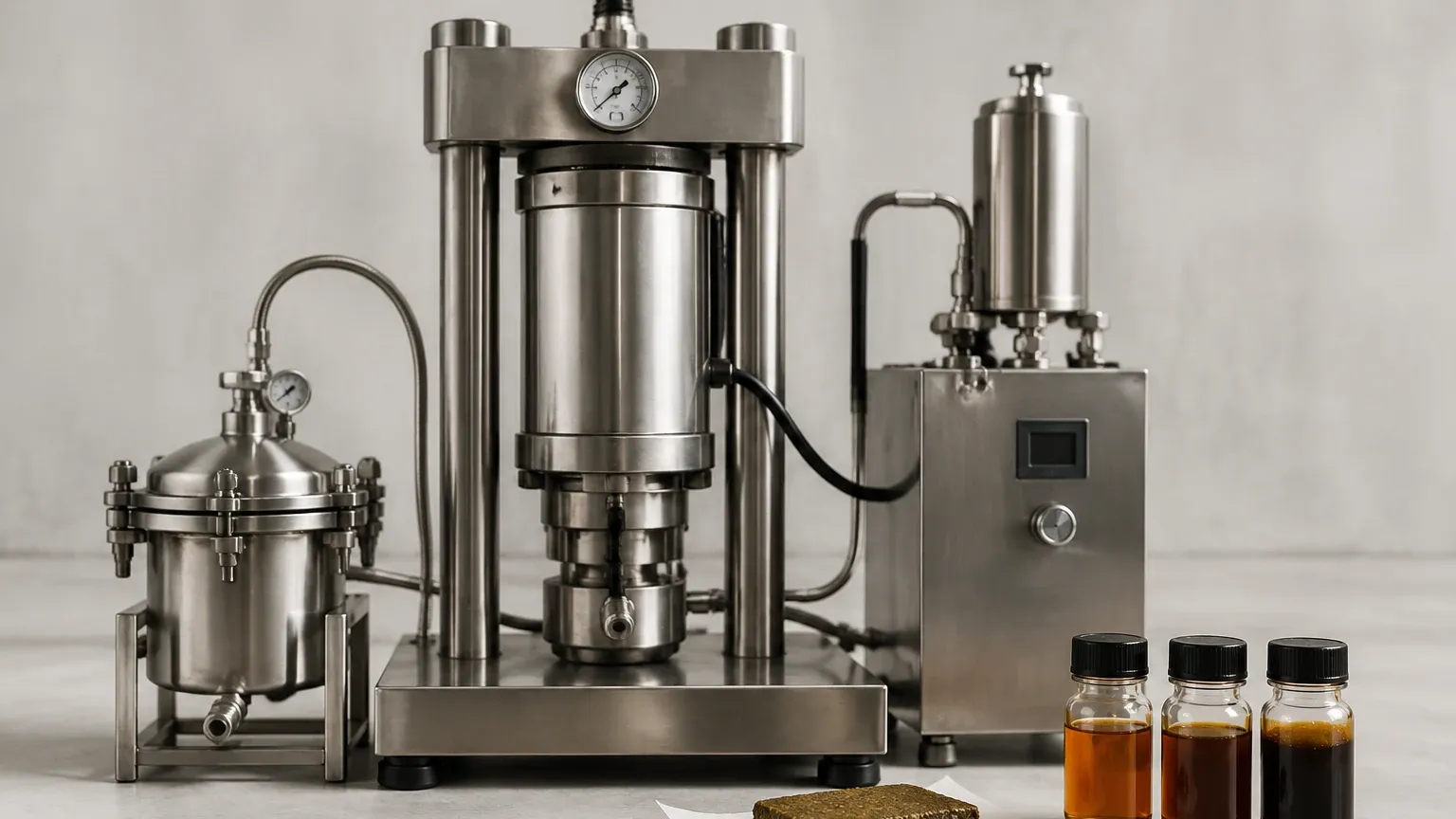
In the rapidly evolving landscape of botanical processing, the hash oil extractor machine has transitioned from artisanal equipment to sophisticated industrial-scale hardware. These systems are designed to isolate essential oils, cannabinoids, and terpenes from plant matter using various solvent-based or solvent-less methods. For engineers and facility managers, the efficiency of a hash oil extractor machine is not merely dependent on the extraction method itself, but on the precision of the process control systems that monitor solvent levels, pressure, and temperature.
Reliable level measurement is a cornerstone of safe and efficient extraction. Whether the system utilizes subcritical CO2, ethanol, or hydrocarbons like butane and propane, maintaining accurate fluid levels within the extraction vessels and solvent recovery tanks is essential for throughput and safety. This guide explores the technical integration of level measurement technologies within extraction systems and provides a framework for selecting the right instrumentation.
Measurement Principles in Extraction Systems
Before selecting instrumentation for a hash oil extractor machine, it is vital to understand the physical principles governing level measurement. In the context of extraction, three primary technologies are most prevalent: Radar, Ultrasonic, and Hydrostatic measurement.
Radar Level Measurement (Guided and Non-Contact)
Radar technology operates on the Time-of-Flight (ToF) principle. A sensor emits high-frequency microwave pulses that travel to the surface of the liquid, reflect, and return to the sensor. The distance is calculated based on the time taken for the signal to return.
* Non-Contact Radar: These sensors are ideal for extraction because they do not touch the medium. This is critical when dealing with high-purity solvents or corrosive cleaning agents. They are unaffected by pressure or vacuum conditions inside the extractor.
* Guided Wave Radar (GWR): GWR uses a probe to guide the microwave signal. This is particularly effective in narrow vessels or when the dielectric constant of the solvent (like ethanol) is low, ensuring a strong return signal even in turbulent conditions.
Ultrasonic Level Measurement
Ultrasonic sensors emit sound waves at frequencies above the human hearing range. Like radar, they use the ToF principle. However, because sound requires a medium (air or gas) to travel, ultrasonic sensors are sensitive to changes in gas density, temperature, and pressure. While cost-effective, they are generally reserved for atmospheric storage tanks rather than high-pressure extraction vessels.
Hydrostatic Level Measurement
This principle measures the pressure exerted by a liquid column at the bottom of a tank. The pressure is directly proportional to the height of the liquid and its density ($P = \rho \cdot g \cdot h$). Hydrostatic transmitters are robust and easy to install, making them a standard choice for solvent storage where the liquid density remains relatively constant.
Integrating Level Sensors into a Hash Oil Extractor Machine
The integration of level sensors into a hash oil extractor machine occurs at several critical stages of the process. Each stage presents unique environmental challenges that dictate the choice of technology.
1. Solvent Storage and Feed Tanks
In large-scale operations, bulk solvent storage must be monitored to ensure a continuous supply to the extraction line. For ethanol-based systems, hydrostatic transmitters provide a reliable continuous reading. For hydrocarbon solvents stored under pressure, non-contact radar is preferred to avoid mechanical wear and to maintain vessel integrity.
2. The Extraction Vessel
This is the core of the hash oil extractor machine where the solvent meets the biomass. The environment here is often characterized by high pressure (up to 70 bar or 1000 psi in CO2 systems) and fluctuating temperatures. Level sensors here prevent "overfilling," which could lead to solvent carryover into the filtration system, and "underfilling," which results in incomplete extraction. Radar sensors are the gold standard here due to their ability to penetrate vapors and operate accurately in high-pressure environments.
3. Collection and Recovery Vessels
After extraction, the solvent is evaporated to leave behind the concentrated oil. Monitoring the level in the collection vessel allows operators to determine when a batch is complete. Furthermore, in the recovery stage, where solvent is condensed back into liquid form, level sensors ensure the recovery pump does not run dry, protecting expensive machinery from damage.
For those seeking specific technical specifications for these components, you can Review product options and application support to find instruments tailored to high-pressure botanical processing.
Selection Criteria for Extraction Level Instrumentation
Choosing the wrong sensor for a hash oil extractor machine can lead to inaccurate data, process downtime, or safety hazards. Engineers should evaluate the following criteria:
| Criteria | Radar (Non-Contact) | Ultrasonic | Hydrostatic |
| :— | :— | :— | :— |
| Pressure Range | Vacuum to 100+ bar | Typically Atmospheric | Up to 40 bar |
| Temperature Range | -196°C to +450°C | -40°C to +80°C | -40°C to +120°C |
| Chemical Compatibility | Excellent (PTFE/Ceramic) | Moderate (Plastic/SS) | Good (Stainless Steel) |
| Accuracy | ±2mm | ±0.25% of range | ±0.1% to 0.5% of span |
| Vapor Sensitivity | Unaffected | Highly Sensitive | Unaffected |
| Cost | Higher | Lower | Moderate |
Chemical Compatibility and Material Choice
Solvents used in hash oil extraction, such as ethanol, butane, and hexane, can be aggressive toward certain elastomers and plastics. It is essential to specify 316L stainless steel for wetted parts and PTFE or Kalrez for seals. If the extractor uses CO2, the seals must be resistant to Rapid Gas Decompression (RGD).
Safety and Certification
Since many hash oil extractor machines use flammable solvents, the instrumentation must be rated for hazardous locations. Look for ATEX, IECEx, or UL/CSA certifications. Specifically, sensors should be rated for Class I, Division 1 or 2 environments to prevent the risk of ignition in the presence of volatile organic compounds (VOCs).
Installation and Maintenance Considerations
Proper installation is as critical as the sensor choice itself. For a hash oil extractor machine, consider the following engineering best practices:
1. Blocking and Bypassing: Install sensors with isolation valves where possible. This allows for maintenance or calibration without depressurizing the entire extraction system.
2. Nozzle Geometry: For radar sensors, ensure the mounting nozzle is not so long that it creates internal reflections (ringing) that interfere with the signal. The diameter of the nozzle should be sufficient to accommodate the signal beam angle.
3. Vibration Dampening: Extraction systems often involve high-pressure pumps and compressors that generate significant vibration. Use robust mounting brackets and, if necessary, remote-mounted electronics to protect the sensor's circuitry.
4. Calibration: Even the most advanced sensors require periodic verification. For hydrostatic sensors, this involves zeroing the sensor at atmospheric pressure. For radar, it may involve a "dry run" to map out internal tank obstructions (false echo suppression).
Limitations and Troubleshooting
While modern instrumentation is highly reliable, certain conditions can challenge the accuracy of a hash oil extractor machine's level control.
* Foaming: During the evaporation or purging phase, the oil/solvent mixture may foam. Ultrasonic sensors will likely fail here as the foam absorbs the sound wave. Radar can often "see through" light foam, but heavy, dense foam may require a guided wave radar with a coaxial probe to maintain a signal.
* Dielectric Constant Changes: Radar accuracy depends on the dielectric constant ($ε_r$) of the fluid. If a process switches from a high-dielectric solvent (Ethanol, $ε_r ≈ 24$) to a low-dielectric solvent (Butane, $ε_r ≈ 1.4$), the radar may need to be reconfigured to ensure it detects the surface correctly.
* Build-up: Over time, residual resins and waxes can build up on the sensor face or probe. Non-contact radar is less susceptible to this, but if build-up becomes excessive, it can cause "signal loss" errors. Regular cleaning intervals should be established as part of the facility's SOPs.
Frequently Asked Questions (FAQs)
Q: Can I use a float switch in a hash oil extractor machine?
A: While float switches are simple, they are mechanical and prone to sticking in the viscous resins produced during extraction. Continuous level measurement (Radar or Hydrostatic) is generally preferred for process automation.
Q: How does pressure affect ultrasonic sensors in CO2 extraction?
A: Ultrasonic sensors are generally unsuitable for CO2 extraction. High pressure significantly changes the speed of sound, and the dense CO2 vapor can completely attenuate the ultrasonic signal.
Q: Is radar safe for use with flammable solvents like butane?
A: Yes, provided the radar unit is intrinsically safe (Ex ia) or explosion-proof (Ex d) rated. Radar is actually safer than many mechanical alternatives because it has no moving parts that could create friction or sparks.
Q: What is the best way to measure level in a vacuum oven?
A: Vacuum ovens used for final solvent purging usually do not require continuous level measurement of the oil, but rather pressure and temperature monitoring. However, if you are measuring the level of collected solvent in a vacuum trap, non-contact radar is the most effective solution as it is unaffected by the vacuum.
In summary, the efficiency of a hash oil extractor machine is fundamentally linked to the quality of its instrumentation. By understanding the measurement principles and the specific demands of the extraction environment, operators can ensure higher purity, better safety, and consistent yields. For comprehensive technical data on level measurement solutions, visit the Main Page of Welk's industrial catalog.