Hazy Beer Monitoring Solutions
Hazy Beer Monitoring Solutions
In the modern brewing industry, the production of hazy beer styles—such as New England IPAs (NEIPAs), unfiltered Hefeweizens, and certain farmhouse ales—has transitioned from a niche craft trend to a significant market segment. However, the very characteristics that define these beers, namely their high suspended solid content, yeast density, and protein-polyphenol complexes, present unique challenges for process automation. Implementing effective hazy beer monitoring solutions requires a deep understanding of how these physical properties interact with level and analytical instrumentation.
For process engineers and brewery managers, selecting the right instrumentation is not merely about measuring volume; it is about ensuring batch consistency and preventing product loss in an environment where traditional sensors often fail. This guide examines the technical principles of level measurement in hazy beer applications and provides a framework for selecting the most reliable monitoring technologies.
Principles of Level Measurement in Brewing
Before selecting a specific instrument, it is essential to understand the physical principles that govern level measurement in a liquid containing high concentrations of suspended solids and dissolved gases.
Time-of-Flight (ToF) Measurement
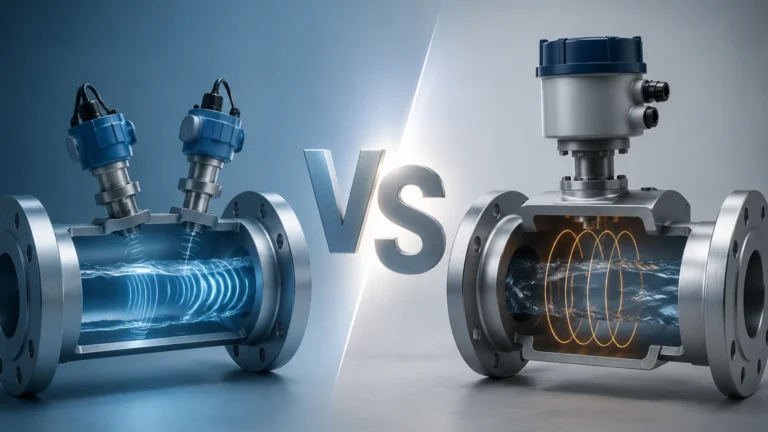
Both radar and ultrasonic sensors operate on the Time-of-Flight principle. The sensor emits a signal (microwave or sound wave) that travels to the liquid surface, reflects, and returns to the receiver. The distance is calculated based on the speed of the wave and the time elapsed. In hazy beer monitoring solutions, the dielectric constant (for radar) and the medium density (for ultrasonic) play critical roles in signal integrity.
Hydrostatic Pressure
Hydrostatic sensors measure the pressure exerted by the liquid column at the bottom of the tank. This pressure is directly proportional to the liquid height and its density ($P = \rho gh$). For hazy beers, where density can fluctuate significantly during fermentation due to yeast activity and CO2 saturation, precise temperature and density compensation are required to maintain accuracy.
Capacitance and Conductivity
These sensors detect changes in the electrical properties between a probe and the tank wall. While effective for point-level detection (switches), they can be sensitive to the buildup of proteins and yeast "krausen" on the probe, which is a common occurrence in hazy beer production.
Challenges Specific to Hazy Beer Monitoring
Hazy beers are characterized by their turbidity, which is caused by suspended particles that scatter light. While turbidity is an optical property, the physical presence of these particles affects nearly every type of level sensor.
1. Foam and Krausen: Hazy beers often have high protein content, leading to thick, stable foam heads during fermentation. This foam can absorb ultrasonic waves and scatter radar signals, leading to "false empty" readings.
2. CO2 Outgassing: The fermentation of hazy styles is often vigorous. The resulting CO2 layer in the tank headspace can change the speed of sound, making ultrasonic sensors inaccurate unless they are specifically calibrated for the gas composition.
3. Product Buildup: The high hop oil and protein content in NEIPAs can lead to significant scaling or buildup on sensor faces. This requires instruments with flush-mounted diaphragms or non-contact designs that are compatible with Clean-in-Place (CIP) cycles.
4. Variable Density: As yeast flocculates or remains in suspension, the effective density of the beer changes. This is a primary concern for hydrostatic hazy beer monitoring solutions.
Comparison of Level Measurement Technologies
Choosing the correct technology depends on the tank type (fermenter vs. bright beer tank) and the specific characteristics of the brew. The following table provides an engineering comparison of the primary technologies used in the industry.
| Technology | Accuracy | Suitability for Foam | Maintenance Requirement | Ideal Application |
| :— | :— | :— | :— | :— |
| 80 GHz Radar | High (±1mm) | Excellent | Low (Non-contact) | Fermentation & Storage |
| Ultrasonic | Moderate | Poor | Moderate | Water/Wastewater tanks |
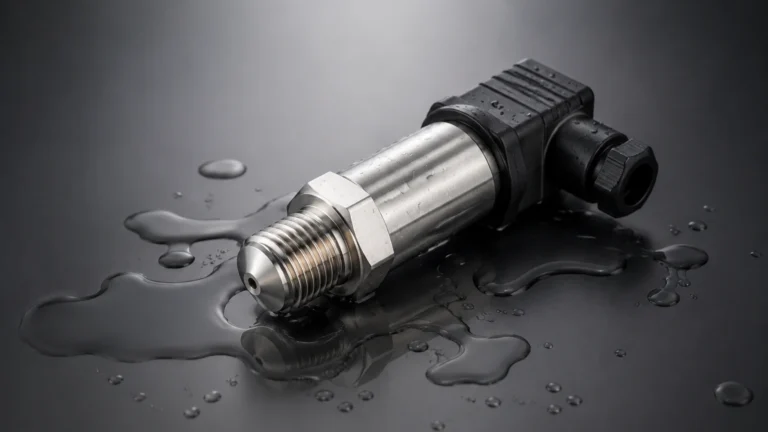
| Hydrostatic | High | Excellent | Moderate (Contact) | Bright Beer Tanks (BBT) |
| Capacitance | Moderate | Moderate | High (Cleaning needed) | Point level/Overfill |
Radar Level Meters: The Gold Standard
For most hazy beer monitoring solutions, 80 GHz high-frequency radar is the preferred choice. Unlike lower frequency radars, 80 GHz sensors have a narrow beam angle, which allows them to avoid internal tank obstructions like agitators or spray balls. Furthermore, the high frequency is better at penetrating foam and reflecting off the actual liquid surface, providing a reliable reading even during the most active stages of fermentation.
Welk provides a range of radar and ultrasonic solutions specifically designed to handle the rigors of the food and beverage industry. For more detailed technical specifications on radar performance in agitated vessels, you may visit the Main Page to review product options and application support.
Installation and Engineering Considerations
To ensure the longevity and accuracy of hazy beer monitoring solutions, several installation factors must be addressed during the design phase.
Sanitary Design and CIP Compatibility
In brewing, hygiene is paramount. All sensors must feature sanitary process connections, typically Tri-Clamp or Varivent fittings. The wetted materials should be 316L stainless steel or high-grade plastics like PEEK or PTFE, which can withstand the caustic and acidic chemicals used in CIP processes. Sensors should be flush-mounted to eliminate dead spaces where bacteria or yeast could colonize.
Mounting Location
Sensors should be mounted away from the tank's inlet to avoid interference from the filling stream. For radar sensors, it is crucial to ensure that the signal path is clear of cooling coils and ladders. If the tank has a conical bottom, the hydrostatic sensor must be placed at the lowest point of the cylindrical side wall to ensure it remains submerged even at low levels, while accounting for the sediment (trub) that collects in the cone.
Temperature Compensation
Brewing involves significant temperature swings, from 20°C (68°F) during fermentation to 0°C (32°F) during cold crashing. Since temperature affects the density of the beer and the electronics of the sensor, integrated temperature compensation is a mandatory feature for any reliable monitoring system.
Limitations of Common Technologies
While modern instrumentation is highly advanced, no single technology is a universal solution. Engineers must be aware of the following limitations:
* Ultrasonic Sensors: These are often unsuitable for hazy beer fermentation because the CO2-rich atmosphere attenuates the sound waves. Additionally, the heavy foam common in high-protein hazy beers acts as an acoustic absorber.
* Hydrostatic Pressure: While excellent for volume measurement in finished beer, it cannot distinguish between liquid and the yeast cake (trub) at the bottom of a fermenter. If the yeast layer is thick, the pressure reading may remain high even as the usable beer is drawn off.
* Optical Turbidity Meters: While these are excellent for monitoring the "haziness" itself, they are not level sensors. They are often used in conjunction with level meters to determine when a beer has reached the desired level of clarity or haze during transfer.
Frequently Asked Questions (FAQ)
Q: How does the "haze" in the beer affect radar signals?
A: The haze itself (suspended solids) has a negligible effect on radar signals because the microwaves used in radar level measurement respond primarily to the dielectric constant of the bulk liquid (water/ethanol). The solids do not significantly change the dielectric constant of the beer.
Q: Can I use the same sensor for a clear lager and a hazy NEIPA?
A: Generally, yes. A high-quality 80 GHz radar or a well-compensated hydrostatic transmitter will work for both. However, the hazy beer may require more frequent cleaning of the sensor face if it is a contact-type instrument, due to the higher protein and hop oil content.
Q: Why is 80 GHz radar better than 26 GHz for brewing?
A: The 80 GHz frequency allows for a much smaller antenna and a narrower beam (often 3 to 6 degrees). This is critical in brewery tanks which are often narrow and filled with obstructions like cooling jackets and spray balls. The narrower beam avoids these obstacles, reducing signal noise.
Q: Is hydrostatic measurement better for weight or volume?
A: Hydrostatic sensors measure the weight of the liquid column above the sensor. To convert this to volume, the PLC must know the tank geometry and the current density of the beer. For hazy beers, the density changes as fermentation progresses, so volume calculations must be adjusted accordingly.
Conclusion
Implementing robust hazy beer monitoring solutions is a critical step in scaling craft beer production while maintaining the high quality and specific sensory profiles that consumers expect. By prioritizing non-contact technologies like high-frequency radar or utilizing sanitary-grade hydrostatic transmitters with density compensation, breweries can overcome the challenges of foam, CO2, and suspended solids.
For engineers seeking to optimize their vessel monitoring, the selection process should start with a clear assessment of the tank environment and the specific physical properties of the beer styles being produced. For further technical guidance and a comprehensive overview of available measurement hardware, refer to the Main Page for additional resources and expert support in industrial level automation.