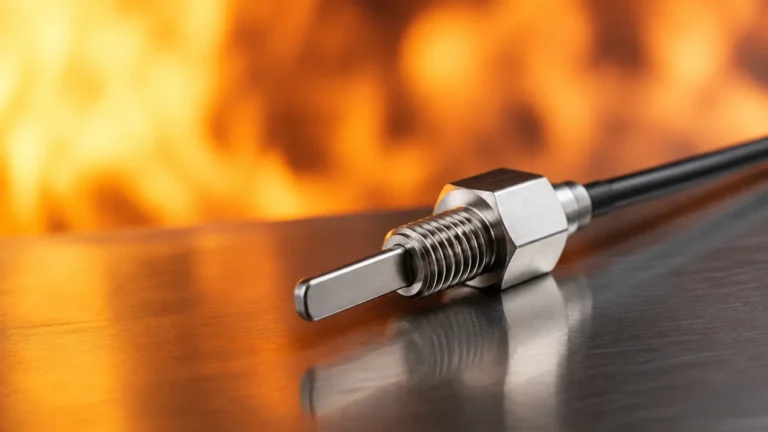
Conductivity Level Probes
Conductivity Level Probes
Conductivity level probes represent one of the most reliable and cost-effective methods for point level detection in conductive liquids. Widely utilized across water treatment, chemical processing, and food and beverage industries, these instruments provide essential high-level alarms, low-level protection, and pump control functionality. Unlike continuous measurement technologies such as radar or ultrasonic sensors, conductivity probes function as switches, identifying the presence or absence of a liquid at a specific elevation within a vessel.
As a professional manufacturer of industrial level measurement instruments, Welk provides a range of solutions designed to meet the rigorous demands of industrial automation. For those seeking comprehensive technical specifications and product ranges, visiting the Main Page offers a broader view of the available technologies in the level measurement sector.
Measurement Principles of Conductivity Level Probes
The operation of conductivity level probes is based on the electrical conductivity of the process medium. The system typically consists of an electrode (the probe) and a control unit (the transmitter or relay).
The Electrical Circuit
When the liquid level rises and comes into contact with the electrode, it completes an electrical circuit between the probe and a reference point. In metallic tanks, the tank wall itself often serves as the reference ground. In non-metallic or plastic tanks, a separate reference electrode must be installed to complete the circuit.
AC vs. DC Voltage
To prevent the buildup of ions and the subsequent corrosion of the electrodes—a process known as electrolysis—conductivity level systems utilize a low-voltage Alternating Current (AC). Direct Current (DC) is avoided because it causes chemical changes in the liquid and the electrode surface, leading to measurement drift and hardware degradation. The control unit detects the flow of current when the circuit is closed and triggers a relay output, which can be used to start or stop pumps, open valves, or activate alarms.
Sensitivity Adjustment
Different liquids have varying levels of conductivity. For instance, municipal wastewater has higher conductivity than distilled water. Most modern conductivity control units feature adjustable sensitivity settings, allowing the operator to calibrate the probe to ignore foam or light splashing while accurately detecting the bulk liquid surface.
Key Components and Construction
A standard conductivity level probe assembly includes several critical components designed for durability and chemical resistance:
1. Electrodes: These are the sensing elements. They are typically made of stainless steel (304 or 316L), but for highly corrosive environments, materials like Titanium, Hastelloy, or Monel are used.
2. Insulation: The portion of the probe that passes through the tank wall or is submerged must be insulated to prevent short-circuiting against the tank or other probes. Common insulation materials include Polyolefin, PTFE (Teflon), or Kynar.
3. Process Connection: This is the mounting interface, which can be threaded (e.g., G1", NPT) or flanged. It must provide a pressure-tight seal.
4. Housing: The head of the probe contains the electrical terminals. These housings are rated for different environments, such as IP65 for general use or explosion-proof ratings for hazardous zones.
Practical Selection Criteria
Selecting the right conductivity level probes requires an understanding of the process environment and the physical characteristics of the liquid. The following table provides a general guide for material and type selection.
Selection Table: Electrode Materials and Applications
| Material | Typical Application | Advantages | Limitations |
| :— | :— | :— | :— |
| Stainless Steel 304/316 | General water, wastewater, mild chemicals | Cost-effective, durable, widely available | Not suitable for high-concentration acids or chlorides |
| Hastelloy C | Highly corrosive chemicals, bleach, hot acids | Exceptional chemical resistance | High cost |
| Titanium | Seawater, brine, chlorine-rich environments | Corrosion resistance in saline conditions | Sensitive to certain specific acids |
| PTFE Coating | Sticky liquids, aggressive acids | Prevents buildup, high temperature resistance | Can be damaged by abrasive solids |
| Cable Probes | Deep wells, large sumps, tall tanks | Flexible length, easy to transport | Can sway in turbulent liquids |
Installation Considerations
Proper installation is paramount to the longevity and accuracy of conductivity level probes. Engineers should adhere to the following guidelines:
Grounding and Reference
In a metal tank, the tank wall serves as the ground. Ensure there is a low-resistance electrical path between the control unit and the tank. In plastic or lined tanks, a "common" or reference probe must be installed. This probe should be the longest in the set, extending below the lowest switching point to ensure the circuit is always capable of closing when the liquid rises.
Mounting Position
Probes should be installed vertically whenever possible. If horizontal installation is necessary, the probe must be angled slightly downward to allow liquid to drain off the tip, preventing "false positives" caused by droplets bridging the insulation. Avoid installing probes directly in the path of the tank's inlet flow, as turbulence and splashing can cause relay chatter.
Multi-Point Detection
One of the primary benefits of conductivity level probes is the ability to monitor multiple levels with a single process connection. A single housing can contain up to five or more electrodes of varying lengths.
* High-High Alarm: Safety cutoff to prevent overflow.
* High Level: Starts the discharge pump.
* Low Level: Stops the discharge pump.
* Low-Low Alarm: Prevents pump dry-running.

Limitations and Prohibitions
While conductivity level probes are versatile, they are not suitable for every application. Understanding these boundaries prevents equipment failure.
* Non-Conductive Liquids: These probes cannot detect oils, hydrocarbons, pure alcohols, or ultra-pure deionized water. The liquid must have a minimum conductivity, typically at least 5 μS/cm to 10 μS/cm.
* Coating and Fouling: If the liquid is highly viscous or prone to leaving a conductive film (like some wastewater or food syrups), the film may bridge the gap between the probe and the tank wall, indicating a "full" state even when the tank is empty. In these cases, probes with "active shield" technology or ultrasonic sensors may be more appropriate.
* Turbulent Surfaces: In tanks with heavy agitation, the liquid surface may fluctuate rapidly. Using a stilling well or a control unit with a time-delay relay can help stabilize the signal.
Comparison with Other Technologies
When designing a level control system, it is helpful to compare conductivity probes against other common point-level technologies.
| Feature | Conductivity Probes | Float Switches | Ultrasonic Sensors |
| :— | :— | :— | :— |
| Moving Parts | None | Yes (Mechanical) | None |
| Media Contact | Contacting | Contacting | Non-contacting |
| Cost | Low | Low to Moderate | Moderate to High |
| Maintenance | Low (Cleaning) | Moderate (Mechanical wear) | Low |
| Conductivity Req. | Required | Not required | Not required |
Frequently Asked Questions (FAQ)
Q: How do I determine the conductivity of my liquid?
A: Most industrial chemical charts list conductivity in Siemens per meter (S/m) or microsiemens per centimeter (μS/cm). If the value is above 20 μS/cm, standard conductivity probes will work reliably.
Q: Can I cut the electrodes to length on-site?
A: Yes, most rod-style electrodes can be cut to the desired switching point during installation. However, ensure that the insulation is stripped back correctly and that the cut end is deburred.
Q: What is the maximum temperature and pressure for these probes?
A: This depends on the housing and seal materials. Standard units often handle up to 150°C (302°F) and pressures up to 20 bar (290 psi). Specialized high-pressure versions are available for steam boiler applications.
Q: My probe is giving a false signal when the tank is empty. What should I check?
A: Check for "bridging" caused by moisture or residue on the insulation. Also, check the sensitivity setting on the control unit; it may be set too high, causing it to detect high humidity or film as a liquid presence.
Conclusion
Conductivity level probes remain a staple in the industrial measurement toolkit due to their simplicity and robustness. By understanding the electrical principles and the chemical requirements of the process, engineers can implement a level control solution that requires minimal maintenance and provides years of reliable service. For more complex applications involving non-conductive fluids or continuous level monitoring, exploring the full range of radar and ultrasonic options at the Main Page is recommended to ensure the most accurate technology is selected for the specific project requirements.