High Level Float Switch
High Level Float Switch
In industrial liquid management, the high level float switch serves as a critical component for overfill protection, pump control, and process automation. As a primary safety mechanism, these devices are engineered to detect when a liquid reaches a specific upper threshold within a tank or vessel, triggering an electrical signal to stop a filling process or activate an alarm. For engineers and facility managers, selecting the correct high level float switch requires a deep understanding of buoyancy physics, material compatibility, and the specific mechanical demands of the application environment.
Welk, a professional manufacturer of industrial level measurement instruments, provides a range of solutions including radar, ultrasonic, and float-based technologies. While advanced non-contact methods are prevalent, the high level float switch remains a staple in water treatment, chemical processing, and oil and gas industries due to its reliability, simplicity, and cost-effectiveness. This guide examines the technical principles, selection criteria, and installation requirements for these essential instruments.
Measurement Principles of Float Switches
The operation of a high level float switch is governed by Archimedes' principle, which states that any object, wholly or partially immersed in a fluid, is buoyed up by a force equal to the weight of the fluid displaced by the object. In the context of a level switch, a float—designed with a lower density than the process liquid—rises and falls with the liquid surface.
Magnetic Reed Switch Technology
The most common industrial design involves a magnetic reed switch housed within a stationary stem. The float, which contains a permanent magnet, slides along this stem. As the liquid level rises to the high-level set point, the float's magnetic field closes (or opens) the reed switch contacts. This transition creates a discrete electrical signal. Because the electrical components are hermetically sealed within the stem, this technology is highly resistant to moisture and corrosion.
Mechanical Microswitch Technology
In larger or more heavy-duty applications, a mechanical microswitch may be used. These are often found in "tilt switches" or cable-suspended floats. As the liquid level rises, the float tilts or moves a mechanical linkage that physically toggles a microswitch. These units are often capable of handling higher electrical currents directly, sometimes eliminating the need for intermediate relays in simple pump-up or pump-down circuits.
Fail-Safe Logic: NO vs. NC
For high-level detection, the configuration of the switch is vital for safety.
- Normally Open (NO): The circuit is open when the level is low and closes when the level reaches the high point. This is typically used to trigger high-level alarms.
- Normally Closed (NC): The circuit is closed when the level is low and opens when the high level is reached. This is often preferred for "fail-safe" overfill protection; if a wire breaks or power is lost, the system reacts as if a high-level condition has occurred, stopping the fill process.
Types of High Level Float Switches
Different tank geometries and liquid characteristics necessitate various switch configurations. Choosing the right physical form factor is the first step in ensuring long-term reliability.
Top-Mounted Vertical Float Switches
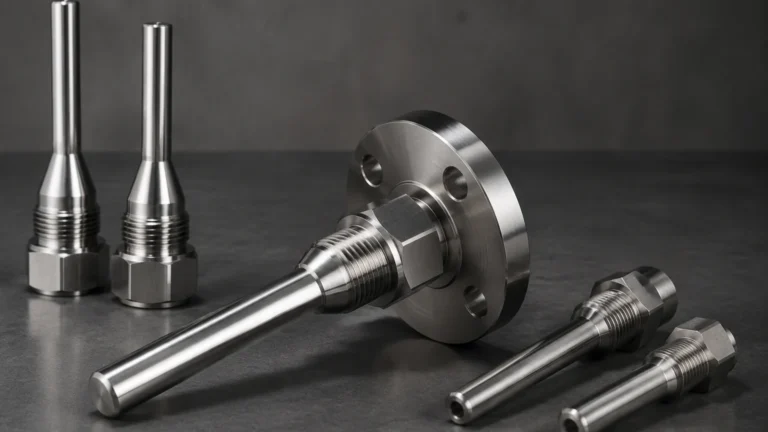
These are installed through a flange or thread at the top of the tank. The stem extends downward to the desired high-level trigger point. They are ideal for deep tanks where side access is restricted. Multi-point vertical switches can incorporate both a high-level alarm and a high-high level emergency shut-off on a single stem.
Side-Mounted (Horizontal) Float Switches
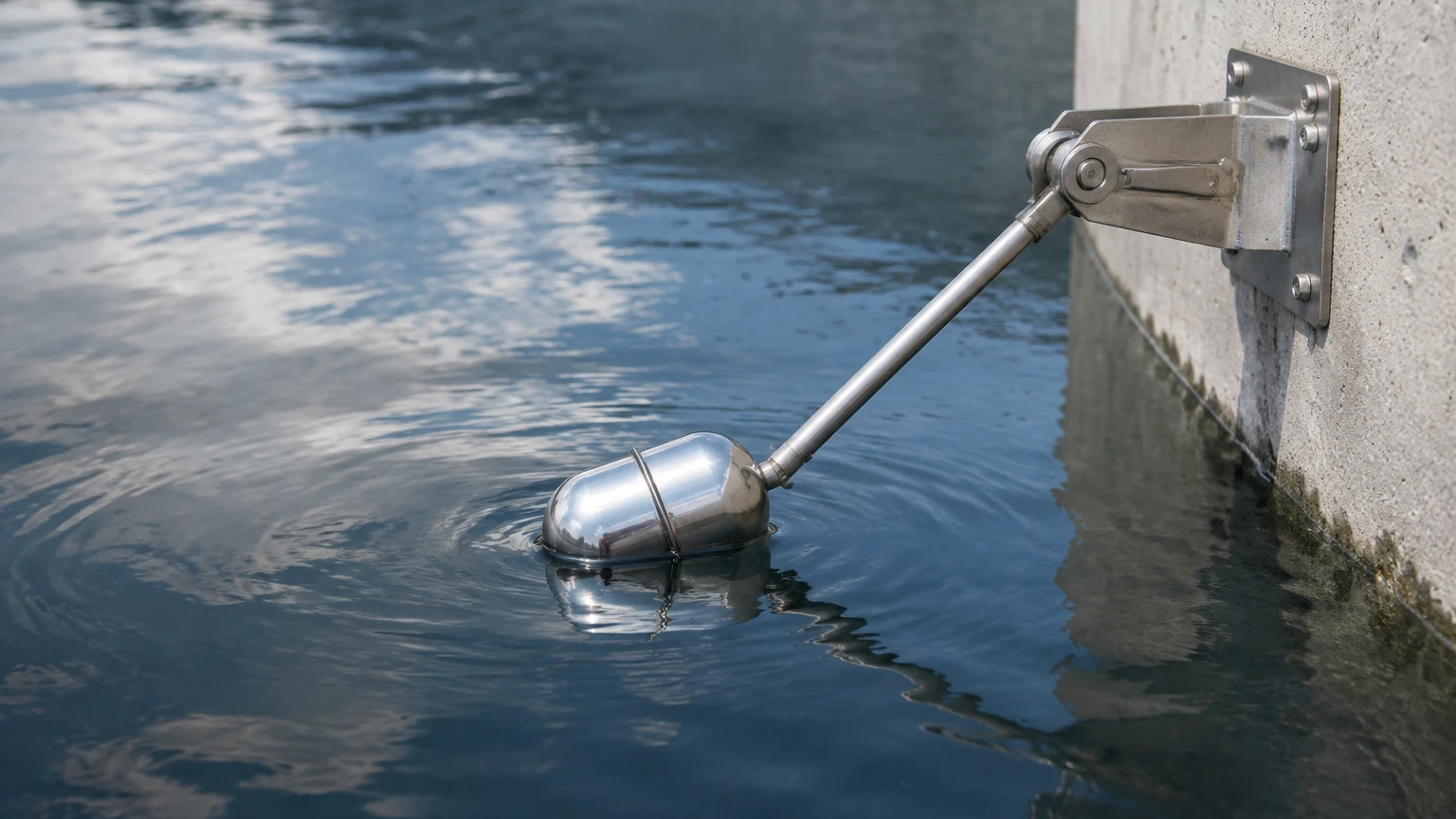
Side-mounted switches are installed through the wall of the vessel. They utilize a hinged float arm. When the liquid level reaches the switch, the float pivots upward, activating the internal mechanism. These are compact and excellent for tanks with limited overhead clearance, though they require a penetration in the side of the tank at the exact height of the high-level set point.
Cable-Suspended Float Switches
Often used in wastewater and large sumps, these consist of a weighted float attached to a flexible cable. As the level rises, the float tilts. The internal steel ball or mechanical linkage then moves to trigger the switch. These are valued for their robustness in turbulent liquids and their ability to handle solids that might jam a sliding float on a stem.
Selection Criteria and Material Science
Selecting a high level float switch is not a "one size fits all" process. Engineers must confirm several parameters to prevent premature failure.
Material Compatibility
The float and stem materials must withstand the chemical properties of the liquid.
- Stainless Steel (SS304/SS316L): The standard for oil, fuels, and high-temperature water applications. It offers excellent pressure resistance, often up to 30 bar (approx. 435 psi).
- Polypropylene (PP): A cost-effective choice for general water and many acidic or alkaline chemicals, though limited to lower temperatures, typically below 80°C.
- PVDF/PTFE: Reserved for highly aggressive chemical environments where even stainless steel might succumb to corrosion.
Specific Gravity (Density)
The float must be lighter than the liquid it is intended to measure. Most standard floats are designed for liquids with a specific gravity (SG) of 0.8 or higher. If the process liquid is a light hydrocarbon with an SG of 0.6, a standard float will sink, failing to trigger the high-level alarm. Custom-weighted floats are required for low-density fluids.
Temperature and Pressure
High-temperature applications (above 120°C) usually require stainless steel construction and specialized wiring. Similarly, in pressurized vessels, the float must be engineered to resist collapsing. Welk provides specialized high-pressure floats designed for the demanding environments of the oil and gas sector.
Technical Comparison Table
| Switch Type | Typical Materials | Max Temperature | Pressure Rating | Best Use Case |
| :— | :— | :— | :— | :— |
| Vertical Stem | SS316, PP, PVC | Up to 200°C (SS) | Up to 30 bar | Clean liquids, multi-point detection |
| Side-Mounted | SS316, PP | Up to 150°C | Up to 20 bar | Small tanks, side-wall access |
| Cable Float | PP, Neoprene | Up to 60°C | Atmospheric | Wastewater, sumps, turbulent water |
| Magnetic Gauge | SS316 / Alloy | Up to 400°C | Up to 100 bar | High pressure, hazardous chemicals |
Installation and Engineering Best Practices
Proper installation is as important as the device selection itself. A poorly placed high level float switch can lead to false alarms or, worse, a failure to trigger during an actual overfill event.
1. Avoid Turbulence: Do not install a float switch directly under a fill pipe. The force of the incoming liquid can cause the float to bounce or oscillate, leading to "chatter" in the electrical signal. If turbulence is unavoidable, use a stilling well (a perforated pipe) to protect the float.
2. Maintain Clearance: Ensure the float has at least 25mm to 50mm of clearance from tank walls, heating coils, or internal baffles to prevent mechanical jamming.
3. Wiring and Protection: Use shielded cables for signal integrity, especially if the switch is connected to a PLC or DCS. For inductive loads (like directly driving a motor or large solenoid), always use an interposing relay to protect the delicate reed switch contacts from arcing.
4. Orientation: Vertical switches must be mounted within a few degrees of true vertical to ensure the float slides freely along the stem. Side-mounted switches must be oriented according to the manufacturer's "Top" indicator to ensure the hinge operates correctly.
Limitations and Common Risks
While highly reliable, high level float switches have inherent limitations:
- Viscosity and Coating: Highly viscous liquids or those that crystallize can cause the float to stick to the stem. In these cases, non-contact methods like ultrasonic or radar may be more appropriate.
- Mechanical Wear: As mechanical devices, they are subject to fatigue over millions of cycles. Regular testing is required.
- Build-up: In wastewater applications, grease and debris can accumulate on the float, changing its buoyancy or pinning it in place.
For complex applications where float switches may not be suitable, you can Review product options and application support on our Main Page to explore alternative technologies like radar or hydrostatic transmitters.
Frequently Asked Questions (FAQ)
Q: Can a high level float switch be used for solids or powders?
A: No. Float switches rely on buoyancy and liquid displacement. For solids, powders, or granulates, a rotary paddle switch or a tuning fork level switch is required.
Q: How do I test a high level float switch without filling the tank?
A: Most vertical switches allow you to manually slide the float up the stem to verify the electrical contact change. For cable floats, simply tilting the float by hand will simulate a high-level condition. Always ensure that the connected alarm or pump system is safely bypassed or monitored during testing.
Q: What is the difference between a float switch and a float level transmitter?
A: A float switch provides a discrete "on/off" signal at a specific point (point level detection). A float level transmitter (often using a magnetostrictive or resistive chain) provides a continuous 4-20mA signal representing the exact level throughout the tank's height.
Q: Are float switches safe for explosive environments?
A: Yes, provided they are used with an intrinsically safe (IS) barrier or are housed in an explosion-proof enclosure. Because reed switches are hermetically sealed, they are inherently safer than open-contact switches, but regulatory compliance (ATEX/IECEx) is mandatory in hazardous zones.
Conclusion
The high level float switch remains an indispensable tool in the industrial arsenal for preventing environmental incidents and equipment damage. By understanding the chemical and physical demands of the process—ranging from specific gravity to material compatibility—engineers can implement a robust overfill protection strategy. For more detailed technical specifications and to find the right instrument for your specific application, visit the Welk Main Page for comprehensive product data and engineering support.