High Temp Thermometer
High Temp Thermometer
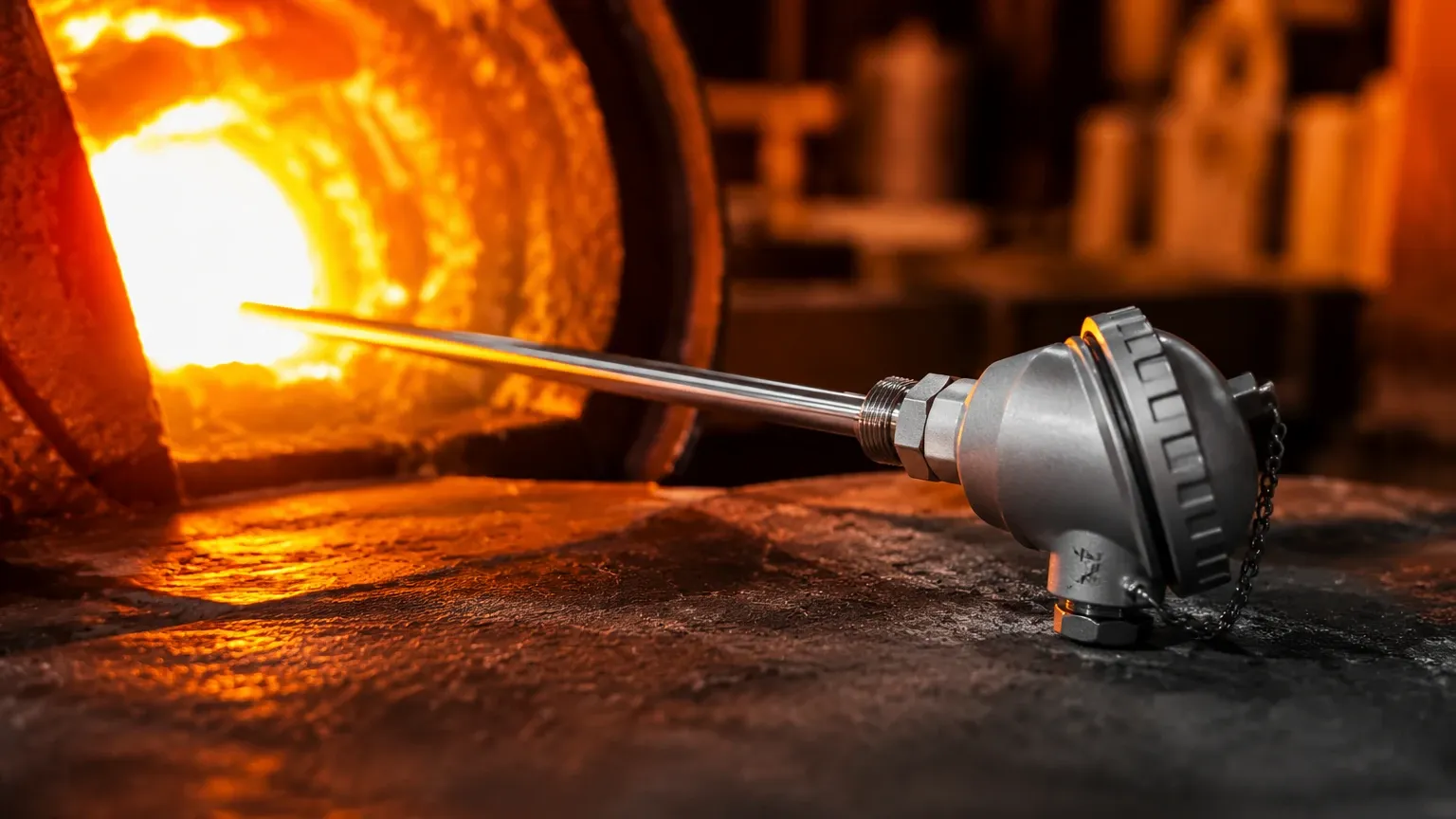
In industrial process control, the accurate measurement of extreme heat is as critical as monitoring pressure or fluid levels. A high temp thermometer is not a single device but a category of specialized sensors designed to withstand and quantify temperatures that would melt or degrade standard commercial instrumentation. From the smelting of metals to the cracking of hydrocarbons in refineries, these instruments provide the data necessary for safety, quality assurance, and energy efficiency.
For engineers and plant managers, selecting a high temp thermometer requires a deep understanding of the environment, including the chemical composition of the media, the potential for mechanical vibration, and the required response time. This guide explores the fundamental principles of high-temperature measurement, selection criteria, and the critical role these sensors play in broader industrial automation systems.
Understanding Industrial Temperature Measurement Principles
Before selecting hardware, it is essential to understand the physical principles that govern high-temperature sensing. Industrial thermometers generally fall into three categories: contact-based thermoelectric sensors, resistance-based sensors, and non-contact radiation-based sensors.
Thermocouples (The Seebeck Effect)
Thermocouples are the most common choice for high-temperature applications. They operate on the Seebeck Effect, where two dissimilar metal wires joined at one end (the sensing junction) produce a voltage proportional to the temperature difference between that junction and the free ends (the reference junction).
For high-temperature environments, specific base-metal and noble-metal calibrations are used:
* Type K (Chromel/Alumel): Suitable for temperatures up to 1,260°C (2,300°F). They are widely used due to their cost-effectiveness but can suffer from drift in oxidizing environments at peak temperatures.
* Type N (Nicrosil/Nisil): Designed to overcome the instabilities of Type K, offering better oxidation resistance up to 1,260°C.
* Type R and S (Platinum/Rhodium): Noble metal thermocouples used for temperatures up to 1,480°C (2,700°F). These are highly stable but expensive and require ceramic protection tubes.
* Type B: Capable of measuring up to 1,700°C (3,100°F), often used in glass manufacturing and high-heat research.
Resistance Temperature Detectors (RTDs)
RTDs operate on the principle that the electrical resistance of a metal increases as temperature rises. Most industrial RTDs use platinum (Pt100 or Pt1000). While RTDs offer superior accuracy and stability compared to thermocouples, they are generally limited to temperatures below 600°C (1,112°F), though specialized high-temp versions can reach 850°C (1,562°F).
Infrared (IR) Pyrometers
When the process temperature exceeds the limits of physical probes, or when the target is moving or corrosive, non-contact infrared thermometers are used. These devices measure the thermal radiation emitted by an object. The accuracy of an IR high temp thermometer depends heavily on the "emissivity" of the target material—the measure of its ability to emit infrared energy.
Selecting the Right Sensor for High-Temperature Environments
Choosing a high temp thermometer involves more than just checking the maximum temperature rating. Engineers must evaluate the following factors to ensure long-term reliability.
1. Temperature Range and Accuracy
While a Type K thermocouple can technically reach 1,200°C, using it continuously at its limit will lead to rapid sensor degradation and calibration drift. It is best practice to select a sensor where the normal operating temperature sits at roughly 600-750% of its maximum rated range.
2. Environmental Conditions
Is the atmosphere oxidizing, reducing, or vacuum? Base metal thermocouples like Type K will oxidize rapidly in certain furnace atmospheres. In such cases, a noble metal thermocouple or a heavy-duty thermowell is required. Additionally, if the process involves high-pressure steam or corrosive chemicals, the material of the protective sheath (e.g., Inconel, Hastelloy, or Ceramic) becomes as important as the sensor itself.
3. Response Time
In dynamic processes where temperature fluctuations occur rapidly, a sensor with a high thermal mass (like a thick-walled thermowell) may be too slow. Thin-film RTDs or exposed-junction thermocouples provide faster response times but are more vulnerable to mechanical damage.
Comparative Analysis of High-Temperature Sensors
The following table provides a general comparison of the most common high-temperature measurement technologies used in industrial settings.
| Sensor Type | Typical Max Temp | Accuracy | Durability | Best Use Case |
| :— | :— | :— | :— | :— |
| RTD (Pt100) | 600°C – 850°C | Very High | Moderate | Precise chemical processing |
| Type K Thermocouple | 1,260°C | Moderate | High | General industrial furnaces |
| Type S Thermocouple | 1,480°C | High | Fragile (Ceramic) | Glass and metal smelting |
| Type B Thermocouple | 1,700°C | High | Fragile (Ceramic) | High-temp research/foundries |
| Infrared Pyrometer | 3,000°C+ | Dependent on Emissivity | High (Non-contact) | Molten metal, moving kilns |
Installation Best Practices for Industrial Thermometry
Proper installation is critical to prevent measurement errors such as "stem conduction," where heat travels away from the sensor tip, leading to a lower-than-actual reading.
Thermowell Integration
In most B2B applications, a high temp thermometer is inserted into a thermowell. This allows the sensor to be replaced without depressurizing or draining the process vessel. When installing:
* Insertion Length: Ensure the sensor tip is immersed at least 10 times the diameter of the protective sheath into the process flow to minimize conduction errors.
* Lagging: In insulated pipes, use a lagging extension to keep the connection head (where the wiring terminates) away from the extreme heat of the pipe surface.
Wiring and Shielding
High-temperature sensors often produce very small millivolt signals. To prevent electromagnetic interference (EMI) from motors or power lines, use shielded extension wires. For thermocouples, it is mandatory to use specific extension wires that match the thermocouple type to avoid creating unintended junctions at the terminal block.
The Role of Temperature Compensation in Level Measurement
In the context of industrial automation, temperature measurement is rarely an isolated task. It is intrinsically linked to the accuracy of level measurement instruments. For example, Welk's range of industrial level sensors often requires temperature data to provide precise readings.
1. Hydrostatic Level Transmitters: These sensors measure the pressure exerted by a liquid column. Since liquid density changes with temperature, a high temp thermometer must provide data to the control system to calculate the corrected volume.
2. Ultrasonic Level Sensors: The speed of sound through air varies significantly with temperature. Without an integrated or external temperature sensor to compensate for these changes, ultrasonic level readings can drift by several percentage points as the ambient or process temperature fluctuates.
3. Radar Level Meters: While radar is less affected by temperature than ultrasonic technology, extreme heat can still affect the dielectric constant of certain vapors or the physical integrity of the antenna.
For engineers looking to integrate temperature data with precise level monitoring, it is helpful to Review product options and application support at the Main Page of our technical resource center.
Maintenance, Calibration, and Troubleshooting
High-temperature sensors are consumable items. Over time, the metal alloys in thermocouples will diffuse or oxidize, leading to "calibration drift."
* Routine Calibration: Sensors should be calibrated at least annually using a dry-block calibrator or a blackbody source for IR thermometers.
* Sheath Inspection: Regularly check ceramic or metal sheaths for cracks or pitting. A breach in the sheath can lead to immediate sensor failure or, worse, a process leak.
* Loop Checking: If a thermometer reads unexpectedly low, check for a "short" in the wiring. In thermocouples, a short creates a new junction, and the instrument will display the temperature at the location of the short rather than the process tip.
Frequently Asked Questions
Q: Can I use a standard thermometer for high-temperature steam?
A: No. High-pressure steam requires a high temp thermometer housed in a heavy-duty, wake-frequency-tested thermowell to prevent mechanical failure due to vibration and corrosion.
Q: What is the difference between a PT100 and a thermocouple at 500°C?
A: At 500°C, a PT100 (RTD) will be significantly more accurate and stable over time, but it is more susceptible to damage from vibration. A Type K thermocouple is more rugged and cheaper but may drift by a few degrees over a year of use.
Q: Why is my infrared thermometer giving inconsistent readings on shiny metal?
A: Shiny metals have low emissivity and high reflectivity. The IR sensor may be measuring the reflected heat of the surroundings rather than the metal itself. You may need a sensor with a specific wavelength (e.g., 1.0 or 1.6 microns) designed for metals.
Q: How does temperature affect level measurement in a sealed tank?
A: In a sealed tank, temperature changes affect the vapor pressure and the density of the liquid. If you are using a differential pressure transmitter for level, failing to account for temperature-induced density changes will result in a false level reading.
By understanding these technical nuances, procurement officers and maintenance engineers can ensure that their high temp thermometer selection provides the reliability and precision required for demanding industrial environments. Proper integration with other process variables, such as those found on our Main Page, ensures a holistic approach to plant automation and safety.