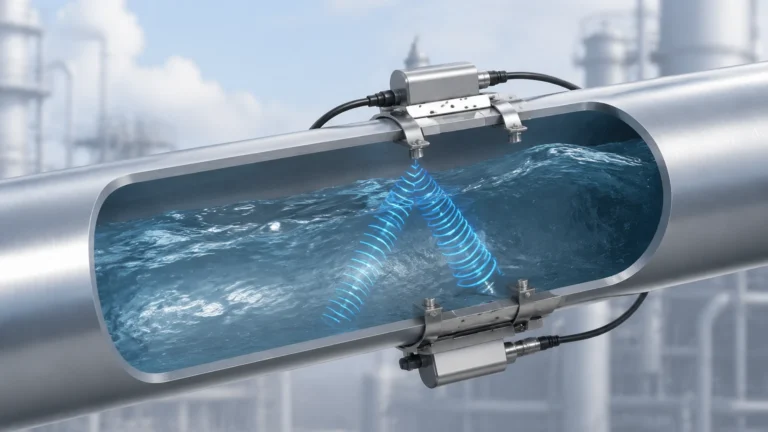
Idex Water Technology Energy Metering Electric Gas
Idex Water Technology Energy Metering Electric Gas
In the landscape of modern industrial automation, the convergence of resource management and precise measurement is critical for operational efficiency. The integration of idex water technology energy metering electric gas systems represents a holistic approach to utility management, where water, electricity, and gas are monitored with high precision to ensure sustainability and cost-effectiveness. For engineers and facility managers, understanding how level measurement instruments integrate into these broader energy and water technology frameworks is essential for maintaining process integrity.
Level measurement serves as a foundational component within these utility sectors. Whether managing water treatment facilities or monitoring fuel storage for energy production, the choice of instrumentation impacts the accuracy of the entire metering ecosystem. This guide explores the principles of level measurement as they apply to industrial water and energy sectors, providing a technical reference for selecting the appropriate technology.
Measurement Principles in Industrial Utilities
Before selecting a level meter for applications involving water or energy-related liquids, it is necessary to understand the underlying physics of the most common sensing technologies. Each method has specific strengths depending on the physical properties of the medium and the environmental conditions of the installation.
Radar Level Measurement (ToF)
Radar level meters operate on the Time-of-Flight (ToF) principle. The device emits high-frequency microwave pulses (typically in the 26GHz or 80GHz range) toward the surface of the medium. These pulses are reflected back to the sensor. The distance is calculated based on the time interval between transmission and reception.
In the context of idex water technology energy metering electric gas applications, radar is preferred for its non-contact nature. It is unaffected by temperature fluctuations, pressure changes, or the presence of vapors, making it ideal for volatile energy liquids or chemical storage in water treatment.
Ultrasonic Level Measurement
Ultrasonic sensors also use the ToF principle but utilize sound waves instead of electromagnetic waves. A transducer emits an ultrasonic pulse that bounces off the liquid surface. The time taken for the echo to return determines the level.
Ultrasonic technology is widely used in water technology for open-channel flow measurement and tank level monitoring. However, it is sensitive to air temperature (which affects the speed of sound) and can be hindered by heavy foam or surface turbulence.
Hydrostatic Pressure Measurement
Hydrostatic transmitters measure the pressure exerted by a liquid column at a specific point. The pressure is directly proportional to the height of the liquid and its density ($P = \rho \cdot g \cdot h$). This is a contact-based method where the sensor is either submerged or mounted at the bottom of the vessel. It is a robust solution for deep water wells and large storage tanks where non-contact sensors might face range limitations.
Applications in Water and Energy Sectors
The implementation of idex water technology energy metering electric gas strategies requires specific hardware for different stages of the process. Below are the primary application areas where level measurement is indispensable.
Water Treatment and Distribution
In water technology, accurate level monitoring ensures that chemicals for purification are correctly dosed and that reservoirs maintain adequate supply.
* Chemical Tanks: Radar meters are used for corrosive chemicals like sodium hypochlorite or sulfuric acid, where contact sensors would degrade.
* Open Channels: Ultrasonic sensors are standard for measuring flow rates in flumes and weirs by monitoring the head level of the water.
* Wastewater Sumps: Submersible hydrostatic transmitters are often used here due to their ability to handle solids and turbulent surfaces.
Energy and Fuel Management
For energy metering involving gas and liquid fuels, level measurement provides the data necessary for inventory control and leak detection.
* Fuel Storage: High-frequency radar (80GHz) allows for high-precision measurement in oil and gas tanks, even with internal obstructions like heating coils.
* Condensate Recovery: In power plants, monitoring the level of water condensate in high-pressure tanks is vital for boiler efficiency. Hydrostatic or magnetic level gauges are frequently employed in these high-temperature environments.
Technical Selection Criteria
Choosing the right instrument requires a comparison of technical specifications against the process requirements. The following table provides a general selection guide for common utility applications.
| Technology | Accuracy | Max Range | Media Suitability | Environmental Resistance |
| :— | :— | :— | :— | :— |
| Radar (80GHz) | ±1 mm | 120 m | Hydrocarbons, Water, Chemicals | Excellent (Vapor/Pressure) |
| Ultrasonic | ±0.25% FS | 15 – 30 m | Water, Dilute Acids | Moderate (Sensitive to Wind/Temp) |
| Hydrostatic | ±0.1% – 0.5% | 200 m+ | Water, Oils, Sludge | Good (Submersible) |
| Magnetic Gauge | ±5 mm | 6 m | High-Temp/High-Pressure Liquids | Excellent (Visual + Electronic) |
When evaluating systems for Main Page integration, engineers must prioritize the dielectric constant (DC) of the medium. Radar sensors require a minimum DC to reflect the signal effectively; for low DC fluids like liquefied gases, specialized guided wave radar or high-sensitivity non-contact radar is necessary.
Installation Considerations
Proper installation is as critical as the technology choice itself. Failure to account for the physical layout of the tank or vessel can lead to "false echoes" or signal loss.
1. Dead Zones (Blocking Distance): Every non-contact sensor has a minimum distance near the face of the transducer where it cannot measure. For ultrasonic sensors, this is typically 0.25 m to 0.8 m (10 in to 31 in). Radar sensors have much smaller dead zones, often less than 0.1 m.
2. Nozzle Geometry: The mounting nozzle should be short and wide enough to prevent the signal from reflecting off the nozzle walls. For radar, the beam angle determines the required clearance from the tank wall to avoid interference.
3. Internal Obstructions: Agitators, ladders, and inlet pipes can create false reflections. Modern radar and ultrasonic meters include "false echo suppression" software, but it is best practice to install the sensor in a location with a clear line of sight to the liquid surface.
4. Environmental Protection: In outdoor water technology applications, sensors should be equipped with sunshades to prevent temperature-induced errors in ultrasonic transducers and to protect electronics from UV degradation.
Limitations and Operational Risks
While modern instrumentation is highly advanced, certain conditions present risks to measurement accuracy in idex water technology energy metering electric gas frameworks.
* Foam and Turbulence: Heavy foam can absorb ultrasonic and radar signals, leading to a "loss of echo." In these cases, a stilling well or a bypass chamber may be required to provide a calm surface for measurement.
* Vapor and Condensation: While radar is largely unaffected by vapor, heavy condensation on an ultrasonic transducer face can block the sound pulse. Sensors with self-cleaning or heated faces are available for these conditions.
* Vacuum Conditions: Ultrasonic waves cannot travel through a vacuum. For vacuum-sealed tanks in the chemical or energy sectors, radar or hydrostatic sensors must be used.
* Density Variations: Hydrostatic pressure sensors are calibrated based on a specific liquid density. If the density changes due to temperature shifts or mixing, the level reading will drift unless a compensation algorithm or a second pressure sensor is used for differential measurement.
Frequently Asked Questions (FAQ)
Q: Can one meter be used for both water and gas condensate?
A: Generally, yes, provided the material of the sensor is compatible with both. A high-frequency radar meter is versatile enough to handle the dielectric differences between water and hydrocarbon-based condensates.
Q: How does energy metering relate to level measurement?
A: In many industrial contexts, the "energy" being metered is stored in liquid form (e.g., fuel oil or chilled water). Level measurement provides the volume data which, when combined with temperature and density, allows for the calculation of total energy content (BTUs or Joules).
Q: What is the maintenance requirement for these sensors?
A: Non-contact sensors like radar and ultrasonic require very little maintenance as they do not touch the media. Hydrostatic sensors may require periodic cleaning if used in wastewater or sludge to prevent buildup on the diaphragm.
Q: Is 80GHz radar always better than 26GHz?
A: 80GHz radar offers a narrower beam angle and better precision, which is ideal for small tanks or tanks with many internal obstructions. However, 26GHz may be more robust in extremely dusty environments or where very heavy foam is present.
Conclusion
Integrating level measurement into idex water technology energy metering electric gas systems requires a disciplined engineering approach. By understanding the measurement principles of radar, ultrasonic, and hydrostatic technologies, and by carefully considering the installation environment, facility managers can ensure accurate data for their utility management systems. Reliable level data not only prevents overflows and dry-runs but also provides the granular inventory information necessary for sophisticated energy and water metering strategies. For further technical specifications and product selection, consult professional industrial measurement resources to match the specific demands of your application.
Download Idex Water Technology Energy Metering Electric Gas as a PDF