Inline Ph Probe
Inline Ph Probe
In industrial process control, the ability to monitor chemical properties in real-time is as critical as monitoring physical parameters like level, pressure, or flow. An inline ph probe is a precision instrument designed to be installed directly into a process pipe or vessel, providing continuous, real-time measurements of the acidity or alkalinity of a liquid. Unlike laboratory pH meters that require manual sampling, inline systems allow for automated chemical dosing, immediate detection of process upsets, and tighter control over reaction kinetics.
For engineers and plant operators, selecting the correct inline pH probe involves understanding the electrochemical principles at play, the mechanical stresses of the installation environment, and the maintenance requirements necessary to ensure long-term accuracy. This guide provides a technical overview of inline pH measurement technology, selection criteria, and installation best practices within the context of industrial automation.
The Principles of Inline pH Measurement
To effectively utilize an inline ph probe, one must first understand the potentiometric measurement principle upon which it operates. pH measurement is essentially the measurement of a voltage potential difference between two electrodes immersed in a solution.
The Nernst Equation
The relationship between the voltage produced and the pH of the solution is defined by the Nernst Equation. In a perfect system at 25°C (77°F), a change of one pH unit corresponds to a change of 59.16 millivolts (mV). An inline pH probe measures this micro-voltage and converts it into a pH value ranging from 0 to 14.
Electrode Components
A standard industrial inline pH probe typically combines two electrodes into a single "combination electrode" body:
1. Measuring Electrode: This component features a specialized pH-sensitive glass membrane. When immersed, a hydrated layer forms on the glass surfaces, allowing hydrogen ions to exchange and create a potential relative to the ion concentration of the process liquid.
2. Reference Electrode: This provides a stable, constant potential against which the measuring electrode is compared. It contains a reference element (usually silver/silver chloride) submerged in an electrolyte (often potassium chloride).
3. Reference Junction: This is a porous path (made of ceramic, PTFE, or wood) that allows electrical continuity between the internal electrolyte and the process liquid without allowing the two to mix rapidly.
Temperature Compensation
Because the millivolt output of a pH probe is temperature-dependent, most industrial inline probes include an integrated Temperature Compensation (ATC) element, such as a Pt100 or Pt1000 RTD. This ensures that the transmitter can adjust the pH reading based on the actual temperature of the process fluid.
Types of Inline pH Probes and Sensor Technologies
Not all industrial processes are compatible with standard glass electrodes. Depending on the chemical composition, temperature, and pressure of the media, different sensor designs are required.
Glass Membrane Variations
* General Purpose Glass: Suitable for most water treatment and mild chemical applications with temperatures between 0°C and 80°C.
* High-Temperature Glass: Designed with specialized glass formulations to withstand continuous exposure to temperatures up to 130°C (266°F), often required in sterilization-in-place (SIP) processes.
* Hydrofluoric Acid (HF) Resistant: Standard glass is etched by HF; these probes use a specialized composition to extend sensor life in etching applications.
Junction Designs
The junction is often the "weak link" in an inline ph probe.
* Ceramic Junctions: Common in clean water applications but prone to clogging in oily or high-solids media.
* Teflon (PTFE) Junctions: Offer better resistance to fouling and chemical attack, making them ideal for wastewater and chemical processing.
* Open Aperture/Solid Polymer: These eliminate the porous junction entirely, using a solid polymer electrolyte that contacts the process directly. This is the preferred choice for heavy slurries and high-fouling environments.
Selection Criteria for Industrial Applications
Choosing the right probe requires a thorough evaluation of the process conditions. Failure to match the probe to the environment leads to frequent drift, slow response times, and premature sensor failure. When reviewing options on the Main Page for integrated instrumentation solutions, consider the following parameters:
Chemical Compatibility
The body material of the probe (typically Ryton, PVDF, or Stainless Steel) and the O-ring seals (Viton, EPDM) must be compatible with the process chemicals. In aggressive chemical manufacturing, PVT or specialized fluoropolymers are often required.
Pressure and Flow Velocity
Inline probes are subjected to the hydraulic forces of the pipe. Standard probes are usually rated for up to 6 or 7 bar (approx. 100 psi). For high-pressure lines, specialized reinforced housings or pressurized reference systems are necessary. Furthermore, the flow velocity should ideally be maintained between 0.5 m/s and 3 m/s to ensure a representative sample and prevent sediment buildup on the sensor face.
Selection Summary Table
| Application Type | Recommended Junction | Membrane Type | Body Material |
| :— | :— | :— | :— |
| Potable Water | Ceramic | General Purpose | PVC / Ryton |
| Industrial Wastewater | PTFE / Double Junction | Ruggedized Glass | PVDF |
| Chemical Processing | Solid Polymer | HF Resistant / High Temp | Stainless Steel / PVDF |
| Food & Beverage | Ceramic / ISFET | Flash-sterilizable | 316L SS / PEEK |
| Oil/Water Separation | Open Aperture | Flat Surface Glass | Ryton |
Installation Considerations and Best Practices
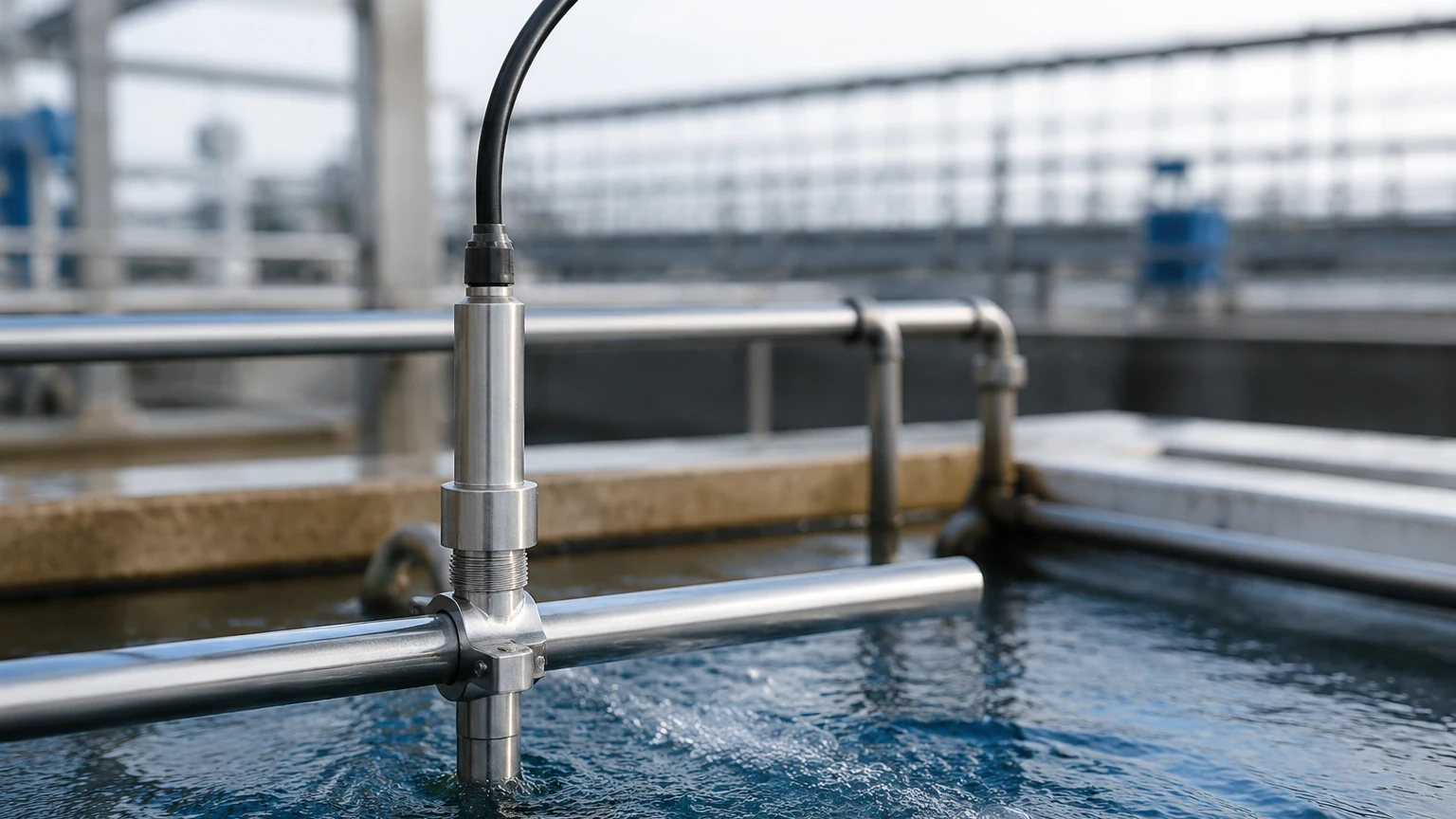
The physical installation of an inline ph probe determines its accuracy and its ease of maintenance. Proper engineering at the installation stage reduces the Total Cost of Ownership (TCO).
Mounting Orientation
Probes should never be installed horizontally or upside down. To ensure the internal electrolyte stays in contact with the pH glass and to prevent air bubbles from being trapped inside the electrode, the probe should be mounted at least 15° above the horizontal plane.
Insertion Depth and Location
The sensor must be fully submerged in the process liquid at all times. In partially filled pipes, the probe should be installed at the bottom or side of the pipe (at the 4 o'clock or 8 o'clock position). Avoid installing probes immediately after pumps or valves where cavitation and air bubbles can cause erratic readings.
Bypass vs. Direct Insertion
* Direct Insertion: The probe is placed directly in the main process line. This provides the fastest response time but requires a process shutdown for sensor removal unless a retractable housing is used.
* Bypass (Sampling) Line: A small portion of the process is diverted through a smaller pipe where the probe is located. This allows for easier maintenance and calibration without stopping the main flow, though it introduces a slight time lag in measurement.
Retractable Housings
In critical B2B industrial environments, retractable housings (manual or pneumatic) are highly recommended. These allow the inline ph probe to be withdrawn from a pressurized pipe, cleaned, and calibrated while the process remains active.
Integration with Level and Automation Systems
In modern industrial automation, pH data is rarely viewed in isolation. It is typically integrated into a PLC or SCADA system alongside other critical parameters. For instance, in a neutralization tank, the inline ph probe provides the feedback signal for acid/base dosing pumps, while ultrasonic or radar level meters (such as those provided by Welk) ensure the tank does not overflow and maintain the required retention time for the reaction.
Reliable level measurement is essential for pH control because the volume of the liquid significantly affects the titration curve. A low-level condition in a tank might require a different PID tuning for the pH controller than a full-tank condition. Coordinating these measurements ensures process stability and prevents the over-consumption of expensive treatment chemicals.
Common Risks and Limitations
Despite their utility, inline pH probes face several inherent challenges in industrial environments:
1. Coating and Fouling: Fats, oils, greases, and mineral scales can coat the pH glass, slowing response time or "flat-lining" the signal. Regular cleaning cycles (automated or manual) are necessary.
2. Reference Poisoning: Certain chemicals, such as sulfides, cyanides, or heavy metals, can react with the silver/silver chloride reference element, causing a permanent shift in the reference potential (offset).
3. Ground Loops: In metal piping systems, electrical noise can interfere with the high-impedance pH signal. Using a transmitter with a solution ground or a differential pre-amplifier can mitigate this risk.
4. Dehydration: If a process line is drained and the probe is left dry, the hydrated layer on the glass membrane will dehydrate, leading to sluggish response or permanent damage. Probes should be kept wet at all times.
Maintenance and Calibration Protocols
An inline ph probe is a consumable item; its sensitivity will naturally decline over time. A robust maintenance schedule is required to maintain accuracy.
Calibration Frequency
Calibration should be performed using certified buffer solutions (typically pH 4.0, 7.0, and 10.0). The frequency depends on the process—clean water applications may only require monthly calibration, while aggressive chemical processes may require weekly or even daily checks.
Slope and Offset
During calibration, the transmitter calculates the "Slope" (efficiency) and "Offset" (zero point).
* Offset: Should ideally be 0 mV at pH 7. If the offset exceeds ±30 mV, the probe likely needs cleaning or the reference electrolyte is contaminated.
* Slope: Should be between 85% and 105% of the theoretical Nernst value. A slope below 80% usually indicates that the probe has reached the end of its functional life and must be replaced.
Frequently Asked Questions (FAQ)
Q: How long does an inline ph probe typically last?
A: In clean, ambient-temperature water, a probe can last 12 to 24 months. In high-temperature, high-pressure, or chemically aggressive environments, the lifespan may be reduced to 3 to 6 months.
Q: Can I use a standard lab pH probe in an inline application?
A: No. Lab probes are not designed to withstand the pressure, flow, or mechanical vibrations of a process pipe. They lack the necessary mounting threads and pressure-rated seals.
Q: Why does my pH reading drift after installation?
A: Drift is often caused by temperature fluctuations (if ATC is not working), reference junction clogging, or ground loops. Ensure the probe is properly grounded and that the junction is appropriate for your media.
Q: Is it possible to automate the cleaning of the probe?
A: Yes. Many industrial housings feature spray nozzles that can inject water, acid, or detergents to clean the sensor face at programmed intervals without removing the probe from the process.
By understanding these technical requirements and selecting a probe designed for the specific rigors of the application, industrial operators can achieve reliable, long-term pH monitoring. For further information on industrial instrumentation and level control solutions, visit the Main Page to explore the full range of process measurement technologies.