Lab Water System with Real-time Monitoring
Lab Water System with Real-time Monitoring
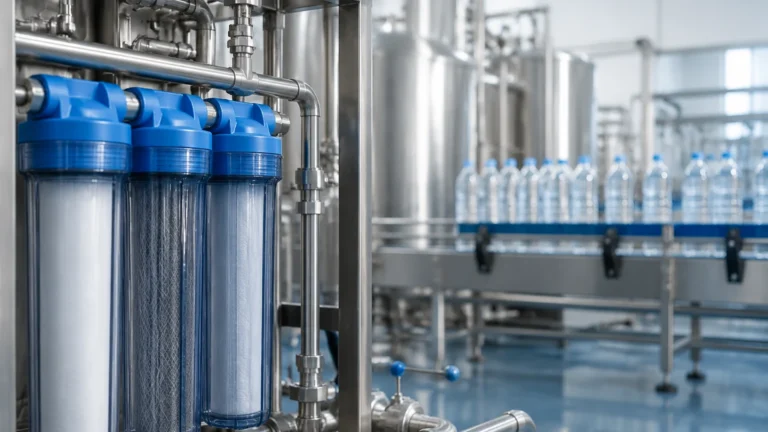
In modern laboratory environments, the availability of high-purity water is a fundamental requirement for analytical chemistry, clinical diagnostics, and life sciences research. A lab water system with real-time monitoring ensures that water quality and quantity are maintained within strict parameters, preventing experimental failures and equipment downtime. Central to these systems is the integration of precise level measurement and monitoring technologies that provide continuous data on storage tank status.
Effective monitoring allows lab managers to automate replenishment cycles, detect leaks early, and ensure that purification modules are not running dry, which could damage sensitive membranes or pumps. This article examines the technical foundations of level measurement within these systems, selection criteria for sensors, and practical installation guidance.
Understanding Measurement Principles for Lab Water
Before selecting a monitoring solution, it is essential to understand the physics behind the measurement. In a lab water system with real-time monitoring, level sensors typically employ one of three primary physical principles: ultrasonic time-of-flight, hydrostatic pressure, or radar reflection.
Ultrasonic Measurement (Non-Contact)
Ultrasonic sensors emit high-frequency sound pulses from a transducer located at the top of the tank. These pulses travel through the air, reflect off the water surface, and return to the sensor. The system calculates the distance based on the time-of-flight and the speed of sound.
* Advantage: Since the sensor does not contact the water, there is no risk of contaminating ultra-pure water (UPW) with metallic ions or biological films.
* Consideration: The speed of sound is affected by air temperature, so sensors must include integrated temperature compensation.
Hydrostatic Pressure (Contact)
Hydrostatic transmitters measure the pressure exerted by the liquid column at the bottom of the tank. The pressure is directly proportional to the height of the water (based on the formula $P = \rho gh$).
* Advantage: These sensors are highly reliable and unaffected by surface foam or internal tank obstructions.
* Consideration: The sensor must be constructed from high-grade stainless steel or chemically inert plastics to prevent leaching into the purified water.
Radar Measurement (Non-Contact)
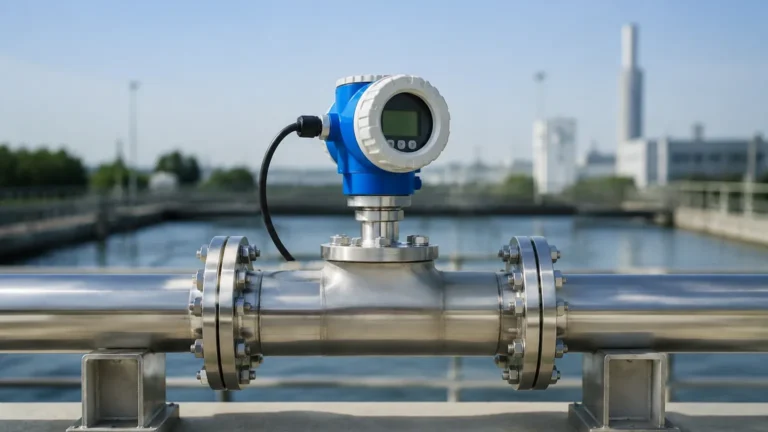
Radar level meters use high-frequency electromagnetic waves (typically in the GHz range). Similar to ultrasonic sensors, they measure the time-of-flight but are unaffected by temperature fluctuations, vacuum conditions, or vapor layers.
* Advantage: Extremely high precision (often ±1 mm or ±0.04 inches) and suitable for tanks with complex internal geometries.
* Consideration: Higher initial cost compared to ultrasonic or hydrostatic options.
The Role of Real-time Monitoring in Laboratory Environments
A lab water system with real-time monitoring transforms a passive storage tank into an active component of the laboratory's digital infrastructure. Real-time data is typically transmitted via 4-20mA signals, Modbus RTU, or digital protocols to a central control unit or a Building Management System (BMS).
This continuous stream of data serves several critical functions:
1. Automated Refill Logic: Sensors trigger the RO (Reverse Osmosis) or DI (Deionization) system to start when levels drop below a specific setpoint (e.g., 30%) and stop when the tank is full (e.g., 95%).
2. Trend Analysis: Monitoring usage patterns helps in planning maintenance for filters and resin cartridges.
3. Alarm Management: Immediate alerts for "Low Level" prevent air from entering distribution pumps, while "High Level" alarms prevent catastrophic overflows in the lab.
For engineers designing these systems, reviewing the Main Page of specialized instrument manufacturers provides a technical baseline for the types of transmitters compatible with laboratory-grade controllers.
Selection Criteria for Lab Water Sensors
Choosing the right sensor for a lab water system with real-time monitoring requires balancing precision, material compatibility, and ease of integration. Laboratory water is often aggressive (especially deionized water, which seeks to pull ions from its surroundings), making material choice a priority.
Selection Table: Level Measurement Technologies
| Feature | Ultrasonic | Hydrostatic | Radar (80GHz) |
| :— | :— | :— | :— |
| Contact Type | Non-contact | Contact | Non-contact |
| Accuracy | ±0.25% of range | ±0.1% to 0.5% | ±1 mm (0.04 in) |
| Contamination Risk | Zero | Low (if high-grade) | Zero |
| Installation | Top-mounted | Bottom or side-mount | Top-mounted |
| Ideal Application | Standard DI water tanks | Deep underground sumps | Precision UPW storage |
| Typical Range | 0.25m – 5m | 1m – 20m | 0.1m – 30m |
Installation and Engineering Considerations
Proper installation is as critical as sensor selection. Even the most advanced lab water system with real-time monitoring will fail if the sensor is poorly positioned.
Dead Zones (Blocking Distance)
Every non-contact sensor (ultrasonic and radar) has a "dead zone" directly beneath the transducer where measurements cannot be taken. For a typical lab tank of 1.5 meters (4.9 feet) in height, an ultrasonic sensor might have a dead zone of 0.2 meters (0.65 feet). The tank should never be filled into this zone, or the sensor will provide an error signal.
Mounting Position
Sensors should be mounted away from the tank walls to avoid false reflections from seams or ladders. In tanks with internal spray balls (used for cleaning), sensors must be positioned where the spray does not directly hit the transducer face.
Tank Venting
As the water level changes, air must enter or exit the tank. For ultra-pure water, this air is usually filtered through a CO2 trap or a HEPA filter. The level sensor must be installed such that it does not interfere with the airflow or the integrity of the sterile seal.

Limitations and Operational Challenges
While a lab water system with real-time monitoring significantly improves efficiency, there are inherent limitations to consider:
* Surface Turbulence: High-flow return lines can create ripples or foam on the water surface. This can scatter ultrasonic signals. Using a stilling well (a vertical pipe that stabilizes the water level around the sensor) can mitigate this issue.
* Condensation: In humid environments or when there is a temperature differential between the water and the ambient air, condensation can form on the sensor face. Some modern radar and ultrasonic sensors feature drip-off designs or specialized coatings to prevent water droplets from obstructing the signal.
* Signal Interference: In laboratory settings with heavy electrical equipment, electromagnetic interference (EMI) can affect 4-20mA signal loops. Using shielded cables and proper grounding is mandatory for maintaining data integrity.
Maintenance and Calibration
To ensure the lab water system with real-time monitoring remains accurate, a periodic maintenance schedule should be implemented.
1. Visual Inspection: Check for mineral buildup or biological growth on the sensor face (for non-contact) or the diaphragm (for hydrostatic).
2. Zero-Point Verification: Periodically empty the tank to ensure the sensor reads 0% or the correct empty distance.
3. Calibration: Use a manual dip-tape measurement to verify the electronic reading. Many digital sensors allow for field calibration via a local display or a connected laptop.
Frequently Asked Questions (FAQ)
Q: Can I use a float switch instead of a continuous level sensor?
A: Float switches are excellent for simple high/low logic, but they do not provide real-time monitoring. For a system that requires data logging, trend analysis, or variable pump control, a continuous transmitter (ultrasonic, radar, or hydrostatic) is necessary.
Q: How does deionized (DI) water affect sensor longevity?
A: DI water is highly corrosive to certain metals. If using a hydrostatic sensor, ensure the wetted parts are made of 316L Stainless Steel, Hastelloy, or PTFE. Non-contact sensors like ultrasonic or radar are generally preferred for DI water because they avoid this issue entirely.
Q: What is the best output signal for a lab water system with real-time monitoring?
A: The 4-20mA current loop is the industry standard for its reliability over long distances. However, if you are integrating multiple sensors into a digital lab management system, Modbus RTU or HART protocols offer more diagnostic data, such as sensor health and internal temperature.
Q: Is radar overkill for a small 500-liter (132-gallon) tank?
A: While ultrasonic sensors are cost-effective for small tanks, 80GHz radar has become increasingly affordable. If the application requires high precision or if there is significant condensation, radar is often the more robust choice despite the higher initial investment.
Conclusion
Implementing a lab water system with real-time monitoring is a strategic investment in laboratory reliability. By understanding the measurement principles—whether ultrasonic, hydrostatic, or radar—and adhering to strict installation guidelines, facilities can ensure a constant supply of high-purity water. For technical specifications and to explore the range of instruments suitable for these applications, engineers are encouraged to consult the Main Page for detailed product data and application support. Proper sensor selection not only protects expensive laboratory equipment but also ensures the integrity of the scientific data produced within the facility.
Download Lab Water System with Real-time Monitoring as a PDF