In Line Ph Meter
In Line Ph Meter
In industrial process control, the continuous monitoring of liquid acidity or alkalinity is fundamental to ensuring product quality, protecting downstream equipment, and maintaining regulatory compliance. An in line ph meter is a specialized analytical instrument designed to provide real-time pH measurements directly within a process pipe or vessel. Unlike laboratory-based measurements, which require manual sampling and can introduce delays or contamination, in-line systems offer immediate feedback for automated dosing and neutralization loops.
For engineers and plant managers, selecting the correct in line ph meter involves understanding not only the chemical properties of the process fluid but also the physical dynamics of the flow, pressure, and temperature. This guide provides a technical overview of pH measurement principles, system components, and the engineering considerations necessary for reliable integration into industrial environments.
Understanding the Measurement Principle of In Line Ph Meters
The operation of an in line ph meter is based on the potentiometric measurement method, which determines the activity of hydrogen ions in a solution. This is typically achieved using a combination electrode system consisting of a sensing electrode and a reference electrode.
The Glass Electrode and Nernst Equation
The sensing component is a glass electrode featuring a specialized pH-sensitive glass membrane. When this membrane comes into contact with an aqueous solution, a hydrated gel layer forms on both the inner and outer surfaces. An electrical potential develops across this membrane that is proportional to the difference in hydrogen ion concentration between the internal buffer solution of the electrode and the external process fluid.
This relationship is governed by the Nernst Equation:
$$E = E_0 + \frac{2.303RT}{nF} \log(a_{H+})$$
Where:
* E is the measured potential.
* E0 is the standard electrode potential.
* R is the ideal gas constant.
* T is the absolute temperature in Kelvin.
* n is the valence of the ion (1 for H+).
* F is the Faraday constant.
* aH+ is the activity of the hydrogen ions.
Because the potential is temperature-dependent, almost every industrial in line ph meter includes an integrated temperature sensor (such as a Pt100 or Pt1000) to provide automatic temperature compensation (ATC).
The Reference System
To measure the potential generated by the glass electrode, a stable reference point is required. The reference electrode provides this stable potential regardless of the pH of the solution. It typically consists of a silver/silver chloride (Ag/AgCl) element immersed in a concentrated potassium chloride (KCl) electrolyte. The electrical connection between the reference electrolyte and the process fluid is made through a porous junction, which allows a minute, controlled flow of ions.
Key Components of an Industrial In Line Ph Meter System
A complete in-line installation is more than just a sensor; it is a multi-component system designed to withstand harsh industrial conditions.
1. The pH Sensor (Electrode): The primary sensing element, often a "combination" electrode that houses both the glass sensing bulb and the reference junction in a single 12 mm body.
2. The Transmitter/Analyzer: This unit receives the high-impedance millivolt signal from the sensor, converts it into a pH value, and outputs a standard signal (such as 4-20mA, HART, or Modbus) to the plant’s control system. Modern transmitters also provide diagnostic data on sensor health (e.g., glass impedance and slope).
3. The Sensor Housing or Assembly: This is the mechanical interface between the sensor and the process. It protects the fragile glass electrode from mechanical stress and ensures it remains properly submerged in the fluid.
4. Cabling: Specialized low-noise coaxial cables are required to transmit the high-impedance signal from the sensor to the transmitter without interference.
Selection Criteria for Process-Specific pH Sensors
Not all in line ph meter sensors are created equal. The choice of glass type, junction material, and electrolyte depends heavily on the application. For instance, in water treatment, a standard ceramic junction may suffice, but in chemical processing involving heavy oils or proteins, a specialized junction is required to prevent clogging.
Selection Table: Sensor Types and Applications
| Sensor Feature | Application Type | Temperature Range | Pressure Limit | Key Benefit |
| :— | :— | :— | :— | :— |
| Standard Glass | General Water Treatment | 0 to 80°C (32 to 176°F) | 6 bar (87 psi) | Cost-effective, versatile |
| High-Temp Glass | Steam Sterilization / CIP | 0 to 135°C (32 to 275°F) | 10 bar (145 psi) | Resists alkaline error at high T |
| HF-Resistant | Semiconductor / Etching | 0 to 60°C (32 to 140°F) | 6 bar (87 psi) | Resists hydrofluoric acid attack |
| PTFE Junction | Wastewater / Oily Media | 0 to 100°C (32 to 212°F) | 10 bar (145 psi) | Minimizes fouling and clogging |
| Solid Electrolyte | High Pressure / Pigmented | 0 to 110°C (32 to 230°F) | 16 bar (232 psi) | No electrolyte outflow required |
When designing a system that integrates multiple measurement parameters, such as pH and liquid level, it is essential to source equipment from manufacturers who understand industrial ruggedness. For engineers seeking a comprehensive overview of integrated instrumentation solutions, visiting the Main Page provides access to a full range of level and process monitoring technologies that complement pH analysis.
Installation Best Practices for In Line Ph Meters
The physical placement of an in line ph meter significantly impacts its accuracy and lifespan. Even the most advanced sensor will fail prematurely if installed in a location with excessive turbulence or where it can run dry.
Mounting Orientation
Sensors should ideally be installed at an angle of at least 15° to 20° above the horizontal. This ensures that the internal air bubble in the glass electrode does not settle in the tip, which would break the electrical contact between the internal buffer and the glass membrane. Vertical installation is preferred wherever possible.
Flow and Pressure Considerations
* Velocity: High flow velocities (exceeding 2-3 m/s or 6.5-10 ft/s) can cause "streaming potentials" or mechanical erosion of the glass bulb. If the flow is too high, a bypass loop or a flow-through cell should be used.
* Pressure: Standard sensors are rated for approximately 6 bar (87 psi). In high-pressure lines, pressure-compensated sensors or specialized housings are required to prevent the process fluid from being forced into the reference junction (junction poisoning).
Retractable Assemblies
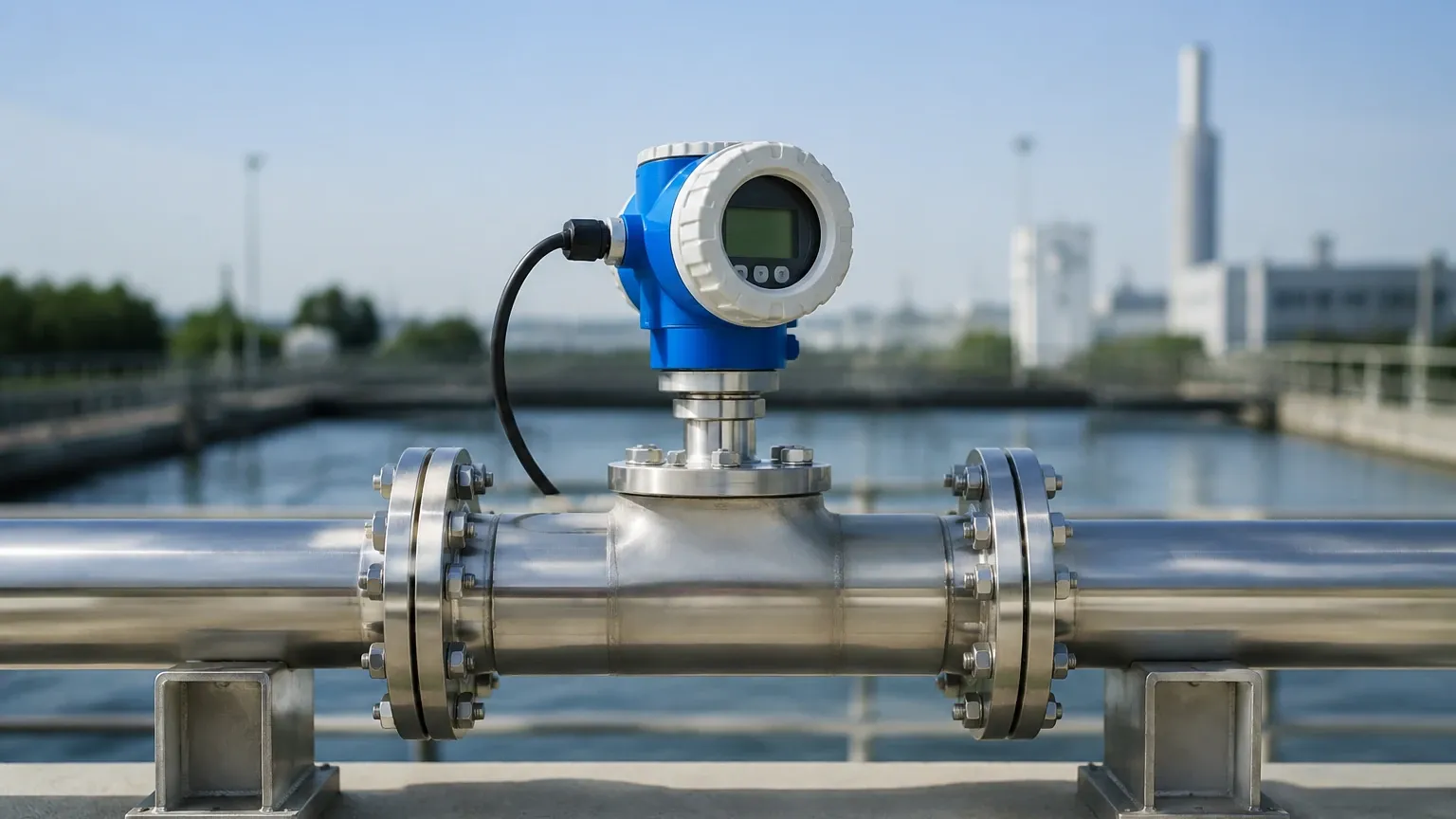
In processes where the line cannot be shut down for maintenance, a retractable housing is used. These assemblies allow the sensor to be withdrawn from the pipe, cleaned, calibrated, and re-inserted while the process remains under pressure. This is critical for 24/7 operations in the chemical and pharmaceutical sectors.
Maintenance, Calibration, and Longevity
An in line ph meter is a consumable item. Unlike a radar level meter, which has no moving parts and does not touch the media, a pH sensor is a chemical probe that degrades over time.
Calibration Protocols
Calibration should be performed using at least two buffer solutions (e.g., pH 4.01 and pH 7.00). The frequency of calibration depends on the required accuracy and the aggressiveness of the process. In stable water treatment applications, monthly calibration may be sufficient; in harsh chemical reactors, daily checks might be necessary.
Cleaning Procedures
Fouling of the glass membrane or the reference junction is the most common cause of measurement drift.
* Alkaline deposits: Clean with a weak acid (e.g., 0.1M HCl).
* Grease and oils: Clean with a mild detergent or specialized solvent.
* Proteins: Use a pepsin/HCl solution.
After cleaning, the sensor must be rinsed thoroughly and allowed to stabilize in a storage solution or buffer before recalibration.
Common Risks and Operational Limitations
Engineers must be aware of the inherent limitations of in-line pH measurement to avoid common pitfalls:
1. Reference Junction Poisoning: If the process contains ions that react with the silver in the reference electrolyte (such as sulfides, bromides, or iodides), a precipitate can form inside the junction, leading to a sluggish response and eventual sensor failure.
2. Dehydration: If the sensor is allowed to dry out (e.g., in an empty pipe during a shutdown), the hydrated gel layer on the glass bulb will collapse. While some sensors can be rehydrated, this often leads to a permanent shift in the electrode's slope.
3. Ground Loops: In metal piping systems, stray electrical currents can interfere with the low-voltage pH signal. Using a transmitter with a solution ground or an isolated input can mitigate this risk.
4. Temperature Shocks: Rapid changes in temperature (e.g., during Clean-in-Place cycles) can cause mechanical stress on the glass-to-metal seals of the sensor. High-quality sensors designed for CIP/SIP are required for these applications.
Frequently Asked Questions
Q: How long does an in line ph meter sensor typically last?
A: In clean water applications, a sensor may last 12 to 24 months. In harsh chemical processes or high-temperature environments, the lifespan may be reduced to 3 to 6 months.
Q: Can I use a standard lab pH probe for in-line measurement?
A: No. Laboratory probes are not designed to withstand the pressure, flow, and temperature fluctuations of a process line. They lack the mechanical reinforcement and the specialized reference junctions required for industrial use.
Q: What is the difference between an in-line and a bypass installation?
A: An in-line installation places the sensor directly in the main process flow. A bypass installation diverts a small portion of the flow through a separate, smaller pipe where the sensor is located. Bypass installations are often easier to maintain and allow for better control over flow velocity and temperature.
Q: Why is my pH reading drifting even after calibration?
A: Drift is often caused by a clogged or poisoned reference junction. It can also result from temperature fluctuations if the temperature compensation is not correctly configured or if the sensor has reached the end of its operational life.
Conclusion
Implementing a reliable in line ph meter system requires a balance between chemical sensitivity and mechanical durability. By selecting the appropriate sensor glass and junction for the specific process media, and following rigorous installation and maintenance protocols, industrial operators can achieve stable and accurate pH control.
In many applications, pH measurement is part of a broader instrumentation strategy. For example, in a neutralization tank, the in line ph meter controls the chemical feed, while a hydrostatic or ultrasonic level transmitter ensures the tank does not overflow. For more information on selecting the right level measurement tools to pair with your analytical instruments, please visit the Main Page to explore professional-grade industrial solutions.