Water Quality Monitoring Instruments
Water Quality Monitoring Instruments
In industrial process control and environmental management, water quality monitoring instruments are essential for ensuring regulatory compliance, protecting equipment, and optimizing chemical dosing. These instruments provide real-time data on the physical and chemical properties of water, allowing engineers to make informed decisions in applications ranging from wastewater treatment and cooling towers to ultrapure water production in the semiconductor industry.
While level measurement focuses on the volume and presence of liquid, water quality monitoring focuses on the "health" and composition of the fluid. Integrating these two data streams is critical for comprehensive industrial automation. For those seeking reliable hardware for fluid management, reviewing the Main Page of specialized manufacturers provides a foundation for selecting compatible level and quality sensors.
Measurement Principles of Water Quality Sensors
Effective water quality monitoring relies on various electrochemical and optical principles. Understanding these mechanisms is the first step in selecting the correct instrument for a specific process environment.
Potentiometric Measurement (pH and ORP)
pH sensors measure the hydrogen-ion activity in a solution, typically using a glass electrode and a reference electrode. The potential difference between these electrodes is proportional to the pH value. Oxidation-Reduction Potential (ORP) sensors operate on a similar principle but measure the overall capability of a solution to act as an oxidizing or reducing agent, which is vital in disinfection processes using chlorine or ozone.
Conductivity and TDS
Conductivity measurement determines the ability of water to conduct an electrical current, which is directly related to the concentration of dissolved ionized solids. There are two primary methods:
1. Contacting Conductivity: Uses electrodes in direct contact with the fluid. It is highly accurate for low-conductivity (pure) water.
2. Toroidal (Inductive) Conductivity: Uses two induction coils encased in a plastic body. This method is preferred for high-conductivity or corrosive fluids as it avoids electrode fouling and polarization.
Optical Measurement (Turbidity and Dissolved Oxygen)
Turbidity sensors measure the clarity of water by detecting the amount of light scattered by suspended solids (Nephelometry). Dissolved Oxygen (DO) is increasingly measured using optical (luminescence) sensors, which detect the quenching of fluorescence by oxygen molecules. This method is more stable and requires less maintenance than traditional electrochemical (Galvanic or Polarographic) sensors.
Integration with Level Measurement Systems
In practical engineering, water quality monitoring instruments rarely operate in isolation. They are frequently paired with level measurement technologies to provide a complete picture of a storage tank or process vessel. For instance:
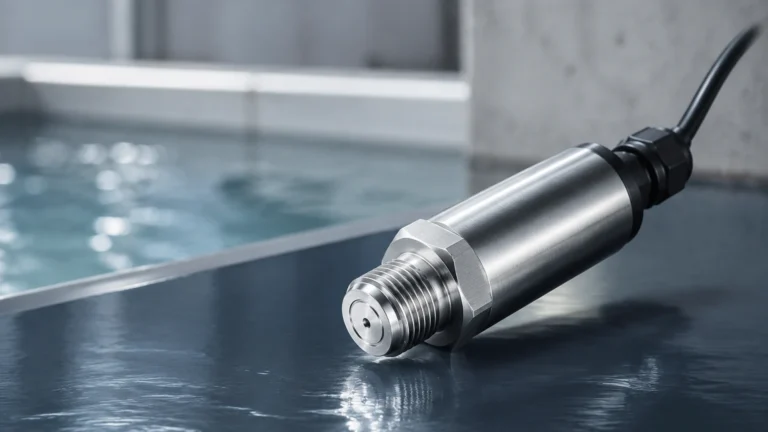
* Hydrostatic Level Transmitters: These provide precise depth data in tanks where water quality sensors are submerged. By knowing the exact level, operators can ensure that quality sensors remain fully immersed and positioned away from sediment layers.
* Ultrasonic and Radar Level Meters: In open-channel flow monitoring, non-contact level sensors calculate flow rates while water quality instruments analyze the effluent composition.
Combining these technologies allows for automated mass-balance calculations and ensures that chemical additives are proportional to both the volume and the current chemical state of the water.
Selection Criteria for Water Quality Monitoring Instruments
Selecting the right instrumentation requires balancing technical requirements with operational constraints. Engineers should evaluate the following factors:
1. Process Media Compatibility: Ensure that the sensor body and wetted materials (e.g., PVC, PVDF, Stainless Steel) can withstand the chemical aggressiveness of the water.
2. Measurement Range and Resolution: A sensor designed for ultrapure water conductivity (0.055 µS/cm) will not function correctly in seawater (50 mS/cm).
3. Temperature and Pressure: Most water quality parameters are temperature-dependent. Instruments must include automatic temperature compensation (ATC) and be rated for the maximum process pressure.
4. Signal Output: Modern B2B applications require integration with PLC or SCADA systems via 4-20mA, Modbus RTU, or HART protocols.
Selection Table: Common Water Quality Parameters
| Parameter | Primary Technology | Typical Application | Maintenance Requirement |
| :— | :— | :— | :— |
| pH | Glass Electrode | Neutralization, Cooling Towers | High (Monthly Calibration) |
| Conductivity | Toroidal/Contacting | Boiler Feedwater, Desalination | Medium (Cleaning) |
| Turbidity | 90° Light Scattering | Filter Monitoring, Effluent | Medium (Optical Cleaning) |
| Dissolved Oxygen | Optical/Luminescent | Aeration Tanks, Aquaculture | Low (Annual Cap Change) |
| ORP | Platinum Electrode | Chlorine Dosing, Cyanide Destruction | High (Cleaning/Calibration) |
Installation Considerations
Proper installation is as critical as the sensor technology itself. Poor placement can lead to inaccurate readings or premature sensor failure.
* Flow Velocity: Sensors should be installed in areas with sufficient flow to ensure a representative sample and prevent sediment buildup, but not so high that it causes physical damage or cavitation.
* Immersion Depth: In tanks, sensors should be placed at a depth where they are not affected by surface foam or bottom sludge. Using a hydrostatic level transmitter can help automate the positioning of retractable sensor assemblies.
* Avoid Air Bubbles: Optical sensors (Turbidity, DO) are sensitive to air bubbles, which can be misread as solids or high oxygen levels. Install sensors in vertical pipes with upward flow to minimize bubble entrapment.
* Accessibility: Choose locations that allow technicians to safely remove the sensor for cleaning and calibration without shutting down the entire process.
Limitations and Risks
While water quality monitoring instruments are highly advanced, they are not "set and forget" devices. Engineers must account for the following risks:
* Biofouling and Scaling: In wastewater or untreated source water, biological growth or mineral scaling can coat sensor surfaces. This leads to "drift" in measurements. Automated cleaning systems (air blast or mechanical wipers) are often necessary.
* Interference: High levels of specific ions can interfere with ion-selective electrodes (ISE), and high turbidity can interfere with certain optical DO measurements.
* Calibration Drift: All electrochemical sensors drift over time. A rigorous calibration schedule using certified buffer solutions is mandatory to maintain data integrity.
* Cable Length and Noise: Analog signals from pH and ORP sensors are high-impedance and susceptible to electromagnetic interference (EMI). Using digital sensors or transmitters located close to the sensor head is recommended for long cable runs.
Frequently Asked Questions (FAQ)
Q: How often should pH sensors be calibrated?
A: In most industrial applications, pH sensors should be checked weekly and calibrated monthly. However, in harsh chemical processes, weekly calibration may be required to maintain accuracy within ±0.1 pH.
Q: Can I use one instrument to measure multiple parameters?
A: Yes, multi-parameter transmitters are common in B2B environments. They can often handle inputs for pH, conductivity, and temperature simultaneously, reducing the footprint and cost of the control panel.
Q: What is the difference between TDS and Conductivity?
A: Conductivity measures the electrical current flow, while Total Dissolved Solids (TDS) is a measure of the mass of dissolved organic and inorganic substances. TDS is typically calculated from conductivity using a conversion factor (usually between 0.5 and 0.7).
Q: How do I protect sensors from freezing in outdoor installations?
A: Sensors should be installed in heated enclosures or submerged below the frost line. If the flow stops, stagnant water in pipes can freeze and shatter glass electrodes or damage optical windows.
Conclusion
Water quality monitoring instruments are vital for the modern industrial facility, providing the data necessary to protect both the environment and the process infrastructure. By understanding the underlying measurement principles and carefully considering installation and maintenance requirements, engineers can build robust monitoring stations. When paired with accurate level measurement solutions, these instruments ensure that water management is both precise and cost-effective. For further technical specifications and product integration options, engineers should consult the Main Page of their equipment providers to ensure a holistic approach to fluid automation.