Mercury Meter
Mercury Meter
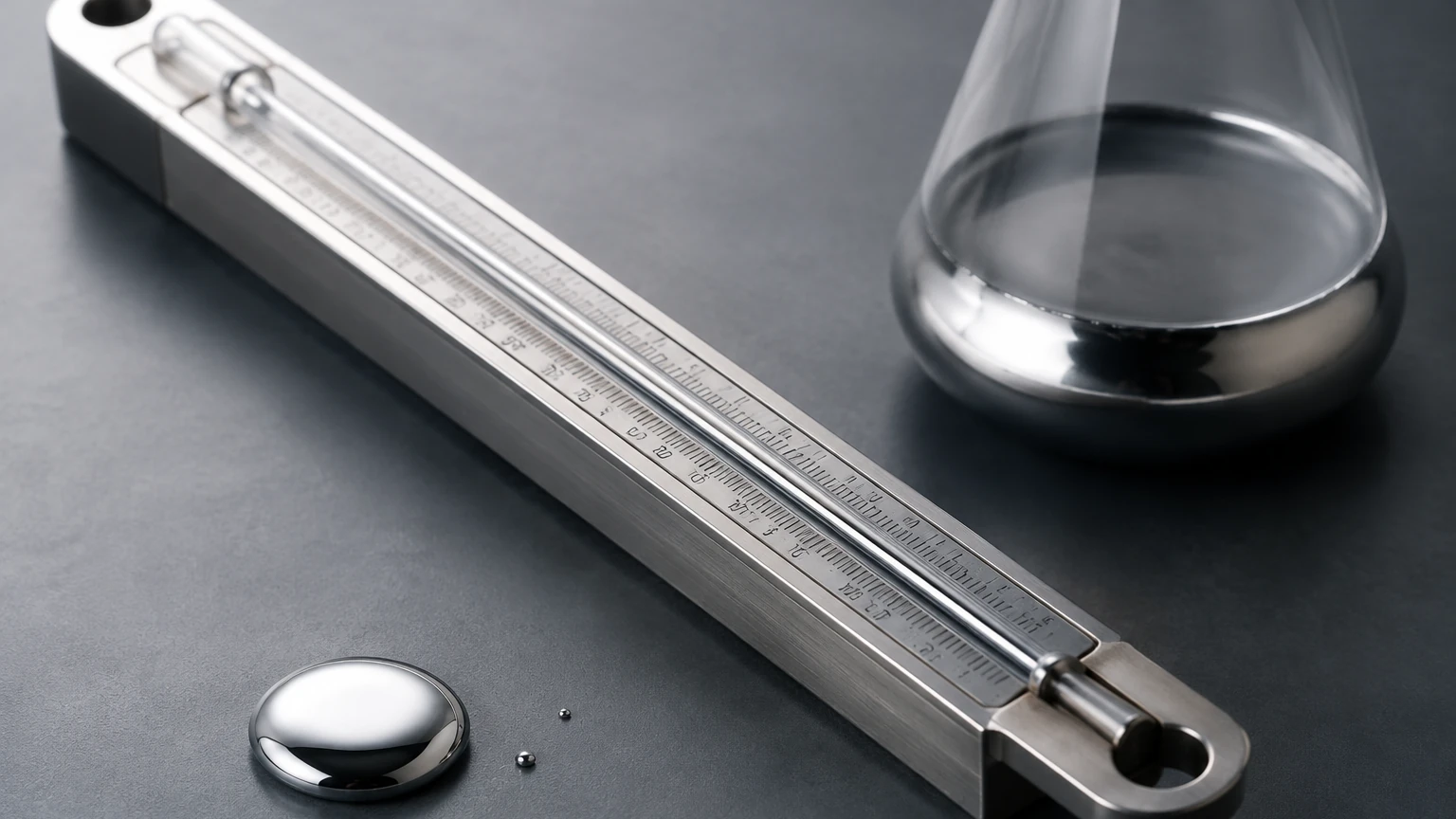
In the history of industrial instrumentation, the mercury meter has served as a foundational tool for measuring pressure, flow, and liquid level. Utilizing the unique physical properties of elemental mercury—specifically its high density and liquid state at room temperature—these instruments provided early engineers with a reliable, albeit hazardous, method for monitoring process variables. However, as environmental regulations have tightened and sensor technology has advanced, the industry has transitioned toward safer, more precise electronic alternatives.
For modern industrial applications, understanding the legacy of the mercury meter is essential for identifying the correct replacement technology. Whether upgrading a legacy system or designing a new process loop, engineers must evaluate modern level measurement solutions that offer the same reliability without the associated environmental risks. This guide explores the principles of mercury-based measurement and provides a technical framework for selecting contemporary alternatives.
Measurement Principles of Mercury-Based Instruments
The mercury meter operates primarily on the principle of hydrostatic balance. Because mercury has a density approximately 13.6 times that of water (13,546 kg/m³ at 20°C), it allows for the measurement of significant pressures within a relatively compact physical footprint.
Hydrostatic Manometers
In a classic U-tube manometer, mercury is used to balance the pressure exerted by a process fluid. When pressure is applied to one side of the tube, the mercury column shifts. The difference in height between the two columns is directly proportional to the pressure difference. This is expressed by the formula:
P = ρgh
Where *P* is pressure, *ρ* (rho) is the density of mercury, *g* is the gravitational constant, and *h* is the height differential.
Mercury Level Switches
In level control, mercury was frequently used in "tilt switches." These devices consist of a sealed glass or plastic bulb containing two electrical contacts and a small pool of mercury. As the liquid level rises and tilts the float mechanism, the mercury flows to one end of the bulb, completing or breaking the electrical circuit. This mechanical simplicity made them popular in sump pumps and industrial tanks for decades.
Differential Pressure (DP) Flow Meters
Mercury was also used in differential pressure meters to measure flow rates. By connecting a mercury-filled manometer across an orifice plate, the resulting displacement of mercury provided a visual and sometimes mechanical output of the flow rate based on Bernoulli’s principle.
Limitations and Environmental Risks of Mercury Meters
While effective, the mercury meter presents several critical drawbacks that have led to its systematic phase-out in global industrial sectors.
1. Toxicity and Health Hazards: Mercury is a potent neurotoxin. Exposure to mercury vapor or accidental ingestion through skin contact poses severe health risks to plant personnel.
2. Environmental Impact: A single spill can contaminate large areas of a facility and requires specialized hazardous material (HAZMAT) remediation. If mercury enters the wastewater stream, it can lead to bioaccumulation in the ecosystem.
3. Maintenance Complexity: Cleaning and recalibrating mercury-filled instruments is labor-intensive. Over time, mercury can become "oxidized" or contaminated by process fluids, leading to a loss of meniscus clarity and measurement error.
4. Regulatory Compliance: International standards, such as the Minamata Convention on Mercury and various REACH/RoHS regulations, strictly limit or ban the use of mercury in new industrial equipment.
Given these factors, facilities are encouraged to Review product options and application support to find solid-state or non-contact replacements that eliminate these risks.
Modern Alternatives to Mercury Level Meters
Transitioning away from mercury-based technology requires selecting a sensor that matches the application's specific gravity, temperature, and pressure requirements. Below are the primary technologies used to replace legacy mercury meters.
Radar Level Meters
Radar technology, particularly 80GHz high-frequency radar, has become the gold standard for replacing mercury-based level indicators. Unlike mercury manometers, radar is non-contact. It emits a microwave signal that reflects off the material surface. The time-of-flight is measured to determine the level.
* Advantages: Unaffected by density changes, vacuum, or high pressure.
* Best For: Chemical reactors, oil storage, and volatile liquids.
Ultrasonic Level Sensors
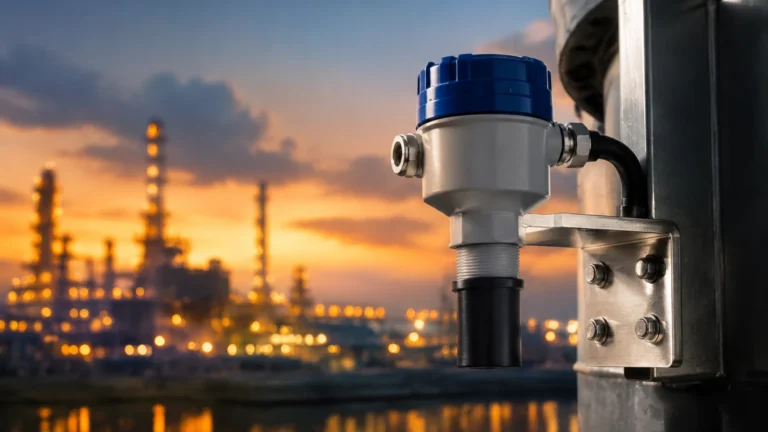
For water treatment and simple liquid storage, ultrasonic sensors offer a cost-effective alternative to mercury float switches. They use sound waves to detect the distance to the liquid surface.
* Advantages: No moving parts and easy to install.
* Limitations: Sensitive to surface foam and heavy vapor.
Hydrostatic Level Transmitters
These sensors replicate the pressure-sensing logic of the mercury manometer but use a piezoresistive silicon or ceramic diaphragm instead of a liquid column. The transmitter measures the pressure exerted by the liquid column above it and converts this into a 4-20mA or digital signal.
* Advantages: High accuracy and direct replacement for DP cells.
* Best For: Deep wells, vented tanks, and pressurized vessels.
Magnetic Level Gauges
If a visual indication is required (similar to a mercury sight glass), magnetic level gauges are the preferred choice. A float containing a magnet moves with the liquid level, flipping external flags or moving a magnetic follower to show the level.
* Advantages: Completely sealed, no risk of leakage, and no power required for visual reading.
Technical Selection Criteria for Replacement
When replacing a mercury meter, engineers should use the following table to evaluate which modern technology best fits their process parameters:
| Feature | Mercury Manometer | Radar Level Meter | Hydrostatic Transmitter | Ultrasonic Sensor |
| :— | :— | :— | :— | :— |
| Measurement Type | Contact (via fluid) | Non-contact | Contact (Submerged) | Non-contact |
| Accuracy | ±0.5% to 1% FS | ±1 mm (0.04 in) | ±0.1% to 0.25% FS | ±0.2% FS |
| Media Compatibility | Limited (Corrosive) | High (All media) | Medium (Diaphragm dependent) | High (Non-corrosive) |
| Pressure Range | Up to 100 bar | Up to 160 bar | Up to 600 bar | Atmospheric |
| Maintenance | High (Cleaning) | Very Low | Low | Low |
| Safety | Low (Toxic) | High | High | High |
Installation and Transition Considerations
Replacing a mercury meter is not a simple "plug-and-play" operation; it requires careful consideration of the existing infrastructure and the intended process control goals.
Decommissioning Legacy Systems
The first step in any upgrade is the safe removal and disposal of the existing mercury. This must be performed by certified professionals. The mercury must be drained into approved containers, and the piping or vessels must be decontaminated to ensure no residual droplets remain, which could interfere with the accuracy of new electronic sensors.
Signal Integration
Most mercury meters provided either a mechanical readout or a simple pneumatic signal. Modern sensors typically output a 4-20mA signal with HART protocol, Modbus RS485, or Profibus. Ensure that the control room's PLC (Programmable Logic Controller) or DCS (Distributed Control System) is configured to accept these digital inputs.
Mounting and Orientation
* Radar/Ultrasonic: These must be mounted at the top of the tank, away from the walls and filling inlets to avoid false echoes.
* Hydrostatic: These are typically mounted at the bottom or side of the tank. If replacing a U-tube manometer, the tapping points may need to be modified to accommodate the threaded or flanged connection of the new transmitter.
Frequently Asked Questions (FAQs)
Q: Can I still buy a mercury meter for industrial use?
A: In most jurisdictions, including the EU, USA, and China, the sale of new mercury-containing instruments for general industrial use is heavily restricted or banned. Specialty laboratories may have exemptions, but for process industries, electronic alternatives are mandatory.
Q: How do I calculate the equivalent pressure if I am replacing a mercury manometer?
A: You can convert the "inches of mercury" (inHg) or "millimeters of mercury" (mmHg) to standard SI units. For example, 1 mmHg is approximately 133.32 Pascals (Pa), and 1 inHg is approximately 3.386 kiloPascals (kPa). Modern transmitters can be factory-calibrated to these specific units for ease of transition.
Q: Are electronic level meters as accurate as mercury meters?
A: Yes, modern electronic meters generally exceed the accuracy of mercury-based systems. High-frequency radar can achieve accuracy within ±1 mm (0.04 in), which is far more precise than a human operator reading a mercury meniscus on a scale.
Q: What happens if my process temperature is too high for a standard electronic sensor?
A: While mercury has a high boiling point (356.7°C), modern radar and hydrostatic sensors are available with cooling extensions and high-temperature ceramic diaphragms that can handle temperatures exceeding 400°C (752°F).
Conclusion
The mercury meter played a vital role in the early development of industrial automation, providing a physical reference for pressure and level that was easy to understand. However, the risks to human health and the environment, combined with the superior precision of digital technology, have made mercury obsolete. By transitioning to radar, ultrasonic, or hydrostatic solutions, facilities can improve their operational safety, reduce maintenance costs, and achieve higher levels of process control. For detailed specifications on modern level measurement instruments, engineers are encouraged to consult the Main Page for comprehensive technical data and application support.