Metering Skid
Metering Skid
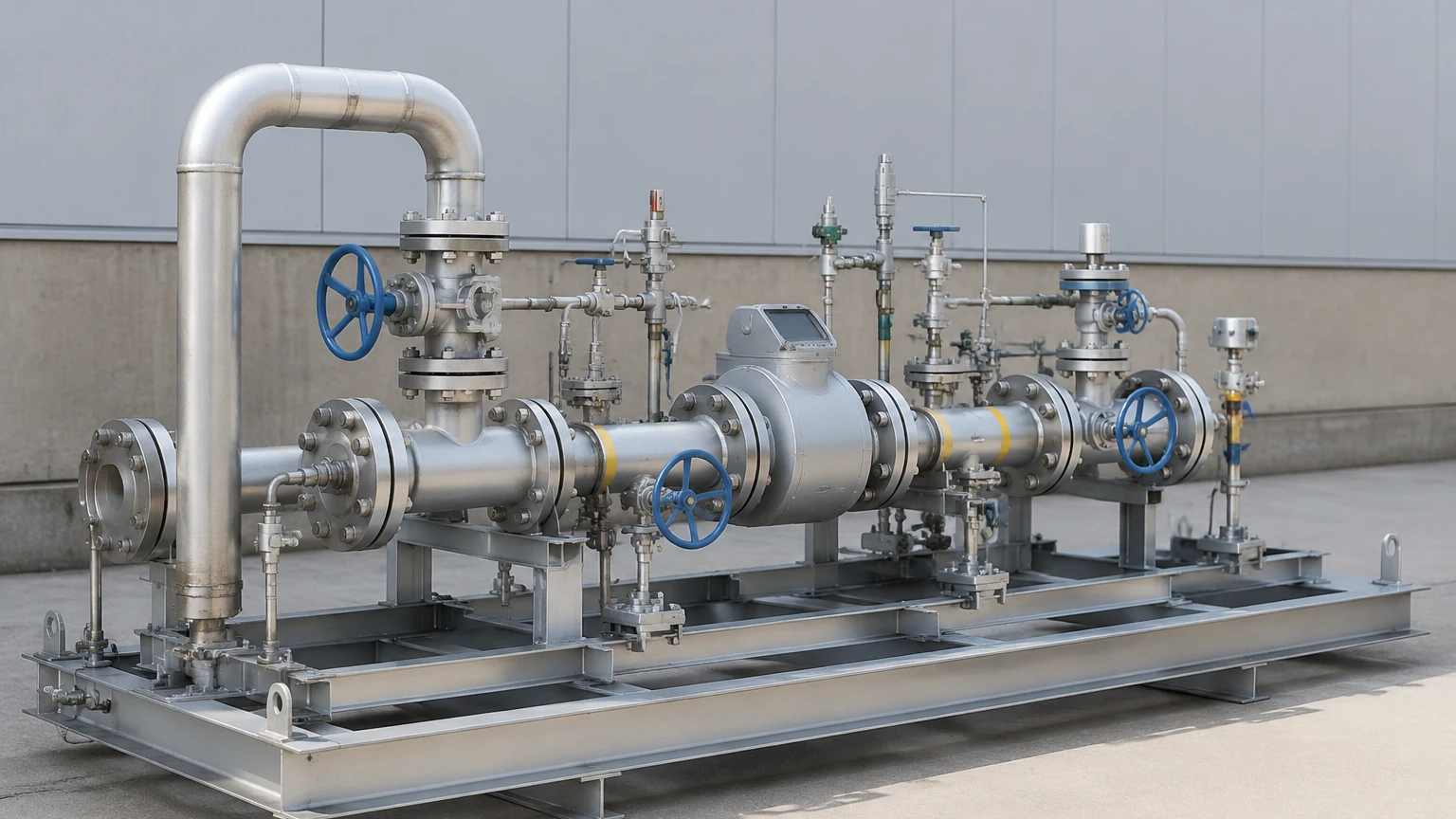
In the landscape of industrial fluid handling, a metering skid serves as a critical, automated system designed to measure and control the flow of liquids or gases as they pass through a pipeline. These systems are engineered as modular, skid-mounted units, allowing for factory-tested precision and ease of installation at the site. While the primary function of a metering skid is often associated with flow measurement—particularly for custody transfer where financial transactions depend on accuracy—the integration of reliable level measurement instrumentation is equally vital for process safety, inventory management, and system efficiency.
A well-designed metering skid ensures that fluid properties are monitored in real-time, accounting for variables such as temperature, pressure, and density. This article provides a technical overview of the role of level measurement within these systems, the principles behind the technologies used, and the criteria for selecting the appropriate instrumentation for industrial applications.
The Role of Level Measurement in a Metering Skid
Within a metering skid, level measurement is typically required in buffer tanks, separators, deaerators, and storage vessels. These components ensure that the fluid being metered is in the correct state (e.g., removing air from liquids) and that the system remains primed. Accurate level data prevents pump cavitation, manages surge volumes, and provides the necessary data for mass balance calculations.
For engineers and project managers evaluating instrumentation, understanding the specific requirements of the Main Page of the process—where the core measurement occurs—is essential for maintaining the integrity of the entire skid.
Core Measurement Principles
Before selecting instrumentation for a metering skid, it is necessary to understand the physics governing different level measurement technologies. Each method offers distinct advantages depending on the fluid characteristics and environmental conditions.
Radar Level Measurement
Radar level meters operate on the Time-of-Flight (ToF) principle. The device emits high-frequency microwave pulses (typically in the 26 GHz or 80 GHz range) that travel at the speed of light. When these pulses hit the surface of the medium, they are reflected back to the sensor. The distance is calculated based on the time interval between transmission and reception.
Non-contact radar is highly valued in metering skids because it is unaffected by changes in density, pressure, or temperature. It is ideal for aggressive chemicals or high-purity liquids where sensor contact must be avoided.
Ultrasonic Level Sensors
Similar to radar, ultrasonic sensors use the ToF principle but employ sound waves instead of microwaves. The sensor emits an ultrasonic pulse that reflects off the liquid surface. Because the speed of sound is influenced by air temperature, these sensors include integrated temperature compensation. They are cost-effective solutions for water treatment and open-vessel applications within a skid, though they are less suitable for vacuum conditions or environments with heavy foam.
Hydrostatic Level Transmitters
Hydrostatic measurement relies on the principle that the pressure at a specific depth in a static liquid is proportional to the height of the liquid column above it. The formula used is $P = \rho \cdot g \cdot h$, where $P$ is pressure, $\rho$ is the fluid density, $g$ is gravity, and $h$ is the height. In a metering skid, hydrostatic sensors are often used in vented tanks. If the tank is pressurized, a differential pressure (DP) approach is required to subtract the headspace pressure from the total bottom pressure.
Magnetic Level Gauges
Magnetic level gauges (MLGs) utilize the principle of buoyancy and magnetism. A float containing a permanent magnet moves up and down a bypass chamber as the liquid level changes. Outside the chamber, a visual indicator (flaps or a follower) responds to the magnet, providing a clear, power-free visual reading. These are frequently used in high-pressure or high-temperature sections of a metering skid where electronic failure must not result in a loss of level visibility.
Technical Selection Criteria for Metering Skid Components
Selecting the right level instrument for a metering skid requires a detailed analysis of the process parameters. The following table summarizes the primary considerations for the most common technologies.
| Technology | Typical Accuracy | Pressure Range | Temperature Range | Best For |
| :— | :— | :— | :— | :— |
| Radar (80 GHz) | ±1 mm | Up to 160 bar | -40°C to +200°C | Precision measurement, volatile liquids |
| Ultrasonic | ±0.25% of range | Atmospheric | -40°C to +80°C | Water, wastewater, simple chemicals |
| Hydrostatic | ±0.1% to 0.5% | Dependent on sensor | -20°C to +100°C | Constant density liquids, deep tanks |
| Magnetic Gauge | Visual (±5 mm) | Up to 320 bar | -196°C to +420°C | High-pressure steam, oil/water interface |
Fluid Properties
The dielectric constant (DK) of the fluid is a major factor for radar; low DK fluids (like oils) reflect weaker signals than high DK fluids (like water). For hydrostatic sensors, the density must remain relatively constant, or the system must be calibrated to account for density shifts. If the fluid is corrosive, wetted parts must be constructed from compatible materials such as Hastelloy, PTFE, or 316L stainless steel.
Process Conditions
In a metering skid, turbulence is common due to high flow rates or agitation. In such cases, a stilling well or bypass pipe may be necessary to provide a calm surface for radar or ultrasonic measurements. Furthermore, if the skid operates in a hazardous area (Ex-zone), the instrumentation must carry the appropriate ATEX or IECEx certifications.
Installation and Engineering Considerations
Proper installation is the most significant factor in ensuring the long-term reliability of a metering skid. Engineers should adhere to the following guidelines:
1. Nozzle Positioning: For radar and ultrasonic sensors, the nozzle should be located away from the tank wall to avoid false reflections (parasitic echoes). The nozzle height should also be minimized to prevent interference with the signal beam.
2. Dead Zones: Every Top-down sensor has a "dead zone" or "blocking distance" near the sensor face where measurement is impossible. The skid design must ensure that the maximum liquid level never enters this zone.
3. Bypass Chambers: When using magnetic level gauges, the chamber must be vertically plumb. Any deviation can cause the float to stick, leading to inaccurate readings.
4. Grounding and Shielding: To prevent signal noise, especially in skids with large pumps and motors, all instrumentation wiring should be shielded and properly grounded to the skid frame.
5. Calibration and Verification: Metering skids used for custody transfer require regular calibration. Level instruments should be checked against a secondary reference or via a manual dip-tape measurement during commissioning.
Common Risks and Limitations
Despite advancements in technology, certain conditions can challenge the performance of level instruments within a metering skid:
* Foam and Vapor: Heavy surface foam can absorb ultrasonic and radar signals, leading to signal loss. In these instances, guided wave radar (GWR) is often a more robust choice as the probe guides the signal through the foam.
* Build-up and Scaling: In chemical or wastewater skids, material may build up on the sensor face or the float of a magnetic gauge. Regular maintenance schedules must be established to clean these components.
* Ambient Temperature Extremes: Skids located outdoors in extreme climates require heat tracing or insulation for hydrostatic and magnetic gauges to prevent the fluid from freezing or changing viscosity significantly.
Frequently Asked Questions (FAQ)
Q: Can a metering skid handle multiple fluid types?
A: Yes, but the instrumentation must be calibrated for the different physical properties (density, dielectric constant) of each fluid. Some modern radar units can auto-calibrate for different media.
Q: Why use a bypass chamber for level measurement on a skid?
A: A bypass chamber isolates the measurement from the turbulence of the main vessel and allows for maintenance of the instrument without shutting down the entire process.
Q: How often should level sensors in a metering skid be calibrated?
A: For standard process monitoring, annual calibration is typical. For skids involved in custody transfer or high-safety applications (SIL rated), more frequent intervals may be mandated by local regulations.
Q: Is radar better than ultrasonic for all skid applications?
A: Not necessarily. While radar is more versatile in terms of pressure and temperature, ultrasonic sensors are often more economical for simple water-based applications where the vapor space is stable.
Conclusion
A metering skid is only as reliable as the data provided by its constituent sensors. By integrating high-quality level measurement instruments—whether radar, ultrasonic, or magnetic—operators can ensure that their fluid handling processes are both accurate and safe. When designing or procuring a skid, it is vital to match the instrument technology to the specific chemical and physical demands of the application. For further technical guidance on selecting the right measurement solutions, please visit the Main Page to explore comprehensive product specifications and application support.