Deltabar Pmd50
Deltabar Pmd50
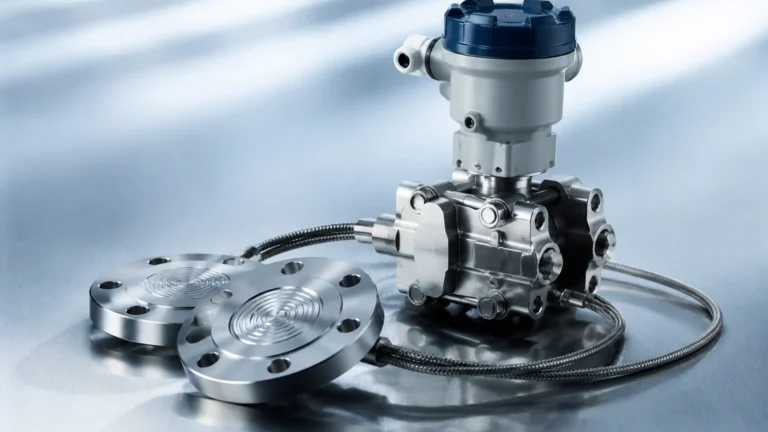
In the realm of industrial process control, the Deltabar PMD50 stands as a critical instrument for the measurement of differential pressure. This technology is widely employed across sectors such as chemical processing, oil and gas, and water treatment to determine flow rates, liquid levels, and pressure gradients. Understanding the engineering principles, application limits, and installation requirements of the deltabar pmd50 is essential for engineers tasked with maintaining system accuracy and safety.
As a professional reference, this guide examines the technical architecture of differential pressure (DP) transmitters and provides practical insights into their deployment. For those evaluating a broader range of instrumentation, including radar and ultrasonic alternatives, consulting a comprehensive Main Page of industrial solutions is recommended to ensure the selected technology aligns with specific process conditions.
Differential Pressure Measurement Principles
The fundamental operation of the deltabar pmd50 relies on the measurement of pressure at two distinct points in a process. The difference between these two values—the differential pressure—is used to derive other physical variables.
Level Measurement in Pressurized Vessels
In an open tank, level is a function of hydrostatic pressure. However, in pressurized vessels, the total pressure at the bottom of the tank includes the pressure of the gas or vapor space above the liquid. To isolate the liquid level, a DP transmitter measures the pressure at the bottom (High Pressure side) and the pressure in the vapor space (Low Pressure side).
The calculation follows the hydrostatic formula:
$$P_{diff} = P_{high} – P_{low} = \rho \cdot g \cdot h$$
Where:
* $P_{diff}$ is the differential pressure.
* $\rho$ is the density of the fluid.
* $g$ is the gravitational constant.
* $h$ is the height of the liquid column.
Flow Measurement via Primary Elements
When used for flow measurement, the deltabar pmd50 is paired with a primary element, such as an orifice plate, Venturi tube, or Pitot tube. These elements create a deliberate pressure drop. According to Bernoulli’s principle, the square root of the differential pressure is proportional to the flow rate. This allows the transmitter to calculate volume or mass flow in liquids, gases, and steam applications.
Technical Specifications and Features
The deltabar pmd50 is designed for high-performance industrial environments. It typically utilizes a piezoresistive sensor element with a metallic diaphragm. This construction allows for robust performance even under significant static pressure loads.
Key Technical Attributes:
* Accuracy: Standard models offer a reference accuracy of up to ±0.075%, with high-precision versions reaching ±0.05%.
* Long-term Stability: Designed to maintain calibration with minimal drift (typically <0.05% of the URL per year).
* Communication Protocols: Supports modern industrial standards including 4-20mA HART, PROFIBUS PA, and FOUNDATION Fieldbus.
* Modular Design: The electronics and sensor modules are often replaceable, allowing for easier maintenance without removing the entire unit from the process line.
Selection Criteria and Application Suitability
Selecting the correct configuration for a deltabar pmd50 involves assessing the chemical compatibility of the wetted parts, the expected pressure range, and the environmental conditions. The following table provides a general selection framework for industrial DP transmitters.
| Feature | Specification / Option | Engineering Consideration |
| :— | :— | :— |
| Diaphragm Material | 316L Stainless Steel, Alloy C276, Monel, Tantalum | Must resist corrosion from the process medium. |
| Measuring Range | 0.25 mbar to 40 bar (0.0036 to 580 psi) | Select a range where the operating point is 50-75% of the span. |
| Static Pressure | Up to 160 bar (2320 psi) or 420 bar (6090 psi) | Ensure the housing can withstand the total system pressure. |
| Fill Fluid | Silicone oil, Inert oil (for Oxygen/Chlorine) | Inert oils are required for reactive or oxidizing media. |
| Process Connection | 1/4"-18 NPT, RC 1/4", Manifold mounts | Must match existing piping and valve manifolds. |
Installation and Commissioning Best Practices
Proper installation is the most significant factor in the long-term reliability of a deltabar pmd50. Because DP transmitters rely on impulse lines (small diameter pipes connecting the process to the transmitter), several physical factors must be managed.
Impulse Line Orientation
* Gas Applications: The transmitter should be mounted *above* the tapping points. This allows any condensate to drain back into the process line, preventing false pressure readings.
* Liquid and Steam Applications: The transmitter should be mounted *below* the tapping points. This ensures the impulse lines remain full of liquid, preventing gas bubbles from causing measurement errors.
* Slope: Impulse lines should have a minimum slope of 1:12 (approx. 8%) to facilitate the movement of gas or liquid toward the desired end.
Use of Manifolds
A 3-way or 5-way valve manifold is highly recommended. These devices allow the operator to isolate the transmitter from the process, equalize the pressure between the high and low sides for zero-point calibration, and vent or drain the impulse lines safely.
Environmental Protection
While the deltabar pmd50 is rated for industrial use (often IP66/67), extreme temperatures can affect accuracy. In very cold climates, impulse lines may require heat tracing or insulation to prevent freezing. In high-temperature steam applications, a siphon or water-filled impulse line must be used to protect the sensor diaphragm from direct steam contact.

Limitations and Risk Mitigation
While differential pressure measurement is a mature and reliable technology, it is not suitable for every application. Engineers should be aware of the following limitations:
1. Density Sensitivity: Since DP level measurement relies on the formula $P = \rho gh$, any change in fluid density (caused by temperature or concentration changes) will result in a level error. If the density is variable, a compensation method or a different technology, such as radar, may be required.
2. Impulse Line Clogging: In processes with high solids content or viscous fluids, impulse lines can become plugged. This leads to a "frozen" or sluggish reading. For these applications, diaphragm seals (remote seals) are a better alternative, as they eliminate the need for impulse lines.
3. Static Pressure Effects: High static pressure can cause a shift in the zero point of the transmitter. This is usually corrected during commissioning by equalizing the manifold and performing a "zero at line pressure" adjustment.
Comparison with Alternative Technologies
In modern industrial automation, DP transmitters like the deltabar pmd50 often compete with newer technologies. Understanding when to use each is key to effective plant design.
* Radar (Non-contact): Unlike DP, radar is independent of fluid density. It is ideal for applications with varying temperatures or where the media is highly corrosive or viscous. However, radar can be more expensive and may struggle in tanks with heavy foam or complex internal obstructions.
* Ultrasonic: A cost-effective solution for open-air water applications. It is less suitable for pressurized vessels or environments with dust and vapor, where DP transmitters excel.
* Hydrostatic (Submersible): Simpler for open tanks but lacks the ability to compensate for vessel pressure, which is the primary strength of the DP transmitter.
For a detailed comparison of these technologies and to find the best fit for your specific infrastructure, you can review product options and application support on our Main Page.
Frequently Asked Questions (FAQ)
1. How often should a deltabar pmd50 be calibrated?
Calibration frequency depends on the criticality of the process and the environmental conditions. While the device has high long-term stability, many plants perform a verification check every 12 to 24 months. Safety-instrumented systems (SIS) may require more frequent proof testing.
2. Can the PMD50 measure the level of a boiling liquid?
Yes, but it requires careful engineering. Boiling liquids create vapor pressure that must be compensated for using the low-pressure side of the DP transmitter. Additionally, a "wet leg" or a remote seal may be necessary to prevent the vapor from condensing in the impulse lines and creating an inconsistent pressure head.
3. What is the difference between a "dry leg" and a "wet leg"?
In a pressurized tank, the low-pressure impulse line is called a "dry leg" if it is filled with gas. If the gas is likely to condense, the line is intentionally filled with a known liquid to create a "wet leg." The constant pressure exerted by the wet leg is then subtracted from the total differential pressure via the transmitter's electronics.
4. What does the "HistoROM" function do?
In many versions of the deltabar pmd50, HistoROM is a data management module that stores device parameters and event logs. If the electronics module needs replacement, the HistoROM can be plugged into the new module, automatically uploading all configuration settings and reducing downtime.
5. Is the deltabar pmd50 suitable for hygienic applications?
While the PMD50 is used in many industrial settings, applications in the food, beverage, or pharmaceutical industries often require specific hygienic transmitters with flush-mounted diaphragms and 3-A or EHEDG certifications to ensure no bacteria can grow in the process connections.
Conclusion
The deltabar pmd50 remains a cornerstone of industrial measurement due to its versatility and robustness. By understanding the underlying physics of differential pressure and adhering to strict installation guidelines, engineers can achieve highly accurate measurements for flow and level. However, as process demands evolve, it is vital to remain informed about alternative technologies. For further technical specifications and to explore a wide range of level and pressure measurement instruments, visit the Main Page for professional guidance and product support.