Micro Motion Mass Flow Meter
Micro Motion Mass Flow Meter
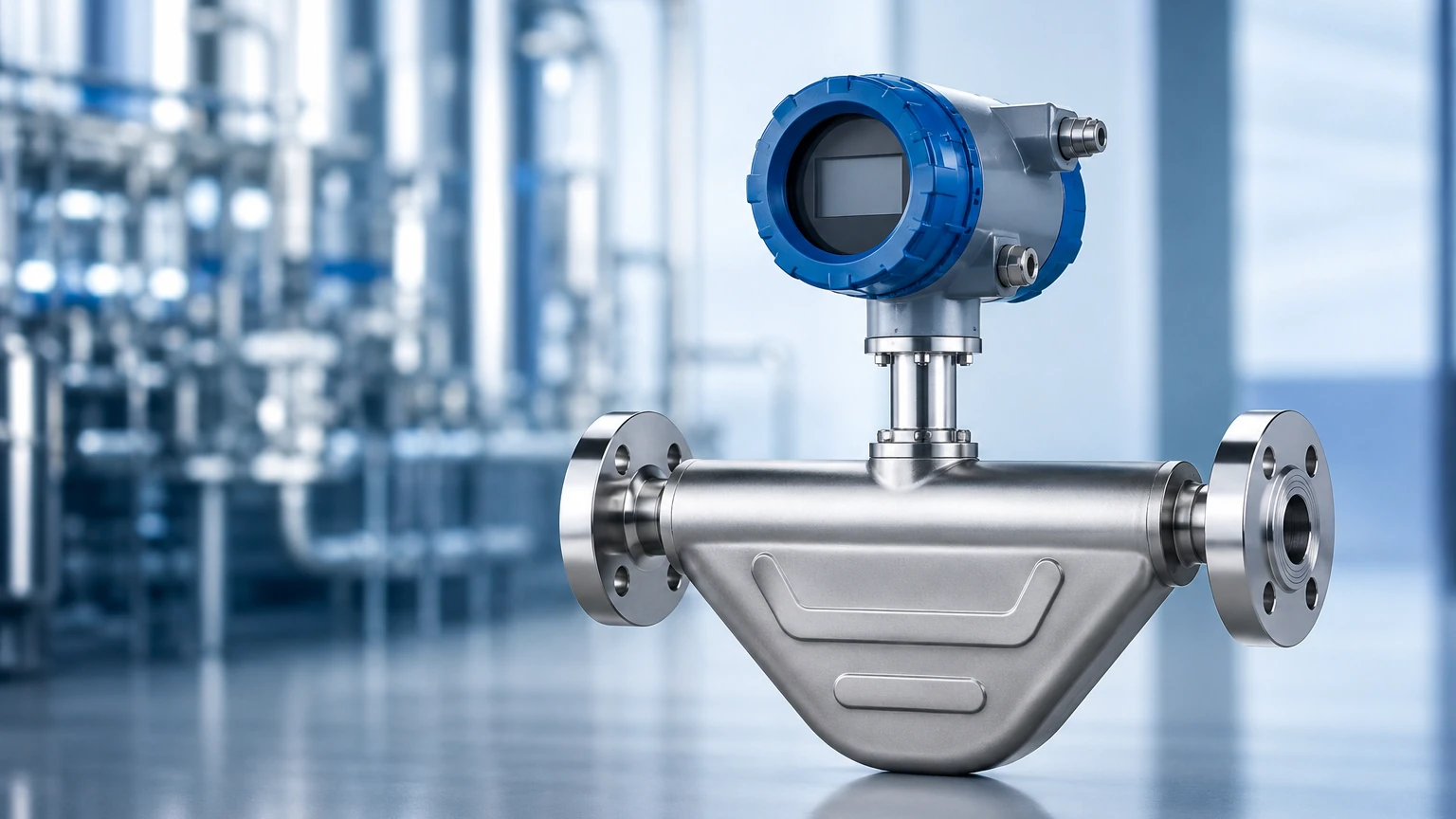
In the landscape of industrial process control, the ability to measure fluid flow with high precision is fundamental to operational efficiency, safety, and fiscal accountability. Among the various technologies available, the micro motion mass flow meter, based on the Coriolis principle, stands out as a premier solution for direct mass flow measurement. Unlike volumetric flow meters, which require compensation for temperature and pressure to calculate mass, a Coriolis meter measures the mass of the fluid directly, providing a more stable and accurate reading across varying process conditions.
For engineers and plant managers, understanding the nuances of this technology is essential for selecting the right instrumentation. This guide explores the measurement principles, selection criteria, and installation requirements for mass flow systems, while considering their integration alongside other process instruments such as those found on the Main Page of industrial measurement catalogs.
Measurement Principles: The Coriolis Effect
To appreciate the capabilities of a micro motion mass flow meter, one must first understand the physics governing its operation. The device operates on the principle of inertia. When a fluid moves through a vibrating tube, it exerts a force on the tube walls that is proportional to the mass flow rate of that fluid.
The Vibrating Tube
Inside the meter, one or two flow tubes are driven to vibrate at their natural resonant frequency by an electromagnetic drive coil. When there is no flow, the tubes vibrate in a uniform manner, and the sine waves produced by sensors (pick-offs) located at the inlet and outlet sides of the tubes are in phase with each other.
The Coriolis Force
As fluid enters the meter and begins to flow through the vibrating tubes, it is forced to take on the vertical momentum of the vibrating tube. On the inlet side, the fluid resists this upward motion, pushing down on the tube. As the fluid exits the tube, it resists the decrease in vertical momentum, pushing up. This creates a twisting effect on the flow tube, known as the Coriolis effect.
Phase Shift and Mass Calculation
The resulting twist causes a phase shift between the sine waves generated by the inlet and outlet pick-off sensors. The time difference ($Δt$) between these two signals is directly proportional to the mass flow rate. Because this measurement relies on the mass (inertia) of the fluid rather than its volume, it remains unaffected by changes in fluid density, viscosity, or flow profile.
Simultaneous Density Measurement
In addition to mass flow, these meters measure the resonant frequency of the tubes. Since the frequency at which the tube vibrates depends on the total mass of the tube and the fluid inside it, and the volume of the tube is fixed, the meter can calculate the fluid's density in real-time. This dual-capability allows for the calculation of volume flow and concentration, making it a versatile tool for complex chemical processes.
Key Evaluation Criteria for Selection
Selecting a micro motion mass flow meter requires a thorough analysis of the process environment. While these meters offer high accuracy, they are a significant investment compared to simpler volumetric devices.
Accuracy and Repeatability
Most high-end Coriolis meters offer mass flow accuracy of ±0.1% to ±0.05% of the flow rate. For density measurement, accuracies can reach ±0.0005 g/cm³. This level of precision is critical for custody transfer, where small errors can lead to significant financial discrepancies.
Turndown Ratio
The turndown ratio (the range between maximum and minimum measurable flow) is typically 20:1 or higher. Engineers must ensure the meter maintains its stated accuracy at the lower end of the flow range, particularly in batching applications where flow rates may taper off toward the end of a cycle.
Material Compatibility
The wetted parts of the meter must be compatible with the process fluid. Common materials include 316L stainless steel, but for corrosive applications, nickel alloys (such as Hastelloy C-22) or tantalum may be required. High-pressure applications may necessitate thicker tube walls, which can slightly impact sensitivity.
Pressure Drop
Because the fluid must pass through the internal geometry of the meter (often a U-shaped or curved tube), there is an inherent pressure drop. This must be calculated during the design phase to ensure the system pump capacity is sufficient and to prevent cavitation in liquid applications.
Practical Selection Table
| Feature | U-Shaped Tube Design | Straight Tube Design |
| :— | :— | :— |
| Accuracy | Highest (up to ±0.05%) | High (up to ±0.1%) |
| Pressure Drop | Moderate to High | Low |
| Cleanability | Difficult (potential for residue) | Excellent (Self-draining) |
| Installation Space | Requires more vertical/horizontal depth | Compact, inline |
| Sensitivity to Vibration| Lower (inherently balanced) | Higher (requires rigid mounting) |
| Typical Applications | High-precision custody transfer | Food & Beverage, Slurries |
Installation Considerations
Proper installation is paramount to achieving the rated accuracy of a micro motion mass flow meter. While Coriolis meters are less sensitive to flow profile distortions than ultrasonic or magnetic meters, they are highly sensitive to mechanical vibration and mounting stress.
1. Mounting and Support: The meter should be supported by the process piping, but the piping itself must be rigidly anchored to a stable structure on both the inlet and outlet sides. This prevents external vibrations from interfering with the tube's natural resonance.
2. Orientation:
* Liquids: The meter should ideally be installed in a vertical pipe with upward flow to ensure the tubes remain full and to allow any gas bubbles to pass through.
* Gases: The meter is often installed with the tubes pointing upward (in a U-shape) to allow any condensed liquids to drain out.
* Slurries: Vertical installation is preferred to prevent solids from settling in the tubes.
3. Zeroing the Meter: After installation and under full-pipe, zero-flow conditions, the meter must be "zeroed" to account for the specific mechanical stresses of the piping. This should be performed at operating temperature and pressure for maximum accuracy.
4. Avoid Cavitation: Ensure the backpressure is sufficient to prevent the fluid from flashing or cavitating within the meter, which will cause significant measurement errors and potentially damage the tubes.
Integration with Level Measurement Systems
In many industrial applications, mass flow measurement and level measurement are used in tandem to provide a complete picture of inventory and process stability. While a micro motion mass flow meter tracks the movement of material into or out of a vessel, level measurement instruments—such as those discussed in the Main Page of technical references—provide the "static" inventory check.
For example, in a chemical reactor, a Coriolis meter might control the precise mass of a catalyst being added, while a radar level transmitter monitors the overall volume to prevent overfills. Using mass flow data alongside hydrostatic or radar level data allows engineers to perform mass balance calculations, which can help identify leaks or inconsistencies in fluid density that might indicate a process deviation.
Limitations and Risks
Despite their versatility, micro motion mass flow meters are not suitable for every application.
* Gas Entrainment: The presence of air or gas bubbles in a liquid stream (slug flow) can dampen the vibration of the tubes, leading to a "stalling" of the meter or significant measurement errors. Advanced digital signal processing has mitigated this, but it remains a challenge.
* Initial Cost: Coriolis meters are among the most expensive flow measurement technologies. The ROI must be justified by the need for high accuracy or the benefits of direct mass measurement.
* Size and Weight: Large-diameter Coriolis meters (above 250 mm or 10 inches) are extremely heavy and bulky, often requiring specialized structural supports.
Frequently Asked Questions (FAQ)
Q: Does a micro motion mass flow meter require straight pipe runs?
A: Generally, no. Unlike turbine or differential pressure meters, Coriolis meters are not sensitive to flow profile disturbances like swirls or asymmetry. However, it is still good practice to avoid placing them immediately after a high-vibration source like a pump.
Q: Can it measure the flow of non-conductive fluids?
A: Yes. Unlike magnetic flow meters, which require a minimum fluid conductivity, Coriolis meters work on any fluid with sufficient mass, including hydrocarbons, deionized water, and gases.
Q: How often should the meter be calibrated?
A: While the meter has no moving parts to wear out, many industries require annual or biennial calibration for regulatory compliance. Many modern transmitters offer "Smart Meter Verification," which checks the structural integrity of the tubes without removing the meter from the line.
Q: What is the maximum temperature these meters can handle?
A: Standard models usually handle up to 200°C (392°F), but specialized high-temperature versions can operate at up to 350°C (662°F) or higher.
Conclusion
The micro motion mass flow meter remains the gold standard for precision and reliability in fluid measurement. By providing direct mass, density, and temperature data in a single device, it simplifies complex process loops and ensures high-quality output. When integrated with a robust suite of level measurement tools, as seen in the broader product ranges available on the Main Page, it forms the backbone of modern industrial automation. Engineers should carefully weigh the initial costs against the long-term benefits of reduced maintenance and superior accuracy to determine the best fit for their specific application.