Ph Meter Handheld
Ph Meter Handheld
In industrial process control and environmental monitoring, measuring the acidity or alkalinity of a liquid is as fundamental as monitoring its physical level. While continuous inline sensors are standard for automated systems, the ph meter handheld remains an indispensable tool for field verification, spot-checking, and calibration support. For engineers and technicians managing complex fluid systems, understanding the technical nuances of these portable devices is essential for maintaining process integrity.
Industrial applications often require a synergy between chemical analysis and physical measurement. While a ph meter handheld provides immediate chemical data, comprehensive process management also relies on precise level monitoring. For a broader view of industrial measurement solutions, including radar and ultrasonic technologies, professionals can refer to the Main Page of our technical resource center.
Measurement Principles of Handheld pH Meters
The operation of a handheld pH meter is based on the electrochemical potential between a known solution and an unknown sample. This measurement is governed by the Nernst equation, which relates the voltage of an electrochemical cell to the concentration of ions in the solution.
The Electrode System
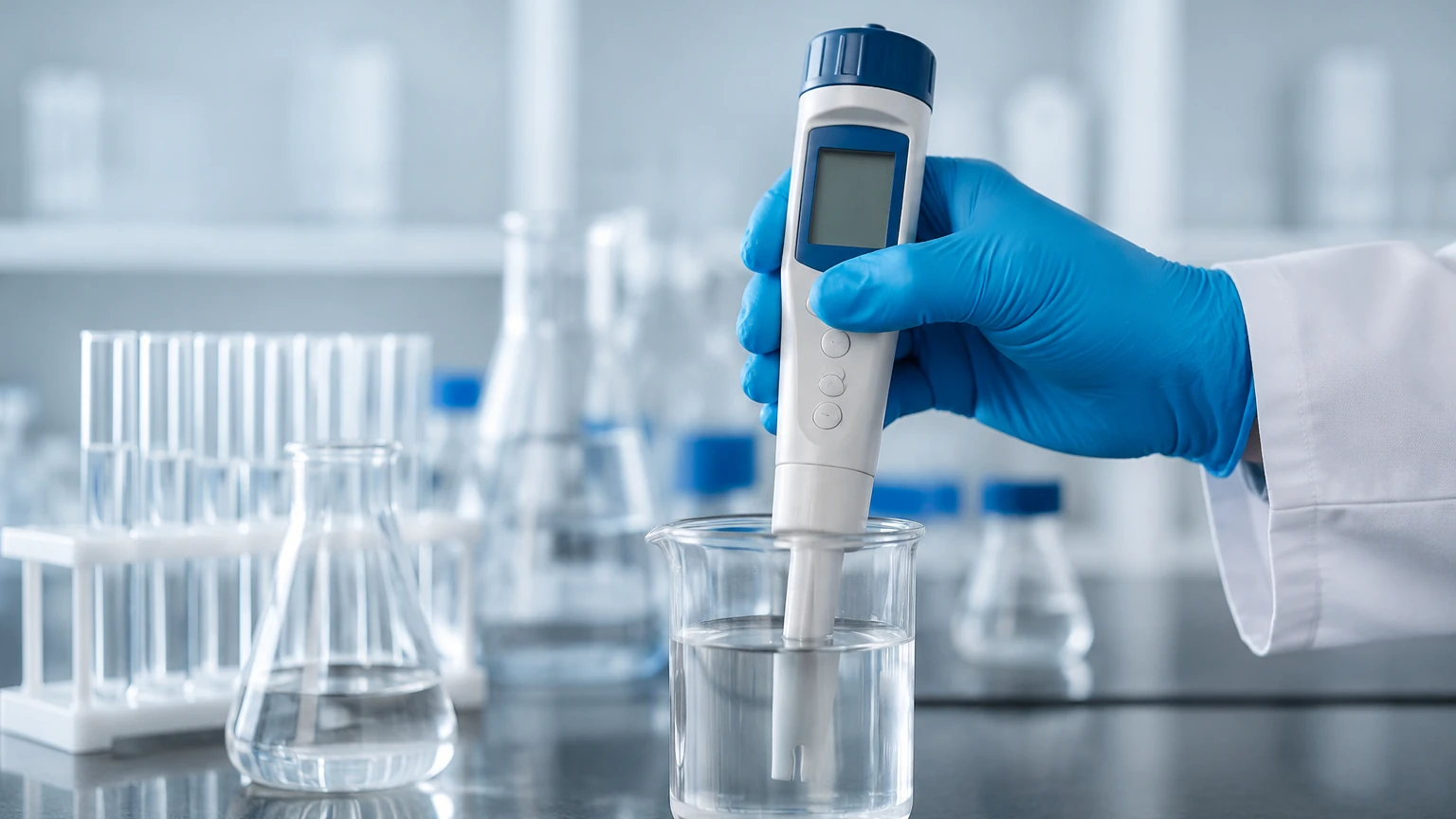
Most modern handheld units utilize a "combination electrode" that houses both the sensing electrode and the reference electrode in a single probe.
1. The Glass Electrode: This component features a specialized glass membrane sensitive to hydrogen ions ($H^+$). When immersed, a thin layer of hydrated gel forms on the outside and inside of the glass bulb. The difference in potential between these layers is proportional to the pH of the liquid.
2. The Reference Electrode: To measure the potential of the glass electrode, a stable reference point is required. This is typically a silver/silver chloride (Ag/AgCl) electrode immersed in a saturated potassium chloride (KCl) electrolyte.
3. The Junction: A porous ceramic or Teflon junction allows a small amount of electrolyte to leak into the sample, completing the electrical circuit without allowing the sample to contaminate the reference system.
Temperature Compensation
Temperature significantly affects the activity of hydrogen ions and the sensitivity of the electrode. A ph meter handheld designed for industrial use must include Automatic Temperature Compensation (ATC). This feature uses an integrated thermistor to measure the sample temperature and mathematically adjust the pH reading to a standard reference (usually 25°C).
Key Components and Design Features
When selecting a ph meter handheld for B2B applications, the hardware must be robust enough to withstand the rigors of the field. Industrial-grade units typically consist of the following:
* The Meter Body: Often rated to IP67 standards, ensuring the device is dust-tight and capable of withstanding temporary immersion in water.
* The BNC Connector: A standardized connection point that allows the user to swap electrodes based on the specific application (e.g., spear-tip electrodes for solids or flat-surface electrodes for slurries).
* The Display: High-contrast LCD or OLED screens that provide simultaneous readings of pH, temperature, and calibration status.
* Data Logging Modules: Internal memory capable of storing hundreds of data points with timestamps, which can later be exported via USB or Bluetooth for compliance reporting.
Selection Criteria for Industrial Applications
Choosing the right handheld instrument requires balancing accuracy requirements with the specific environment of the facility. The following table outlines primary considerations for different industrial sectors:
| Application | Critical Feature | Recommended Electrode Type |
| :— | :— | :— |
| Water Treatment | Stability and ATC | General-purpose glass bulb |
| Chemical Processing | Chemical resistance | PTFE junction / PVDF body |
| Food & Beverage | Hygiene and durability | Spear-tip or non-glass ISFET |
| Oil & Gas (Brine) | High salinity tolerance | Double-junction electrode |
| Cooling Towers | Portability and speed | Integrated sensor / Pen-style |
Accuracy and Resolution
For standard industrial monitoring, a resolution of 0.01 pH and an accuracy of ±0.02 pH are typically sufficient. However, for laboratory-grade field work or pharmaceutical applications, higher precision may be required. It is important to note that the accuracy of the ph meter handheld is only as good as its most recent calibration.
Best Practices for Calibration and Maintenance
Unlike physical level sensors—such as the radar level meters or ultrasonic level sensors manufactured by Welk—pH electrodes are consumable items that degrade over time. Proper maintenance is the only way to ensure reliable data.
Calibration Procedures
1. Multi-point Calibration: Always perform at least a two-point calibration (pH 7.00 and pH 4.01 or 10.01) before a shift. A three-point calibration provides a more linear response across the entire pH range.
2. Buffer Freshness: Never reuse calibration buffers. Contamination from previous measurements will lead to "slope errors."
3. Slope and Offset: Monitor the electrode slope (expressed as a percentage). A healthy electrode should have a slope between 92% and 102%. If the slope falls below 90%, the electrode likely needs cleaning or replacement.
Storage and Cleaning
* Never store in deionized (DI) water: This leaches ions out of the glass membrane and the reference electrolyte, permanently damaging the sensor.
* Use Storage Solution: Always keep the electrode bulb hydrated in a dedicated pH storage solution or a pH 4.0 buffer.
* Cleaning Protocols: For protein buildup, use a pepsin/HCl solution. For grease or oil, use a mild detergent or specialized solvent that does not degrade the electrode's seals.
Integration with Level Measurement Systems
In many industrial processes, such as neutralized wastewater discharge or chemical dosing tanks, pH measurement is inextricably linked to level control. For example, in a dosing tank, a Welk ultrasonic level sensor might monitor the volume of a caustic reagent, while a technician uses a ph meter handheld to verify that the dosing pump is achieving the correct chemical balance in the outflow.
Integrating these data points allows for a more holistic view of the process. If a level transmitter indicates a sudden drop in reagent volume without a corresponding change in the pH of the process stream, it may signal a leak or a pump failure. Reliable level instrumentation, such as hydrostatic transmitters or magnetic level gauges, provides the physical context necessary to interpret chemical data accurately.
Limitations and Common Risks
While highly versatile, the ph meter handheld has inherent limitations that users must acknowledge:
1. Electrode Aging: Even with perfect care, a pH electrode typically lasts only 6 to 18 months in industrial environments.
2. Dehydration: If the sensor dries out, it may require 24 hours of soaking to regain its sensitivity, or it may be rendered useless.
3. Pressure Sensitivity: Handheld meters are designed for atmospheric pressure. They cannot be used to measure liquids inside pressurized pipes or vessels without taking a manual sample first.
4. Electrical Interference: In environments with heavy industrial machinery, electromagnetic interference (EMI) can occasionally cause erratic readings on unshielded handheld cables.
Frequently Asked Questions (FAQ)
Q: How often should I calibrate my handheld pH meter?
A: For industrial B2B applications, daily calibration is recommended. If the meter is used infrequently, calibrate it immediately before use.
Q: Can I use one probe for all types of liquids?
A: No. While a general-purpose probe works for water, specialized probes are needed for viscous liquids, low-conductivity water (like condensate), or high-temperature samples.
Q: Why is my pH reading drifting?
A: Drifting is often caused by a clogged reference junction or a depleted electrolyte. It can also occur if the sample is not being stirred or if there is a significant temperature difference between the buffer and the sample.
Q: What is the difference between a pH pen and a handheld meter?
A: A pH pen is a compact, all-in-one device usually intended for less rigorous applications. A ph meter handheld typically features a separate, replaceable probe and more advanced features like data logging and higher-grade ATC.
Conclusion
The ph meter handheld is a vital component of any industrial toolkit, providing the flexibility needed for onsite analysis and system verification. By understanding the electrochemical principles of the device and adhering to a strict maintenance schedule, technicians can ensure that their chemical data is as reliable as their physical level measurements. For organizations looking to upgrade their overall process monitoring capabilities—from chemical analysis to advanced level measurement—exploring the full range of industrial sensors is the first step toward operational excellence.