Pmp55
Pmp55
In the field of industrial process automation, precise level measurement is a cornerstone of operational safety and efficiency. Among the various technologies available, hydrostatic pressure measurement remains one of the most reliable methods for monitoring liquid levels in tanks and vessels. The pmp55 represents a specific category of digital pressure transmitters equipped with metal diaphragm seals, designed to handle challenging process conditions where standard sensors might fail. This article provides a comprehensive technical overview of the pmp55 technology, its operating principles, and its application within the broader context of industrial level measurement.
Understanding the Measurement Principle
Before selecting a specific instrument like the pmp55, it is essential to understand the physics of hydrostatic level measurement. This method relies on the relationship between the pressure exerted by a liquid column and its height.
The Hydrostatic Equation
The fundamental principle is expressed by the formula:
P = ρ × g × h
Where:
* P is the hydrostatic pressure.
* ρ (rho) is the density of the liquid.
* g is the acceleration due to gravity (approximately 9.81 m/s²).
* h is the height of the liquid column.
In a vessel where the density of the fluid is constant, the pressure measured at the bottom of the tank is directly proportional to the level of the liquid. The pmp55 utilizes a high-precision pressure cell to detect this force and convert it into an electrical signal (typically 4-20mA or a digital bus protocol).
The Role of the Diaphragm Seal
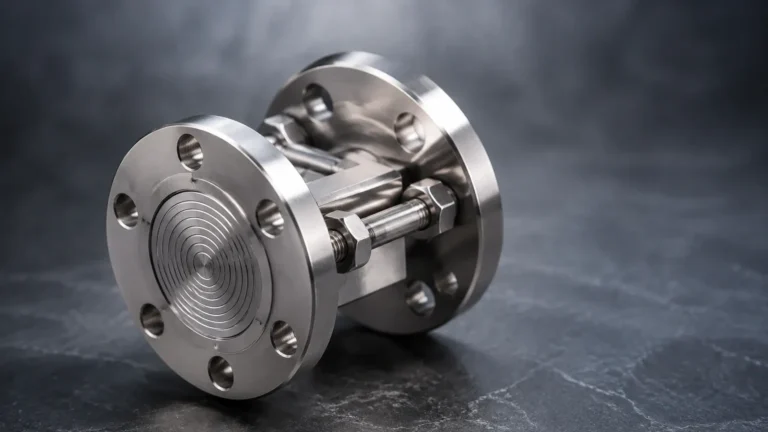
Unlike standard pressure transmitters where the process medium comes into direct contact with the internal sensing element, the pmp55 features a diaphragm seal. This seal consists of a flexible metal membrane that separates the process fluid from the transmitter's internal measuring cell. The space between the membrane and the sensor is filled with a specialized oil (fill fluid). When pressure is applied to the diaphragm, it deflects slightly, transferring the pressure through the fill fluid to the sensor.
This design is critical for applications involving:
* Corrosive Media: Protecting the sensor from chemical attack.
* High Temperatures: Isolating the electronics from extreme heat.
* Hygienic Requirements: Preventing fluid stagnation and ensuring easy cleaning in food or pharmaceutical processes.
* Viscous or Clogging Fluids: Avoiding build-up that would block a standard pressure port.
Technical Specifications and Selection Criteria
Choosing the correct configuration for a pmp55 requires an evaluation of the process environment. Engineers must consider the pressure range, temperature limits, and material compatibility.
Selection Table: Diaphragm Seal vs. Standard Transmitter
| Feature | Standard Pressure Transmitter | Pmp55 (Diaphragm Seal) |
| :— | :— | :— |
| Media Contact | Direct contact with sensor | Indirect (via diaphragm) |
| Viscous Liquids | Risk of clogging | Recommended |
| High Temperature | Limited (typically < 100°C) | High (up to 400°C / 750°F) |
| Corrosive Fluids | Requires exotic sensor materials | Exotic materials for diaphragm only |
| Cleaning | Difficult to flush | CIP/SIP compatible |
| Accuracy | Very High | High (slight temp-related drift) |
Material Selection
The diaphragm is the primary wetted part. Common materials include 316L stainless steel, but for more aggressive environments, options such as Hastelloy C, Tantalum, or Monel are used. The choice of fill fluid is equally important; silicone oil is standard, but vegetable oil or inert fluids are required for oxygen service or food-grade applications.
Installation Considerations
Proper installation of the pmp55 is vital to ensure long-term accuracy and prevent premature failure. Because these units often involve remote seals or specific mounting orientations, the following guidelines should be observed:
1. Mounting Position: The transmitter should ideally be installed at or below the lowest expected liquid level (the zero point). If the transmitter is mounted above or below the tapping point, a "zero shift" occurs due to the weight of the fill fluid in the capillary or neck. This must be compensated for during commissioning.
2. Temperature Effects: While the pmp55 is designed for high temperatures, extreme fluctuations can cause the fill fluid to expand or contract, leading to small measurement errors. In outdoor installations, sunshades or insulation may be necessary to maintain a stable temperature for the transmitter body.
3. Venting: For gauge pressure applications (measuring level in a tank open to the atmosphere), the transmitter must have a clear vent path to compensate for changes in atmospheric pressure. Ensure the vent is protected from moisture ingress.
4. Seal Protection: Never touch the metal diaphragm during installation. Even slight deformation can change the calibration or damage the sensor's linearity.
Limitations and Challenges
While the pmp55 is a versatile tool, it is not a universal solution for every level measurement task. Understanding its limitations helps in choosing the right technology from a broader catalog of Main Page solutions.
* Density Sensitivity: Since hydrostatic measurement depends on density, any change in the fluid's density (due to temperature changes or concentration shifts) will result in an error. If the density decreases by 2%, the indicated level will be 2% lower than the actual level.
* Vacuum Applications: In high-vacuum processes, the fill fluid inside the diaphragm seal can outgas or the diaphragm can be pulled outward (ballooning), leading to permanent damage. Special vacuum-service fill fluids and reinforced diaphragms are required.
* Response Time: Units with long capillary lines may have a slower response time compared to direct-mount sensors, as the pressure must travel through the viscous fill fluid.

Comparison with Alternative Technologies
In some industrial scenarios, other technologies might be more appropriate than a hydrostatic pmp55 transmitter.
* Radar Level Meters: Unlike the pmp55, radar is non-contact and unaffected by density changes. It is ideal for highly volatile liquids or when the tank internals make pressure tapping difficult. However, radar can be more expensive and may struggle with heavy foam.
* Ultrasonic Sensors: These are cost-effective for water and wastewater applications but are sensitive to air temperature, vapor layers, and surface turbulence.
* Magnetic Level Gauges: These provide a visual indication alongside an electronic signal, which is useful for redundant safety monitoring in boiler or oil/gas applications.
For a detailed comparison of these technologies and to find the best fit for your specific process, you can explore the various Main Page options provided by industrial manufacturers.
Maintenance and Troubleshooting
To maintain the integrity of a pmp55 installation, a regular maintenance schedule should be implemented.
* Visual Inspection: Regularly check the diaphragm for signs of pitting, corrosion, or coating build-up. In hygienic applications, ensure the gaskets are intact and there are no leaks.
* Zero Point Verification: Periodically check the transmitter's output when the tank is empty. If the zero has drifted, perform a "zero trim" via the device's local display or communication interface (HART/Profibus).
* Seal Integrity: If the output signal becomes erratic or sluggish, it may indicate that the fill fluid has leaked or that air has entered the system. In such cases, the diaphragm seal assembly usually requires professional repair or replacement.
Frequently Asked Questions (FAQ)
Q: Can the pmp55 be used in pressurized tanks?
A: A single pmp55 measures gauge pressure relative to the atmosphere. For pressurized (closed) tanks, a differential pressure (DP) transmitter or two pmp55 units in an electronic differential pressure configuration is required to subtract the headspace pressure from the total pressure at the bottom.
Q: How does the length of the capillary affect the measurement?
A: Longer capillaries increase the volume of fill fluid, which makes the system more sensitive to ambient temperature changes. It also increases the response time of the sensor. Capillaries should be kept as short as possible and both lines (in DP applications) should be the same length and kept at the same temperature.
Q: What is the difference between a pmp55 and a pmp51?
A: Generally, the pmp51 is designed for direct mounting without a diaphragm seal, whereas the pmp55 is specifically engineered with a diaphragm seal for more demanding process conditions. The internal electronics and sensing cells are often similar, but the process interface is the primary differentiator.
Q: Is it possible to field-repair a damaged diaphragm?
A: No. The diaphragm seal and the transmitter are calibrated as a single system in a controlled environment. If the diaphragm is dented or punctured, the entire seal assembly must be replaced and the system refilled and recalibrated by the manufacturer.
Conclusion
The pmp55 is a robust and highly capable instrument for hydrostatic level measurement, particularly when dealing with high temperatures, corrosive chemicals, or hygienic requirements. By understanding the underlying physics of pressure-based level detection and adhering to strict installation and selection guidelines, engineers can ensure highly accurate and reliable data for their process control systems. For those seeking a wider range of measurement solutions, including radar, ultrasonic, and magnetic gauges, visiting the Main Page of a dedicated level instrument provider is the best next step to ensure the right technology is matched to the specific application requirements.