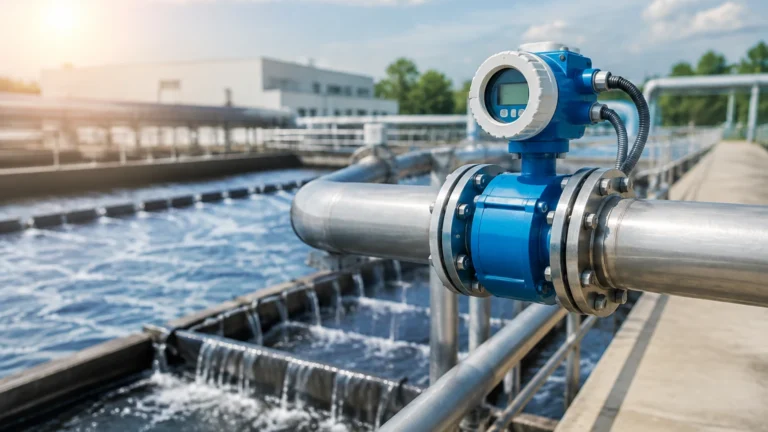
Point Level Sensors
Point Level Sensors
Point level sensors are fundamental components in industrial automation, designed to detect the presence or absence of a substance at a specific height within a vessel, tank, or pipe. Unlike continuous level transmitters that provide a constant stream of data regarding the exact level, point level sensors act as discrete switches. They are primarily utilized for high-level alarms to prevent overfills, low-level alarms to protect pumps from running dry, or as triggers for automated filling and emptying cycles.
In the context of industrial process control, selecting the correct point level technology is critical for operational safety and efficiency. This article explores the various measurement principles, selection criteria, and installation best practices for point level sensors in B2B applications.
Understanding Measurement Principles
Before selecting a sensor, it is essential to understand the physical principles that govern different technologies. Each method interacts with the process media differently, making some more suitable for specific environments than others.
Vibrating Fork (Tuning Fork) Sensors
This technology utilizes a sensing element shaped like a tuning fork, which is vibrated at its resonant frequency by a piezo-electric crystal. When the fork is immersed in a liquid or solid, the frequency of vibration changes. The electronic circuit detects this shift and converts it into a switching signal. Vibrating forks are highly versatile because they are largely unaffected by the chemical or physical properties of the liquid, such as density, conductivity, or viscosity.
Capacitance and RF Admittance
Capacitance sensors operate on the principle of an electrical capacitor. The sensor probe and the tank wall (or a second probe) act as two plates. As the material level rises, it displaces air (which has a low dielectric constant) with the process material (which typically has a higher dielectric constant), changing the capacitance of the system. RF Admittance is an advanced version of this technology that uses a high-frequency signal to ignore the effects of material build-up on the probe, making it ideal for sticky or coating substances.
Float Switches
Float switches are among the oldest and most straightforward technologies. They rely on buoyancy; a float containing a magnet moves with the liquid level. When the float reaches a predetermined point, the magnet actuates a reed switch or a microswitch. While cost-effective, they are limited to clean, non-coating liquids and are susceptible to mechanical wear.
Rotary Paddle Sensors
Specifically designed for bulk solids and powders, rotary paddle sensors use a low-speed motor that rotates a paddle. When the material reaches the paddle, it creates a mechanical resistance that stalls the motor. This stall triggers a switch. These are robust and commonly used in silos and hoppers for grain, plastic pellets, or cement.
Ultrasonic Gap Sensors
These sensors consist of two ultrasonic transducers separated by a small gap. An ultrasonic signal is sent across the gap. When the gap is filled with air, the signal is weak; when filled with liquid, the signal is transmitted efficiently. This technology is excellent for detecting the interface between liquids or for non-contact detection in specific configurations.
Optical Level Sensors
Optical sensors use an infrared LED and a phototransistor. When the sensor tip is in air, the infrared light is reflected back to the receiver within a prism. When immersed in liquid, the light is refracted into the liquid, and the receiver detects a loss of signal. These are compact and ideal for leak detection or small tank applications.
Practical Selection Criteria
Choosing the right point level sensor requires a detailed analysis of the process environment. Engineers must evaluate the following factors to ensure long-term reliability.
Media Properties
* State of Matter: Is it a liquid, slurry, or bulk solid?
* Dielectric Constant: Critical for capacitance sensors. Materials with a dielectric constant (εr) below 2.0 may require specialized high-sensitivity probes.
* Viscosity and Coating: Sticky materials like molasses or wastewater sludge can cause false triggers on standard probes. RF Admittance or vibrating forks with "coating rejection" features are preferred.
* Corrosiveness: The wetted parts must be compatible with the media. Common materials include 316L stainless steel, PTFE (Teflon), or PVDF.
Process Conditions
* Temperature: Standard sensors typically handle up to 80°C (176°F), but high-temperature versions with cooling fins can operate up to 250°C (482°F) or higher.
* Pressure: Sensors must be rated for the maximum vessel pressure, often measured in bar or PSI. High-pressure applications (e.g., 40 bar / 580 PSI) require robust threaded or flanged connections.
* Turbulence and Foam: Agitators and splashing can cause "chatter" in a switch. Sensors with adjustable delay settings or those unaffected by surface conditions (like vibrating forks) are necessary here.
Technology Comparison Table
| Technology | Suitable Media | Key Advantage | Major Limitation |
| :— | :— | :— | :— |
| Vibrating Fork | Liquids, Powders | Unaffected by foam/bubbles | Not for very high viscosity |
| Capacitance | Liquids, Solids | No moving parts | Requires calibration |
| Float Switch | Clean Liquids | Low cost, simple | Moving parts can jam |
| Rotary Paddle | Bulk Solids | Robust for heavy solids | Mechanical wear |
| Optical | Clean Liquids | Very compact | Sensitive to coating/dirt |
| Conductive | Conductive Liquids | Extremely low cost | Only for conductive media |
Installation Considerations and Best Practices
Proper installation is as important as sensor selection. Even the most advanced sensor will fail if placed in an unsuitable location.
1. Mounting Orientation: Most point level sensors can be mounted horizontally (side of the tank) or vertically (top of the tank). For high-level alarms, vertical mounting is often preferred to keep the electronics away from the media. For low-level detection, horizontal mounting ensures the sensor is triggered as soon as the level drops below the probe.
2. Nozzle Length: For side-mounted sensors, the probe must extend far enough into the tank to clear the "dead zone" created by the mounting nozzle. If the nozzle is too long, material may build up inside it, causing a permanent "full" signal.
3. Avoid Inflow Streams: Never install a point level sensor directly beneath a fill pipe. The falling material will cause false alarms and may physically damage the probe over time. Use a baffle or relocate the sensor if this is unavoidable.
4. Wiring and Grounding: For capacitance and RF Admittance sensors, a proper ground reference is vital. In plastic tanks, a grounding rod or a metal flange must be used to provide a reference point for the electrical field.
5. Environmental Sealing: Ensure the cable glands and housing covers are tightened to maintain the IP (Ingress Protection) rating, especially in wash-down environments or outdoor installations.

Limitations and Common Risks
While point level sensors are generally reliable, certain conditions can lead to measurement errors or premature failure.
* Build-up and Bridging: In solid applications, material can "bridge" over the sensor, creating a void that prevents the sensor from detecting the actual level. In liquid applications, a thick coating can trick capacitance sensors into thinking the tank is full.
* Material Compatibility: Chemical attack can degrade seals (O-rings) or the probe material itself. Always consult a chemical resistance chart before finalizing a specification.
* Electromagnetic Interference (EMI): In environments with large motors or variable frequency drives (VFDs), electronic sensors may experience interference. Shielded cabling and proper earthing are mandatory.
* Mechanical Stress: In tall silos, the downward force of falling solids (pull-down force) can bend or snap long probes. Flexible cable probes or heavy-duty mounting brackets should be used in these scenarios.
Frequently Asked Questions (FAQs)
Q: Can a point level sensor be used to measure the interface between oil and water?
A: Yes, certain technologies like RF Admittance or specialized ultrasonic gap sensors can distinguish between two liquids with different electrical or acoustic properties.
Q: How often do point level sensors need calibration?
A: Mechanical switches like floats usually require no calibration but need regular inspection for wear. Capacitance sensors may need recalibration if the media's dielectric properties change significantly. Vibrating forks are typically "plug-and-play" and require no calibration.
Q: What is the difference between a PNP and NPN output?
A: These refer to the type of transistor output for DC sensors. PNP (Source) provides a positive voltage when triggered, while NPN (Sink) connects the load to the negative/ground. The choice depends on the PLC or controller being used.
Q: Are there point level sensors for hazardous areas?
A: Yes, for environments with explosive gases or dust, sensors must be certified as Intrinsically Safe (Ex i) or Explosion-Proof (Ex d). These certifications ensure the device cannot provide enough energy to ignite the atmosphere.
Conclusion
Point level sensors are an indispensable part of modern industrial processes, providing the critical data needed for safety and automation. By understanding the underlying physics—whether it be vibration, capacitance, or mechanical buoyancy—and carefully matching the sensor to the process conditions, engineers can ensure reliable performance and minimize downtime. For comprehensive technical specifications and to explore a wide range of industrial measurement solutions, you can visit the Main Page of Welk, where detailed product documentation and application support are available to assist in your selection process. When in doubt, consulting with a measurement specialist can prevent costly installation errors and ensure the longevity of your instrumentation system.