Power Line Monitoring System
Power Line Monitoring System
In the landscape of industrial automation and process control, the reliability of electrical infrastructure is as critical as the accuracy of the instruments it powers. A power line monitoring system (PLMS) serves as the sensory network for electrical grids and industrial power distribution systems, providing real-time data on the health, performance, and safety of power conductors and hardware. For facilities managing complex operations—such as chemical processing plants, water treatment works, and oil and gas refineries—integrating robust power monitoring is essential to ensure that sensitive instrumentation, including advanced level measurement sensors, operates without interruption or signal degradation.
Modern industrial environments rely on a steady flow of electricity to drive pumps, valves, and the sophisticated electronics found on the Main Page of automated control systems. When power quality fluctuates or lines fail, the resulting downtime can lead to significant economic losses and safety hazards. This article explores the technical principles, selection criteria, and practical implementation of power line monitoring systems within the context of industrial engineering.
Core Components and Measurement Principles
A power line monitoring system is designed to track physical and electrical parameters across a distribution network. Unlike traditional manual inspections, these systems provide continuous telemetry, allowing for predictive maintenance and rapid fault localization.
Electrical Parameter Measurement
The fundamental role of a PLMS is to monitor electrical loads. This is typically achieved through:
* Current Transformers (CTs): These sensors wrap around conductors to measure AC current flow through electromagnetic induction. They allow the system to detect overcurrent conditions that might indicate a short circuit or equipment failure.
* Potential Transformers (PTs) or Voltage Dividers: These components scale down high voltages to measurable levels, enabling the system to monitor for sags, swells, and transients that can damage sensitive PLC (Programmable Logic Controller) inputs.
Physical and Environmental Monitoring
Beyond electrical data, modern systems incorporate sensors to monitor the physical state of the power lines themselves:
* Conductor Temperature: High current loads cause resistive heating. By monitoring the temperature of the line, operators can calculate the "Dynamic Line Rating" (DLR), which determines the maximum safe current capacity based on real-time cooling conditions (wind and ambient temperature).
* Line Sag and Tension: Using accelerometers and inclinometers, a PLMS can detect if a line is sagging too close to the ground or vegetation, which is a primary cause of flashovers and wildfires.
* Vibration and Inclination: These sensors detect mechanical stress caused by wind-induced galloping or structural shifts in support towers.
Data Transmission and Integration
The data collected at the conductor level must be transmitted to a central control room. In industrial settings, this often involves wireless protocols (such as LoRaWAN, NB-IoT, or cellular) to bridge the distance between remote substations and the main facility. The information is then integrated into SCADA (Supervisory Control and Data Acquisition) systems, where it is analyzed alongside other process variables like tank levels and flow rates.
The Role of Power Monitoring in Process Instrumentation
For engineers focused on level measurement and fluid handling, the stability of the power supply is a prerequisite for data integrity. Instruments such as radar level meters and ultrasonic sensors require clean, stable power to process high-frequency signals accurately.
Preventing Signal Drift and Interference
Power line fluctuations can introduce electrical noise into the 4-20mA loops or digital communication buses (like Modbus or HART) used by level transmitters. A power line monitoring system identifies harmonic distortions and voltage imbalances before they manifest as "ghost readings" or signal drift in level sensors. By ensuring the power grid is healthy, the PLMS protects the accuracy of the entire instrumentation suite.
Protecting Remote Assets
In applications like municipal water distribution or remote oil tank farms, level meters are often located kilometers away from the main power source. These long-distance lines are susceptible to lightning strikes and environmental damage. A PLMS provides immediate notification if a remote line is downed, allowing maintenance teams to respond before a tank overflows or a pump runs dry due to a loss of control signal.
Key Evaluation Criteria for Industrial Monitoring Systems
Selecting the right power line monitoring system requires an assessment of both the electrical environment and the specific needs of the facility. Engineers should evaluate the following criteria:
1. Accuracy and Sampling Rate: For fault detection, high-speed sampling (in the millisecond range) is required to capture transient events. For asset management, lower sampling rates may suffice.
2. Power Supply for the Monitor: Since the monitor is attached to a power line, it must often be "self-powered" by harvesting energy from the magnetic field of the conductor it is monitoring. The minimum current required for the monitor to wake up and transmit data is a critical specification.
3. Environmental Durability: Sensors must withstand extreme temperatures (typically -40°C to +85°C), UV exposure, and high-voltage electromagnetic fields without degradation.
4. Ease of Installation: Systems that use "split-core" transformers or clamp-on designs are preferred, as they can be installed without de-energizing the line, preventing operational downtime.
Selection Table: Comparing Monitoring Technologies
| Technology Type | Primary Parameters | Best Application | Limitations |
| :— | :— | :— | :— |
| Current-Only Monitors | Amperage, Fault detection | Basic load balancing in industrial plants | Cannot calculate power factor or energy (kWh) |
| Dynamic Line Rating (DLR) | Temperature, Sag, Wind speed | High-voltage transmission lines | Requires complex thermal modeling software |
| Power Quality Analyzers | Harmonics, Sags, Swells, Transients | Sensitive electronics and lab environments | Usually requires a fixed power source; high cost |
| IoT-Based Line Sensors | Vibration, Tilt, Basic Current | Remote distribution and rural lines | Dependent on cellular or LPWAN coverage |
Installation Considerations and Best Practices
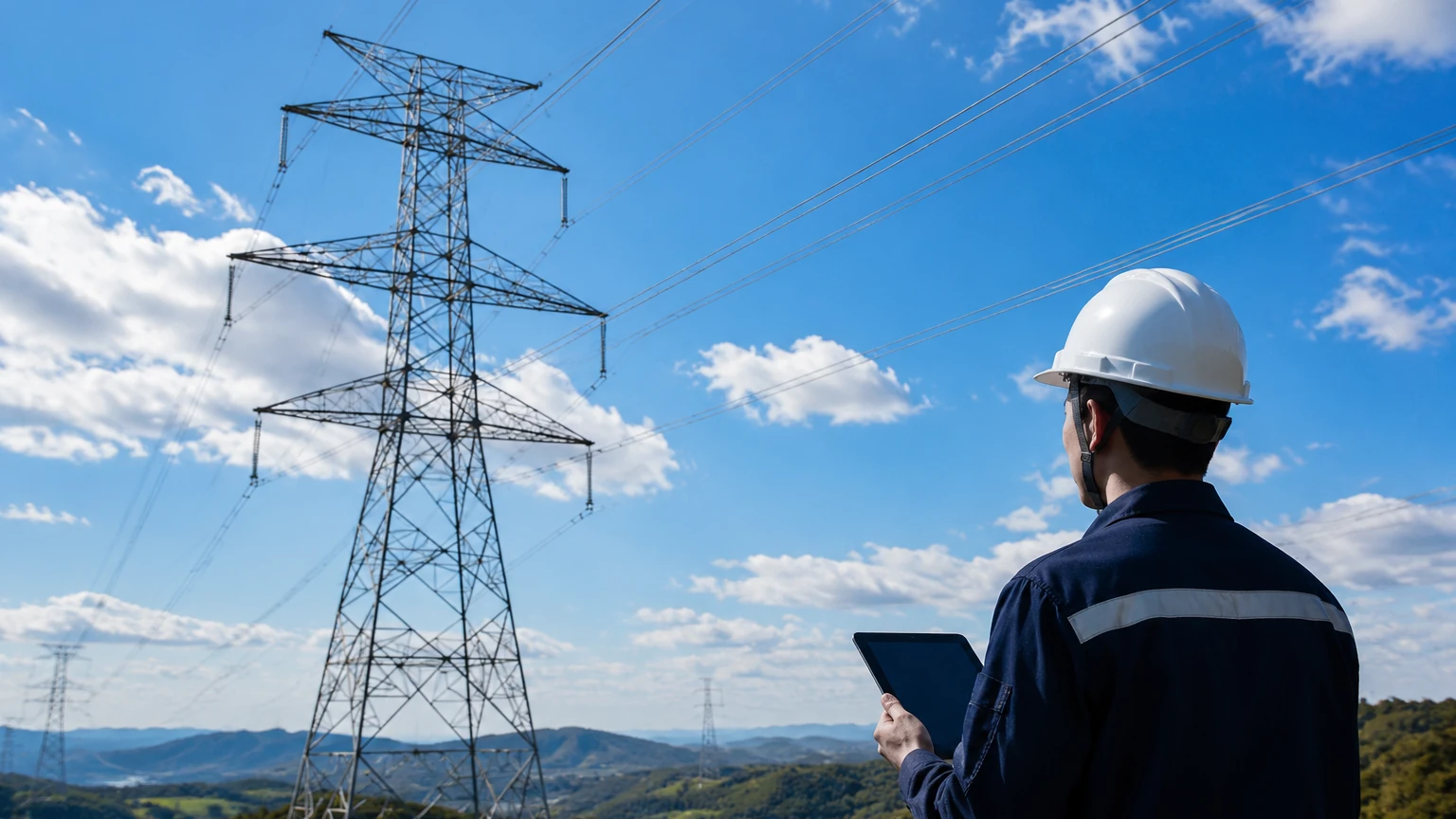
Successful implementation of a power line monitoring system depends on precise installation and adherence to safety protocols. Because these systems are often deployed on medium-to-high voltage lines (11kV to 500kV+), specialized procedures are required.
Safety and Clearance
Installers must maintain "Minimum Approach Distances" (MAD) as defined by local safety regulations (e.g., OSHA or IEC standards). In many cases, hot-stick installation or the use of specialized drones is required to mount sensors while the lines remain live.
Communication Mapping
Before deploying sensors, a signal strength survey is essential. Industrial sites are often filled with steel structures and concrete walls that can block wireless signals. Repeaters or gateways should be positioned to ensure a clear line of sight or robust mesh networking capabilities.
Calibration and Baseline Setting
Once installed, the system must be calibrated against a known reference. This involves setting "normal" operating thresholds for current and temperature. Any deviation beyond these baselines will trigger alarms in the SCADA system, allowing operators to investigate potential issues before they lead to failure.
Common Risks and Limitations
While power line monitoring systems significantly enhance grid reliability, they are not without limitations. Understanding these risks is vital for realistic contingency planning.
* Electromagnetic Interference (EMI): The very environment these sensors inhabit—high-voltage lines—is a source of intense EMI. Poorly shielded sensors may provide inaccurate data or experience internal component failure.
* Data Overload: A system monitoring dozens of parameters across hundreds of points can generate massive amounts of data. Without effective analytics software, critical alerts can be lost in the noise.
* Energy Harvesting Limits: Self-powered sensors rely on a minimum current flow. During periods of extremely low load (e.g., a plant shutdown), the sensors may lose power and stop transmitting, creating a "blind spot" exactly when maintenance might be occurring.
* Cybersecurity: As PLMS devices are increasingly connected to the internet (IIoT), they represent potential entry points for cyberattacks. Robust encryption and secure authentication protocols are mandatory for any system integrated into industrial infrastructure.
Frequently Asked Questions (FAQs)
Q: Can a power line monitoring system detect underground cable faults?
A: Yes, but the sensor types differ. While overhead lines use clamp-on sensors, underground systems typically use sensors installed at cable terminations or manholes to detect partial discharge and sheath currents.
Q: How does a PLMS assist in "Green" initiatives?
A: By monitoring line efficiency and reducing technical losses (such as those caused by phase imbalance or harmonics), facilities can reduce their overall energy consumption and carbon footprint.
Q: Is it necessary to monitor every line in a facility?
A: Generally, no. Engineers prioritize "critical paths"—lines that feed essential processes, such as the main power bus for a chemical reactor or the supply line for a primary water pumping station.
Q: How long do the batteries last in wireless line sensors?
A: Most industrial-grade sensors are designed to last 5 to 10 years. Many use a combination of energy harvesting from the line and long-life lithium-thionyl chloride (Li-SOCl2) batteries for backup.
Conclusion
A power line monitoring system is an indispensable tool for the modern industrial facility. By providing visibility into the invisible forces that drive production, these systems allow for a proactive approach to maintenance and risk management. For professionals involved in level measurement and process control, understanding the health of the power grid is the first step in ensuring the reliability of every sensor and actuator on the factory floor. Whether it is protecting the high-precision instruments found on the Main Page or ensuring the continuous operation of heavy machinery, PLMS technology bridges the gap between electrical utility management and industrial automation excellence.