Process Hydrogen Analyzer
Process Hydrogen Analyzer
In the modern industrial landscape, the accurate measurement of hydrogen concentration is critical for safety, process efficiency, and product quality. A process hydrogen analyzer is a specialized instrument designed to provide real-time monitoring of hydrogen gas within various process streams. Whether used in petroleum refining, chemical synthesis, or the burgeoning green hydrogen economy, these analyzers ensure that hydrogen levels remain within specified operational limits.
Hydrogen (H2) presents unique challenges for measurement due to its small molecular size, high diffusivity, and wide flammability range. Consequently, selecting the appropriate analysis technology requires a deep understanding of the chemical environment, the presence of background gases, and the specific requirements of the industrial application.
Core Measurement Principles
To select the right process hydrogen analyzer, engineers must first understand the physical and chemical principles used to detect H2. Unlike many other gases, hydrogen has distinct physical properties—specifically high thermal conductivity—that make certain measurement methods more effective than others.
Thermal Conductivity Detection (TCD)
Thermal conductivity is the most common principle used in process hydrogen analyzers. Hydrogen possesses the highest thermal conductivity of all known gases. A TCD sensor typically utilizes a Wheatstone bridge circuit containing four filaments. Two filaments are exposed to a reference gas (often sealed), and two are exposed to the sample gas stream.
As the concentration of hydrogen in the sample stream changes, the rate at which heat is conducted away from the filaments changes, altering their electrical resistance. This change in resistance is proportional to the hydrogen concentration. TCD is highly reliable for binary or quasi-binary gas mixtures where the background gas has a significantly lower thermal conductivity than hydrogen.
Electrochemical Sensors
Electrochemical hydrogen sensors work by reacting with the gas of interest and producing an electrical signal. The hydrogen diffuses through a membrane to an electrode where it is oxidized. This oxidation process generates a current that is directly proportional to the partial pressure of hydrogen. These sensors are often used for trace-level detection or in portable safety monitors, though advanced versions are integrated into continuous process streams where high selectivity is required.
Tunable Laser Diode Absorption Spectroscopy (TDLAS)
TDLAS is an optical measurement technique that offers high speed and specificity. By tuning a laser to the specific absorption line of hydrogen, the analyzer can determine the concentration based on the amount of light absorbed as it passes through the gas cell. While hydrogen does not have a strong infrared absorption spectrum compared to gases like CO2 or CH4, specialized Raman-based or vacuum ultraviolet (VUV) optical analyzers are sometimes categorized under advanced process spectroscopy for H2 detection in complex matrices.
Gas Chromatography (GC)
For complex process streams containing multiple hydrocarbons, inert gases, and contaminants, Gas Chromatography remains the gold standard. A GC separates the individual components of a gas sample before they reach a detector (usually a TCD). While slower than continuous sensors—providing measurements in cycles rather than seconds—GCs provide the most comprehensive data for process control in refineries and petrochemical plants.
Key Evaluation Criteria for Selection
Choosing a process hydrogen analyzer involves balancing performance requirements against environmental constraints. The following table summarizes the primary considerations for the most common technologies:
| Feature | Thermal Conductivity (TCD) | Electrochemical | Gas Chromatography (GC) |
| :— | :— | :— | :— |
| Typical Range | 0–100% Vol | 0–10,000 ppm | 0–100% (Multi-component) |
| Response Time | Fast (T90 < 5s) | Moderate (T90 < 30s) | Slow (Minutes per cycle) |
| Selectivity | Low (Sensitive to background) | High | Excellent |
| Maintenance | Low | Moderate (Sensor replacement) | High (Carrier gas/columns) |
| Common Use | H2 in N2, Ar, or Air | Trace H2 detection | Complex refinery gas |
Background Gas Interference
When using TCD-based analyzers, the composition of the background gas is paramount. If the background contains gases with thermal conductivities close to hydrogen (such as helium) or if the background composition fluctuates significantly, the analyzer may produce inaccurate readings. In such cases, compensation algorithms or alternative technologies like GC are necessary.
Hazardous Area Certification
Since hydrogen is highly flammable, most process hydrogen analyzers must be installed in classified areas. It is essential to confirm that the instrument carries the necessary ATEX, IECEx, or North American Class/Division certifications. Explosion-proof (Ex d) or intrinsically safe (Ex i) designs are standard for these applications.
Critical Installation Guidelines
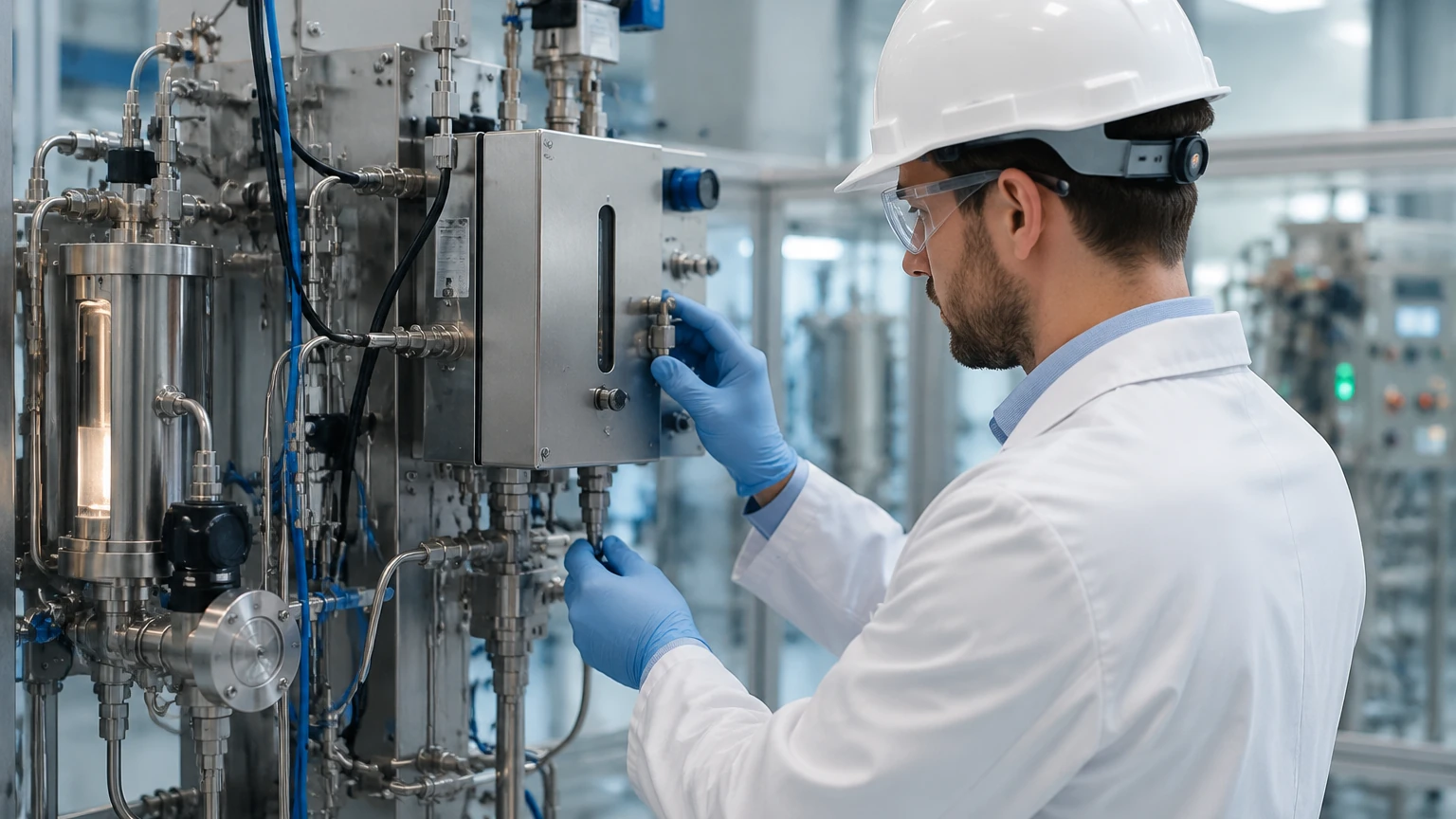
The performance of a process hydrogen analyzer is often determined more by the sample conditioning system (SCS) than by the sensor itself. Proper installation ensures that the gas reaching the sensor is representative of the process and free from damaging contaminants.
1. Sample Conditioning: Hydrogen streams often contain moisture, particulates, or heavy hydrocarbons. A robust SCS should include filters, coalescers, and potentially heated sample lines to prevent condensation. Liquid carryover into a TCD or electrochemical cell can cause permanent damage or significant drift.
2. Pressure and Flow Regulation: Most sensors are sensitive to changes in flow rate and pressure. Pressure regulators and flow meters (rotameters) should be installed upstream of the analyzer to maintain a constant delivery pressure, typically between 0.5 to 2.0 bar (7.2 to 29 psi), depending on the manufacturer's specifications.
3. Ventilation and Safety: Because hydrogen is lighter than air, it tends to accumulate at the highest points of an enclosure. Analyzers should be installed in well-ventilated areas, and any vent lines from the instrument should be piped to a safe atmospheric header or a flare system.
4. Calibration Ports: Ensure the installation includes accessible ports for introducing calibration gases. Regular zero and span calibrations are necessary to maintain accuracy, especially for electrochemical and TCD sensors.
Operational Challenges and Risks
Engineers must be aware of the potential risks that can compromise the integrity of hydrogen measurement.
* Sensor Poisoning: Electrochemical sensors can be "poisoned" by sulfur compounds (H2S), lead, or silicone vapors. If these are present in the process stream, specialized scrubbing filters must be used.
* Cross-Sensitivity: In TCD applications, the presence of CO2 or CH4 can interfere with the H2 reading because their thermal conductivities differ from the calibration background. Advanced analyzers use multi-sensor arrays or pressure-swing compensation to mitigate this.
* Diffusion Issues: Hydrogen's ability to diffuse through materials means that seals and gaskets must be specifically rated for H2 service to prevent leaks and ensure the safety of the operating environment.
Integration with Industrial Instrumentation
In a comprehensive process control strategy, gas analysis is rarely an isolated measurement. It is frequently integrated with other instrumentation to provide a full picture of vessel or reactor status. For instance, in a hydrogen separator or storage tank, monitoring the gas purity with a process hydrogen analyzer is as vital as monitoring the liquid levels within the vessel.
For engineers managing complex liquid and gas interfaces, sourcing reliable measurement tools is essential. You can Review product options and application support to see how modern level measurement technologies, such as radar and ultrasonic sensors, complement gas analysis systems to ensure total process transparency. On the Main Page, technical specifications for various industrial sensors are available to help align gas analysis with level control requirements.
Frequently Asked Questions (FAQ)
Q: How often should a process hydrogen analyzer be calibrated?
A: This depends on the technology. TCD-based units are generally stable and may only require calibration every 3 to 6 months. Electrochemical sensors may require monthly checks due to the natural degradation of the electrolyte.
Q: Can a hydrogen analyzer detect H2 in a 100% CO2 background?
A: Yes, especially using TCD. Since the thermal conductivity of H2 is approximately 0.182 W/(m·K) and CO2 is approximately 0.016 W/(m·K) at 25°C, there is a significant delta that allows for accurate measurement, provided the analyzer is calibrated for that specific background.
Q: What is the impact of temperature on H2 measurement?
A: Temperature significantly affects the thermal conductivity of gases. Most modern process hydrogen analyzers include internal temperature compensation or heat the sensor cell to a constant temperature (e.g., 50°C or 60°C) to eliminate environmental influence.
Q: Is it possible to measure hydrogen in a vacuum?
A: Measurement in a vacuum requires specialized sampling systems, such as an aspirator or a pump, to pull the sample through the analyzer cell. The sensor itself must also be rated for low-pressure operation to avoid mechanical failure of membranes or filaments.
By carefully considering the measurement principle, the background gas composition, and the requirements of the sample conditioning system, facilities can implement a process hydrogen analyzer that provides years of reliable service, enhancing both the safety and productivity of the operation.