Raman Analyzers for Diesel Streams
Raman Analyzers for Diesel Streams
In the modern refinery environment, the ability to monitor fuel quality in real-time is essential for optimizing blending operations and ensuring compliance with stringent environmental regulations. Raman analyzers for diesel streams have emerged as a sophisticated solution for multi-parameter analysis, providing rapid feedback on chemical composition without the delays associated with traditional laboratory testing. This guide explores the principles, applications, and integration of Raman spectroscopy within diesel production and storage processes.
Understanding the Principle of Raman Spectroscopy
Raman spectroscopy is an analytical technique based on the inelastic scattering of monochromatic light, typically from a laser source. When the laser light interacts with the molecular vibrations of the hydrocarbons in a diesel stream, the energy of the photons is shifted. This shift, known as the Raman effect, provides a unique "fingerprint" of the molecules present in the sample.
The Scattering Process
Unlike Infrared (IR) spectroscopy, which measures the absorption of light, Raman spectroscopy measures the light that is scattered. Most of the scattered light is at the same frequency as the laser (Rayleigh scattering). However, a very small fraction (approximately 1 in 10^7 photons) is scattered at different frequencies. These shifts correspond to the vibrational frequencies of specific chemical bonds, such as C-H, C-C, and aromatic rings within the diesel matrix.
Chemometric Modeling
Because diesel is a complex mixture of hundreds of different hydrocarbons, the resulting Raman spectrum is a composite of many overlapping peaks. To extract useful data, such as Cetane Number or Density, manufacturers use chemometric models. These mathematical models (often utilizing Partial Least Squares or Principal Component Analysis) correlate the spectral data with known laboratory reference values. Once calibrated, the analyzer can predict multiple properties simultaneously from a single scan.
Key Applications for Raman Analyzers in Diesel Streams
Raman analyzers for diesel streams are primarily deployed in refinery units where real-time quality control translates directly into profit. By moving analysis from the lab to the process line, operators can reduce "giveaway" (the practice of over-specifying a product to ensure it passes minimum requirements).
1. Diesel Blending Optimization
In the final stages of production, various refinery streams (e.g., Light Cycle Oil, Hydrotreated Diesel, and Biodiesel) are blended to meet final specifications. Raman analyzers provide continuous data on:
* Cetane Number and Cetane Index: Ensuring ignition quality.
* Distillation Points (T10, T50, T90): Monitoring the boiling range.
* Aromatics Content: Total and poly-aromatic hydrocarbons (PAH).
* Cloud Point and Pour Point: Essential for cold-weather performance.
2. Hydrotreater Control
During the hydrotreating process, sulfur is removed and aromatics are saturated. Raman systems can monitor the feed and product streams to ensure the catalyst is performing efficiently and that the degree of aromatic saturation meets the desired setpoints.
3. Interface Detection
In multi-product pipelines, Raman analyzers can detect the transition between different fuel grades (e.g., from ultra-low sulfur diesel to jet fuel) with high precision, minimizing transmix and protecting product integrity.
Selection Criteria for Process Raman Systems
Choosing the correct Raman system requires a balance between analytical performance and industrial durability. Engineers should evaluate the following factors:
| Feature | Requirement | Reason |
| :— | :— | :— |
| Laser Wavelength | 785 nm or 1064 nm | 785 nm offers higher signal, but 1064 nm reduces background fluorescence in darker diesel streams. |
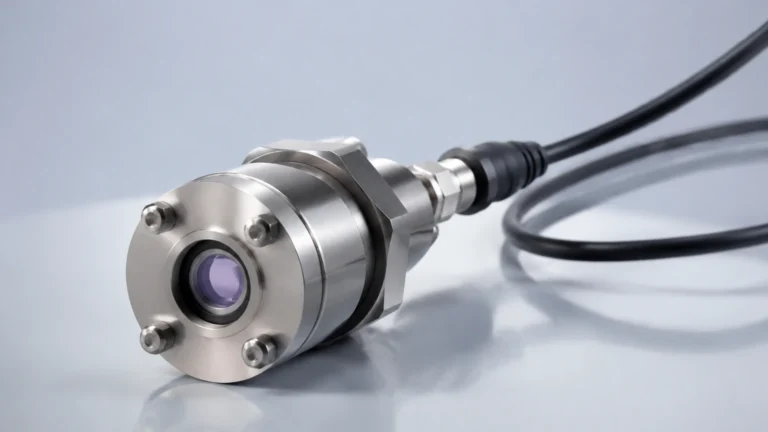
| Probe Design | In-situ or Flow-cell | In-situ probes reduce sample handling; flow-cells allow for easier temperature control. |
| Fiber Optic Length | Up to 500 meters | Allows the sensitive electronics to be located in a safe, climate-controlled room far from the process. |
| Resolution | 4 cm⁻¹ to 10 cm⁻¹ | Sufficient for distinguishing hydrocarbon groups in complex mixtures. |
| Safety Rating | ATEX/IECEx Zone 1/2 | Must be certified for use in hazardous refinery environments. |
Integration with Level Measurement and Process Control
While Raman analyzers provide the chemical "what" of the process, they must work in tandem with physical measurement instruments to provide a complete picture of the operation. In diesel storage and blending tanks, the data from Raman analyzers is often paired with high-precision level measurement.
For instance, accurate inventory management and blending ratios depend on knowing the exact volume of the components. Modern radar level meters and ultrasonic sensors, such as those provided on the Main Page of industrial instrument manufacturers, ensure that the physical quantities match the chemical requirements determined by the Raman analyzer.
In a blending application, the Raman analyzer determines if the Cetane Number is too low, signaling the control system to increase the flow of a high-cetane component. Simultaneously, a hydrostatic or radar level transmitter monitors the tank level to prevent overfilling and to calculate the total mass of the finished product. This synergy between composition analysis and level measurement is the foundation of automated refinery management.
Installation and Maintenance Considerations
Successful deployment of Raman analyzers for diesel streams depends heavily on the installation environment and ongoing maintenance protocols.
Sample Conditioning
Although Raman probes can often be inserted directly into the process line (in-situ), the sample must be representative. If the diesel stream contains high levels of particulates or entrained water, a fast-loop sample conditioning system may be required. Water, in particular, can coat the probe window and interfere with the optical path, leading to inaccurate readings.
Temperature Stability
Raman scattering is sensitive to the density of the fluid, which changes with temperature. While chemometric models can compensate for some temperature variation, maintaining the sample at a relatively stable temperature (e.g., ±5°C) improves the robustness of the predictions.
Laser Safety
Process Raman systems use Class 3B or Class 4 lasers. When the probe is installed in a pipe, the laser is contained. However, during maintenance or when using fiber optic connectors, strict laser safety protocols must be followed to prevent eye injury.
Calibration Validation
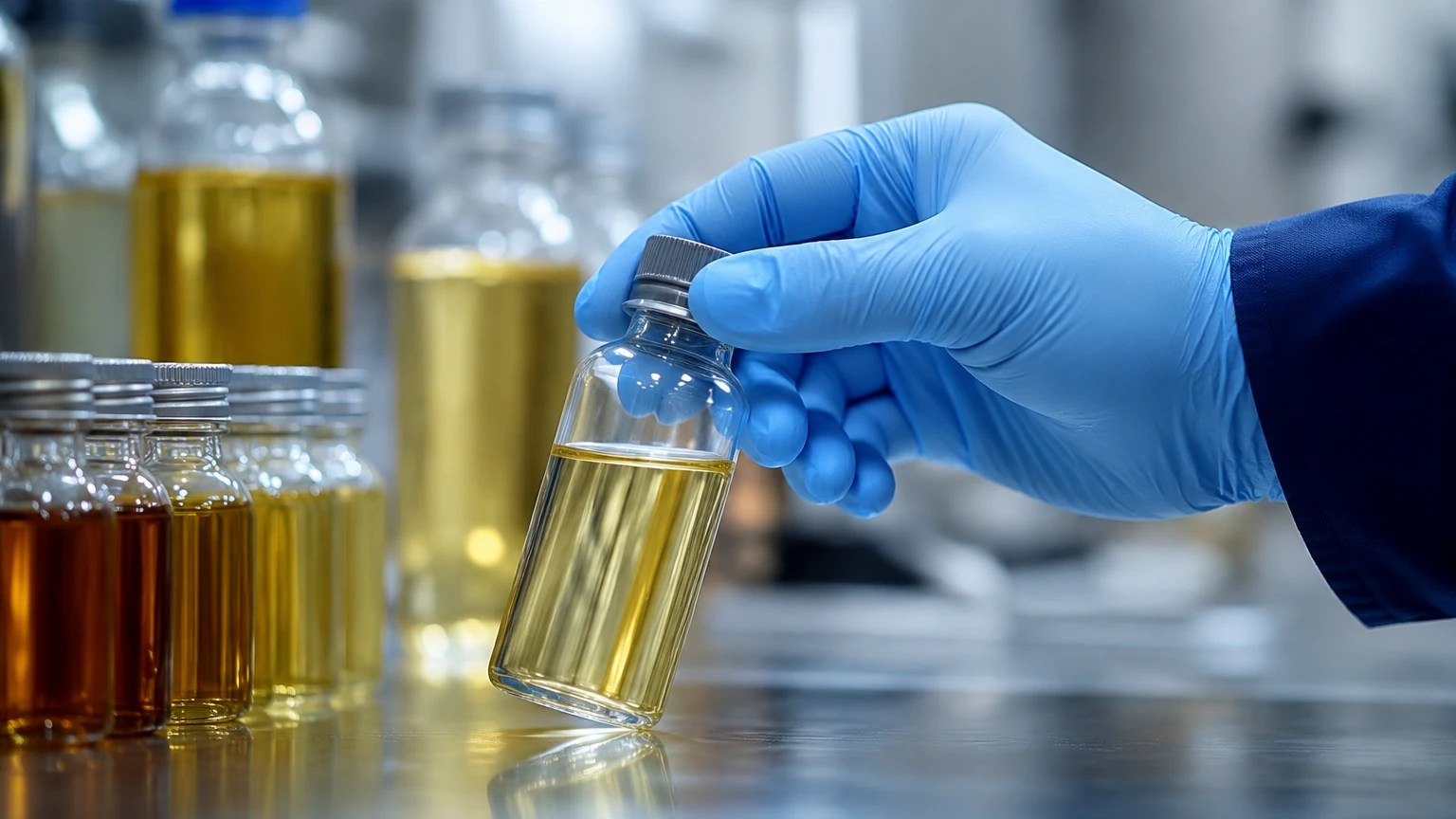
Unlike a simple level meter that can be checked with a tape measure, a Raman analyzer requires periodic validation against laboratory ASTM methods. This typically involves collecting a physical sample at the same time the analyzer takes a reading and comparing the results. If a drift is detected, the chemometric model may need to be updated with new data points.
Limitations and Common Risks
Despite their versatility, Raman analyzers are not a universal solution for every diesel stream. Engineers must be aware of the following limitations:
1. Fluorescence Interference: Some heavier diesel fractions or additives contain molecules that fluoresce when hit by laser light. This fluorescence can be orders of magnitude stronger than the Raman signal, effectively "swamping" the detector. Using a longer wavelength laser (1064 nm) can mitigate this but increases the cost and complexity of the system.
2. Sample Opacity: Raman spectroscopy relies on the penetration of light. If the diesel stream is extremely dark or contains high concentrations of black carbon/soot, the signal-to-noise ratio will degrade significantly.
3. Model Dependency: The analyzer is only as good as the model it uses. If the refinery switches to a significantly different crude oil slate, the existing chemometric models may no longer be valid, requiring a period of data collection and model rebuilding.
Comparison Table: Raman vs. Other Technologies
Refineries often choose between Raman, Near-Infrared (NIR), and Gas Chromatography (GC) for diesel analysis.
| Technology | Analysis Speed | Maintenance | Multi-parameter? | Installation Cost |
| :— | :— | :— | :— | :— |
| Raman | < 1 minute | Moderate | Yes | High |
| NIR | < 1 minute | Low | Yes | Moderate |
| GC | 10-20 minutes | High | Yes (Limited) | High |
| Level Meters | Real-time | Very Low | No (Volume only) | Low to Moderate |
Frequently Asked Questions
Q: Can Raman analyzers measure sulfur content in diesel?
A: While Raman can detect some sulfur-containing compounds, it is generally not sensitive enough to measure ultra-low sulfur diesel (ULSD) levels at the 10 ppm range. X-ray Fluorescence (XRF) or specialized UV-fluorescence analyzers are typically used for sulfur.
Q: How often does the laser source need to be replaced?
A: Most industrial diode lasers used in Raman systems have a lifespan of 10,000 to 20,000 hours. This usually results in a replacement cycle of every 2 to 3 years, depending on usage.
Q: Is it possible to use one analyzer for multiple diesel streams?
A: Yes. Using fiber optic multiplexers, a single Raman spectrometer can be connected to multiple probes (e.g., up to 8 or 16) located at different points in the process, significantly reducing the cost per measurement point.
Q: How does Raman compare to NIR for diesel blending?
A: Raman is often better at identifying specific aromatic structures and carbon-carbon bonds, whereas NIR is very sensitive to C-H overtones. Raman is also less sensitive to water interference than NIR, making it more robust in certain refinery applications.
Conclusion
Raman analyzers for diesel streams represent a critical tool for the modern refinery, enabling high-speed, multi-parameter analysis that drives process efficiency. When integrated with reliable physical measurement technologies, such as the radar and ultrasonic level sensors found on the Main Page, these analyzers allow for a level of automation and precision that was previously unattainable. By understanding the underlying principles of inelastic scattering and the practicalities of chemometric modeling, engineering teams can successfully implement these systems to optimize diesel production, reduce waste, and maintain strict product quality standards.