Raman Spectroscopy Machine
Raman Spectroscopy Machine
In the landscape of industrial process monitoring, the ability to identify chemical compositions in real-time is as critical as measuring physical parameters like volume or pressure. A Raman spectroscopy machine serves as a sophisticated analytical tool that provides a "molecular fingerprint" of substances. While level measurement instruments—such as those found on the Main Page of industrial instrumentation providers—quantify the amount of material present, Raman spectroscopy qualifies what that material is. This guide explores the principles, components, and selection criteria for Raman spectroscopy machines within industrial B2B environments.
Measurement Principles of Raman Spectroscopy
Raman spectroscopy is based on the inelastic scattering of monochromatic light, typically from a laser source. When laser light interacts with molecular vibrations, phonons, or other excitations in a system, the energy of the laser photons is shifted up or down. This shift provides information about the vibrational modes in the system.
The Raman Effect
When light hits a molecule, the majority of photons are scattered elastically (Rayleigh scattering), meaning the scattered photons have the same energy and wavelength as the incident photons. However, a tiny fraction (approximately 1 in 10 million photons) is scattered inelastically.
1. Stokes Scattering: The molecule absorbs energy, and the scattered photon has lower energy (longer wavelength) than the incident photon.
2. Anti-Stokes Scattering: The molecule loses energy to the photon, and the scattered photon has higher energy (shorter wavelength) than the incident photon.
Because every chemical bond has specific vibrational frequencies, the resulting spectrum of shifted light is unique to the chemical structure of the sample. This allows a Raman spectroscopy machine to identify substances, monitor reactions, and determine concentrations without physical contact or destructive sampling.
Core Components of an Industrial Raman Spectroscopy Machine
A modern Raman system designed for industrial or laboratory use consists of several high-precision components integrated into a single housing or connected via fiber optics.
1. Excitation Source (The Laser)
The laser provides the monochromatic light required to induce the Raman effect. Common wavelengths include:
* 532 nm (Green): Offers high Raman signal intensity but often triggers significant fluorescence in organic samples.
* 785 nm (Near-Infrared): The industry standard for many B2B applications, balancing signal strength with reduced fluorescence interference.
* 1064 nm (Infrared): Used for highly fluorescent or dark samples, though it requires more sensitive (and expensive) detectors.
2. Sampling Optics and Probes
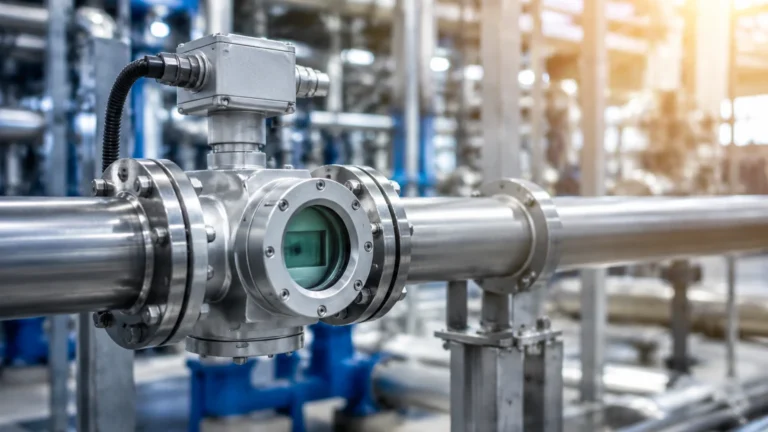
In industrial settings, the Raman spectroscopy machine often utilizes fiber optic probes. These probes allow the machine to remain in a controlled environment while the sensor head is submerged in a chemical reactor or positioned above a conveyor belt. Probes must be constructed from chemically resistant materials like stainless steel or Hastelloy, with sapphire windows for optical clarity.
3. Spectrometer and Grating
The spectrometer receives the scattered light, filters out the dominant Rayleigh scattering (using a notch or edge filter), and disperses the remaining Raman-shifted light across a detector using a diffraction grating.
4. Detector
Most Raman machines use Charge-Coupled Device (CCD) detectors cooled to sub-zero temperatures (e.g., -60°C to -90°C) to minimize thermal noise and increase the signal-to-noise ratio for low-light detection.
Selection Criteria for Industrial Raman Systems
Choosing the right Raman spectroscopy machine requires an understanding of the specific process environment. Unlike standard level meters that might only need to account for tank height and dielectric constants, a Raman system must be tuned to the chemistry of the media.
Practical Selection Table
| Feature | Handheld/Portable Raman | Benchtop Laboratory Raman | In-line Process Raman |
| :— | :— | :— | :— |
| Primary Use | Material ID, Warehouse QC | R&D, Complex Analysis | Real-time Reaction Monitoring |
| Laser Power | Low (typically <300mW) | Variable/High | High (Continuous Duty) |
| Spectral Range | 200 cm⁻¹ to 2,500 cm⁻¹ | 50 cm⁻¹ to 4,000 cm⁻¹ | 100 cm⁻¹ to 3,500 cm⁻¹ |
| Environment | Field/Rugged | Controlled Lab | ATEX/Industrial Plant |
| Integration | Standalone | PC-based | PLC/SCADA Integration |
Integration with Level Measurement and Process Control
In advanced industrial automation, a Raman spectroscopy machine is rarely used in isolation. It is frequently paired with level measurement technologies to provide a comprehensive view of a vessel's status. For example, in a chemical blending tank, a radar level meter provides the volume data while the Raman probe monitors the homogeneity of the mixture.
When evaluating a facility's needs, engineers often consult the Main Page of equipment manufacturers to ensure that the physical mounting of Raman probes does not interfere with the signal path of ultrasonic or radar level sensors. Proper spacing and nozzle allocation are essential to avoid mechanical interference between the analytical probe and the level transmitter.
Installation and Maintenance Considerations
Laser Safety
Industrial Raman machines typically use Class 3B or Class 4 lasers. When the probe is installed in a closed pipe or vessel, the system is often classified as Class 1. However, during maintenance or open-air sampling, strict laser safety protocols, including the use of specific wavelength goggles, must be followed.
Calibration and Alignment
Raman shifts are measured in relative wavenumbers (cm⁻¹). To ensure accuracy, the machine must be calibrated against a known standard, such as a silicon wafer (520.7 cm⁻¹) or specific chemical standards like cyclohexane. Automated internal calibration lamps (e.g., Neon or Argon) are preferred for in-line process machines to compensate for thermal drift.
Environmental Protection
For units installed near production lines, the Raman spectroscopy machine should be housed in a temperature-controlled NEMA 4X or IP66 enclosure. Excessive heat can degrade laser performance and increase detector noise, leading to inaccurate chemical readings.
Limitations and Challenges
While powerful, Raman spectroscopy has specific physical limitations that must be addressed during the engineering phase:
* Fluorescence Interference: Some materials emit fluorescence that is orders of magnitude stronger than the Raman signal, effectively "swamping" the detector. Shifting to a longer wavelength laser (e.g., 1064 nm) is the standard solution.
* Sample Heating: High-power lasers concentrated on a small spot can heat or even burn dark or sensitive samples. Using a larger spot size or lower laser power can mitigate this risk.
* Turbidity and Bubbles: In liquid applications, excessive bubbles or high solids content can scatter the laser light before it interacts with the molecules of interest, reducing the effective signal.
Frequently Asked Questions (FAQ)
Q: Can a Raman spectroscopy machine measure through packaging?
A: Yes, one of the primary advantages of Raman is its ability to measure through transparent or semi-transparent materials like glass vials or plastic bags, provided the material does not have a strong Raman signature that interferes with the sample.
Q: How does Raman differ from Infrared (IR) spectroscopy?
A: While both measure molecular vibrations, IR spectroscopy is based on light absorption, whereas Raman is based on light scattering. Raman is generally better for aqueous solutions because water has a very weak Raman signal but a very strong IR absorption.
Q: What is the typical maintenance schedule for an industrial Raman unit?
A: Laser sources typically have a lifespan of 5,000 to 10,000 hours. Annual calibration and inspection of fiber optic cables for physical damage or solarization are recommended.
Q: Is it possible to use Raman for gas phase measurement?
A: It is possible, but gas phase Raman signals are significantly weaker than liquid or solid signals due to lower molecular density. High-pressure environments or specialized gas cells are usually required to obtain a usable spectrum.
Conclusion
The implementation of a Raman spectroscopy machine represents a significant step toward Process Analytical Technology (PAT) goals. By providing molecular-level insights in real-time, these machines allow for tighter control over chemical processes, reduced waste, and improved product consistency. When integrated alongside reliable level measurement solutions, as detailed on the Main Page, Raman spectroscopy completes the data set required for modern, automated industrial operations. Engineers should prioritize laser wavelength selection and probe durability to ensure the long-term success of the installation.