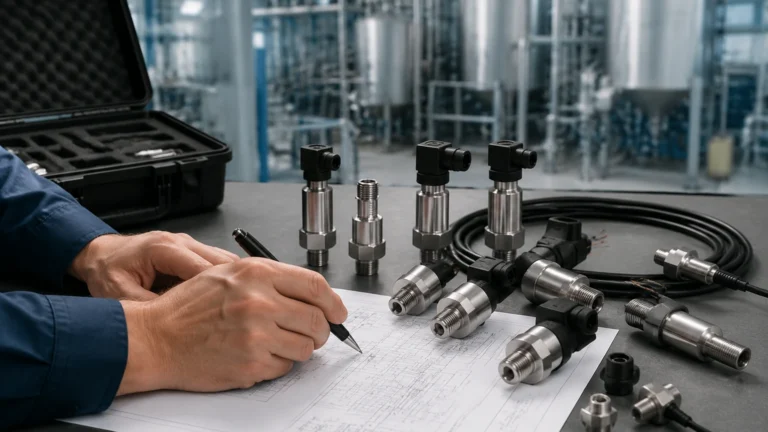
Redline Instruments
Redline Instruments
In the landscape of industrial process control, the term "redline instruments" often refers to critical monitoring devices designed to indicate when a system has reached its maximum safe operating limit. Whether these are visual indicators on a magnetic level gauge or digital setpoints in a radar level transmitter, the primary function remains the same: ensuring safety and preventing overflow or equipment damage. For engineers and procurement specialists, selecting the right level measurement technology is the first step in establishing a robust "redline" safety protocol.
Industrial level measurement is not a one-size-fits-all discipline. It requires a deep understanding of the physical properties of the media, the environmental conditions of the tank or vessel, and the specific accuracy requirements of the application. As a professional manufacturer, Welk provides a comprehensive range of industrial level measurement instruments, including radar, ultrasonic, and hydrostatic solutions, designed to meet these rigorous demands.
Fundamental Principles of Level Measurement
Before integrating redline instruments into a process, it is essential to understand the underlying measurement principles. Each technology interacts with the process media differently, which dictates its suitability for specific industrial environments.
Radar Level Measurement
Radar level meters operate on the principle of Time Domain Reflectometry (TDR) or Frequency Modulated Continuous Wave (FMCW). In non-contact radar systems, the instrument emits a high-frequency electromagnetic wave toward the material surface. The wave reflects off the surface and returns to the sensor. By measuring the time of flight or the frequency shift, the instrument calculates the distance to the product surface. This technology is highly valued for its immunity to changes in temperature, pressure, and vapor space composition.
Ultrasonic Level Measurement
Ultrasonic sensors utilize sound waves rather than electromagnetic waves. The sensor transmits an ultrasonic pulse that reflects off the liquid or solid surface. The time taken for the echo to return is proportional to the distance. While cost-effective and reliable for many water treatment applications, ultrasonic waves are mechanical and can be affected by air temperature gradients, heavy foam, or vacuum conditions.
Hydrostatic Level Measurement
Hydrostatic transmitters measure the pressure exerted by a liquid column. Based on the formula $P = \rho gh$ (where $P$ is pressure, $\rho$ is density, $g$ is gravity, and $h$ is height), the sensor can determine the level of the liquid if the density is constant. This is a common choice for vented tanks and deep-well applications where direct contact with the media is acceptable.
Magnetic Level Gauges
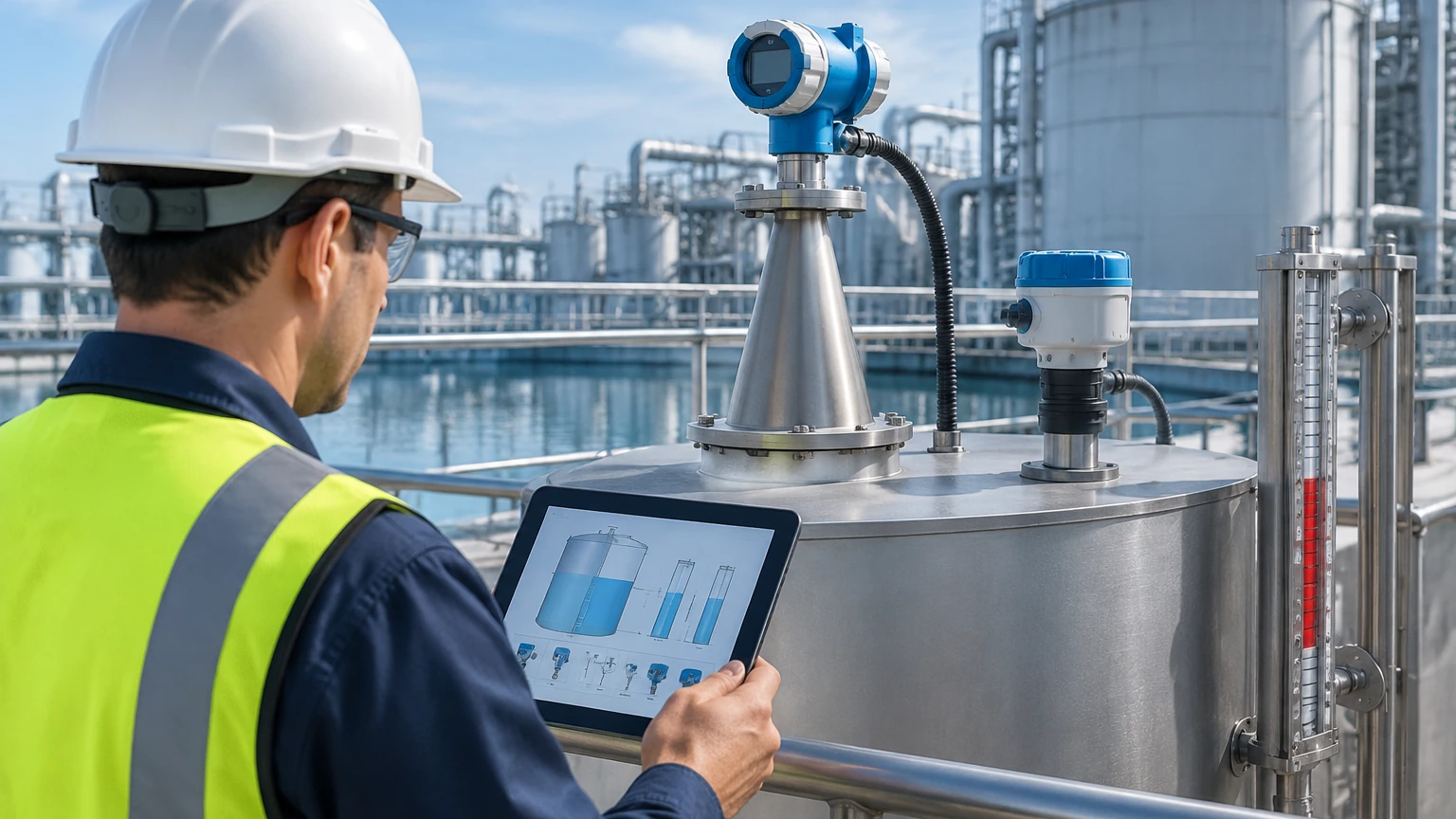
Magnetic level gauges provide a clear visual representation of the liquid level. A float containing a magnet moves within a bypass chamber; as it moves, it flips magnetic flaps or rollers on an external scale. This is where the concept of redline instruments is most visible, as high-level markers are often physically painted red on the scale to alert operators to critical thresholds.
Evaluating Redline Instruments and Safety Systems
When evaluating redline instruments for high-limit detection, engineers must look beyond basic measurement to the reliability of the output signal. In a B2B context, the integration of these instruments into a Distributed Control System (DCS) or Programmable Logic Controller (PLC) is vital.
Accuracy and Repeatability
For a redline instrument to be effective, it must offer high repeatability. If a high-level alarm is set at 95% capacity, the instrument must trigger at exactly that point every time. Radar level meters, such as those found on our Main Page, offer millimeter-level accuracy, making them ideal for high-precision safety applications.
Response Time
In fast-filling vessels, the response time of the instrument is critical. If the instrument has a slow processing speed, the level might exceed the safe "redline" before the system can trigger a shut-off valve. Digital transmitters with adjustable damping allow for a balance between signal stability and rapid response.
Material Compatibility
The longevity of redline instruments depends on their resistance to the process media. Corrosive chemicals require PTFE or PVDF coatings, while high-temperature oil and gas applications may require stainless steel or ceramic seals. Welk offers customized OEM/ODM services to ensure that the materials used in the sensors are perfectly matched to the specific chemical environment of the client.
Selection Criteria for Level Measurement Technologies
Choosing between different technologies requires a systematic comparison of the application requirements. The following table provides a general guideline for selecting the appropriate instrument based on common industrial variables.
| Feature | Radar (Non-Contact) | Ultrasonic | Hydrostatic | Magnetic Gauge |
| :— | :— | :— | :— | :— |
| Accuracy | Excellent (±2mm) | Good (±0.25%) | Moderate (±0.5%) | Good (Visual) |
| Media Type | Liquids & Solids | Liquids & Solids | Liquids Only | Liquids Only |
| Pressure Range | Up to 40 MPa | Atmospheric | Varies by sensor | Up to 20 MPa |
| Temperature | Up to 450°C | -40°C to 80°C | -20°C to 100°C | Up to 400°C |
| Foam Impact | Minimal (FMCW) | High | None | None |
| Cost | Higher | Lower | Moderate | Moderate |
Installation Considerations for Redline Instruments
Proper installation is as important as the technology itself. Even the most advanced redline instruments will fail to provide accurate data if they are installed incorrectly.
1. Nozzle Placement: For radar and ultrasonic sensors, the instrument should be placed away from the tank wall to avoid false reflections. A general rule is to keep the sensor at least 200mm (approx. 8 inches) away from the wall for every 1 meter of depth.
2. Obstruction Clearance: Ensure that the path of the signal is clear of internal structures like ladders, agitators, or heating coils. If obstructions are unavoidable, many modern instruments offer "false echo suppression" software to map out these signals.
3. Stilling Wells: In applications with heavy turbulence or foam, installing the sensor inside a stilling well or bypass pipe can provide a stable surface for measurement, ensuring the redline alarm is not triggered prematurely by waves.
4. Venting: For hydrostatic sensors in sealed tanks, a differential pressure setup or a vented cable is necessary to compensate for changes in headspace pressure.
Limitations and Common Risks
While redline instruments are designed to enhance safety, they are not infallible. Users should be aware of the following risks:
* Build-up and Scaling: In wastewater or slurry applications, material can build up on the sensor face. This is particularly problematic for ultrasonic sensors, where the build-up can block the sound pulse. Radar sensors are generally more tolerant but may still require periodic cleaning.
* Dielectric Constant (Dk): Radar measurement depends on the dielectric constant of the material. If the Dk is very low (e.g., liquid gases), the reflection may be weak, requiring a guided wave radar or a larger antenna.
* Environmental Interference: Heavy dust in silos can attenuate ultrasonic signals. In these cases, high-frequency radar (80GHz) is the preferred choice due to its ability to penetrate dust clouds.
Maintenance and Calibration Protocols
To ensure that redline instruments remain reliable over their service life, a regular maintenance schedule is required. This typically includes:
* Visual Inspection: Checking for signs of corrosion on the housing or process connection.
* Zero and Span Verification: Periodically checking the instrument against a known reference point to ensure calibration has not drifted.
* Signal Strength Monitoring: Modern digital instruments provide a signal-to-noise ratio. A declining signal strength often indicates that cleaning or maintenance is required before a failure occurs.
Frequently Asked Questions (FAQ)
Q: Can I use one instrument for both continuous measurement and redline safety?
A: Yes, most modern transmitters provide a 4-20mA signal for continuous monitoring and integrated relays or digital outputs (HART, Modbus) for high-level safety alarms. However, for critical safety applications (SIL-rated), it is often recommended to have a redundant, independent switch.
Q: What is the benefit of using 80GHz radar for redline monitoring?
A: 80GHz radar offers a much narrower beam angle compared to older 26GHz models. This allows the sensor to be installed in smaller nozzles and avoids interference from internal tank structures, providing a much cleaner signal for safety-critical measurements.
Q: How does temperature affect hydrostatic level sensors?
A: Temperature changes can affect the density of the liquid and the electronics of the sensor. High-quality hydrostatic transmitters include temperature compensation to adjust the pressure reading based on the current media temperature.
Q: Why are magnetic level gauges still used if radar is more accurate?
A: Magnetic level gauges provide a mechanical, non-electric visual backup. In the event of a total power failure, an operator can still walk to the tank and see exactly where the level is relative to the redline, which is a critical safety feature in many chemical plants.
Conclusion
Selecting redline instruments requires a balance of technical precision and practical application knowledge. By understanding the measurement principles of radar, ultrasonic, and hydrostatic technologies, and by following strict installation and maintenance guidelines, industrial facilities can ensure their processes remain within safe operating limits. For those seeking reliable, accurate, and cost-effective solutions, reviewing the diverse product options and application support available on our Main Page is the best way to begin a project. Welk remains committed to providing the advanced technology and customized services needed to meet the evolving challenges of industrial automation worldwide.