Pormass
Pormass
In the landscape of industrial process control, the demand for high-precision measurement has led to the widespread adoption of Coriolis mass flow technology, often referred to within specific engineering circles as pormass systems. Unlike volumetric flow meters that measure the space a fluid occupies, pormass instruments measure the actual mass of the fluid passing through the system. This distinction is critical in industries such as chemical processing, oil and gas, and water treatment, where temperature and pressure fluctuations can significantly alter fluid density, rendering volumetric readings inaccurate.
For engineers and plant managers, understanding the integration of pormass technology with existing level measurement infrastructures is essential for achieving mass balance and operational efficiency. While Welk specializes in dedicated level measurement instruments like radar and ultrasonic sensors, the data provided by pormass devices—specifically real-time density and mass flow—serves as a vital secondary input for complex level control loops. To explore the full range of available instrumentation for these applications, professionals often consult the Main Page to evaluate how different technologies can be synthesized into a cohesive monitoring strategy.
Understanding the Measurement Principles of Pormass Technology
The fundamental principle behind pormass instrumentation is the Coriolis effect. This physical phenomenon occurs when an object moving in a straight line is subjected to a rotation or vibration perpendicular to its path of motion. In a pormass meter, the fluid flows through one or two vibrating tubes.
The Coriolis Force and Phase Shift
As the fluid enters the vibrating sensor tubes, it is forced to take on the vertical momentum of the vibration. When the fluid moves toward the point of maximum vibration amplitude, it resists being pushed upward, exerting a force that opposes the tube's motion. Conversely, as the fluid moves away from the peak and toward the exit, it resists the decrease in vibration, exerting a force in the direction of the motion.
This results in a "twisting" or phase shift in the sensor tubes. The magnitude of this phase shift is directly proportional to the mass flow rate. Because this measurement relies on inertia rather than the fluid's volume, it remains unaffected by changes in viscosity, conductivity, or flow profile.
Density and Temperature Measurement
In addition to mass flow, pormass devices are exceptional at measuring fluid density. The tubes are vibrated at their resonant frequency. This frequency changes depending on the mass of the tubes and the fluid inside them. Since the volume of the tubes is constant, the resonant frequency is a direct function of the fluid's density. Furthermore, an integrated Pt100 temperature sensor monitors the tube temperature to compensate for thermal expansion or contraction of the metal, ensuring that density and mass calculations remain accurate across a wide operating range, typically from -50°C to +200°C.
Integrating Pormass Data with Level Measurement Systems
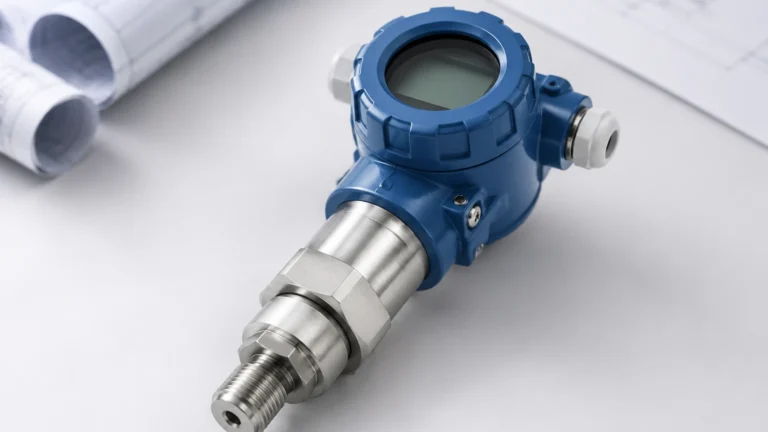
While pormass is primarily a flow and density measurement tool, its role in level measurement is significant, particularly in hydrostatic and buoyancy-based applications. In many industrial tanks, level is measured using hydrostatic pressure transmitters. The formula for level ($L$) is derived from pressure ($P$), gravity ($g$), and density ($
ho$):
$$L = \frac{P}{\rho \cdot g}$$
In processes where the fluid composition or temperature varies, the density ($
ho$) is not a constant. If a static density value is used in the level calculation, the resulting level reading will be incorrect. By integrating a pormass meter into the inlet or recirculation line of a tank, the system can feed real-time density data to the level controller. This allows for dynamic compensation, ensuring that the level reading remains accurate regardless of fluid changes.
Furthermore, in batching operations, pormass devices provide the mass-based "inventory" that complements the physical "space" measurement provided by radar or ultrasonic level meters. Comparing the mass added (via pormass) to the volume change (via level meter) allows for continuous verification of fluid properties and tank integrity.
Key Evaluation Criteria for Pormass Selection
Selecting the correct pormass instrument requires a detailed analysis of the process fluid and the environmental conditions. Because these instruments are a significant capital investment, engineers must prioritize compatibility and performance specs.
Material Compatibility
The wetted parts of a pormass meter must withstand the chemical properties of the fluid. Common materials include:
- 316L Stainless Steel: Standard for water, food grade, and mild chemicals.
- Hastelloy C22: Used for highly corrosive acids and chlorides.
- Tantalum: Reserved for the most aggressive chemical environments where even Hastelloy may fail.
Selection Table for Industrial Applications
| Feature | Specification Range | Application Note |
| :— | :— | :— |
| Nominal Diameter | DN1 (1 mm) to DN400 (400 mm) | Match to process piping flow velocity. |
| Mass Flow Accuracy | ±0.1% to ±0.05% of rate | Essential for custody transfer and blending. |
| Density Accuracy | ±0.0005 g/cm³ to ±0.001 g/cm³ | Critical for hydrostatic level compensation. |
| Pressure Rating | Up to 400 bar (40 MPa) | High-pressure gas or hydraulic applications. |
| Temperature Range | -200°C to +350°C | Cryogenic or high-temp thermal oil loops. |

Installation Considerations and Practical Guidelines
To maintain the high accuracy associated with pormass technology, strict adherence to installation best practices is required. Unlike some flow technologies that are forgiving of poor piping, Coriolis-based pormass meters are sensitive to mechanical stress and external vibrations.
1. Vibration Isolation: The meter operates by measuring internal vibrations. If the piping system has significant external vibration (from pumps or compressors), it can interfere with the sensor's signal. Use flexible connectors or robust piping supports to isolate the meter.
2. Orientation:
- Liquids: The tubes should point downward (in a "U" shape) to prevent gas bubbles from becoming trapped, which can cause signal noise.
- Gases: The tubes should point upward to prevent condensate or liquids from collecting in the sensor.
- Flag Position: For slurries or fluids with solids, a vertical installation with upward flow is preferred to ensure the tubes remain full and solids do not settle.
3. Mechanical Stress: The meter should never be used to support the weight of the piping. Flanges must be perfectly aligned to avoid introducing "mounting stress" into the sensor body, which can shift the zero point.
4. Zero Point Adjustment: After installation and under full-pipe, zero-flow conditions, a zero-point calibration must be performed. This accounts for the specific mechanical environment of the installation.
Limitations and Common Risks in Process Applications
Despite its precision, pormass technology is not a universal solution for every application. Engineers must be aware of specific limitations that can lead to measurement errors or equipment failure.
Entrained Gas and Cavitation
The presence of gas bubbles in a liquid stream (two-phase flow) is the most common challenge for pormass meters. Bubbles disrupt the vibration of the tubes, leading to "stalling" or significant measurement errors. While modern digital signal processing can mitigate some effects of entrained air, it is always best to maintain sufficient backpressure to keep gases in solution.
Pressure Drop
Because pormass meters often involve a reduction in pipe diameter or a split into two smaller tubes, they can introduce a significant pressure drop into the system. In gravity-fed systems or low-pressure loops, this must be calculated to ensure the required flow rate can still be maintained.
High Initial Cost
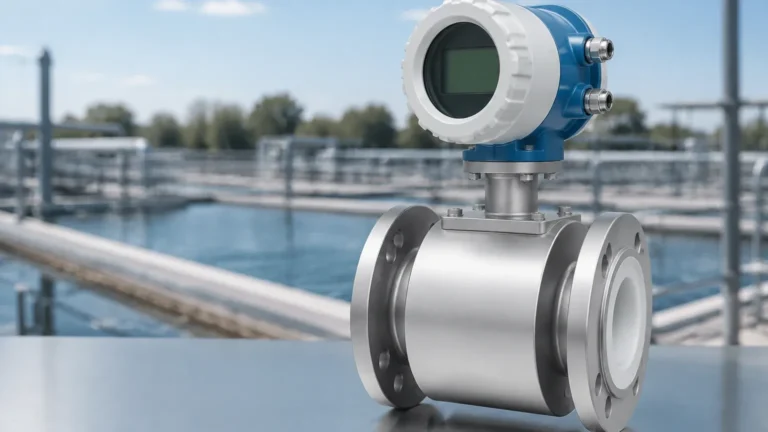
Pormass instruments are among the most expensive flow and density measurement options. In applications where simple volumetric flow is sufficient or where density is constant, other technologies—such as electromagnetic flow meters or Welk's specialized level sensors—may be more cost-effective. For a comparison of measurement technologies and their relative costs, refer to the Main Page to ensure the selected instrument aligns with the project budget and technical requirements.
Frequently Asked Questions (FAQ)
Q: Does a pormass meter require straight pipe runs like an orifice plate or turbine meter?
A: Generally, no. Because the Coriolis measurement is independent of the flow profile, pormass meters do not strictly require long straight runs of pipe before or after the sensor. However, avoiding extreme turbulence directly at the inlet is still considered good engineering practice.
Q: Can pormass be used for custody transfer?
A: Yes, pormass technology is one of the few methods widely approved for custody transfer of high-value fluids, such as oil, chemicals, and liquid gases, due to its high mass accuracy and inability to be easily "fooled" by changes in fluid temperature or pressure.
Q: How often does a pormass meter need recalibration?
A: In stable applications without erosion or corrosion, a pormass meter can maintain its calibration for many years. However, in critical applications, an annual verification using a master meter or a "dry" verification of the internal electronics and tube integrity is recommended.
Q: Is pormass suitable for high-viscosity fluids?
A: Yes, it is excellent for high-viscosity fluids like molasses, resins, or heavy crude oil. Unlike volumetric meters that may struggle with the increased friction and changing flow profiles of viscous fluids, the pormass meter continues to measure mass accurately as long as the pump can overcome the pressure drop through the sensor.
By understanding these principles and limitations, process engineers can effectively leverage pormass technology to enhance both flow and level measurement accuracy, leading to safer and more efficient industrial operations.