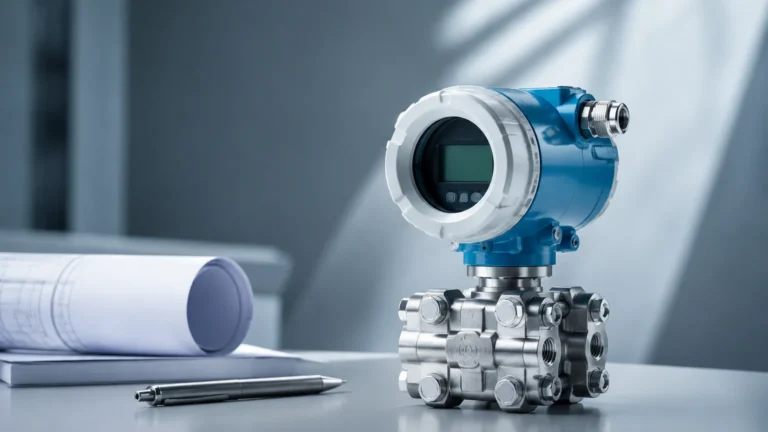
Rheonik Rhm 03
Rheonik Rhm 03
In the landscape of industrial process control, the precision of fluid measurement is a cornerstone of operational efficiency and product quality. The Rheonik RHM 03 is a specialized Coriolis mass flow meter designed specifically for low-flow applications where accuracy and reliability are non-negotiable. While level measurement technologies—such as those found on our Main Page—provide critical data regarding tank inventory and static volume, Coriolis meters like the RHM 03 offer dynamic, real-time mass flow data that is essential for dosing, blending, and high-pressure injection.
Understanding the technical nuances of the Rheonik RHM 03 requires an exploration of its underlying physics, its mechanical construction, and its integration into broader process automation systems. This guide provides a factual engineering reference for selecting and implementing this instrument in demanding industrial environments.
Measurement Principles of Coriolis Technology
Before evaluating the specific capabilities of the Rheonik RHM 03, it is essential to understand the Coriolis principle that governs its operation. Unlike volumetric flow meters that measure the space a fluid occupies, a Coriolis meter measures mass directly. This is a significant advantage because mass remains constant regardless of changes in temperature, pressure, or viscosity.
The Coriolis Effect
The measurement is based on the Coriolis effect, which occurs when a fluid moves through an oscillating tube. Inside the RHM 03, two parallel tubes are vibrated at their resonant frequency by an electromagnetic drive coil. As fluid flows through these vibrating tubes, it is forced to take on the vertical momentum of the vibration.
As the fluid moves toward the center of the oscillation, it resists the increasing vibration speed, pushing back against the tube. As it moves away from the center, it resists the decreasing vibration speed. This creates a twisting force (torque) on the tubes. The degree of this twist is directly proportional to the mass flow rate of the fluid. Sensors (pick-offs) located at the inlet and outlet sides of the tubes detect the phase shift caused by this twist. This phase difference is processed by the transmitter to determine the exact mass flow.
Density and Temperature Measurement
In addition to mass flow, Coriolis meters like the RHM 03 inherently measure fluid density. The resonant frequency at which the tubes vibrate changes depending on the mass of the fluid inside them (the "mass of the system"). By measuring this frequency, the instrument can calculate the density of the medium. Furthermore, an integrated Resistance Temperature Detector (RTD) monitors the tube temperature to compensate for changes in the elasticity of the tube material, ensuring accuracy across a wide thermal range.
Technical Overview of the Rheonik RHM 03
The RHM 03 is part of Rheonik’s "Small Size" series. It is characterized by its unique Omega-shaped tube design, which offers high sensitivity and a large signal-to-noise ratio, even at very low flow rates. This design allows the tubes to be thicker than those in conventional U-shaped meters, providing enhanced durability and higher pressure ratings.
Performance Specifications
| Parameter | Specification (Typical) |
| :— | :— |
| Flow Range | 0.05 kg/min to 5 kg/min (approx. 3 kg/h to 300 kg/h) |
| Accuracy (Mass Flow) | Up to ±0.10% of rate |
| Repeatability | Better than ±0.05% |
| Pressure Rating | Up to 900 bar (standard versions available for lower pressures) |
| Temperature Range | -196°C to +350°C (depending on model) |
| Wetted Materials | 316Ti Stainless Steel, Hastelloy C22, Tantalum |
Applications in Process Industries
The Rheonik RHM 03 is frequently deployed in scenarios where traditional level-based mass calculations are insufficient due to rapid process changes or the need for extreme precision in small-scale dosing.
Chemical Dosing and Injection
In chemical processing, precise amounts of catalysts or inhibitors must often be injected into a high-pressure reactor. The RHM 03’s ability to handle pressures up to 900 bar makes it ideal for these applications. When paired with high-accuracy level sensors for bulk storage monitoring, the RHM 03 ensures the final delivery is exact.
Pharmaceutical Manufacturing
For batch processing in the pharmaceutical industry, the RHM 03 provides the high repeatability required to meet stringent regulatory standards. Its ability to measure low flow rates allows for the precise addition of active ingredients in continuous manufacturing setups.
High-Pressure Gas Filling
The meter is also utilized in gas filling stations, particularly for hydrogen or specialty gases, where mass measurement is the only reliable way to ensure a full and safe fill regardless of gas compression or ambient temperature fluctuations.
Selection Criteria: Mass Flow vs. Level Measurement
When designing a process system, engineers must decide between monitoring inventory via level transmitters or measuring throughput via flow meters. While Welk provides a comprehensive range of level measurement solutions, the Rheonik RHM 03 serves a different but complementary role.
1. Dynamic vs. Static: Level meters are excellent for static volume and inventory management in tanks. The RHM 03 is designed for dynamic measurement of fluid in motion.
2. Accuracy Requirements: If the process requires an accuracy of 0.1% for a specific ingredient delivery, a Coriolis meter is often the only viable choice.
3. Physical Properties: If the fluid density varies significantly due to temperature or concentration changes, a mass flow meter avoids the errors that would occur with a volumetric level-to-mass conversion.
4. Space Constraints: In small-scale pilot plants, there may not be sufficient space for a large tank with a level sensor; an in-line RHM 03 can provide all necessary data within a compact footprint.

Installation Considerations
To achieve the specified accuracy of the Rheonik RHM 03, strict adherence to installation guidelines is required. Coriolis meters are sensitive to external vibrations and mechanical stress.
* Support and Mounting: The RHM 03 should be mounted on a rigid, vibration-free structure. It is recommended to support the piping immediately upstream and downstream of the meter to prevent pipe stress from being transferred to the sensor tubes.
* Orientation: For liquid applications, the meter should ideally be installed with the tubes pointing downward (the "flag" position) to prevent gas bubbles from becoming trapped. For gas applications, the tubes should point upward to prevent condensate buildup.
* Zero-Point Calibration: After installation and under full process pressure and temperature, a "zero-point" calibration must be performed with the fluid at a complete standstill. This is the most critical step in ensuring low-flow accuracy.
* Straight Pipe Runs: Unlike ultrasonic or turbine meters, Coriolis meters generally do not require long straight pipe runs. However, ensuring a stable flow profile still contributes to overall system stability.
Limitations and Practical Constraints
While the Rheonik RHM 03 is a highly capable instrument, engineers must be aware of its limitations:
1. Initial Cost: Coriolis meters are significantly more expensive than most level measurement technologies or simpler flow technologies like rotameters or thermal mass meters.
2. Pressure Drop: The Omega-shaped tubes of the RHM 03 can cause a noticeable pressure drop at the higher end of the flow range. This must be accounted for in pump sizing.
3. Entrained Gas: While the RHM 03 can handle small amounts of entrained gas, high gas fractions can dampen the tube oscillation, leading to measurement errors or a "stalled" meter.
4. Vibration Sensitivity: If installed near high-frequency pumps or vibrating machinery without proper isolation, the accuracy of the meter may degrade.
Integration with Level Measurement Systems
In a sophisticated industrial setup, the Rheonik RHM 03 often works in tandem with level measurement instruments. For example, in a mass balance application, a Welk radar level transmitter monitors the total mass in a supply tank, while the RHM 03 monitors the mass leaving the tank. By comparing the decrease in tank mass (calculated from level and density) with the totalized flow from the RHM 03, operators can detect leaks or calibrate the system in real-time. For more information on integrating these technologies, you may Review product options and application support.
Frequently Asked Questions (FAQ)
Q: Can the RHM 03 measure both liquids and gases?
A: Yes, the Coriolis principle applies to any fluid with mass. However, the flow range and accuracy specifications will differ between liquid and gas applications due to density differences.
Q: What is the maintenance requirement for the RHM 03?
A: Because there are no moving parts in the fluid stream (no bearings or gears), mechanical wear is non-existent. Maintenance is primarily limited to periodic calibration checks and ensuring the zero-point remains stable.
Q: How does the RHM 03 handle corrosive fluids?
A: The meter can be manufactured with wetted parts made of Hastelloy C22 or Tantalum, providing excellent resistance to aggressive chemicals that would degrade standard stainless steel.
Q: Is the RHM 03 suitable for hazardous areas?
A: Yes, Rheonik provides versions of the RHM 03 with ATEX, IECEx, and CSA certifications for use in Zone 0, 1, and 2 hazardous environments.
Q: How does the RHM 03 compare to ultrasonic flow meters?
A: The RHM 03 measures mass directly and is generally more accurate for low flow rates. Ultrasonic meters are typically used for larger pipe sizes and are sensitive to changes in the fluid's sonic velocity, whereas the RHM 03 is not.