Differential Pressure Sensor for Hvac Market
Differential Pressure Sensor for Hvac Market
In the modern landscape of building automation and climate control, the differential pressure sensor for hvac market has become a cornerstone of energy efficiency and indoor air quality. These instruments are designed to measure the difference in pressure between two points in a system, providing critical data that allows Heating, Ventilation, and Air Conditioning (HVAC) systems to respond dynamically to changing environmental conditions. As industries move toward "smart building" architectures, the demand for high-precision, reliable sensing technology has intensified, placing a spotlight on the engineering principles and selection criteria that govern these devices.
For engineers and facility managers, understanding the technical nuances of differential pressure (DP) measurement is essential. Whether it is monitoring the health of a filtration system or maintaining the precise static pressure required in a cleanroom, the choice of sensor directly impacts operational costs and system longevity. This guide explores the fundamental measurement principles, application scenarios, and practical selection strategies for DP sensors within the industrial and commercial HVAC sectors.
Understanding the Measurement Principles of Differential Pressure Sensors
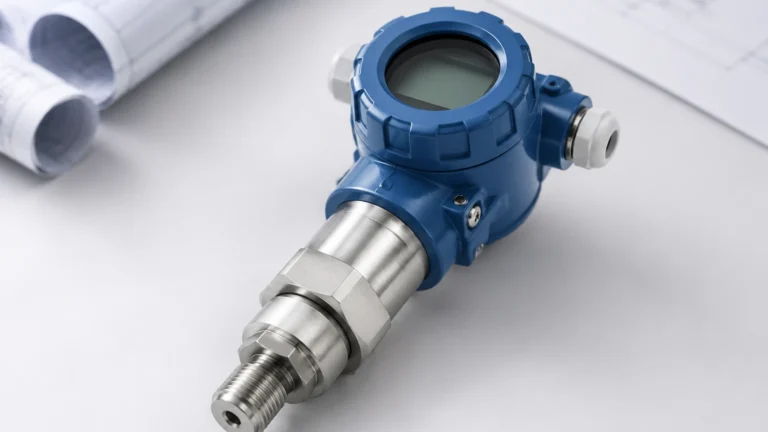
Before selecting a device, it is vital to understand how a differential pressure sensor converts physical force into an electrical signal. In the HVAC market, most sensors rely on a sensing element—typically a diaphragm—that separates two pressure ports: the high-pressure side (P1) and the low-pressure side (P2). The "differential" is the mathematical difference between these two values (ΔP = P1 – P2).
Piezo-resistive Sensing
This is the most common technology used in the HVAC industry. It involves a silicon diaphragm with integrated strain gauges. When pressure is applied, the diaphragm deforms slightly, changing the electrical resistance of the strain gauges. This change is proportional to the pressure difference. Piezo-resistive sensors are favored for their high sensitivity and ability to measure very low pressure ranges, such as those found in duct static pressure applications.
Capacitive Sensing
Capacitive DP sensors utilize a diaphragm that acts as one plate of a variable capacitor. As the diaphragm moves due to pressure changes, the capacitance between it and a fixed reference plate shifts. This technology is known for its robustness and resistance to overpressure. It is frequently employed in industrial environments where vibration or electrical noise might interfere with other sensor types.
Thermal Anemometry (Mass Flow)
While less common for high-pressure applications, some low-range HVAC sensors use a thermal principle. A tiny amount of air is allowed to bypass through the sensor, and the cooling effect on a heated element is measured. This is then correlated back to the pressure difference. These sensors are exceptionally accurate at near-zero pressures but are sensitive to dust and contaminants in the air stream.
Role and Applications in the HVAC Market
The utility of a differential pressure sensor for hvac market extends across various subsystems. Each application requires specific performance characteristics to ensure the HVAC system operates within its design parameters.
Filter Status Monitoring
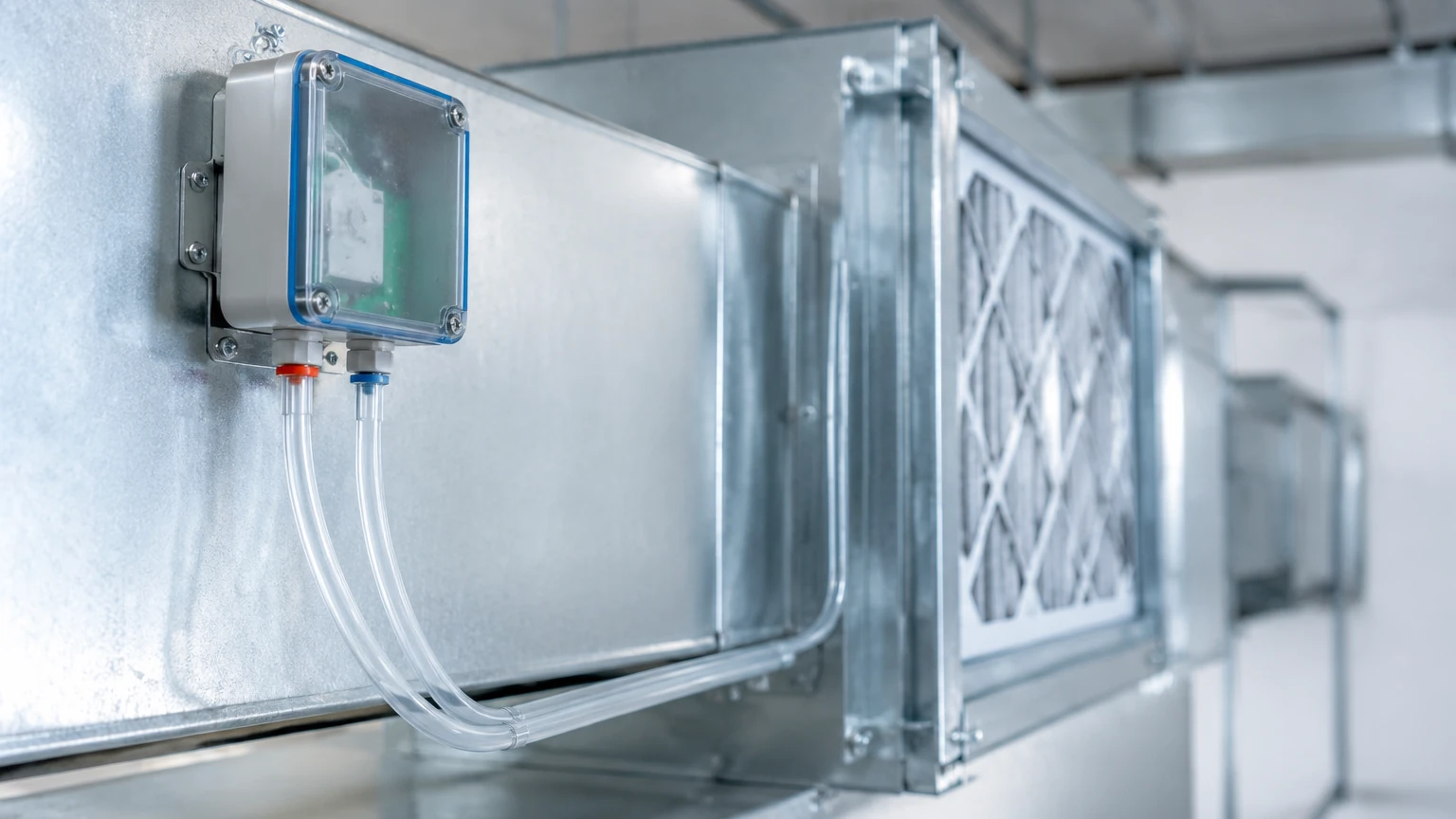
One of the most frequent uses of DP sensors is monitoring the pressure drop across air filters. As a filter accumulates dust and debris, the resistance to airflow increases, leading to a higher differential pressure. By setting a threshold (e.g., 250 Pa or 1.0 inH2O), the system can alert maintenance staff to replace the filter exactly when needed, preventing energy waste from overworked fans and ensuring air purity.
Variable Air Volume (VAV) Control
In VAV systems, DP sensors measure the velocity pressure at the inlet of a terminal box. This data allows the controller to adjust the damper position to maintain a constant airflow regardless of fluctuations in the main duct pressure. This localized control is fundamental to maintaining occupant comfort in large commercial buildings.
Building and Room Static Pressure
To prevent the infiltration of outside air or the escape of conditioned air, buildings are often maintained at a slightly positive pressure relative to the outdoors (typically 12.5 to 25 Pa). Conversely, laboratories and hospitals may require negative pressure to contain contaminants. DP sensors provide the feedback loop for the exhaust and supply fans to maintain these delicate balances.
Pump and Chiller Protection
In hydronic HVAC systems, differential pressure sensors are used to monitor the pressure drop across heat exchangers and pumps. This ensures that fluid flow is sufficient to prevent freezing in chillers or overheating in boilers. For these applications, industrial-grade sensors from manufacturers like Welk are often preferred due to their ability to handle liquid media and higher base pressures.
Key Evaluation Criteria for Industrial HVAC Sensors
Selecting the right sensor involves more than just matching a pressure range. Engineers must evaluate several technical specifications to ensure long-term reliability in the field.
1. Pressure Range and Overpressure Rating: The sensor must be rated for the maximum expected differential pressure, but it must also withstand "burst pressure" or overpressure events (e.g., a sudden damper closure). A common range for duct static pressure is 0 to 500 Pa (0 to 2 inH2O).
2. Accuracy and Total Error Band: Accuracy is often cited as a percentage of Full Scale (FS). However, it is important to consider the "Total Error Band," which includes effects from temperature changes and long-term drift. For cleanroom applications, high-precision sensors with ±0.25% FS accuracy are standard.
3. Output Signals: Integration with Building Management Systems (BMS) requires compatible outputs. Common analog signals include 4-20 mA or 0-10 VDC. Increasingly, digital protocols like Modbus RTU or BACnet MS/TP are used to provide more diagnostic data and easier daisy-chaining of sensors.
4. Long-term Stability: High-quality sensors utilize "auto-zero" technology or high-stability silicon elements to minimize the need for manual re-calibration, which can be labor-intensive in large facilities.
Selection Table for HVAC Differential Pressure Applications
The following table provides a general guideline for selecting sensor specifications based on common HVAC tasks.
| Application | Typical Range (Metric) | Typical Range (Imperial) | Required Accuracy | Recommended Technology |
| :— | :— | :— | :— | :— |
| General Filter Monitoring | 0 – 500 Pa | 0 – 2.0 inH2O | ±1.0% FS | Piezo-resistive |
| Duct Static Pressure | 0 – 1250 Pa | 0 – 5.0 inH2O | ±0.5% FS | Piezo-resistive / Capacitive |
| Cleanroom / Lab Pressure | -25 to +25 Pa | -0.1 to +0.1 inH2O | ±0.25% FS | High-stability Silicon |
| VAV Box Airflow | 0 – 250 Pa | 0 – 1.0 inH2O | ±1.0% FS | Thermal or Piezo-resistive |
| Hydronic (Liquid) DP | 0 – 5 bar | 0 – 72 psi | ±0.5% FS | Stainless Steel Diaphragm |
For specialized industrial level or flow applications that intersect with HVAC systems, reviewing professional product options can clarify the best path forward. Engineers can Review product options and application support to find instruments that meet these rigorous standards.
Installation Considerations and Best Practices
Even the most accurate sensor will provide faulty data if installed incorrectly. Follow these engineering guidelines to ensure valid measurements:
* Port Orientation: For air applications, sensors should ideally be mounted with the pressure ports facing downward. This prevents any moisture (condensate) from entering the sensing chamber, which could cause permanent damage or offset errors.
* Tubing Runs: Keep the tubing between the pressure source and the sensor as short as possible to minimize signal lag. Ensure there are no kinks or sharp bends that could restrict airflow.
* Static Pressure Probes: When measuring duct pressure, use a dedicated static pressure probe with a flat head oriented perpendicular to the airflow. This ensures the sensor measures static pressure rather than the dynamic (velocity) pressure of the moving air.
* Zeroing the Sensor: Always perform a "zero calibration" at the time of installation. This should be done with both ports open to the atmosphere to ensure the sensor reads exactly zero when there is no pressure difference.
Limitations and Common Risks in DP Sensing
While highly effective, differential pressure sensors are subject to environmental and mechanical limitations:
* Temperature Sensitivity: Silicon-based sensing elements are sensitive to temperature fluctuations. While most modern sensors include temperature compensation, extreme environments (e.g., rooftop units in winter) may require heated enclosures or sensors with wider operating temperature ratings.
* Contamination: In exhaust systems or industrial HVAC, particulate matter can clog the pressure ports or the tubing. Using inline filters or "purge" systems can mitigate this risk.
* Media Compatibility: Standard HVAC sensors are designed for dry, non-corrosive air. If the application involves high humidity, chemical fumes, or liquids, a sensor with a 316L stainless steel diaphragm or specialized coating is necessary.
Frequently Asked Questions (FAQs)
Q: What is the difference between Gauge Pressure and Differential Pressure?
Gauge pressure measures the pressure of a system relative to the local atmospheric pressure. Differential pressure measures the difference between two specific points within a system, neither of which needs to be the atmosphere.
Q: How often should HVAC differential pressure sensors be calibrated?
For general commercial applications (like filter monitoring), an annual check is usually sufficient. For critical applications like hospital isolation rooms or semiconductor cleanrooms, semi-annual or quarterly calibration is often mandated by regulatory standards.
Q: Can a differential pressure sensor be used to measure airflow?
Yes. By measuring the pressure drop across a known restriction (like an orifice plate or a Pitot tube), the square root of the differential pressure can be used to calculate the air velocity and volume flow rate.
Q: What happens if the high and low pressure tubes are swapped?
Most analog sensors will output their minimum signal (e.g., 4mA or 0V) or a "negative" reading if the ports are reversed. This will result in the control system failing to respond correctly to pressure changes. Always verify port markings (H/L or +/-) during installation.
By adhering to these technical standards and selection criteria, stakeholders in the HVAC market can ensure that their pressure sensing infrastructure provides the accuracy and reliability required for modern building performance. For those seeking robust industrial solutions, exploring the Main Page of specialized manufacturers provides a gateway to high-performance instrumentation tailored for demanding environments.
Download Differential Pressure Sensor for Hvac Market as a PDF