Sparling Instruments Llc
Sparling Instruments Llc
In the landscape of industrial process control, the precision of measurement instrumentation determines the efficiency, safety, and profitability of a facility. Companies like Sparling Instruments LLC have established a long-standing reputation for flow and level measurement solutions, particularly in the water, wastewater, and chemical processing sectors. For engineers and procurement specialists, understanding the technical nuances of these instruments—and how they compare to modern alternatives like radar and ultrasonic sensors—is essential for optimizing plant operations.
Selecting the right instrumentation requires a deep dive into measurement principles, environmental constraints, and the specific physical properties of the media being monitored. Whether managing a municipal water reservoir or a complex chemical reactor, the choice between contact and non-contact measurement can significantly impact maintenance cycles and data reliability.
Core Measurement Principles in Industrial Instrumentation
Before selecting a specific device, it is vital to understand the physics behind different measurement technologies. Most industrial level and flow systems rely on a few fundamental principles: time-of-flight, hydrostatic pressure, and buoyancy.
Radar Level Measurement (Non-Contact)
Radar level meters utilize high-frequency electromagnetic waves (typically in the GHz range). The sensor emits a microwave signal toward the surface of the medium. The signal reflects off the surface—due to a change in the dielectric constant—and returns to the sensor. The instrument calculates the distance based on the time it takes for the signal to travel to the surface and back.
* Advantage: Unaffected by temperature fluctuations, vacuum, or high pressure.
* Application: Ideal for volatile liquids and solids where accuracy is paramount.
Ultrasonic Level Measurement (Non-Contact)
Ultrasonic sensors function similarly to radar but use sound waves instead of electromagnetic waves. A transducer emits an ultrasonic pulse that bounces off the product surface. The time-of-flight is measured and converted into distance.
* Advantage: Highly cost-effective for open-channel flow and liquid storage.
* Limitation: Performance can be degraded by heavy foam, dust, or significant temperature gradients that alter the speed of sound.
Hydrostatic Pressure Measurement (Contact)
This method calculates level by measuring the pressure exerted by a liquid column at a specific point. The pressure is directly proportional to the height of the liquid and its density ($P = \rho \cdot g \cdot h$).
* Advantage: Simple installation, especially for deep wells or vented tanks.
* Requirement: Requires consistent liquid density for accurate readings.
Magnetic and Float-Based Measurement
Magnetic level gauges utilize a float containing an internal magnet that moves with the liquid level. This float interacts with an external indicator or a series of reed switches to provide a visual or electronic signal.
The Role of Sparling Instruments LLC in the Market
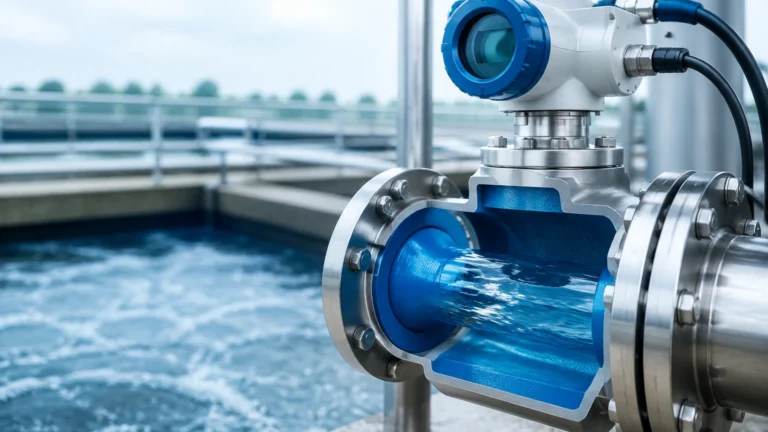
Sparling Instruments LLC is widely recognized for its historical contributions to the flow measurement industry, particularly with its propeller meters and electromagnetic flowmeters (Magmeters). In the context of level measurement, their solutions often integrate with broader control systems to provide a comprehensive view of fluid dynamics within a facility.
While Sparling has focused heavily on flow, many industrial applications require a hybrid approach where level data validates flow rates. For instance, in wastewater treatment, influent monitoring often requires both level sensors (to prevent overflow) and flowmeters (to track volume). Engineers evaluating Sparling instruments LLC often look for ruggedness and long-term stability in harsh environments, qualities that are also central to the high-performance radar and ultrasonic sensors provided by professional manufacturers like Welk.
For those looking to expand their instrumentation suite, reviewing the Main Page of specialized manufacturers can provide insights into the latest radar and hydrostatic technologies that complement traditional flow measurement tools.
Practical Selection Table for Level Measurement
Choosing the correct technology depends on the specific parameters of your application. Use the following table as a general engineering reference:
| Technology | Medium Type | Max Range (Typical) | Accuracy | Pressure Tolerance | Temperature Range |
| :— | :— | :— | :— | :— | :— |
| Radar (80GHz) | Liquids/Solids | Up to 120m (393 ft) | ±1mm | Up to 160 bar | -40°C to +250°C |
| Ultrasonic | Liquids | Up to 30m (98 ft) | ±0.25% | Up to 3 bar | -40°C to +80°C |
| Hydrostatic | Liquids | Up to 200m (656 ft) | ±0.1% to 0.5% | Dependent on sensor | -20°C to +80°C |
| Magnetic Gauge | Liquids | Up to 6m (20 ft) | ±5mm | Up to 40 bar | -40°C to +400°C |
Installation Considerations and Best Practices
Even the most advanced instrument from a reputable provider like Sparling Instruments LLC or Welk will fail to perform if installed incorrectly. Engineering teams must account for several physical factors during the design phase.
1. The "Dead Zone" (Blocking Distance)
Every non-contact sensor (Radar and Ultrasonic) has a minimum distance near the sensor face where it cannot accurately measure. This is known as the dead zone. Ensure the maximum expected liquid level does not enter this zone, or use a mounting nozzle to elevate the sensor.
2. Obstructions and False Reflections
Internal tank structures such as agitators, heating coils, or ladders can create "ghost" echoes. Modern radar sensors use software algorithms to "map out" these fixed obstructions, but it is best practice to install the sensor in a location with a clear line of sight to the medium.
3. Mounting Position
* Avoid the Center: In cylindrical tanks, mounting a sensor in the exact center can lead to multiple reflections that interfere with the primary signal.
* Avoid the Wall: Mounting too close to the tank wall can cause signal attenuation. A distance of at least 200mm (8 inches) from the wall is generally recommended.
4. Turbulence and Foam
In tanks with heavy agitation, the surface may be turbulent or covered in foam. Radar is generally more resistant to foam than ultrasonic technology, but in extreme cases, a stilling well (a bypass pipe) may be required to provide a calm surface for measurement.

Limitations and Environmental Factors
No single measurement technology is universal. Understanding the limitations is key to avoiding costly downtime.
* Dielectric Constant ($ε_r$): Radar relies on the reflectivity of the medium. Low dielectric liquids (like certain oils or liquefied gases) reflect less energy. Specialized high-sensitivity radar or guided wave radar (GWR) may be necessary for these substances.
* Vapor and Dust: While radar penetrates dust and vapor easily, ultrasonic waves can be scattered or absorbed, leading to signal loss.
* Ambient Noise: High-frequency industrial noise can occasionally interfere with ultrasonic sensors if the frequencies overlap, though modern digital filtering has mitigated much of this risk.
Frequently Asked Questions (FAQ)
How does Sparling Instruments LLC compare to other level meter manufacturers?
Sparling is traditionally known for its flow measurement expertise, particularly electromagnetic and propeller meters. For dedicated level measurement, manufacturers like Welk provide a broader range of specialized radar, ultrasonic, and hydrostatic technologies designed specifically for tank and silo monitoring.
Can radar level meters be used in vacuum conditions?
Yes. Because radar uses electromagnetic waves, it does not require a medium (like air) to travel. This makes radar superior to ultrasonic sensors in vacuum applications, as sound waves cannot travel through a vacuum.
What is the maintenance requirement for hydrostatic transmitters?
Hydrostatic transmitters are contact-based. If the liquid is corrosive or prone to scaling, the diaphragm may need periodic cleaning or replacement. For clean water applications, they are often "set and forget" instruments.
How do I choose between a 26GHz and an 80GHz radar?
80GHz radar offers a narrower beam angle and higher precision, making it better for small tanks, tanks with internal obstructions, or when measuring through narrow nozzles. 26GHz radar is often used for larger ranges or in environments with heavier dust.
Conclusion
Selecting instrumentation from established names like Sparling Instruments LLC or specialized manufacturers like Welk ensures that your facility benefits from decades of engineering refinement. By understanding the underlying principles of radar, ultrasonic, and hydrostatic measurement, and by adhering to strict installation guidelines, B2B operators can achieve the accuracy and reliability required for modern industrial automation. For a detailed look at specific hardware configurations and technical support, professionals are encouraged to consult the Main Page of their preferred equipment provider to ensure the selected device matches the unique demands of their process environment.