Spectrasensors
Spectrasensors
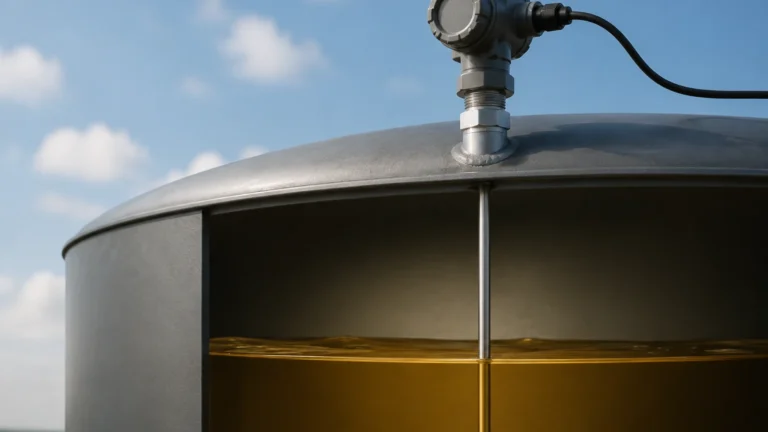
In the complex landscape of industrial process control, the ability to monitor both the physical quantity of a substance and its chemical composition is vital for safety, efficiency, and regulatory compliance. While level measurement focuses on the volume and height of liquids or solids within a vessel, spectroscopic sensing—often associated with technologies like those found in spectrasensors—delves into the molecular makeup of the gas or liquid phase. For engineers and plant managers, understanding how these two worlds intersect is crucial for optimizing reactor performance, ensuring pipeline integrity, and managing storage facilities.
This guide explores the principles of spectroscopic sensing, compares it with traditional level measurement technologies, and provides a framework for selecting the right instrumentation for demanding industrial environments. For those seeking a broader overview of hardware options, referring to the Main Page of industrial instrumentation providers can offer a starting point for integrated system design.
Measurement Principles: Spectroscopy vs. Level Detection
Before selecting an instrument, it is essential to understand the physical laws governing different sensing methods. While radar and ultrasonic sensors measure distance, spectroscopic sensors measure light absorption.
Tunable Diode Laser Absorption Spectroscopy (TDLAS)
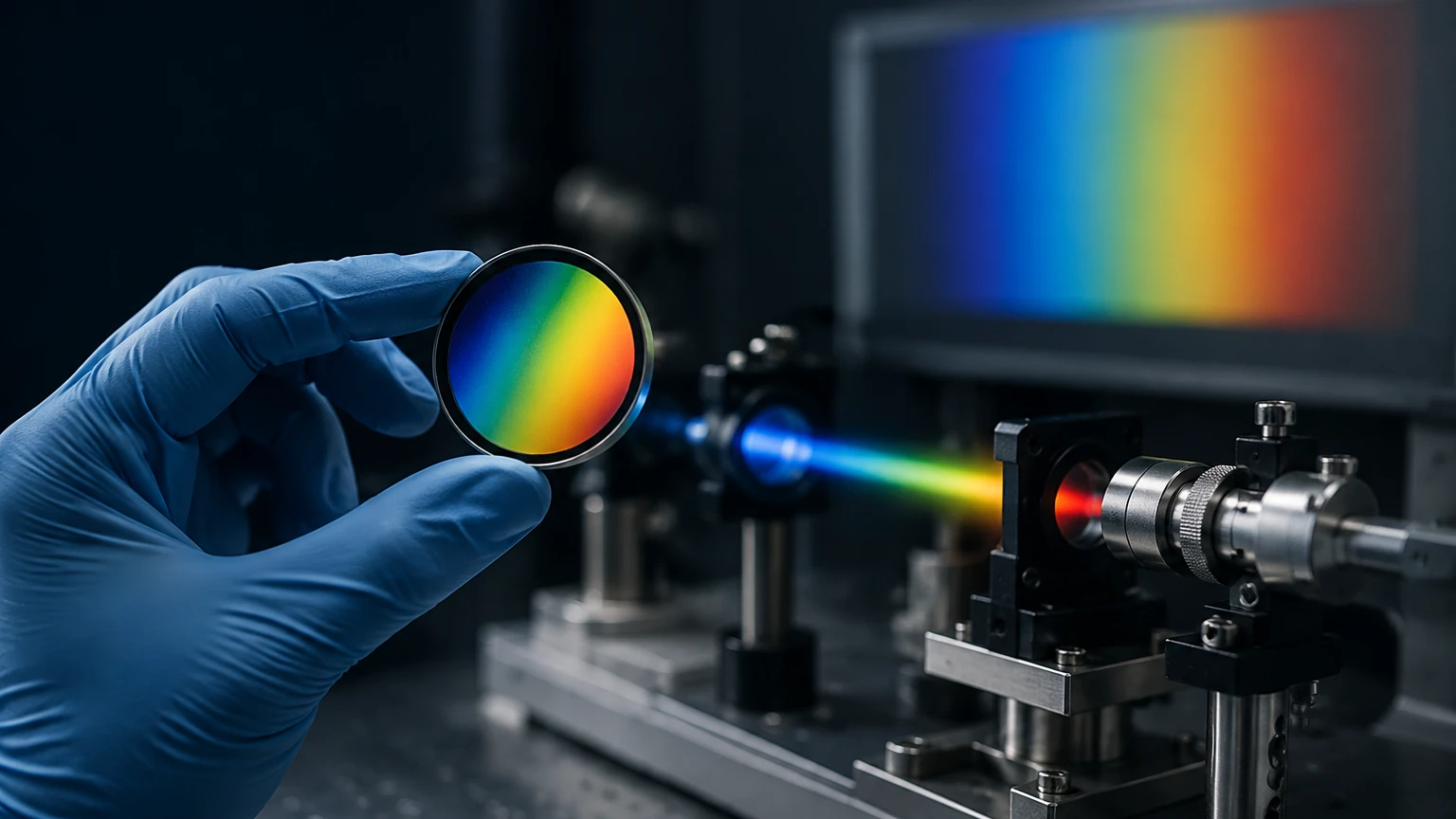
Spectroscopic sensors, particularly those utilizing TDLAS, operate on the principle of the Beer-Lambert Law. This law states that there is a logarithmic relationship between the transmission of light through a substance and the product of the absorption coefficient of the substance, the distance the light travels (path length), and the concentration of the substance.
In a typical TDLAS setup, a laser emits light at a specific wavelength known to be absorbed by the target molecule (such as H2O, H2S, or CO2). As the laser scans across this wavelength, the detector measures the intensity of the light that passes through the gas. The amount of light absorbed is directly proportional to the concentration of the target gas. This method is highly selective and resistant to interference from other gas components.
Level Measurement Principles
In contrast, level measurement relies on wave reflection or hydrostatic pressure:
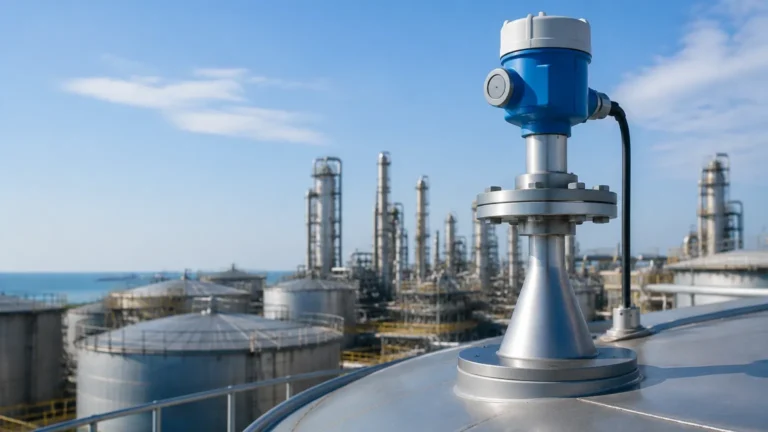
1. Radar (FMCW/Pulse): Emits high-frequency electromagnetic waves (typically 26 GHz or 80 GHz). The time it takes for the signal to reflect off the material surface and return to the sensor determines the distance. Radar is largely unaffected by gas composition, making it a robust choice for vacuum or high-pressure tanks.
2. Ultrasonic: Uses sound waves (typically 40 kHz to 200 kHz). The sensor measures the time-of-flight of the sound pulse. Unlike radar, the speed of sound is heavily dependent on the gas medium's temperature and density, which is where spectroscopic data often becomes a valuable secondary input.
3. Hydrostatic: Measures the pressure exerted by a liquid column. This is a contact-based method that requires knowledge of the liquid's density to calculate the level accurately.
The Intersection of Gas Analysis and Level Measurement
In many B2B applications, such as natural gas processing or chemical synthesis, level measurement and gas analysis must work in tandem. For instance, in a separator vessel, a radar level meter tracks the liquid interface while a spectroscopic sensor monitors the moisture content (H2O) or hydrogen sulfide (H2S) in the gas phase above.
Understanding the gas phase is also critical for the accuracy of non-contact level meters. In high-pressure CO2 storage, the density of the gas phase can become significant enough to slow down the travel of radar waves (the "refractive index" effect). By using data from spectrasensors to identify gas concentration and pressure, engineers can apply correction factors to level readings, ensuring millimeter-level accuracy even in fluctuating environments.
Practical Selection Table for Industrial Sensing
Choosing between a dedicated level meter and a spectroscopic analyzer depends on the primary process goal. The following table compares common technologies used in tank and pipeline management.
| Technology | Primary Application | Measurement Target | Media Contact | Typical Accuracy |
| :— | :— | :— | :— | :— |
| TDLAS (Spectrasensors) | Gas Quality / Safety | Concentration (ppm/%) | In-situ or Extractive | ±2% of reading |
| 80 GHz Radar | Level Control | Liquid/Solid Surface | Non-contact | ±1 mm (0.04 in) |
| Ultrasonic Sensor | Water/Wastewater | Liquid Level | Non-contact | ±0.25% of range |
| Guided Wave Radar | Interface Measurement | Liquid-Liquid Level | Contact (Probe) | ±2 mm (0.08 in) |
| Hydrostatic Transmitter | Deep Well / Open Tank | Liquid Level | Contact (Diaphragm) | ±0.1% of span |
Installation Considerations and Best Practices
Proper installation is the single most important factor in the longevity of both level and spectroscopic instruments. For spectroscopic sensors, the focus is on maintaining a clear optical path, while for level meters, the focus is on avoiding internal obstructions.
For Spectroscopic Sensors
1. Sample Conditioning: If using an extractive spectrasensor, the sample must be delivered to the measurement cell without phase changes. Heat-traced lines are often required to prevent condensation.
2. Alignment: In-situ sensors require precise alignment between the laser source and the detector. Thermal expansion of the vessel or pipe can cause misalignment over time.
3. Window Fouling: Optical windows must remain clean. Many systems use a "swirl" purge of nitrogen or dry air to keep process vapors from depositing on the glass.
For Level Meters (Radar and Ultrasonic)
1. Nozzle Geometry: The height and diameter of the mounting nozzle should not interfere with the signal beam. For 80 GHz radar, smaller nozzles (DN25 or 1-inch) are often sufficient due to the narrow beam angle.
2. Obstruction Mapping: Modern level meters allow for "false echo suppression," where the software ignores reflections from agitators, ladders, or baffles. This should be configured during commissioning while the tank is empty.
3. Dead Zones: Every non-contact sensor has a "blind zone" or "blocking distance" near the face of the sensor (typically 50 mm to 200 mm). Ensure the maximum fill level does not enter this zone.
Limitations and Operational Risks
No technology is universal. Recognizing the boundaries of spectrasensors and level meters prevents costly downtime.
* Spectroscopic Limitations: TDLAS is molecule-specific. A sensor designed for moisture cannot measure oxygen unless it is specifically equipped with a second laser. Additionally, extremely high particulate loads or "black powder" in pipelines can block the optical signal entirely.
* Radar Limitations: While radar is highly versatile, liquids with very low dielectric constants (e.g., certain liquefied gases or pure hydrocarbons) may reflect a weak signal. In these cases, guided wave radar (GWR) or magnetic level gauges are preferred.
* Ultrasonic Limitations: These sensors should be avoided in vacuum applications (sound cannot travel in a vacuum) or in tanks with heavy foam, which absorbs the acoustic energy rather than reflecting it.
Frequently Asked Questions (FAQ)
Q: Can a spectroscopic sensor be used to measure liquid level?
A: Generally, no. Spectroscopic sensors are designed to analyze the chemical composition of a medium. While some specialized laser distance meters use similar principles, industrial spectrasensors are optimized for gas or liquid concentration analysis, not distance-to-surface measurement.
Q: How often do these sensors require calibration?
A: TDLAS-based spectrasensors are known for their stability and often require only annual verification. Radar level meters are typically "calibrated for life" unless the electronics are damaged or the process medium changes significantly in a way that affects the dielectric constant (for GWR).
Q: Are these instruments suitable for hazardous areas?
A: Yes, most professional-grade level meters and spectroscopic analyzers are available with ATEX, IECEx, or Class/Division certifications for use in explosive atmospheres. Always verify the specific protection method (e.g., Intrinsically Safe or Flameproof) before installation.
Q: What is the impact of temperature on these measurements?
A: For spectroscopy, temperature affects the line strength of the absorption peak, which is why these sensors include integrated temperature compensation. For ultrasonic level meters, temperature changes the speed of sound; for radar, temperature has a negligible effect on the signal speed but can impact the physical integrity of the sensor seals.
Conclusion
Integrating advanced sensing technologies like spectrasensors for gas analysis with robust level measurement solutions creates a comprehensive monitoring strategy. Whether you are managing a high-pressure chemical reactor or a simple water storage tank, selecting the right tool requires a balance of accuracy, maintenance requirements, and environmental compatibility. For detailed specifications on the latest radar, ultrasonic, and hydrostatic level instruments, engineers are encouraged to explore the Main Page of specialized manufacturers to find the optimal fit for their specific application parameters.