Surface Rtd
Surface Rtd
In the landscape of industrial process control, the ability to monitor temperature without breaching the integrity of a vessel or piping system is a significant advantage. A surface RTD (Resistance Temperature Detector) serves as a critical tool for engineers who require accurate thermal data while maintaining a completely sealed environment. Unlike traditional immersion probes that require a thermowell or a direct process entry point, surface-mounted sensors provide a non-invasive alternative that is easier to install, maintain, and retrofit into existing systems.
For industries ranging from chemical processing to water treatment, the surface RTD is often a companion to level measurement technologies. Accurate temperature data is frequently required to compensate for density changes in liquids, ensuring that level readings remain precise regardless of thermal fluctuations. Understanding the mechanics, selection criteria, and installation nuances of these sensors is essential for optimizing process efficiency.
Understanding the Principles of Surface RTD Technology
The operation of a surface RTD is based on the predictable relationship between the electrical resistance of a metal and its temperature. Most industrial surface RTDs utilize platinum as the sensing element due to its excellent stability, repeatability, and resistance to oxidation. The most common configuration is the Pt100, which has a resistance of 100 ohms at 0°C, or the Pt1000, which offers 1000 ohms at the same temperature.
The Resistance-Temperature Relationship
As the temperature of the surface increases, the molecular agitation within the platinum element increases, which in turn increases the electrical resistance. This relationship is governed by the alpha coefficient, typically 0.00385 Ω/Ω/°C in industrial standards (DIN EN 60751). By measuring the resistance across the sensor, the control system can calculate the exact temperature of the surface to which the sensor is attached.
Heat Transfer Dynamics
A surface RTD does not measure the fluid temperature directly; instead, it measures the temperature of the pipe or tank wall. For the reading to be accurate, the sensor must reach thermal equilibrium with the surface. This involves conduction from the surface to the RTD element. Factors such as the thermal conductivity of the sensor housing, the quality of the contact, and the presence of ambient air can all influence the final reading. This is why insulation and thermal transfer compounds are critical components of a surface-mount setup.
Comparing Surface RTDs with Immersion Probes
Choosing between a surface-mounted sensor and an immersion probe depends on the specific requirements of the application, including pressure, flow rate, and the corrosiveness of the media.
| Feature | Surface RTD | Immersion RTD (with Thermowell) |
| :— | :— | :— |
| Installation | Non-invasive; no drilling required | Requires process penetration |
| Maintenance | Easy to replace without shutdown | May require draining the system |
| Response Time | Slower (due to wall thickness) | Faster (direct contact) |
| Pressure Rating | Independent of process pressure | Limited by thermowell strength |
| Accuracy | High (if properly insulated) | Highest (direct immersion) |
| Cost | Generally lower installation cost | Higher due to machining and welding |
While immersion probes offer the fastest response times, surface RTDs are preferred in high-pressure applications where a thermowell might fail, or in food and beverage industries where maintaining a sterile, crevice-free environment is paramount.
Critical Selection Criteria for Industrial Applications
When specifying a surface RTD, engineers must look beyond the base resistance and consider the physical environment and the required precision. To explore a wide range of industrial sensing options, professionals can Review product options and application support at the Welk Main Page.
1. Sensor Construction and Mounting Style
* Patch Sensors: These consist of a thin-film RTD element encapsulated in a flexible material like silicone rubber or Kapton. They are ideal for curved surfaces and can be applied with adhesives.
* Bolt-on Sensors: These feature a rigid housing (often stainless steel or aluminum) with a mounting hole. They are mechanically fastened to the surface, providing a robust connection suitable for high-vibration environments.
* Magnetic Mounts: Used for temporary measurements on ferrous metals, these allow for quick relocation of the sensor without permanent modification to the equipment.
2. Wiring Configurations
To mitigate the error caused by lead wire resistance, surface RTDs are available in three configurations:
* 2-Wire: Suitable only for short distances where high accuracy is not critical.
* 3-Wire: The industrial standard. It uses a third wire to cancel out the lead resistance, providing a balance between cost and accuracy.
* 4-Wire: The most accurate configuration, used primarily in laboratory settings or high-precision industrial processes where lead wire resistance must be completely eliminated.
3. Accuracy Classes
Industrial RTDs are categorized by classes defined in IEC 60751:
* Class AA (1/3 DIN): ±(0.1 + 0.0017 |t|) °C
* Class A: ±(0.15 + 0.002 |t|) °C
* Class B: ±(0.3 + 0.005 |t|) °C
The Role of Surface Temperature in Accurate Level Measurement
In many industrial setups, temperature measurement is not an isolated task but a necessary input for accurate level monitoring. Welk, as a manufacturer of level measurement instruments, recognizes that temperature significantly impacts the performance of various level technologies.
Hydrostatic Level Transmitters
Hydrostatic sensors measure the pressure exerted by a liquid column to determine level. However, the density of a liquid changes with temperature. If the temperature of a chemical tank rises, the liquid expands and its density decreases. Without a surface RTD providing temperature data for density correction, the hydrostatic transmitter would report an incorrect level.
Radar and Ultrasonic Level Meters
While radar is less affected by temperature than ultrasonic sensors, the physical expansion of the tank itself at extreme temperatures can introduce small errors in the reference point. Furthermore, in pressurized vessels, the dielectric constant of the vapor space can be temperature-dependent. Integrating surface temperature data allows the control system to apply real-time compensation, ensuring the highest level of accuracy.

Installation Best Practices and Thermal Contact
The most common cause of error in surface RTD applications is poor thermal contact. If there is an air gap between the sensor and the surface, the RTD will read a value somewhere between the surface temperature and the ambient air temperature.
Surface Preparation
Before installation, the mounting surface must be cleaned of all rust, scale, paint, and debris. For metal pipes, light sanding may be required to ensure a flat, smooth contact area. Any oxidation acts as an insulator, delaying the response time and reducing accuracy.
Thermal Transfer Compounds
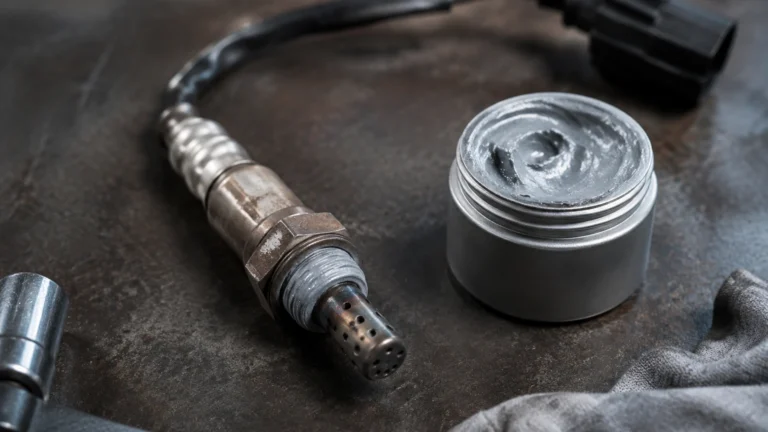
Using a high-quality thermal grease or conductive paste is highly recommended. These compounds fill the microscopic voids between the sensor and the surface, significantly improving heat transfer. When using bolt-on sensors, the torque applied to the fastener should be sufficient to compress the thermal paste without deforming the sensor housing.
Insulation Requirements
To prevent ambient air from cooling or heating the sensor, the entire assembly should be covered with industrial-grade insulation. The insulation should extend at least 150 mm (approx. 6 inches) in both directions from the sensor along the pipe. This minimizes "stem conduction" errors, where heat travels along the lead wires away from the sensing element.
Limitations and Troubleshooting Common Risks
While surface RTDs are versatile, they are not without limitations. Engineers must be aware of the following risks:
1. Thermal Lag: Because the sensor is separated from the process media by a wall, there is an inherent delay in detecting temperature changes. This makes surface RTDs less suitable for processes with rapid thermal cycling.
2. Ambient Interference: In outdoor installations, wind and solar radiation can skew readings if the sensor is not properly shielded and insulated.
3. Adhesive Failure: For patch-style sensors, the adhesive must be rated for the maximum expected temperature. Over time, thermal cycling can cause adhesives to dry out and delaminate, leading to a loss of contact.
4. Mechanical Stress: Lead wires must be properly secured with strain relief. In vibrating environments, the constant motion can fatigue the junction where the wires meet the RTD element, leading to intermittent signals or total failure.
Frequently Asked Questions (FAQ)
Q: Can a surface RTD be used on plastic pipes?
A: Yes, but with caution. Plastics have much lower thermal conductivity than metals. The sensor will accurately measure the outside surface of the plastic, but this may differ significantly from the internal fluid temperature due to the insulating properties of the pipe wall.
Q: How do I choose between a Pt100 and a Pt1000 for surface mounting?
A: Pt1000 sensors are often preferred for battery-powered or low-power applications because they have higher resistance and lower current requirements. They also reduce the impact of lead wire resistance in 2-wire setups. However, Pt100 is the most common standard and is compatible with the widest range of industrial controllers.
Q: Is it possible to calibrate a surface RTD?
A: While you cannot easily perform a dry-block calibration on a sensor that is glued to a tank, you can perform a system verification. This involves using a calibrated handheld surface pyrometer or a reference surface probe placed immediately adjacent to the installed RTD to check for deviations.
Q: What is the maximum temperature for a surface RTD?
A: This depends on the mounting method. Silicone patch sensors are typically limited to 200°C (392°F), while specialized bolt-on sensors with ceramic elements and stainless steel housings can handle temperatures exceeding 600°C (1112°F).
For more information on integrating temperature and level measurement solutions, visit the Main Page to consult with technical experts on your specific project requirements.