Tunable Diode Laser Analyzer Market
Tunable Diode Laser Analyzer Market
The global tunable diode laser analyzer market is experiencing a significant shift as industrial processes demand higher precision, faster response times, and lower maintenance costs. Tunable Diode Laser Absorption Spectroscopy (TDLAS) has emerged as a cornerstone technology for gas analysis in harsh environments, moving away from traditional extractive methods toward in-situ measurement. For process engineers and plant managers, understanding the technical nuances of this market is essential for optimizing safety and efficiency in chemical, oil and gas, and power generation sectors.
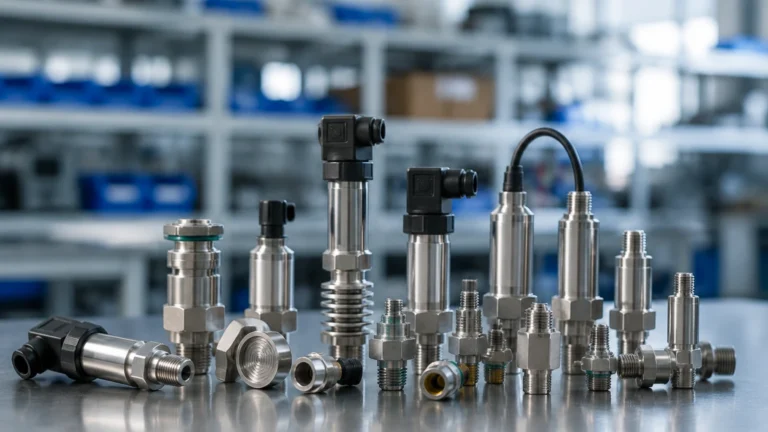
In these complex industrial environments, gas analysis often operates alongside critical liquid management systems. While TDLAS monitors gas composition, reliable instrumentation such as those found on the Main Page of leading manufacturers ensures that liquid levels and pressures remain within safe operational boundaries. This article explores the principles, applications, and selection criteria defining the current TDLAS market.
Measurement Principles of TDLAS
Before evaluating market options, it is vital to understand how TDLAS functions. At its core, TDLAS is a high-resolution spectrographic technique that measures the concentration of specific gas species (such as methane, water vapor, or carbon dioxide) in a mixture.
The Beer-Lambert Law
TDLAS operates based on the Beer-Lambert Law, which describes the relationship between the absorption of light and the properties of the material through which the light is traveling. The fundamental equation is:
A = ε × c × L
* A: Absorbance (dimensionless)
* ε: Molar absorption coefficient (specific to the gas species and wavelength)
* c: Concentration of the target gas
* L: Optical path length (the distance the laser travels through the gas)
Narrow-Bandwidth Emission
Unlike traditional Non-Dispersive Infrared (NDIR) sensors that use a broad spectrum of light, a Tunable Diode Laser emits light at a very narrow bandwidth—typically less than 0.1 nm. By varying the current supplied to the diode, the laser's wavelength is "tuned" to scan across a specific absorption line of the target gas. Because the laser line is narrower than the gas absorption line, the analyzer can achieve extremely high selectivity, virtually eliminating interference from other gases present in the process stream.
Market Segmentation by Application
The tunable diode laser analyzer market is categorized primarily by the gas species detected and the method of installation. Each application requires specific hardware configurations to handle temperature, pressure, and dust load.
1. Combustion Optimization
In large-scale furnaces and boilers, TDLAS is used to measure O2 and CO in real-time. By monitoring these gases directly in the flue gas duct (in-situ), operators can adjust the air-to-fuel ratio instantaneously. This reduces fuel consumption and minimizes the emission of nitrogen oxides (NOx).
2. Safety and Corrosion Monitoring
In the oil and gas industry, TDLAS is the preferred method for detecting moisture (H2O) and hydrogen sulfide (H2S) in natural gas pipelines. Even trace amounts of moisture can lead to hydrate formation or internal corrosion, potentially compromising pipeline integrity. TDLAS systems can detect moisture levels as low as 1 ppm (part per million).
3. De-NOx Processes (Ammonia Slip)
Power plants using Selective Catalytic Reduction (SCR) to reduce emissions must inject ammonia (NH3). If too much ammonia is injected, it "slips" through the stack, leading to environmental fines and the formation of ammonium bisulfate, which clogs downstream equipment. TDLAS provides the fast response necessary to control NH3 injection precisely.
Technical Comparison: TDLAS vs. Traditional Technologies
When navigating the tunable diode laser analyzer market, it is helpful to compare TDLAS against older technologies like Gas Chromatography (GC) or Electrochemical sensors.
| Feature | TDLAS | Gas Chromatography (GC) | NDIR (Non-Dispersive IR) |
| :— | :— | :— | :— |
| Measurement Type | In-situ or Extractive | Extractive Only | Extractive / Cross-stack |
| Response Time | 1–5 seconds | 2–15 minutes | 10–30 seconds |
| Maintenance | Low (No moving parts) | High (Columns/Carrier gas) | Moderate (Optical filters) |
| Selectivity | Excellent (Zero interference) | Good | Moderate (Cross-interference) |
| Calibration | Factory set (Stable) | Frequent (Daily/Weekly) | Monthly |
| Installation Cost | Moderate to High | High | Low to Moderate |
Selection Criteria for Industrial TDLAS Systems
Selecting the right analyzer involves more than just identifying the target gas. Engineers must consider the physical and chemical constraints of the installation site.
Optical Path Length
The path length (L) directly affects sensitivity. For low-concentration measurements (ppb or low ppm), a longer path length is required. In some cases, a "folded" path using mirrors is used to increase the distance the laser travels within a compact enclosure. For cross-stack measurements, the duct diameter (typically 1 to 10 meters) serves as the path length.
Process Temperature and Pressure
Gas absorption lines broaden and shift based on temperature and pressure. High-end TDLAS units include integrated sensors to compensate for these changes in real-time. Standard units can typically handle process temperatures up to 600°C (1112°F), though specialized probes can extend this range.
Dust and Particulate Loading
Because TDLAS relies on light transmission, high dust loads can attenuate the laser signal. Modern analyzers use sophisticated signal processing (such as Wavelength Modulation Spectroscopy) to maintain accurate readings even when 90% or more of the laser light is blocked by particulates.

Installation and Maintenance Considerations
To ensure the longevity of an analyzer in an industrial setting, several installation factors must be addressed:
1. Alignment: For cross-stack (in-situ) installations, the transmitter and receiver units must be perfectly aligned. Thermal expansion of the stack or duct can cause misalignment over time, so robust mounting flanges are essential.
2. Purging: To prevent the process gas from fouling the optical windows, a continuous purge of clean, dry air or nitrogen is required. The purge flow must be regulated to ensure it does not dilute the sample gas significantly at the point of measurement.
3. Calibration Verification: While TDLAS is inherently stable, many regulated industries require periodic verification. This is often done using a "validation cell"—a small internal chamber containing a known concentration of the target gas that can be swung into the laser path without interrupting the process.
Limitations of TDLAS
While highly effective, TDLAS is not a universal solution. Its primary limitations include:
* Single-Species Focus: Most TDLAS analyzers are designed to measure only one or two gas species. If a process requires the analysis of ten different components, multiple units or a different technology like FTIR (Fourier Transform Infrared) may be necessary.
* Optical Access: The technology requires a clear optical path. If the process medium is a liquid or an extremely dense slurry, TDLAS cannot be used (in such cases, hydrostatic or radar level instruments are used for monitoring, as detailed on the Main Page).
* Pressure Limits: At very high pressures (typically above 20-30 Bar), absorption lines broaden so much that they overlap, reducing the selectivity of the instrument.
Market Trends and Future Outlook
The tunable diode laser analyzer market is currently moving toward miniaturization and "all-in-one" probe designs. These probe-style analyzers integrate the transmitter and receiver into a single unit that can be inserted into a process pipe via a single flange, eliminating the alignment issues associated with cross-stack designs.
Furthermore, the integration of IIoT (Industrial Internet of Things) capabilities allows these analyzers to provide diagnostic data regarding window cleanliness and laser health. This predictive maintenance approach reduces unplanned downtime and ensures that the analyzer remains within its specified accuracy limits.
Frequently Asked Questions (FAQs)
Q: Can TDLAS measure oxygen in a 100% nitrogen background?
A: Yes. TDLAS is excellent for measuring trace oxygen (O2) in inert backgrounds because it is highly selective and does not suffer from the drift common in electrochemical sensors.
Q: What is the typical lifespan of a Tunable Diode Laser?
A: Under normal operating conditions, the laser diode itself typically lasts between 5 and 10 years. Most modern systems include diagnostic tools to monitor the laser's power output and warn the user before failure occurs.
Q: How does TDLAS handle varying gas pressures?
A: Most industrial TDLAS analyzers include a pressure compensation algorithm. By inputting a 4-20mA signal from a pressure transmitter, the analyzer adjusts the calculation of gas concentration to account for pressure-induced line broadening.
Q: Is TDLAS suitable for hazardous areas?
A: Yes, most manufacturers offer TDLAS units with ATEX, IECEx, or Class/Division certifications for use in explosive atmospheres. The low power of the laser (typically Class 1) makes it inherently safer than many other high-energy analysis methods.
In conclusion, the tunable diode laser analyzer market provides critical solutions for modern industrial gas analysis. By prioritizing high selectivity and low maintenance, TDLAS technology allows for safer and more efficient plant operations. When combined with robust level and pressure instrumentation, these systems provide the comprehensive data necessary for successful process automation.