Vega Tx to Amarillo Tx
Vega Tx to Amarillo Tx
In the industrial landscape of the Texas Panhandle, the corridor stretching from Vega, TX to Amarillo, TX serves as a vital hub for agriculture, energy production, and water management. For engineers and facility managers operating in this region, the reliability of process automation depends heavily on precise level measurement. Whether managing cattle feedlot runoff, crude oil storage, or municipal water reservoirs, selecting the correct instrumentation is critical to operational efficiency and safety.
This guide examines the technical requirements for level measurement technologies within the industrial context of the Vega to Amarillo region, focusing on the principles of operation, selection criteria, and environmental considerations unique to the Texas High Plains.
Understanding Level Measurement Principles
Before selecting a sensor for a project between Vega, TX and Amarillo, TX, it is essential to understand the physics behind the most common measurement technologies. Industrial level instruments generally fall into two categories: contact and non-contact measurement.
Radar Level Measurement (ToF)
Radar level meters, particularly those utilizing Frequency Modulated Continuous Wave (FMCW) or pulsed signals, operate on the Time of Flight (ToF) principle. The sensor emits a high-frequency microwave signal that reflects off the surface of the medium and returns to the antenna. The distance is calculated based on the time interval between transmission and reception.
Radar is highly effective in the Texas Panhandle because it is unaffected by the high winds and temperature fluctuations common between Vega and Amarillo. Since microwaves do not require a medium for travel, changes in air density or vapor layers do not impact accuracy.
Ultrasonic Level Sensors
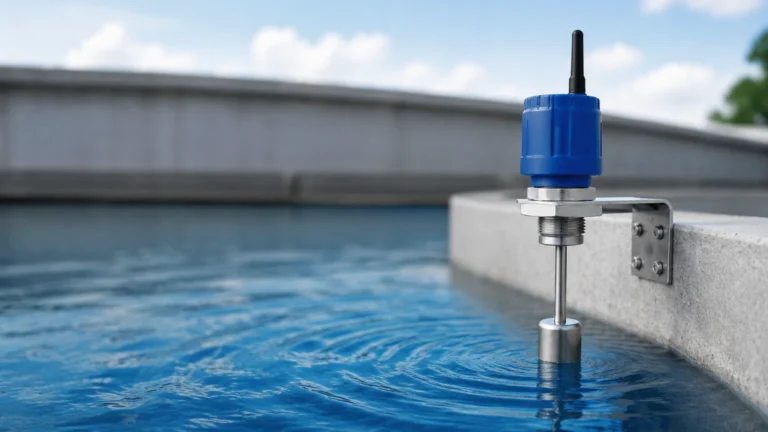
Ultrasonic sensors use sound waves (typically 20 kHz to 200 kHz) to detect the distance to a liquid or solid surface. Like radar, they use the ToF principle. However, because sound speed is dependent on the air temperature and density, these sensors require integrated temperature compensation.
In applications near Amarillo, TX, where ambient temperatures can swing from -15°C (5°F) in winter to over 40°C (104°F) in summer, ultrasonic sensors must be carefully calibrated. They are best suited for stable liquid applications where foam and heavy dust are not present.
Hydrostatic Level Transmitters
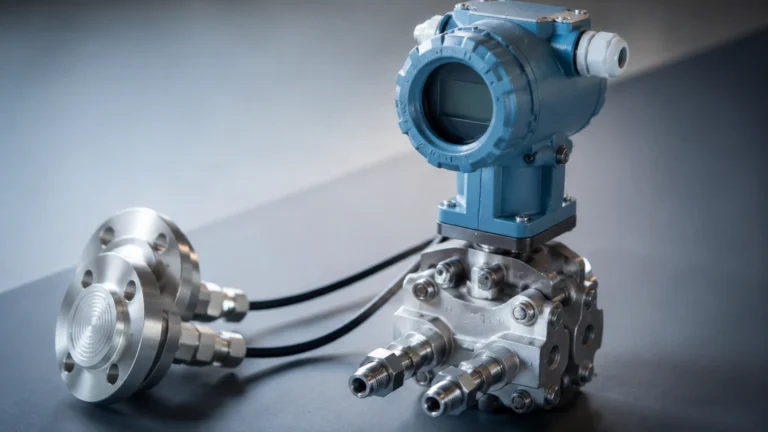
Hydrostatic measurement relies on the principle that the pressure at the bottom of a liquid column is proportional to the height of the liquid and its specific gravity. A submersible pressure transducer measures this head pressure and converts it into a level reading.
This technology is frequently used in deep-well monitoring and water storage tanks across the Vega, TX area, as it provides a robust, low-maintenance solution for clear liquids.
Selection Criteria for the Vega to Amarillo Industrial Corridor
Choosing the right instrument involves evaluating the physical properties of the medium and the environmental conditions of the site. The following table provides a comparison of technologies for common regional applications.
Technology Selection Table
| Application Type | Recommended Technology | Medium State | Measurement Range | Key Advantage |
| :— | :— | :— | :— | :— |
| Grain Silos | 80GHz Radar | Solids/Dusty | Up to 30m (98 ft) | Penetrates dust |
| Oil Storage Tanks | Guided Wave Radar | Liquid/Interface | Up to 20m (65 ft) | High accuracy, no moving parts |
| Water Reservoirs | Ultrasonic | Liquid | Up to 15m (49 ft) | Cost-effective, non-contact |
| Chemical Processing | Magnetic Level Gauge | Liquid | Custom | Visual and electronic feedback |
| Wastewater Sumps | Hydrostatic | Liquid/Slurry | Up to 100m (328 ft) | Simple installation, submersible |
When evaluating equipment for a facility located between Vega, TX and Amarillo, TX, engineers should prioritize instruments with high ingress protection (IP66 or IP67) to withstand the fine silt and dust characteristic of the region.
Environmental Challenges in the Texas Panhandle
The geography from Vega, TX to Amarillo, TX presents specific challenges that can interfere with sensitive instrumentation. Understanding these factors is the first step toward a successful installation.
Wind and Atmospheric Pressure
The High Plains are known for sustained high winds. For non-contact sensors like ultrasonic meters, wind can cause signal "wavering" or dispersion of the sound wave. In such cases, radar is the preferred alternative. Additionally, atmospheric pressure changes during storm fronts can affect unvented hydrostatic sensors; therefore, using vented cables for pressure equalization is standard practice.
Temperature Extremes
Instruments installed outdoors must be rated for a wide operating temperature range. Welk industrial level meters are typically designed to operate between -40°C and +80°C (-40°F to +176°F). In the heat of an Amarillo summer, sunshields are recommended for electronics housings to prevent thermal drift and extend the lifespan of the LCD displays.
Dust and Build-up
In agricultural applications, such as grain elevators near Vega, dust accumulation on sensor faces is a primary cause of signal loss. 80GHz radar sensors with small beam angles and self-cleaning lens antennas are specifically engineered to mitigate this issue. For more information on specialized sensor configurations, you can visit the Main Page for detailed technical specifications.
Installation and Engineering Best Practices
Proper installation is as important as the technology itself. Even the most advanced radar level meter will fail if mounted incorrectly.
1. Nozzle Positioning: For radar and ultrasonic sensors, avoid mounting the unit in the center of a domed tank, as this can create multiple reflections (parabolic effect). Instead, mount the sensor at 1/3 of the tank radius from the wall.
2. Obstruction Clearance: Ensure the signal beam does not intersect with internal tank structures like ladders, agitators, or heating coils. A clear "view" of the surface is required for a clean signal-to-noise ratio.
3. Stilling Wells: In applications with heavy turbulence or foam—common in chemical mixing plants in Amarillo—installing the sensor inside a stilling well or bypass chamber can provide a calm surface for measurement.
4. Grounding and Surge Protection: The Vega to Amarillo corridor is prone to lightning strikes during spring and summer. All level transmitters should be properly grounded, and signal loops should include surge protection modules to prevent damage to the PLC/DCS input cards.

Limitations of Common Level Technologies
While modern instrumentation is highly versatile, every technology has its "blind spots":
* Ultrasonic: Cannot be used in vacuum or high-pressure environments (above 3 bar). It also fails in the presence of heavy foam, which absorbs the sound energy.
* Radar: While excellent for most liquids, radar can struggle with materials that have a very low dielectric constant (εr < 1.5), such as certain liquefied gases, unless a guided wave probe is used.
* Hydrostatic: Is density-dependent. If the temperature of the liquid changes significantly, the density changes, leading to a small error in the level calculation unless compensated by the control system.
Frequently Asked Questions (FAQ)
Q: Can I use an ultrasonic sensor for grain level measurement in a Vega, TX elevator?
A: It is generally not recommended. The dust generated during loading and the irregular surface of the grain scatter sound waves. A high-frequency radar (80GHz) is the industry standard for these conditions.
Q: How often do level meters in the Amarillo area require calibration?
A: For most solid-state radar and ultrasonic units, calibration is stable for several years. However, hydrostatic sensors and magnetic gauges should be checked annually for sediment build-up or mechanical wear, especially in hard water applications.
Q: What is the benefit of a 4-20mA HART output for these sensors?
A: 4-20mA HART allows for digital communication over the existing analog wiring. This enables technicians to perform remote diagnostics and configuration changes without climbing to the top of a tank, which is a significant safety benefit.
Conclusion
For industrial operations spanning the distance from Vega, TX to Amarillo, TX, accurate level measurement is the cornerstone of process control. By matching the measurement principle—whether radar, ultrasonic, or hydrostatic—to the specific demands of the Panhandle environment, companies can reduce downtime and improve resource management. For a comprehensive review of available instrumentation and application-specific support, engineers are encouraged to consult the Main Page to find the most reliable solutions for their unique site requirements.