Vegapuls Air
Vegapuls Air
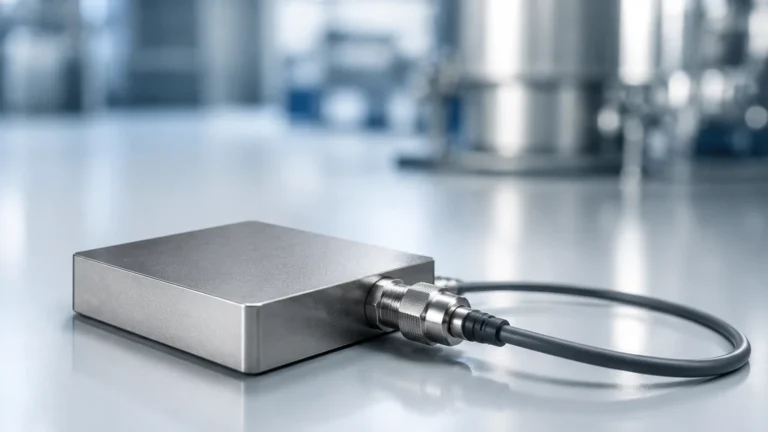
In the landscape of industrial automation, the transition toward decentralized and autonomous monitoring has significantly altered how process industries manage inventory and logistics. Traditional level measurement often requires extensive cabling for power and data transmission, which can be cost-prohibitive for remote locations or mobile assets. The Vegapuls Air series represents a specialized category of radar level sensors designed to address these challenges by integrating high-frequency radar technology with wireless communication and self-contained power supplies.
For engineering teams and facility managers, understanding the underlying principles of these autonomous sensors is essential for selecting the right equipment for water treatment, chemical storage, and industrial automation. This guide examines the technical architecture, application criteria, and installation requirements for wireless radar level sensing.
Radar Level Measurement Principles
Before evaluating autonomous systems, it is necessary to understand the core technology of radar level measurement. Radar sensors, including the Vegapuls Air range, typically utilize Frequency Modulated Continuous Wave (FMCW) or pulse radar technology.
The 80 GHz Advantage
Modern radar sensors often operate at a frequency of 80 GHz. This high frequency allows for a significantly narrower beam angle compared to older 26 GHz or 6 GHz models. A narrow beam angle (often as tight as 3 degrees) is critical because it minimizes the risk of false reflections from internal tank structures such as agitators, heating coils, or ladders.
In practical terms, the sensor emits a microwave signal toward the medium. The signal reflects off the surface and returns to the sensor. By measuring the time of flight or the frequency shift, the device calculates the distance to the product surface. Because radar waves do not require a medium for travel and are largely unaffected by temperature, pressure, or dust, they offer superior reliability compared to ultrasonic alternatives in volatile environments.
Dielectric Constant ($ε_r$)
The reliability of a radar measurement is heavily dependent on the dielectric constant of the medium. Materials with high dielectric constants (such as water-based liquids) reflect radar signals strongly. Non-conductive materials like oils or plastic pellets have lower dielectric constants, requiring more sensitive signal processing to ensure an accurate reading. When selecting a sensor, engineers must confirm that the device sensitivity matches the $ε_r$ value of the stored material.
The Architecture of Wireless Level Sensing
The "Air" designation in autonomous sensors refers to the integration of Internet of Things (IoT) connectivity. Unlike standard radar transmitters that output a 4-20mA or Modbus signal via wires, these units are designed for standalone operation.
Communication Protocols
Autonomous sensors typically utilize Low Power Wide Area Network (LPWAN) technologies to transmit data over long distances while consuming minimal energy. Common protocols include:
* NB-IoT (Narrowband IoT): Optimized for deep indoor penetration and high connection density, making it ideal for sensors located in basements or dense industrial complexes.
* LTE-M (Long Term Evolution for Machines): Offers higher data rates and supports mobility, suitable for assets that may move across different cellular regions.
* LoRaWAN: A non-cellular protocol often used in private networks where cellular coverage is unavailable or where data sovereignty is a primary concern.
Power Management
Because these units are battery-powered, energy efficiency is a primary design constraint. The sensors remain in a "sleep" mode for the majority of the time, waking up at predefined intervals to perform a measurement and transmit the data. Depending on the measurement frequency (e.g., once or twice per day), battery life can extend up to 10 years. This makes them a viable solution for Main Page applications where routine maintenance is difficult.
Key Evaluation Criteria for Autonomous Sensors
When specifying a wireless radar sensor for a project, several technical factors must be weighed to ensure long-term performance and data integrity.
1. Measurement Range: While some radar sensors can measure up to 30 meters (approx. 98 feet), many autonomous units are optimized for shorter ranges, such as 15 meters (approx. 49 feet), which covers the majority of IBCs (Intermediate Bulk Containers) and standard storage tanks.
2. Environmental Rating: Industrial environments require high ingress protection. Look for sensors with IP66/IP68 ratings to ensure they can withstand outdoor exposure and potential submersion.
3. Chemical Compatibility: The wetted parts of the sensor (the parts in contact with or exposed to vapors) must be resistant to the medium. Materials like PVDF are commonly used for their broad chemical resistance.
4. Data Integration: Ensure the sensor’s cloud or software interface can integrate with existing SCADA or ERP systems via APIs (Application Programming Interfaces) or standard protocols like MQTT.
Selection Guide and Technical Specifications
The following table provides a generalized comparison of common application scenarios for autonomous radar sensors.
| Application Type | Typical Medium | Recommended Frequency | Connectivity Choice | Key Consideration |
| :— | :— | :— | :— | :— |
| Mobile IBC Monitoring | Chemicals/Lubricants | 80 GHz | LTE-M / NB-IoT | GPS tracking for asset location |
| Remote Water Wells | Ground Water | 80 GHz | LoRaWAN / NB-IoT | Signal penetration in rural areas |
| Waste Management | Liquid Waste | 80 GHz | NB-IoT | Build-up on sensor face |
| Plastic Pellets | Solids (Low $ε_r$) | 80 GHz | LTE-M | Beam angle to avoid sidewall noise |

Installation Considerations and Best Practices
Proper installation is the most significant factor in preventing measurement errors. Even the most advanced 80 GHz radar can fail if poorly positioned.
Mounting Position
The sensor should be mounted so that the radar beam has an unobstructed path to the liquid surface. It should not be placed in the center of a tank (to avoid multiple reflections) nor too close to the wall (to avoid signal attenuation). Ideally, the sensor should be placed at a distance of 1/4 the tank diameter from the side wall.
Blocking Distance (Dead Zone)
Every radar sensor has a "dead zone" directly beneath the antenna where measurements are not possible. For many autonomous units, this is approximately 50 mm to 100 mm (2 to 4 inches). Engineers must account for this when calculating the maximum fill level of a vessel to prevent the liquid from entering the dead zone, which would cause the sensor to report an error or a frozen value.
Signal Obstructions
While 80 GHz radar is excellent at ignoring small obstructions, large metal objects or heavy foam can still interfere with the signal. In applications involving heavy foam, radar signals may be absorbed or scattered. In such cases, alternative technologies like hydrostatic level transmitters or magnetic level gauges—offered by specialized manufacturers like Welk—may be more appropriate.
Common Risks and Limitations
While autonomous radar sensors offer significant advantages in terms of installation speed and cost, they are not a universal solution for every process.
* Latency: Because these sensors operate on a schedule to save battery, they are not suitable for high-speed process control where real-time feedback is required (e.g., preventing a tank from overflowing during a high-speed fill). For such applications, a wired radar with a continuous power supply is necessary.
* Signal Interference: In areas with extremely poor cellular or radio coverage, the sensor may fail to transmit data, leading to gaps in inventory records. Site surveys are recommended for critical remote monitoring projects.
* Battery Replacement: Although batteries last for years, they eventually require replacement. In hazardous areas (ATEX/Ex zones), battery replacement must be performed according to strict safety protocols, often requiring the device to be moved to a safe zone.
Comparison with Traditional Level Measurement
It is helpful to compare autonomous radar with other common technologies used in industrial automation.
* Ultrasonic Sensors: These are often more cost-effective but are sensitive to air temperature changes, wind, and vapors. Radar is generally preferred for outdoor or chemical applications where accuracy is paramount.
* Hydrostatic Pressure Transmitters: These measure the weight of the liquid column. They are highly reliable for vented tanks but require contact with the fluid, which may not be desirable for corrosive or hygienic applications.
* Guided Wave Radar (GWR): GWR uses a probe to guide the signal. It is excellent for low-dielectric liquids and bypass chambers but is not suitable for mobile tanks or applications where a contact-free measurement is required.
Conclusion
The Vegapuls Air and similar autonomous radar sensors have filled a critical gap in industrial level measurement, particularly for logistics and remote monitoring. By eliminating the need for power cables and signal wiring, these devices allow for the rapid digitization of inventory across vast sites or mobile fleets.
However, the success of an installation depends on a thorough understanding of the media properties, the communication environment, and the physical constraints of the vessel. For complex process control environments where real-time data and high-speed response are required, traditional wired instruments remain the standard. Professionals should evaluate their specific needs against the trade-offs of battery life and data latency to determine if an autonomous radar solution is the optimal choice for their application. For a broader range of industrial measurement options, including radar, ultrasonic, and hydrostatic solutions, engineers can Review product options and application support to find the most cost-effective and accurate fit for their infrastructure.