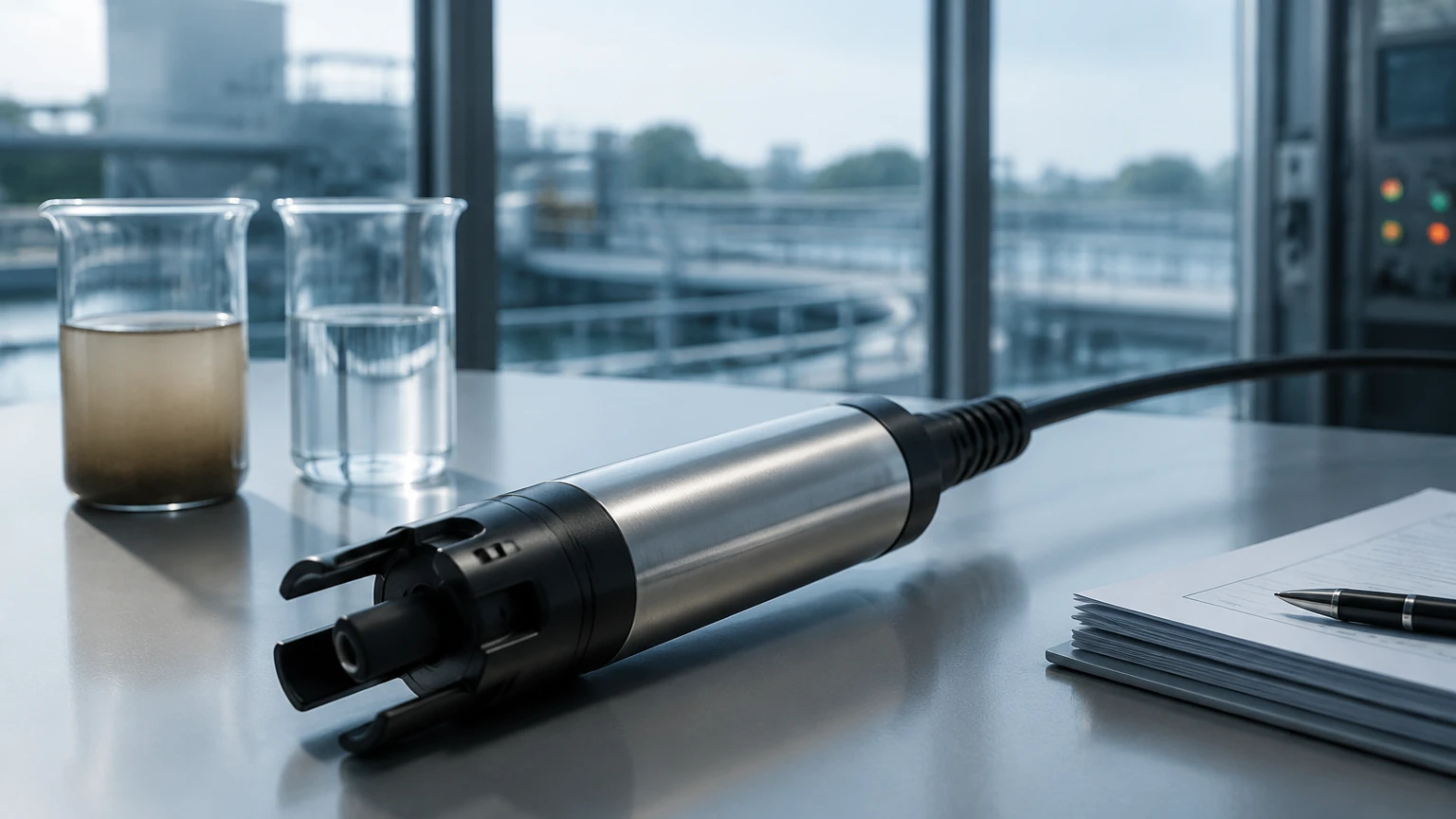
Vernier Turbidity Sensor
Vernier Turbidity Sensor
Turbidity measurement is a critical parameter in water quality analysis, environmental monitoring, and various industrial processes. In the context of liquid analysis and process control, understanding the clarity of a fluid provides essential data regarding the presence of suspended solids, such as silt, clay, algae, and organic matter. The Vernier turbidity sensor is a specialized instrument designed to measure the cloudiness or haziness of a liquid by quantifying the amount of light scattered by these suspended particles. While often utilized in field research and laboratory settings, its underlying principles and operational requirements are foundational to broader industrial level and quality monitoring systems.
Measurement Principles of Turbidity
Before selecting or implementing a turbidity sensor, it is essential to understand the physics of the measurement. Most modern sensors, including the Vernier model, utilize the principle of nephelometry.
Nephelometry and Light Scattering
In a nephelometric sensor, a light source is directed into a liquid sample. When this light encounters suspended particles, it scatters in various directions. The sensor contains a light detector (typically a photodiode) positioned at a 90-degree angle to the light beam. This specific geometry is the industry standard for measuring low to moderate turbidity because it minimizes interference from the primary light source and the color of the liquid.
As the concentration of suspended solids increases, more light is scattered toward the 90-degree detector, resulting in a higher turbidity reading. This reading is typically expressed in Nephelometric Turbidity Units (NTU). It is important to note that turbidity is an optical property and does not directly measure the mass of suspended solids, although a correlation can often be established for specific, consistent sample types.
Light Source Considerations
Turbidity sensors usually employ either a tungsten filament lamp (White Light) or an Infrared (IR) LED (typically around 850-890 nm). The Vernier turbidity sensor typically utilizes an IR light source. The advantage of IR light is that it reduces the impact of sample color on the reading, as many colored dissolved organic matters (CDOM) absorb visible light but are transparent to infrared wavelengths. This ensures that the measurement reflects the physical presence of particles rather than the chemical color of the water.
Technical Specifications and Selection Criteria
When evaluating a turbidity sensor for a specific application, engineers must consider the range, resolution, and compatibility of the device. The following table provides a general overview of the typical performance characteristics for a portable or field-grade turbidity sensor like the Vernier model:
| Feature | Specification (Typical) |
| :— | :— |
| Measurement Range | 0 to 200 NTU |
| Accuracy | ±2 NTU for readings < 25 NTU; ±5% for readings > 25 NTU |
| Resolution | 0.25 NTU |
| Light Source | Infrared LED (880 nm) |
| Detection Angle | 90 degrees (Nephelometric) |
| Operating Temperature | 5°C to 35°C |
| Power Requirements | 5V DC (typically via data logger) |
For industrial applications requiring continuous monitoring in harsh environments, users should consult more robust solutions. For those seeking comprehensive industrial measurement technologies, you can Review product options and application support to find instruments designed for high-pressure or high-temperature process lines.
Calibration and Standardization
Turbidity is a relative measurement, meaning the sensor must be calibrated against a known standard to ensure accuracy. The most widely accepted primary standard is Formazin, a synthetic polymer that produces a consistent and repeatable light-scattering effect.
1. Primary Standards: Formazin is the benchmark, but it is toxic and requires careful handling. Many modern sensors use secondary standards, such as StablCal or pre-calibrated plastic beads, which are safer and have a longer shelf life.
2. Calibration Procedure: A two-point calibration is standard. The first point is usually a "blank" or 0 NTU standard (distilled or deionized water), and the second point is a high-range standard (e.g., 100 NTU).
3. Frequency: For field sensors, calibration should be performed before each use or daily. In industrial settings, the frequency depends on the fouling rate of the sensor optics.
Installation and Operational Considerations
Proper installation and sample handling are paramount to obtaining reliable turbidity data. Even the most accurate sensor will provide erroneous data if the sample is contaminated or if the measurement environment is poorly controlled.
Sample Cell Maintenance
In sensors that use a cuvette or sample cell, the glass must be perfectly clean and free of scratches. Fingerprints on the outside of the cuvette can scatter light, leading to artificially high NTU readings. It is recommended to wipe the outside of the cuvette with a lint-free cloth and a small amount of silicon oil to fill in microscopic scratches.
Eliminating Air Bubbles
Air bubbles are perhaps the most common source of error in turbidity measurement. A bubble acts as a large particle that scatters light intensely. To prevent bubbles:
* Allow the sample to sit for a few seconds before measuring.
* Gently tap the cuvette to dislodge bubbles from the walls.
* In continuous flow-through industrial sensors, use a "bubble trap" or de-aerator before the fluid reaches the sensor chamber.
Stray Light and Environment
Ensure the sensor is used with its light shield or within a closed chamber. External ambient light can enter the detector and cause significant measurement drift, especially in low-turbidity environments like treated drinking water.
Limitations and Common Risks
While the Vernier turbidity sensor is highly effective for its intended use, there are several limitations inherent to nephelometric technology that users must manage:
* Particle Size and Shape: Two samples with the same mass concentration of solids can have different NTU readings if the particle sizes or shapes differ. Smaller particles scatter light more effectively than larger ones at certain wavelengths.
* High Turbidity Saturation: In extremely turbid liquids (e.g., >1000 NTU), the light may be scattered so many times (multiple scattering) or absorbed so heavily that the amount of light reaching the detector actually decreases. For these applications, a backscatter sensor or a ratio-metric sensor (which uses multiple detectors) is required.
* Fouling (Biofilm and Scaling): In continuous monitoring, the optical windows can become coated with algae, mineral scale, or oil. This fouling blocks the light path and causes "drift." Industrial sensors often include integrated wipers or ultrasonic cleaning systems to mitigate this risk.
* Sedimentation: If the sample is not sufficiently mixed, larger particles may settle to the bottom of the cuvette during the measurement, leading to a declining turbidity reading over time.
Comparison: Portable vs. Industrial Turbidity Sensors
| Feature | Portable/Educational (Vernier) | Industrial Inline Sensor |
| :— | :— | :— |
| Housing Material | Plastic/ABS | Stainless Steel / Hastelloy |
| Mounting | Handheld/Lab Stand | Flanged or NPT Threaded |
| Output Signal | Proprietary/Analog | 4-20mA, Modbus, HART |
| Cleaning | Manual | Automatic Wipers / Air Purge |
| Pressure Rating | Atmospheric Only | Up to 10 Bar or higher |
| Application | Field Surveys, Education | Wastewater, Chemical Processing |
Frequently Asked Questions (FAQ)
Q: Can I use a turbidity sensor to measure Total Suspended Solids (TSS)?
A: Not directly. Turbidity measures light scatter, while TSS measures mass. However, if the composition of the suspended solids remains constant, you can create a site-specific calibration curve to estimate TSS from NTU readings.
Q: Why does my sensor show a negative reading?
A: This usually happens if the sensor was calibrated with a "blank" that was actually more turbid than the current sample, or if the sensor optics have drifted. Re-calibrating with high-quality deionized water should resolve this.
Q: Does the color of the water affect the Vernier turbidity sensor?
A: Because it uses an infrared light source, it is less sensitive to color than white-light sensors. However, extremely dark or opaque liquids may still absorb enough IR energy to affect the signal-to-noise ratio.
Q: How do I store the sensor when not in use?
A: The sensor itself should be kept dry and clean. If using a cuvette-based system, ensure the cuvettes are rinsed with distilled water and stored in a protective case to prevent scratching.
Integration into Industrial Systems
In modern process plants, turbidity data is rarely used in isolation. It is often combined with level measurement data from Main Page instruments to manage tank sedimentation or filter backwash cycles. For instance, in a water treatment plant, a high turbidity reading at the outlet of a sand filter can trigger an automated backwash sequence, while ultrasonic or radar level sensors monitor the water levels in the filter beds to prevent overflow.
By understanding the technical nuances of the Vernier turbidity sensor, engineers and technicians can better appreciate the complexities of optical fluid analysis. Whether performing field research or designing a large-scale industrial treatment system, the principles of light scattering, proper calibration, and bubble management remain the cornerstones of accurate and reliable measurement.