Water Sampling Equipment
Water Sampling Equipment
In industrial wastewater management, environmental monitoring, and process control, water sampling equipment serves as the primary tool for obtaining representative physical samples of liquid media. These samples are subsequently analyzed for chemical composition, biological load, and suspended solids. However, the efficacy of any sampling program is heavily dependent on the precision of the triggering mechanisms—most notably, level and flow measurement instruments.
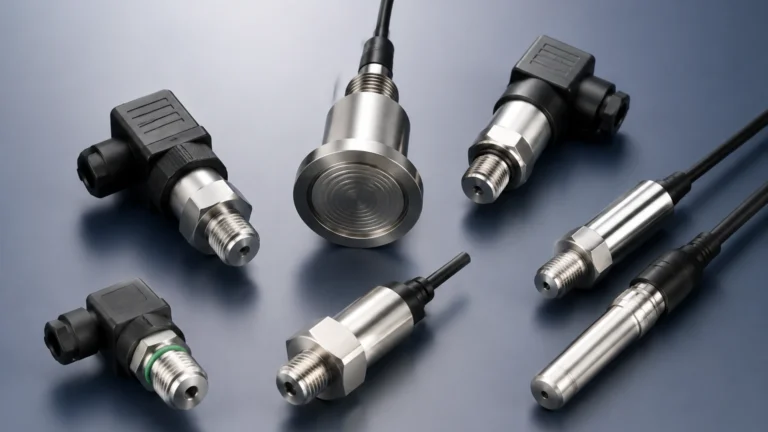
Welk, a specialist in industrial level measurement, provides the foundational sensor technology required to automate these sampling processes. By integrating radar, ultrasonic, or hydrostatic sensors with sampling hardware, engineers can ensure that samples are taken at the correct intervals and under the specific hydraulic conditions required for regulatory compliance. To explore the full range of sensor technologies that support these systems, you may visit the Main Page of our product catalog.
Measurement Principles and Integration
Before selecting water sampling equipment, it is essential to understand the measurement principles that govern automated sampling. Most modern sampling systems operate on one of two triggers: time-proportional or flow-proportional.
Time-Proportional Sampling
In this mode, the equipment collects a fixed volume of water at pre-set time intervals (e.g., every 60 minutes). This method is suitable for stable processes where the concentration of pollutants does not fluctuate significantly with flow rate.
Flow-Proportional Sampling
This is the industry standard for wastewater and environmental monitoring. The sampler is linked to a level meter or flow meter. As the volume of water passing through a flume or weir reaches a specific threshold, the sampler is triggered. This ensures that the final composite sample accurately reflects the total mass loading of the effluent.
Welk’s ultrasonic level sensors are frequently used in these applications. By measuring the head (level) in an open channel, the sensor calculates the flow rate using standard hydraulic formulas (such as Parshall flume or V-notch weir equations) and sends a pulse signal to the water sampling equipment.
Types of Water Sampling Equipment
Water sampling equipment is generally categorized by its portability, automation level, and the way it handles the collected samples.
1. Manual Grab Samplers
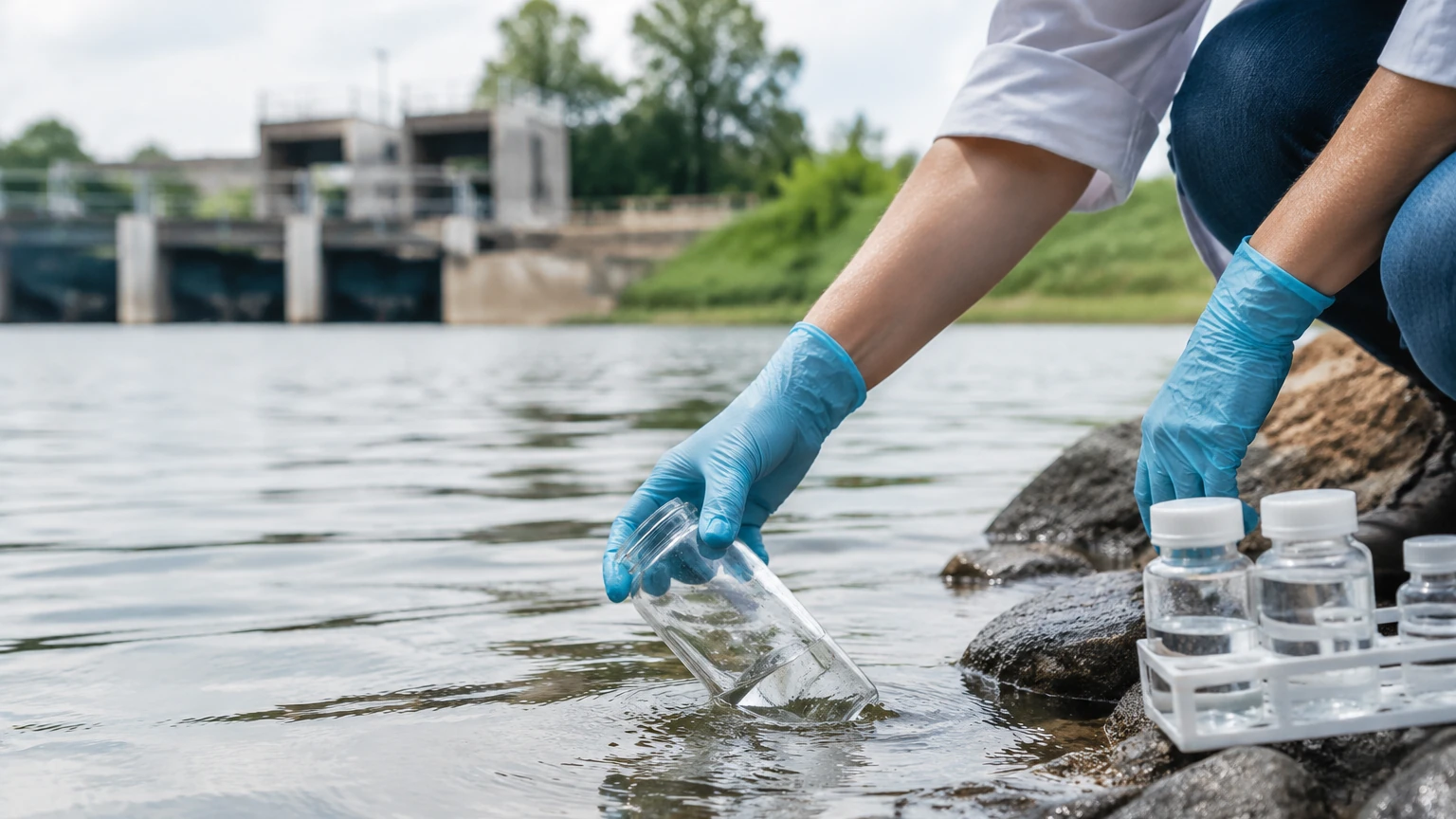
These are basic tools, such as dip samplers or swing samplers, used for spot checks. They consist of a bottle attached to a telescopic pole. While cost-effective, they provide only a "snapshot" of water quality at a single point in time and are prone to human error.
2. Portable Automatic Samplers
Designed for field use and temporary monitoring studies, these units are battery-powered and housed in rugged, weather-resistant enclosures. They typically use a peristaltic pump to draw water from the source into internal bottles. Many models include a space for ice to keep samples cool (4°C or 39.2°F) during the collection period.
3. Stationary Automatic Samplers
Permanently installed at discharge points or treatment plant inlets, these systems are usually powered by AC electricity. They often feature integrated refrigeration units to maintain sample integrity over 24-hour periods or longer. They are designed to interface directly with SCADA systems and Welk level transmitters for seamless data logging.
Technical Selection Table
The following table provides a comparison of common sampling configurations based on industrial requirements.
| Feature | Manual Sampler | Portable Auto-Sampler | Stationary Auto-Sampler |
| :— | :— | :— | :— |
| Primary Use | Spot testing | Short-term studies | Compliance monitoring |
| Power Source | Manual | Battery / Solar | AC Power (110V/220V) |
| Cooling Method | None | Ice / Passive | Active Refrigeration |
| Triggering | Manual | Time / Flow (External) | Time / Flow / Event |
| Max Suction Lift | N/A | 6–8 meters (20–26 ft) | 7–9 meters (23–29 ft) |
| Data Integration | Manual Log | Internal Datalogger | SCADA / PLC |
Key Evaluation Criteria
When specifying water sampling equipment for a project, engineers must evaluate several critical factors to ensure data accuracy and equipment longevity.
Material Compatibility
The wetted parts of the sampling system, including the intake strainer, suction tubing, and sample bottles, must be chemically compatible with the media. For general wastewater, reinforced PVC or PE tubing is standard. For trace organic analysis, PTFE (Teflon) tubing and glass bottles are required to prevent contamination or adsorption.
Pump Performance
Most automatic samplers use peristaltic pumps. The pump must be capable of maintaining a minimum transport velocity (typically 0.6 m/s or 2.0 ft/s) to prevent the settling of suspended solids in the suction line. The vertical distance between the sampler and the water surface (suction lift) must be within the pump's rated capacity.
Sample Volume Accuracy
For composite sampling, the equipment must deliver precise volumes for every aliquot. Variations in volume can lead to significant errors in calculated pollutant concentrations. High-end systems utilize non-contact liquid sensors to verify that the correct volume has been delivered to the bottle.
Installation Considerations
Proper installation is as critical as the choice of equipment. Failure to follow engineering best practices can result in clogged lines or non-representative samples.
1. Suction Line Placement: The intake strainer should be placed in a representative part of the flow—typically in the center of the channel at a depth of 60% from the surface. It should not be placed too close to the bottom to avoid sucking up heavy grit.
2. Line Slope: The suction tubing should have a continuous downward slope toward the source. This allows the line to drain completely between samples, preventing cross-contamination and protecting the line from freezing in cold climates.
3. Level Sensor Positioning: If using a Welk ultrasonic or radar level meter for flow-proportional sampling, the sensor must be installed at the correct distance upstream of the primary flow element (flume/weir) to avoid the "drawdown" effect where the water surface curves as it accelerates.
4. Power Supply: For remote sites, ensure that the battery or solar array is sized to handle both the sampler's pump cycles and the continuous power draw of the level measurement instrument.
Limitations and Risks
While automated water sampling equipment significantly improves data reliability, there are inherent limitations:
* Cross-Contamination: If the suction line is not purged properly between samples, remnants of the previous sample can affect the current one. Most automatic samplers include a "pre-purge" and "post-purge" cycle to mitigate this.
* Large Solids: Standard samplers are not designed to handle large debris. If the water contains large plastic waste or heavy rags, specialized strainers or macerators may be required.
* Temperature Sensitivity: In extreme heat, passive cooling (ice) in portable units may fail within a few hours. Conversely, in sub-zero temperatures, suction lines must be heat-traced or insulated to prevent freezing.
* Volatile Compounds: The vacuum or peristaltic action of many samplers can cause "off-gassing" of volatile organic compounds (VOCs). For these specific analytes, specialized bladder pumps or discrete grab sampling may be necessary.
Frequently Asked Questions (FAQ)
Q: How often should the suction tubing be replaced?
A: In standard wastewater applications, tubing should be inspected monthly and replaced every 3 to 6 months. If sampling corrosive chemicals or highly abrasive slurries, replacement may be required more frequently.
Q: Can I use a hydrostatic level transmitter to trigger my sampler?
A: Yes. A Welk hydrostatic level transmitter can provide a 4-20mA signal to a PLC or the sampler itself. This is particularly useful in deep tanks or wells where ultrasonic sensors might face interference from foam or internal structures.
Q: What is the difference between a discrete sample and a composite sample?
A: A discrete sample is a single bottle representing a single point in time. A composite sample consists of multiple small aliquots collected over time and mixed into a single large container, providing an average representation of the water quality over a period (e.g., 24 hours).
Q: Why is transport velocity important?
A: If the velocity is too low (below 0.6 m/s), heavy particles like sand or organic solids will fall out of the liquid stream and settle in the tube, leading to a sample that under-represents the actual suspended solids in the water.
By carefully selecting water sampling equipment and pairing it with high-precision level measurement tools from Welk, industrial operators can achieve a high degree of accuracy in their environmental reporting and process management. For more information on the sensors required for these integrations, please refer to the Main Page.